
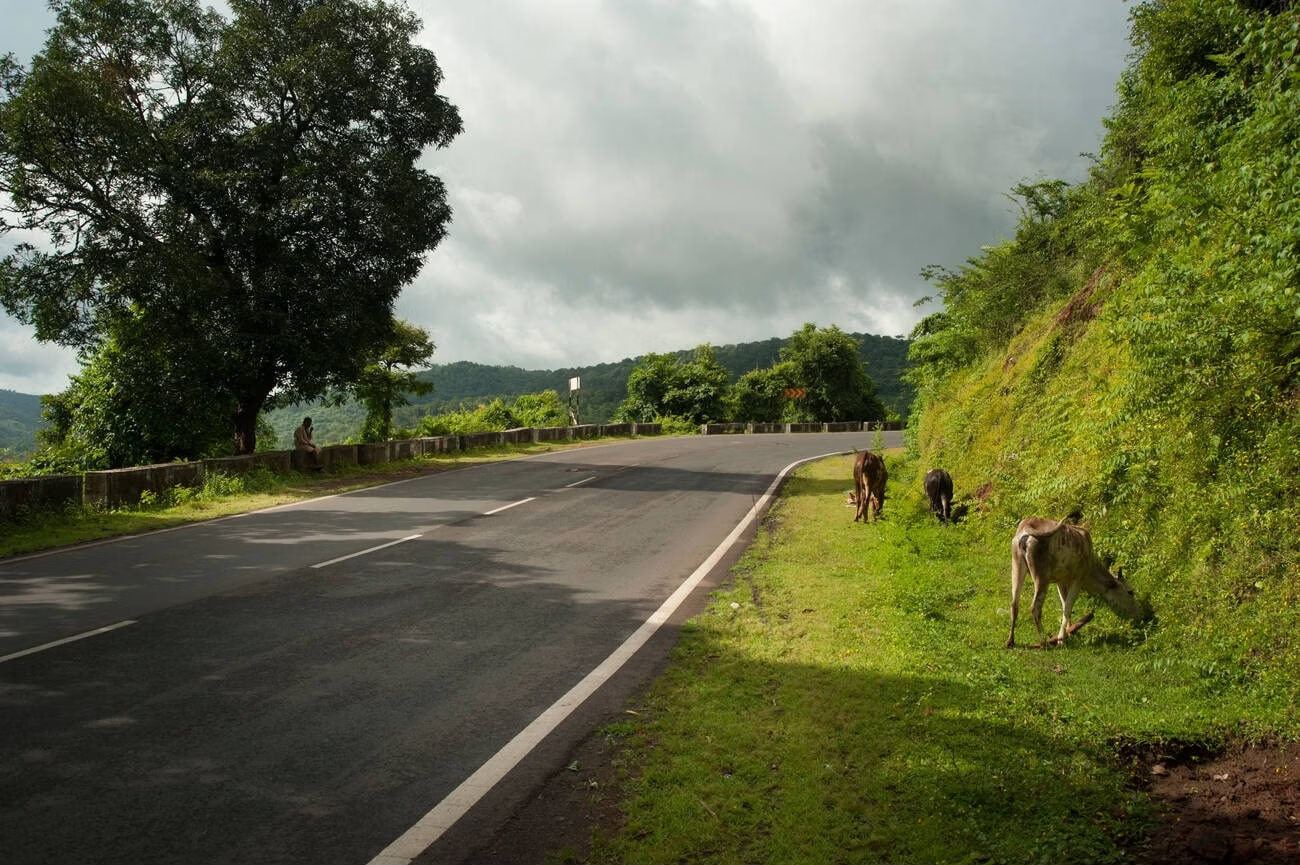
NH 17 Horror Story Goa: Ghost Tales and Highway Truth

Rohan Malhotra
January 1, 2026
Explore NH 17 horror story Goa legends with haunted highway tales, rational explanations, and practical night-driving safety tips for the Mumbai-Goa route.
Introduction: Why NH 17 Horror Story Goa Still Trends
The phrase NH 17 horror story Goa keeps trending because it combines three powerful travel themes: night driving, accident-prone highway stretches, and local ghost folklore. For decades, road trippers on the Mumbai-Goa route have shared stories of mysterious figures, vanishing hitchhikers, and eerie sounds near isolated turns. Some travelers treat these stories as pure fiction, while others treat them as warnings passed between drivers.
There is also a practical layer many people miss. The old NH 17 corridor is now largely renumbered as NH 66, and parts of this long coastal route include ghat sections, rain-heavy zones, and visibility challenges that can make night driving stressful. So even when paranormal claims are unverified, the fear felt by travelers is often real and linked to road conditions.
This guide covers both sides clearly: the famous ghost tales and the rational road-safety truth. If you are planning Goa by road, this will help you separate folklore from risk and drive smarter.

Quick Facts: Old NH 17 and the Goa Route Context
| Topic | What You Should Know |
|---|---|
| Highway identity | Old NH 17 is now mostly part of NH 66 after highway renumbering |
| Route relevance | Core coastal connection used by Mumbai-Goa road travelers |
| Why stories spread | Night driving stress, monsoon weather, and isolated stretches |
| Common legend types | Lady in white, disappearing hitchhiker, roadside shadow sightings |
| Real travel concern | Fatigue, overspeeding, poor visibility, and risky overtakes |
History of NH 17: From Name Change to Road Reputation
Historically, NH 17 was known as the coastal highway connecting important cities along India's western belt. In modern maps and official highway systems, this route is primarily identified as NH 66. Even today, however, many travelers and local drivers still use the older NH 17 name in conversation, especially when discussing road legends and long-drive stories.
The Mumbai-Goa section gained a mixed reputation over the years: scenic in daylight, demanding in heavy rain, and mentally tiring at night due to narrow segments, variable lane quality, and unpredictable traffic behavior in certain stretches. This combination created the perfect environment for folklore to grow. A tense drive plus low visibility can make ordinary roadside visuals feel supernatural.
So when people search for nh 17 ghost stories, they are often asking two questions together: "Is there really something paranormal?" and "Is this road dangerous after dark?" A good guide should answer both honestly.
Most Shared NH 17 Horror Stories Near Goa
Across forums, social posts, and driver circles, a few recurring story patterns appear again and again. The details change by narrator, but the structure is similar.
1. The lady in white near a curve
This is the most common highway ghost template in India. A lone woman in white is said to appear near a bend, signal for help, and disappear once a vehicle slows down or passes. On the old NH 17 corridor, versions of this story are often tied to rain-heavy nights and dimly lit sections.
2. The disappearing hitchhiker
Drivers report picking up a quiet passenger who either vanishes before the next toll/stop or is never visible to other co-passengers. In many versions, the location is close to a known accident point, which adds emotional weight to the narrative.
3. The shadow crossing story
Some motorists describe a sudden human-like shape crossing the road, forcing hard braking. Later, no person is found. Rationally, this can be explained by poor depth perception, glare, wet roads, or animal movement. But in storytelling culture, this becomes a ghost encounter.
4. Engine trouble at one exact point
Another common claim says vehicles stall repeatedly at one "haunted" patch. Mechanically this could be unrelated vehicle condition or incline stress, but repeated anecdotes in the same location keep the fear alive.

Haunted Spots People Talk About on the Mumbai-Goa Side
There is no official haunted-zone map, but storytelling usually clusters around specific road environments rather than exact verified coordinates.
- Isolated forest belts: low lighting, patchy mobile signal, and reduced traffic at night create anxiety.
- Sharp bends near village bypasses: sudden turns plus oncoming glare can produce frightening visual illusions.
- Old accident blackspot stretches: once a fatal crash happens, local memory turns the location into a warning myth.
- Monsoon-dense sections: fog, rain reflection, and wiper-limited visibility amplify perception errors.
Travelers should treat these stories as caution markers rather than paranormal proof. In practical terms, these are exactly the places where careful speed control matters most.
Real Experiences: What Drivers Usually Say
When you compare dozens of first-hand style posts, driver interviews, and highway threads, most reports fall into three broad categories:
| Experience Type | Typical Description | Likely Explanation |
|---|---|---|
| Visual scare | Figure seen briefly near shoulder | Rain glare, reflection, animal movement, fatigue |
| Sound-based scare | Knock, whisper, or sudden noise in isolated patch | Wind pressure, loose fittings, external debris |
| Behavioral reaction | Driver panic, abrupt braking, refusal to stop | Pre-loaded fear from stories plus low visibility stress |
This does not mean people are lying. It means stressful night conditions can make memory and perception highly unreliable. Once a driver has heard horror stories in advance, the brain starts scanning for threat patterns and may over-interpret normal cues.
If your Goa trip includes late-night arrival, balance mystery curiosity with realistic planning by checking Goa travel guide and places to visit Goa in August for weather and route context.
Why NH 17 Horror Narratives Spread So Fast
Highway ghost stories spread faster than regular travel information because they are emotionally sticky. A normal statement like "drive slowly on wet curves" is useful but not memorable. A story about a vanishing hitchhiker at the same curve is memorable and shareable. Over time, the safety message hides inside folklore.
There is also a social factor. Long-distance drivers often exchange caution points through narrative, not technical language. So a "haunted patch" may actually mean: avoid overspeeding here, do not stop alone at 2 AM, and stay alert during rain. Understanding this coded communication helps decode the myth without dismissing local knowledge.
Night Travel Safety Tips for Old NH 17 / NH 66 Route
Whether or not you believe the ghost stories, the safety protocol should be non-negotiable.
Before starting
- Sleep properly before departure; fatigue is a bigger danger than darkness itself.
- Check brakes, lights, wipers, tires, and defogger before entering coastal rain zones.
- Download offline maps and keep emergency contact numbers ready.
- Avoid starting a long night drive after a full workday.
While driving
- Use steady speed, especially on bends and village-entry segments.
- Do not hard-overdrive high beam in rain; it can worsen forward visibility.
- Never stop at fully isolated shoulders unless it is an emergency.
- Avoid phone distractions and unnecessary in-car panic conversations.
- If a visual scare happens, slow safely, breathe, and continue to a populated point.
Route behavior
- Prefer paired travel in two vehicles when possible.
- Plan fuel and food stops at known, lit locations.
- Share live location with family for long night sections.
- If weather worsens, halt in a town instead of forcing schedule.
For trip extensions, you can pair this route plan with places to visit Goa in July and Goa offbeat places.

Rational Explanations Behind "Supernatural" Encounters
The most consistent non-paranormal explanations are well documented in road psychology and night-driving behavior studies.
- Fatigue hallucination effect: sleep-deprived drivers can misread brief peripheral movement.
- Rain reflection distortion: wet asphalt and headlights create shape illusions.
- Fog and depth error: visual distance judgment drops sharply in low contrast.
- Wildlife crossings: sudden animal movement can appear human for a split second.
- Expectation bias: once primed with horror stories, the mind interprets ambiguity as threat.
So the rational position is simple: ghost claims are unverified, but fear responses are real, and the road environment can trigger them.
One Smart Way to Plan a Mumbai-Goa Night Segment
Use a structured plan instead of ad-hoc driving:
- Start early evening, not post-midnight.
- Break the route into 2-3 safe halt zones.
- Rotate drivers only when both are fully rested.
- Keep one "no argument" rule: if weather turns bad, pause the trip.
This single framework reduces both accident risk and panic-driven decisions. Most scary experiences become manageable when drivers feel in control.
Should You Avoid This Route Entirely?
No. Most people complete Mumbai-Goa road travel safely. The goal is not to create fear but to improve judgment. Highway legends around old NH 17 can be treated as cultural folklore plus caution reminders. If you plan timing, maintain the vehicle, and avoid reckless night behavior, the route is manageable for regular travelers.
If your trip focus is spooky tourism instead of highway transit, read haunted places Goa and Dmello House in Goa in daylight-first format.

Conclusion
NH 17 horror story Goa remains popular because it mixes folklore with a genuinely demanding road context. The ghosts are unverified, but the risk factors are real: fatigue, monsoon visibility, poor overtakes, and late-night stress. Treat every "haunted patch" as a signal to drive smarter, not as proof of the paranormal. With practical planning and disciplined road behavior, you can enjoy the Mumbai-Goa highway journey safely and still appreciate the mystery stories as part of local travel culture.
Location
Frequently Asked Questions
Q1.Is NH 17 really haunted?
Q2.What are the most talked-about NH 17 ghost stories?
Q3.Is old NH 17 the same as NH 66 now?
Q4.Is it safe to drive this route at night?
Q5.Are there specific haunted spots officially marked on NH 17?
Q6.Why do drivers report seeing figures on highway stretches?
Q7.What precautions should I take on the Mumbai-Goa highway at night?
Q8.Can I combine this route with haunted tourism in Goa?
Recommended For You

Goa: Complete Travel Plan Beaches And Weather
Complete Goa travel guide featuring beaches, North vs South Goa, water sports, Portuguese heritage, nightlife & practical tips.

Goa Gajah Temple Bali: History, Entry Fee & Visiting Hours
Discover Goa Gajah Temple Bali with history, key highlights, entry guidance, dress code tips, and nearby route planning.

Goa in August: Weather, Best Places & Monsoon Experiences
Discover the best places to visit in Goa in August with monsoon-safe plans, Dudhsagar tips, heritage circuits, weather guidance, and practical travel advice.
Never Miss an Adventure
Get the latest trekking guides, travel tips, and exclusive offers delivered straight to your inbox.
