
Places to Visit in Uttar Pradesh: Spiritual Cities, Heritage & Nature
Rohit Verma
December 14, 2025
Discover best places to visit Uttar Pradesh. Varanasi, Agra, Ayodhya & more. Temples, Taj Mahal, Ganga ghats. Complete UP tourism guide.
Introduction: Uttar Pradesh - The Heart of India
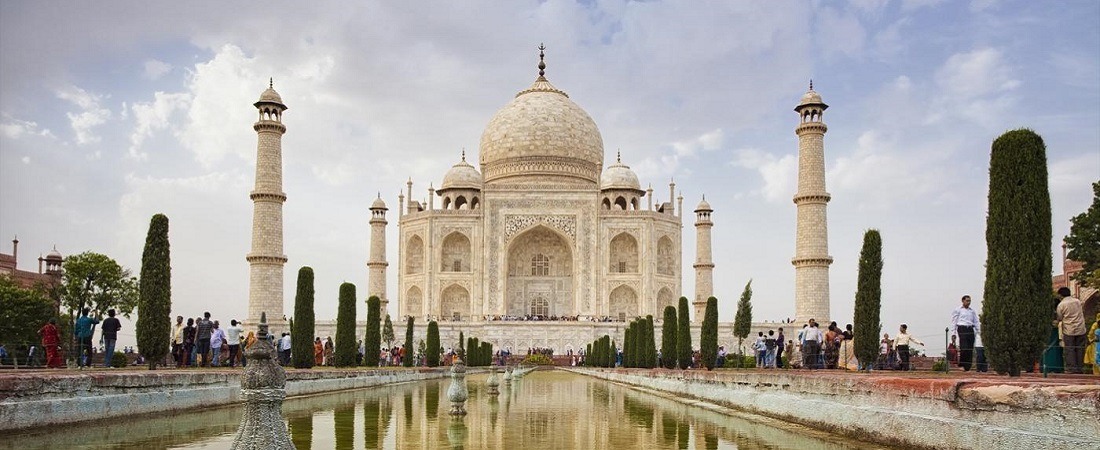
Uttar Pradesh is India's fourth-largest state by area and its most populous, but its significance extends far beyond statistics. This state represents the heart of Indian civilization, serving as birthplace to Hinduism, Buddhism, and Jainism, while witnessing key events of Islamic and Mughal history. UP contains three UNESCO World Heritage Sites, the most visited monument in India (the Taj Mahal), and some of the world's oldest continuously inhabited cities.
What makes Uttar Pradesh special is its diversity. One day you can witness the sunrise at Varanasi's sacred ghats, the next stand before the Taj Mahal's architectural perfection, then visit Ayodhya's temples, Prayagraj's sacred confluence, or Lucknow's Nawabi monuments. The state combines spiritual intensity with architectural grandeur, sacred geography with royal heritage. This guide covers UP's essential destinations, practical planning tips, and how to structure your visit to this culturally rich region.
For deeper exploration of specific destinations, check out Varanasi travel guide, Taj Mahal Agra, and best time to visit Varanasi.
1. Varanasi - The Eternal City
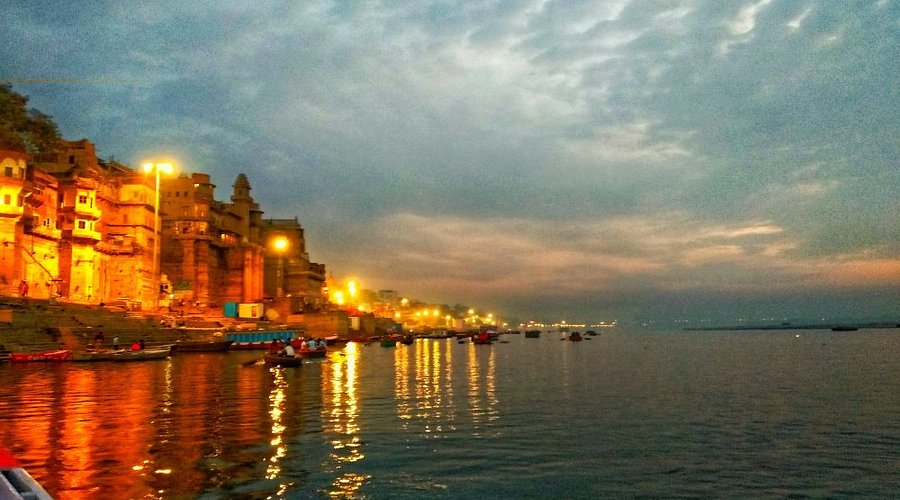
Varanasi, also called Kashi or Banaras, is one of the world's oldest continuously inhabited cities and Hinduism's spiritual capital. Situated on the banks of the sacred Ganges River, Varanasi has been a center of learning, culture, and pilgrimage for over 3,000 years. The city's ghats - riverfront steps leading to the Ganges - form the heart of Varanasi's identity, where life, death, and spiritual practices unfold in public view.
A Varanasi visit is about experiencing the city's rhythm rather than ticking off monuments. Watch sunrise from a boat on the Ganges, witness the evening Ganga Aarti at Dasaswamedh Ghat, walk the narrow lanes of the old city, and visit the Kashi Vishwanath Temple. The atmospheric intensity can be overwhelming, but Varanasi rewards travelers who approach it with openness to spiritual practices and cultural differences.
Ghats of Varanasi
Varanasi has over 80 ghats, each with its own character and significance. Dasaswamedh Ghat hosts the spectacular evening aarti ceremony that draws thousands of devotees and tourists. Manikarnika Ghat is the main cremation ghat, where cremations occur continuously and offer a profound perspective on Hindu beliefs about death and rebirth. Assi Ghat at the southern end offers a more peaceful alternative for boat rides and morning rituals. Assi is also where the great poet Kabir lived and composed his verses.
Kashi Vishwanath Temple
The Kashi Vishwanath Temple is one of the twelve Jyotirlingas - the holiest Shiva shrines in Hinduism. Located in the heart of the old city, the temple has been destroyed and rebuilt multiple times throughout history. The current structure was rebuilt in 1780. Non-Hindus are not allowed inside the main shrine, but all visitors can experience the temple area's intense spiritual energy. Security is tight, so follow instructions and expect queues.
Sarnath
Sarnath, just 10 kilometers from Varanasi, is where Buddha delivered his first sermon after attaining enlightenment. This makes Sarnath one of Buddhism's four most sacred pilgrimage sites. The archaeological site contains the Dhamek Stupa where Buddha preached, the Ashoka Pillar with its lion capital (India's national emblem), and the ruins of ancient monasteries. The Sarnath Museum displays outstanding Buddhist sculptures. Combine Varanasi's Hindu culture with Sarnath's Buddhist heritage for a complete spiritual circuit.
Ganga Aarti
The evening Ganga Aarti at Dasaswamedh Ghat is Varanasi's most iconic ritual. Starting around 7 PM daily (timing varies by season), priests perform elaborate ceremonies involving fire lamps, incense, bells, and chanting dedicated to the Ganges River. The spectacle lasts about 45 minutes and draws devotees who release floating lamps into the river. Arrive early for good viewing positions, or watch from a boat for a unique perspective on the ceremony.
2. Agra - The Taj Mahal City
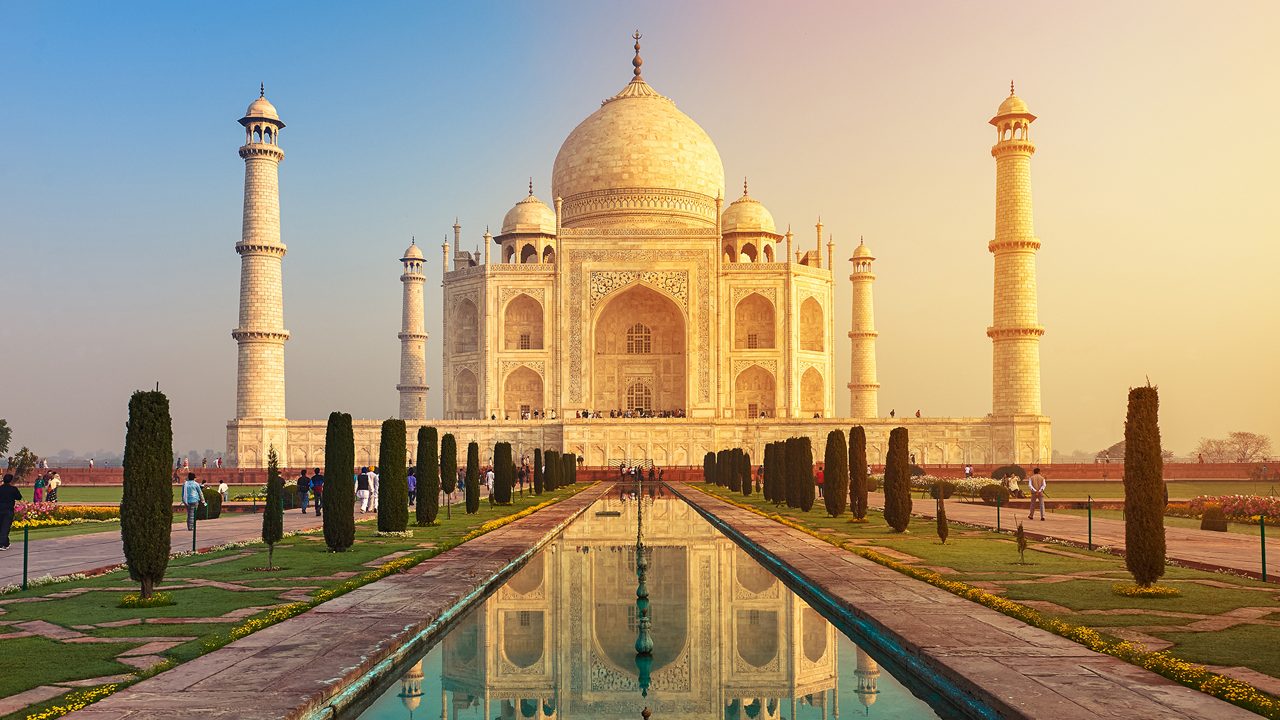
Agra is synonymous with the Taj Mahal, and rightly so - this marble mausoleum is India's most visited monument and one of the New Seven Wonders of the World. Built by Emperor Shah Jahan as a tomb for his wife Mumtaz Mahal, the Taj combines perfect symmetry, intricate decoration, and emotional resonance in a way that justifies its global reputation. But Agra offers beyond the Taj, with additional Mughal monuments, markets, and the abandoned city of Fatehpur Sikri nearby.
Taj Mahal
The Taj Mahal's beauty is most evident during sunrise or sunset when changing light transforms the white marble. The monument is closed on Fridays, so plan accordingly. Allow at least 2 hours to properly appreciate the mausoleum, the gardens, and the outlying buildings. Hire a guide to understand the symbolism in the architecture and calligraphy. The best approach is to arrive before opening time (6 AM) for sunrise, when the marble glows pink-orange and the crowds are thinner.
Agra Fort
Agra Fort is a massive red sandstone complex that served as Mughal power center before Shah Jahan moved the capital to Delhi. Built between 1565 and 1573 by Emperor Akbar, the fort contains palaces, mosques, and audience halls representing Mughal architectural evolution. The Diwan-i-Khas (Hall of Private Audience), Diwan-i-Am (Hall of Public Audience), and Musamman Burj (where Shah Jahan was imprisoned) are key highlights. The fort offers excellent Taj Mahal views from certain sections.
Fatehpur Sikri
Fatehpur Sikri, 40 kilometers from Agra, is a perfectly preserved abandoned Mughal capital. Emperor Akbar built this city in the 1570s but abandoned it within 15 years due to water shortages. The red sandstone buildings remain remarkably intact, creating a UNESCO World Heritage site that feels frozen in time. Key structures include the Buland Darwaza (world's tallest gateway), Panch Mahal palace, and the tomb of Salim Chishti. Fatehpur Sikri can be visited as a half-day trip from Agra.
Mehtab Bagh and Other Agra Sites
Mehtab Bagh, across the Yamuna River from the Taj Mahal, offers classic backlit views of the monument. It's particularly popular at sunset. The Itmad-ud-Daulah, often called the Baby Taj, is a smaller marble mausoleum that influenced Taj Mahal design. Sikandra houses Akbar's tomb in a serene garden setting. These sites provide fuller understanding of Mughal architecture and allow you to appreciate the Taj Mahal's uniqueness within the tradition.
3. Ayodhya - Lord Rama's Birthplace
Ayodhya is one of Hinduism's seven sacred cities and the birthplace of Lord Rama, according to Hindu tradition. Located on the banks of the Saryu River, Ayodhya has been a pilgrimage destination for centuries, with numerous temples marking sites associated with the Ramayana epic. The city has gained increased prominence with the construction of the grand Ram Mandir at the Ram Janmabhoomi site.
Ram Janmabhoomi Temple
The Ram Janmabhoomi complex marks the traditional birthplace of Lord Rama. The newly constructed Ram Mandir has become one of India's most visited religious sites. The temple's architecture combines traditional temple design with modern construction techniques. Visitors pass through security checkpoints before entering the sanctum. The atmosphere is intensely devotional, with continuous chants of "Jai Shri Ram." Note that photography restrictions may apply inside certain areas.
Other Ayodhya Temples
Hanuman Garhi, a temple dedicated to Lord Hanuman on a hilltop, offers panoramic views of Ayodhya. The Kanak Bhawan temple is believed to be the site where Sita, Rama's wife, was received after marriage. The Nageshwarnath Temple is an ancient Shiva shrine said to have been established by Kush, Rama's son. These temples provide a more contemplative alternative to the crowded Ram Janmabhoomi complex.
Saryu River and Ghats
The Saryu River is sacred in Hindu tradition and forms Ayodhya's eastern boundary. Riverfront ghats offer spaces for ritual bathing, meditation, and evening aarti ceremonies. The Saryu Aarti is less famous than Varanasi's Ganga Aarti but equally significant for devotees. Walking along the Saryu promenade provides perspective on Ayodhya as a living spiritual center rather than just temple tourism.
4. Prayagraj - The Sacred Confluence
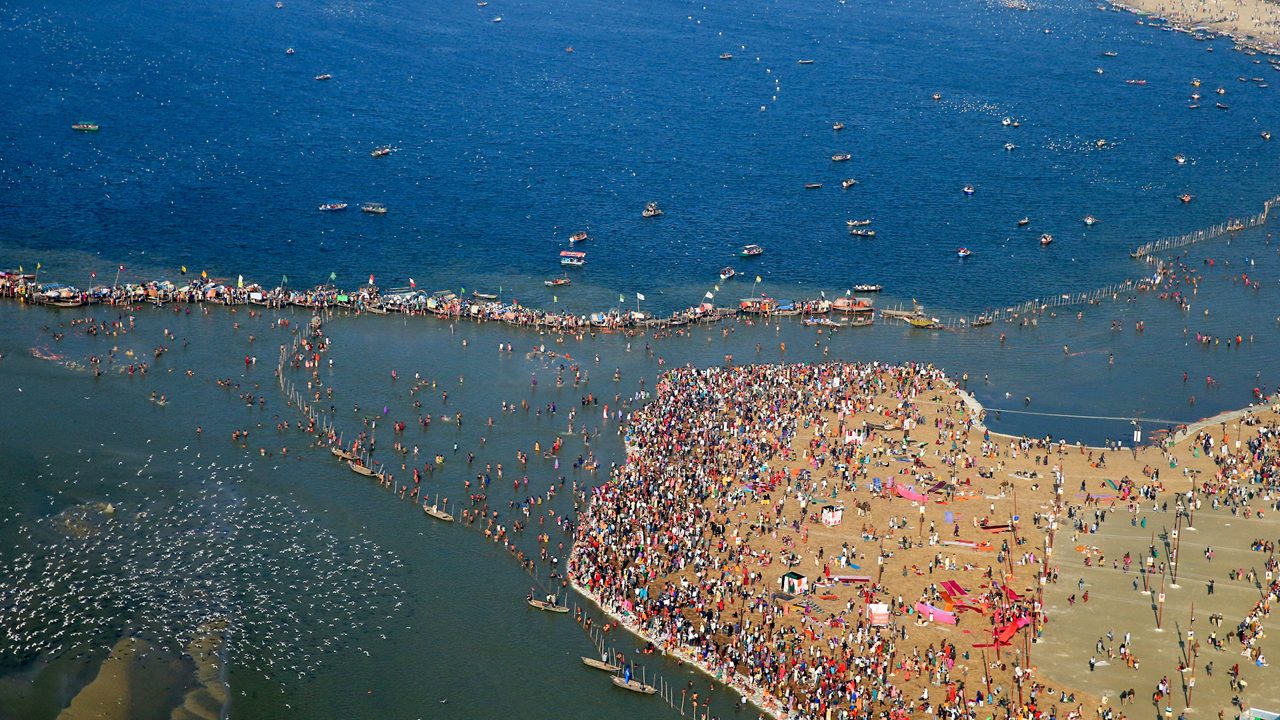
Prayagraj (formerly Allahabad) is famous for the Triveni Sangam - the sacred confluence of the Ganges, Yamuna, and mythical Saraswati rivers. This confluence is one of Hinduism's most important pilgrimage sites, where bathing during auspicious periods is believed to wash away all sins. Prayagraj also hosts the Kumbh Mela, arguably the world's largest religious gathering, which draws over 100 million pilgrims during the 55-day festival held every 12 years.
Triveni Sangam
The Sangam is the spiritual heart of Prayagraj, visible as the muddy Ganges merging with the clearer Yamuna waters. Boat operators take pilgrims to the exact confluence point for ritual bathing. The experience varies dramatically between normal days and festival periods. During Magh Mela (annual) and Kumbh Mela (12-yearly), temporary tent cities cover the riverbanks and the area transforms into one of Earth's most extraordinary human assemblies. Visit during normal periods for a more intimate experience.
Allahabad Fort
Built by Emperor Akbar in 1583, Allahabad Fort stands at the Sangam confluence and represents Mughal military architecture. The fort contains the Saraswati Koop, believed to be the source of the mythical Saraswati River. The fort's strategic location offers river views and historical context for understanding Prayagraj's importance. Note that parts of the fort are under military control and not accessible to civilians.
Anand Bhavan
Anand Bhavan was the ancestral home of the Nehru family and India's first Prime Minister, Jawaharlal Nehru. The building now houses a museum displaying personal belongings, photographs, and memorabilia related to the Nehru-Gandhi family. Visiting Anand Bhavan provides historical context for modern India and the role of UP's political leadership in independence and nation-building.
5. Mathura and Vrindavan - Krishna's Land
Mathura and Vrindavan, twin cities about 150 kilometers from Delhi, are deeply associated with Lord Krishna's life and legends. Mathura is Krishna's birthplace, while Vrindavan is where he spent his childhood performing divine plays. Together, these cities form the heart of Braj region, Krishna's pastoral playground. The area contains hundreds of temples, each marking locations from Krishna's mythology.
Mathura - Krishna Janmabhoomi
The Krishna Janmabhoomi Temple complex marks the traditional birthplace of Lord Krishna. The site contains a prison cell where Krishna was believed to have been born, now a small shrine. The complex has been developed extensively with multiple temples and religious institutions. The atmosphere is particularly vibrant during Janmashtami (Krishna's birthday) when the entire city celebrates with decorations, processions, and temple activities.
Vrindavan Temples
Vrindavan contains the famous Banke Bihari Temple, where Krishna's deity is believed to manifest in child form. The temple is unusual for having curtain-covered darshan (viewing) times when the deity is "put to sleep" or "awakened." The Prem Mandir, with its white marble architecture and light shows, represents modern temple construction. The ISKCON Temple brings international Hindu practice to Vrindavan's sacred geography. Each temple has its own rituals and atmosphere, so visit multiple to understand Vrindavan's diversity.
Govardhan Hill and Yamuna
Govardhan Hill, about 20 kilometers from Mathura, is where Krishna is said to have lifted the hill on his little finger to protect villagers from Indra's wrath. Devotees perform the Govardhan Parikrama (circumambulation), a 21-kilometer walk around the hill. The Yamuna River in Vrindavan has sacred ghats similar to Varanasi, though smaller in scale. Evening aarti at Keshi Ghat is particularly atmospheric.
6. Lucknow - The City of Nawabs
Lucknow, Uttar Pradesh's capital, offers a different cultural experience from the state's religious destinations. As capital of the Awadh kingdom under the Nawabs, Lucknow developed distinctive architecture, cuisine, and social customs that blend Persian, Mughal, and Indian influences. The city is known for refined Urdu culture, kebab cuisine, and the grand imambaras that dominate its historic center.
Bara Imambara
The Bara Imambara is Lucknow's most impressive building, completed in 1784 under Nawab Asaf-ud-Daula. The complex includes the central prayer hall, the Bhool Bhulaiya (labyrinthine maze), and Asafi Mosque. The Imambara's central hall is one of the world's largest arched constructions without central support. The Bhool Bhulaiya maze below the main building is a fascinating architectural puzzle that requires guided exploration to appreciate fully.
Chota Imambara and Rumi Darwaza
The Chota Imambara, also called Husainabad Imambara, is smaller but equally ornate, featuring chandeliers, calligraphy, and decorative elements. The nearby Rumi Darwaza is a 60-foot-high gateway that serves as Lucknow's visual emblem. Modeled after a similar gate in Istanbul, the Rumi Darwaza represents the artistic connections between Awadh and the wider Islamic world.
| Destination | Key Attractions | Best Season | Stay Duration |
|---|---|---|---|
| Varanasi | Ghats, Kashi Vishwanath, Sarnath | Oct-Mar | 2-3 days |
| Agra | Taj Mahal, Agra Fort, Fatehpur Sikri | Oct-Mar | 2 days |
| Ayodhya | Ram Mandir, Saryu Ghats | Oct-Mar | 1-2 days |
| Prayagraj | Triveni Sangam, Kumbh Mela | Winter/Magh Mela | 1-2 days |
| Lucknow | Imambaras, Rumi Darwaza, Food | Oct-Mar | 1-2 days |
British Residency and Chowk
The British Residency complex preserves the ruins of the compound where British residents survived the 1857 siege during India's first war of independence. The lawns, bullet-marked walls, and memorial church provide poignant reminders of colonial history. Chowk, Lucknow's old bazaar district, contrasts with formal monuments through street food culture - this is where you experience Awadhi cuisine in its authentic form, with kebab shops, biryani vendors, and sweet shops creating culinary pilgrimages.
7. Other Important UP Destinations
Beyond the major circuits, Uttar Pradesh contains additional sites worth considering depending on your interests. Kushinagar, where Buddha attained Parinirvana (final nirvana), is another essential Buddhist pilgrimage site that can be combined with Varanasi and Sarnath for a Buddhist circuit. The parinirvana stupa and Nirvana Temple mark the site of Buddha's death.
Dudhwa National Park in UP's terai region offers wildlife experiences including tigers, rhinos, and elephants in a forested setting near the Nepal border. Jhansi, in Bundelkhand region, contains an impressive fort and commemorates Rani Laxmibai, the warrior queen who fought British forces in 1857. Sravasti, where Buddha spent much of his monastic life, contains impressive ancient stupa ruins.
8. Best Time to Visit Uttar Pradesh
October to March is the ideal period for visiting Uttar Pradesh. Winter brings comfortable temperatures for extensive monument walking, temple exploration, and outdoor activities. This is also the peak festival season, with Diwali in October-November and Holi in March adding cultural dimension to sightseeing. Book accommodations well in advance if visiting during festival periods.
Summer from April to June brings intense heat, particularly in the plains, with temperatures regularly exceeding 40°C. Sightseeing during midday becomes challenging, though early morning and evening activities remain feasible. Summer is also when many schools have holidays, so temple sites may be crowded with pilgrims despite the heat.
Monsoon from July to September brings relief from heat but also high humidity, frequent rain, and potential flooding in river cities like Varanasi and Prayagraj. The countryside turns green, and some travelers appreciate the atmospheric quality of monsoon at spiritual sites. However, transportation disruptions and reduced monument access are possible during heavy rainfall.
9. How to Reach Uttar Pradesh
Uttar Pradesh is well-connected by air, rail, and road. The state has multiple airports including Lucknow, Varanasi, Agra, Prayagraj, and Gorakhpur, with flights connecting major Indian cities. For international travelers, Delhi's Indira Gandhi International Airport serves as the primary entry point, with easy onward connections to UP destinations by train or road.
Rail connections are extensive, with Varanasi, Lucknow, Allahabad, and Agra serving as major junctions. Train travel within UP is generally efficient and budget-friendly, though booking in advance is recommended, especially for AC classes. Road travel works well for routes like Delhi to Agra, Mathura, or Varanasi, with good highway infrastructure connecting major destinations.
10. Practical Tips for UP Visitors
- Dress modestly at religious sites, covering shoulders and knees as a minimum requirement.
- Remove shoes before entering temples and some religious compounds - carry slip-on footwear for convenience.
- Respect photography restrictions - many temple interiors prohibit cameras completely.
- Carry cash - smaller establishments and temple donations often prefer rupees over digital payments.
- Use registered guides at monuments for better historical context - negotiate rates clearly before starting.
- Be patient with queues - major religious sites often have wait times, especially during festivals.
- Stay hydrated during summer sightseeing - carry water bottles and plan indoor stops during midday.
- Try regional cuisine - Awadhi food in Lucknow, Braj cuisine in Mathura, and street food everywhere add to the experience.
- Use ride-sharing apps for city transport - they provide transparent pricing and trackable rides.
- Book accommodations in advance for Varanasi and Agra, especially during peak season and festivals.
Final Take
Uttar Pradesh offers India's most concentrated cultural and spiritual heritage. Varanasi's sacred ghats, the Taj Mahal's timeless beauty, Ayodhya's temples, Prayagraj's sacred confluence, Mathura and Vrindavan's Krishna heritage, and Lucknow's Nawabi culture together represent a complete introduction to India's religious and architectural traditions. The state's size means choosing focused destinations rather than attempting everything, but even a well-planned week covering Varanasi, Agra, and one or two other destinations provides an immersive experience of India's heartland. Visit between October and March for comfortable weather, prepare for the spiritual intensity, and approach Uttar Pradesh with openness to the cultural depth that makes this state special. For a deeper look at the Nawabi capital, see our guide to places to visit in Lucknow.
Location
Frequently Asked Questions
Q1.How many days required for Uttar Pradesh?
Q2.What is UP famous for?
Q3.Which is best place in UP?
Q4.Which are famous temples in UP?
Q5.Is Varanasi worth visiting?
Q6.What is special about Ayodhya?
Q7.What is best time to visit Taj Mahal?
Q8.What else to see in Agra besides Taj?
Q9.Is UP safe for tourists?
Q10.What should I eat in UP?
Recommended For You
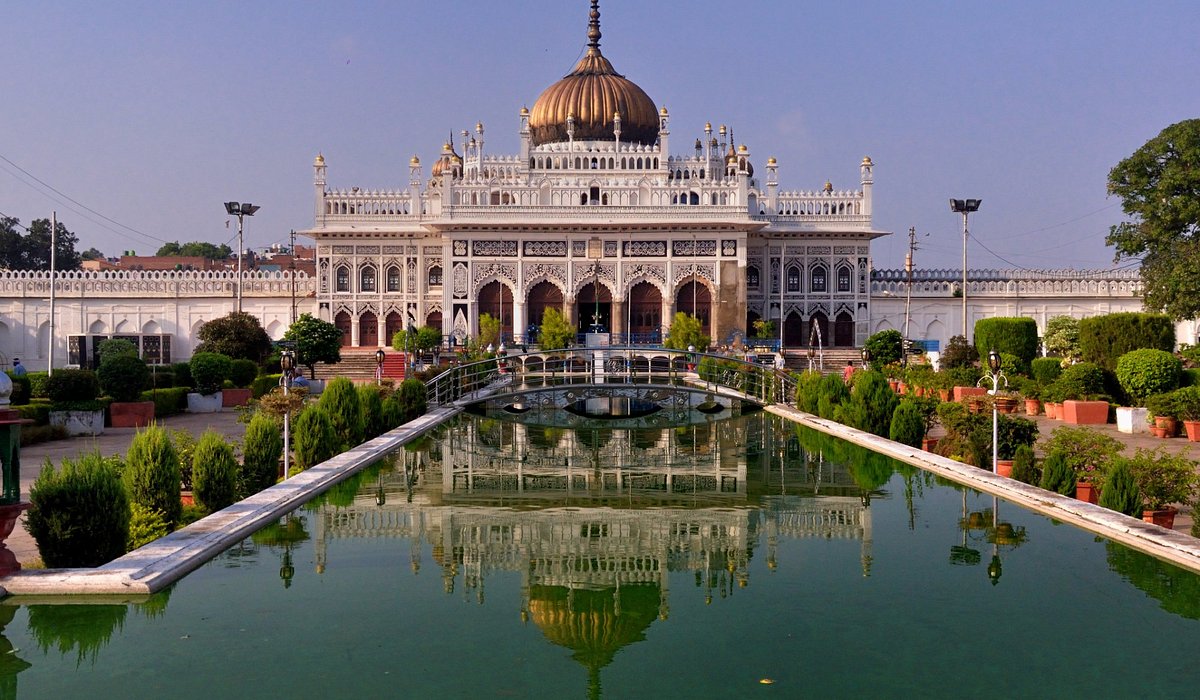
Best Places to Visit in Lucknow: Nawabi Heritage & Food Streets
Explore Lucknow top attractions including Bara Imambara, Rumi Darwaza, Residency and Hazratganj, with food trails, local tips, and travel planning.
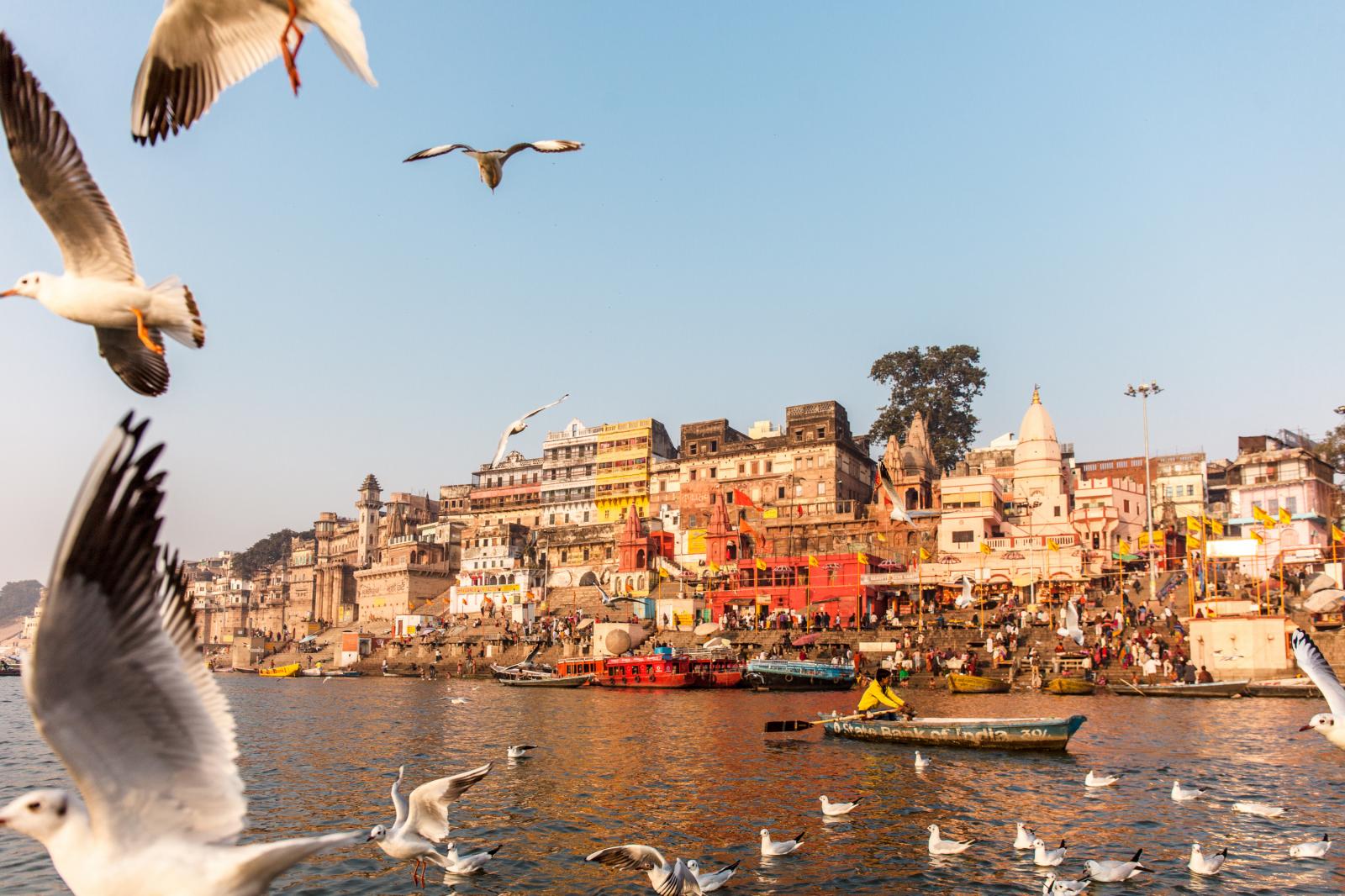
Best Time to Visit Varanasi: Weather, Ganga Aarti Season & Crowd Levels
Discover the best time to visit Varanasi with month-wise weather, Ganga Aarti comfort windows, festival crowd insights, and practical planning tips.
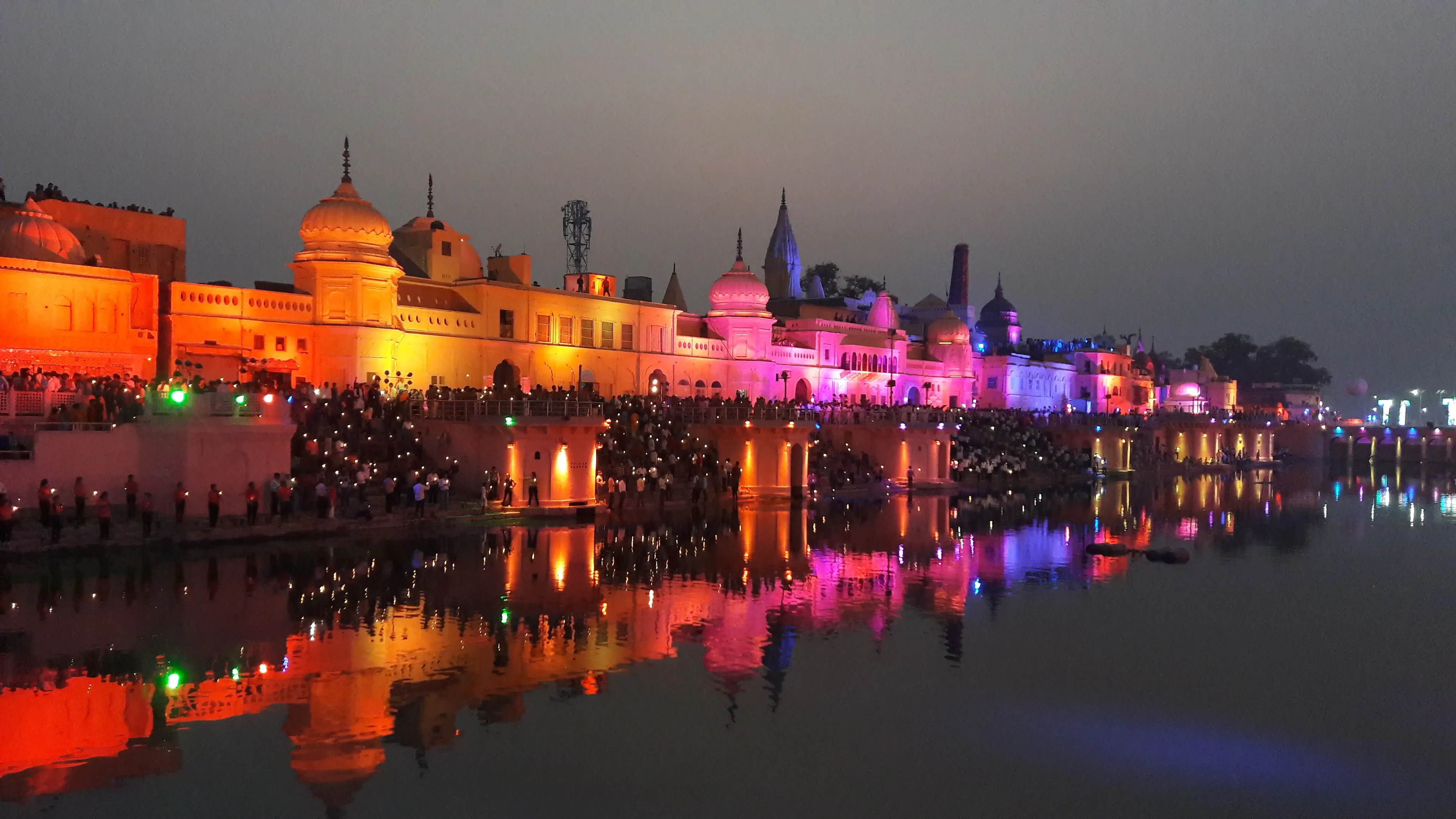
Places to Visit in Ayodhya: Temple Itinerary, Timings & Route
Plan your Ayodhya trip with practical temple-route ideas, day-wise itinerary options, budget planning, and first-time visitor guidance.
Never Miss an Adventure
Get the latest trekking guides, travel tips, and exclusive offers delivered straight to your inbox.
