Introduction: Welcome to the Crossroads of Europe and Asia
Nestled between the Black Sea and the Caucasus Mountains, Georgia is one of Europe's most underrated and captivating destinations. This small nation at the crossroads of Eastern Europe and Western Asia offers an intoxicating blend of ancient history, stunning natural landscapes, world-class wine culture, and legendary hospitality. Having traveled across the Caucasus extensively, I can confidently say that Georgia's unique charm comes from its ability to seamlessly blend thousands of years of tradition with modern vibrancy.
Georgia's story spans over 3,000 years, making it one of the world's oldest nations. As the birthplace of wine (archaeological evidence dates winemaking back to 6,000 BC), this proud country has preserved its unique language, alphabet, and Orthodox Christian faith despite centuries of invasions and domination by Persian, Ottoman, Mongol, and Russian empires. Today, independent Georgia stands as a testament to resilience, offering travelers an authentic experience that feels both familiar and exotic.
From the cave cities of Uplistsikhe to the modern streets of Tbilisi, from the vineyards of Kakheti to the dramatic peaks of Svaneti, Georgia rewards those who venture beyond the typical tourist trail. This comprehensive guide covers everything you need to know about exploring this Caucasian gem – the top attractions, practical travel information, cultural insights, and tips to make your Georgian adventure unforgettable.
Quick Facts: Georgia at a Glance
| Fact |
Details |
| Official Name |
Georgia (Sakartvelo) |
| Location |
Caucasus region, Europe/Asia border |
| Capital |
Tbilisi |
| Population |
3.7 million |
| Currency |
Georgian Lari (GEL) |
| Language |
Georgian (English widely spoken in tourist areas) |
| Religion |
Orthodox Christianity (85%) |
| Best Time to Visit |
May-June, September-October |
| Time Required |
7-10 days minimum |
| Trip Budget |
₹3,000-6,000/day ($40-80 USD) |
| Visa for Indians |
E-visa (free for 90 days) |
| Famous For |
Wine, food, churches, Caucasus Mountains |
Top 15 Things to Do in Georgia
1. Explore Tbilisi – The Charming Capital
Tbilisi, Georgia's capital since the 5th century, is a city of fascinating contrasts. Ancient sulfur baths coexist with modern architecture, Orthodox churches stand alongside synagogues and mosques, and narrow Old Town streets give way to wide Soviet-era avenues. The city's name derives from the Georgian word for warm (tbili), thanks to its famous natural hot springs.
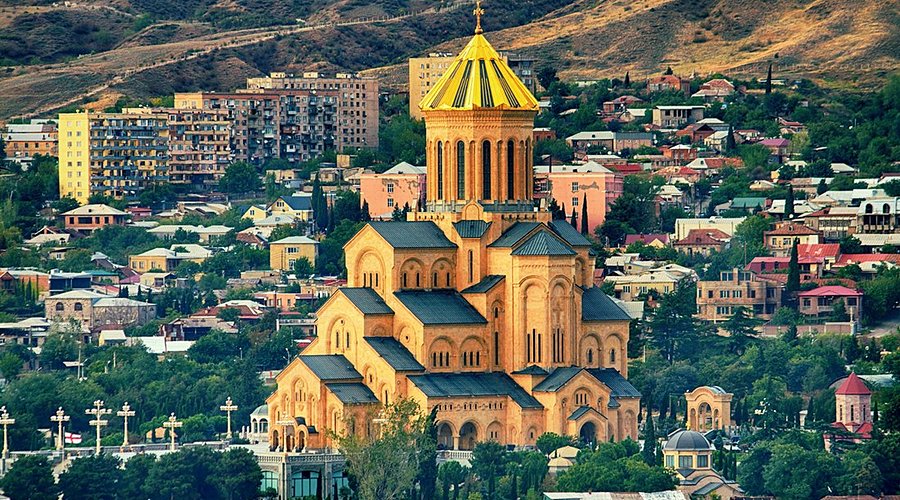
Start your exploration in the atmospheric Old Town (Altstadt), where winding cobblestone streets lead you past traditional houses with carved wooden balconies. The iconic Narikala Fortress, dating to the 4th century, overlooks the city from Sololaki Hill and offers panoramic views that are especially magical at sunset. Take the cable car up to the fortress for the best vantage point.
The Abanotubani (sulfur bath district) is essential to understanding Tbilisi's identity. These distinctive brick-domed baths have been operating for centuries, and soaking in the naturally warm mineral waters is a quintessential Georgian experience. Orbeliani Baths is the most famous – you can rent a private room and channel your inner pashas from the Silk Road era.
Time: 2-3 days | Best Area to Stay: Old Town or Vera district
Don't miss the Bridge of Peace, a modern glass-and-steel pedestrian bridge that has become a symbol of contemporary Georgia, or the Rezo Gabriadze Puppet Theatre, home to the world's most charming puppet shows.
2. Visit the Cave City of Uplistsikhe
One of Georgia's most fascinating archaeological sites, Uplistsikhe ("Lord's Fortress") is an ancient rock-hewn town dating back to the early Iron Age. Carved directly into a rocky plateau along the Mtkvari River, this incredible city once housed 20,000 people and featured streets, churches, residences, a theatre, and even a prison – all cut from the living rock.
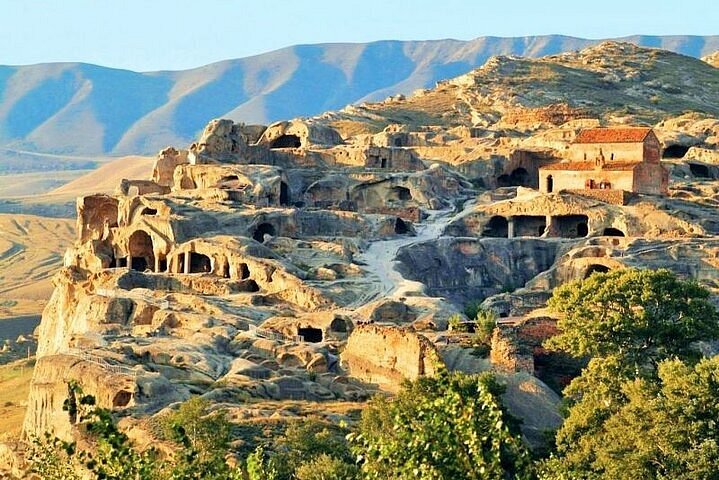
Walking through Uplistsikhe's network of tunnels, caves, and ancient structures feels like entering another world. The site's strategic location on the Silk Road made it an important trading center for over 3,000 years. The most impressive structures include the huge hall known as the "Prince's Palace," the ancient pharmacy, and the 9th-century three-nave basilica – one of Georgia's oldest churches.
Distance from Tbilisi: 80 km (1.5 hours) | Entry: 15 GEL (₹450)
The panoramic views of the Mtkvari River valley from the top of the cave city are spectacular. Combine this visit with nearby Gori (birthplace of Stalin) for a full day trip from Tbilisi.
3. Wine Tasting in Kakheti Region
As the world's oldest wine-producing region (8,000 vintages and counting), Kakheti is Georgia's wine heartland. The unique Georgian winemaking tradition involves fermenting grapes in large clay vessels called qvevri, which are buried underground – a method recognized by UNESCO as part of the Intangible Cultural Heritage of Humanity.
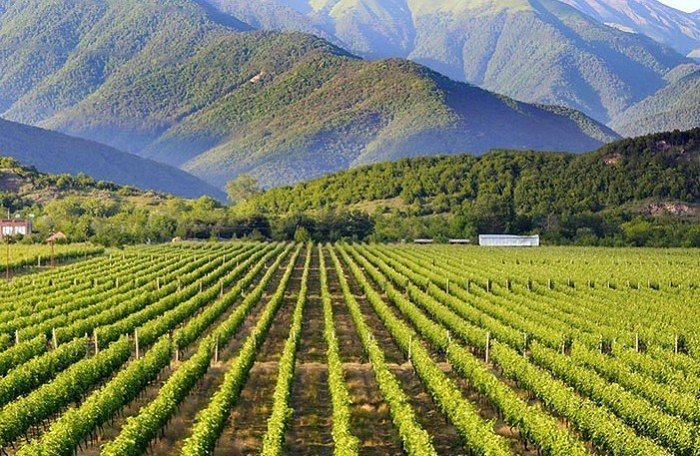
The town of Sighnaghi, nicknamed the "City of Love," offers the perfect base for wine exploration. This charming hilltop town features 18th-century walls with 23 towers, cobblestone streets, and stunning views of the Alazani Valley and the Caucasus Mountains beyond. Walk the 4.5 km city wall for breathtaking panoramic views.
Visit traditional wineries like Pheasant's Tears, where owner John Wurdeman (an American who fell in love with Georgia) makes wine using ancient methods and offers fantastic tours. The Okro's Winery in nearby Kardenakhi provides an authentic family-run experience. Don't miss trying unique Georgian grape varieties like Saperavi (red) and Rkatsiteli (white) that you'll rarely find outside the country.
Best Time: September (harvest season) | Wine Tour: 50-150 GEL (₹1,500-4,500)
4. Marvel at Gergeti Trinity Church
Perched dramatically at 2,170 meters atop Mount Kazbegi, the 14th-century Gergeti Trinity Church (Tsminda Sameba) is arguably Georgia's most iconic sight. The isolated church against the backdrop of the 5,054-meter Mount Kazbek creates one of the Caucasus' most spectacular panoramas – a scene that has graced countless postcards and travel magazines.
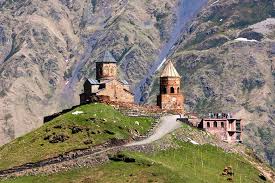
The village of Stepantsminda (formerly Kazbegi) serves as the base for visiting the church. You can hike up (2-3 hours each way) or hire a 4x4 taxi to navigate the steep mountain road. The sunrise views from the church are legendary – watching the first rays paint Mount Kazbek's snowy peak in golden hues is a spiritual experience, regardless of your religious beliefs.
Distance from Tbilisi: 160 km (3 hours) | Hiking Time: 2-3 hours one way
For the adventurous, the hike to the Gergeti Glacier offers even more spectacular mountain scenery. The area also offers excellent opportunities for horse riding and paragliding in summer.
5. Discover Svaneti's Medieval Towers
The remote region of Upper Svaneti, a UNESCO World Heritage site, feels frozen in time. This high-altitude valley is dotted with dozens of medieval stone towers – some dating to the 9th century – that once served as defensive fortifications and status symbols for Svan families. The dramatic tower landscapes against the backdrop of 5,000-meter peaks are unlike anything else in Europe.
The village of Ushguli, at 2,410 meters, is one of Europe's highest continuously inhabited settlements and crown jewel of Svaneti. The village's collection of 30+ towers, with Mount Shkhara (Georgia's highest peak at 5,193m) towering above, creates an otherworldly atmosphere. The isolation has preserved unique Svan traditions, including their own language and ancient Orthodox Christian practices.
Getting There: 4WD from Mestia (8-9 hours from Tbilisi total) | Best Time: June-September
The journey to Svaneti is part of the adventure – the dramatic road through the Inguri Gorge offers jaw-dropping scenery. Stay in a family guesthouse in Mestia or Ushguli for an authentic experience of Svan hospitality and cuisine.
6. Explore the Historic Towns of Mtskheta
Just 20 km from Tbilisi, Mtskheta is Georgia's spiritual heart and ancient capital. This UNESCO World Heritage city was founded in the 5th century BC and served as the capital of the early Georgian kingdom for centuries. Today, it remains the headquarters of the Georgian Orthodox Church.
The 11th-century Svetitskhoveli Cathedral is Georgia's largest religious building and one of its most sacred sites. Legend holds that Christ's robe is buried here, and the cathedral's interior houses some of Georgia's most important religious relics. The architectural significance of this masterpiece – which influenced countless Caucasian churches – cannot be overstated.
The Jvari Monastery (6th century), perched on a hilltop at the confluence of the Mtkvari and Aragvi rivers, offers spectacular views of Mtskheta and the surrounding countryside. This cross-shaped church is one of Georgia's oldest and most architecturally significant religious buildings.
Time: Half day from Tbilisi | Entry: Free (donations appreciated)
7. Relax in Batumi on the Black Sea
Georgia's charming Black Sea port city of Batumi offers a completely different side of the country. This subtropical resort town blends elegant 19th-century architecture, futuristic modern developments, and a relaxed beach atmosphere. The temperature rarely drops below 10°C even in winter, making it Georgia's warmest city.
Batumi's famous Boulevard, a 7-km seaside promenade, is perfect for evening strolls. The old town features beautiful colonial-era buildings, while the new town boasts striking architecture like the Ali and Nino Monument (a moving steel sculpture that rotates to merge into a single figure) and the Sheraton Batumi Hotel's twist design.
The city is famous for its seafood, casinos, and vibrant nightlife. Don't miss the Botanical Garden, one of the world's oldest and most diverse, featuring plant species from every continent. The nearby Gonio Fortress (1st century AD) is one of the best-preserved Roman forts in the region.
Best Time: June-September | Distance from Tbilisi: 400 km (5-6 hours by train)
8. Visit the Prometheus Cave
Located near Tskaltubo in western Georgia, the Prometheus Cave (also known as Kumistavi Cave) is a spectacular 1.6 km long karst cave filled with impressive stalactites, stalagmites, underground rivers, and waterfalls. The cave's dramatic lighting and well-maintained walkways make it accessible to most visitors.
The cave was discovered in 1984 and opened to tourists in 2011. Named after the Greek mythological figure who brought fire to humanity, the cave features 22 halls, each with unique formations and names like the "Hall of Love," "Hall of Argonauts," and "Hall of Iberia." The underground boat ride along the cave's river is a particular highlight.
Distance from Kutaisi: 20 km | Entry: 25 GEL (₹750) | Tour: 1-1.5 hours
Combine this with a visit to nearby Sataplia Nature Reserve, which has a smaller cave plus dinosaur footprints!
9. Taste Georgian Cuisine
Georgian cuisine is one of the world's most delicious but underrated culinary traditions. Influenced by Mediterranean, Persian, Ottoman, and Russian cooking, Georgian food emphasizes fresh ingredients, aromatic herbs, and complex flavors that vary by region.
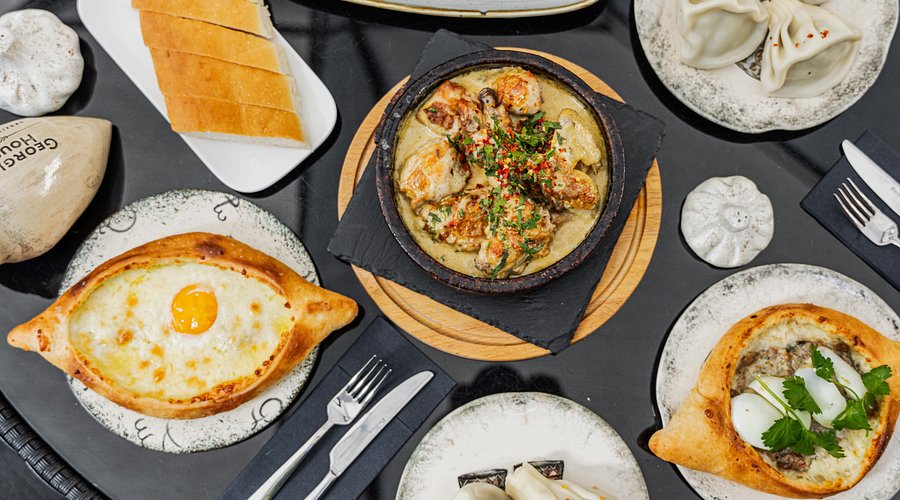 Must-try dishes include:
- Khachapuri: Cheese-filled bread in various regional styles. The Adjarian khachapuri (boat-shaped with egg and butter on top) is legendary.
- Khinkali: Juicy soup dumplings filled with spiced meat, broth, and herbs. Eating them is an art – bite the top, sip the soup, then eat the rest.
- Khinkali: Traditional walnut-heavy stews like chakapuli (lamb with tarragon and plum) and chakhokhbili (chicken with herbs).
- Churchkhela: Candle-shaped candy made from grape must and walnuts – the ultimate Georgian energy bar.
For the full experience, try a supra (traditional feast), complete with toasts led by a tamada (toastmaster). Georgian wine will flow freely!
10. Hike in the Caucasus Mountains
The Caucasus Mountains offer some of Europe's most spectacular and least crowded hiking. Whether you're looking for challenging multi-day treks or gentle day walks, Georgia's mountains deliver dramatic scenery: jagged peaks, glaciers, alpine meadows, and remote villages.
Popular trekking areas include:
- Kazbegi region: Day hikes to Gergeti Glacier, Sabertse Pass, and Abel Pass offer stunning mountain scenery.
- Svaneti: Multi-day treks between villages like Ushguli, Adishi, and Iprari through dramatic valleys.
- Tusheti: Remote mountain region with traditional towers and excellent hiking (accessible only in summer).
Best Season: June-September | Guide Recommended for multi-day treks
The Transcaucasian Trail, a long-distance hiking route under development, will eventually connect Georgia, Armenia, and Azerbaijan through the most scenic mountain landscapes.
11. Visit Vardzia Cave City
While Uplistsikhe is ancient, Vardzia is simply spectacular. This 12th-century cave monastery carved into a cliff face stretches for 500 meters and includes 13 levels, 6,000 caves, a church, throne room, hundreds of living cells, and even an elaborate water supply system.
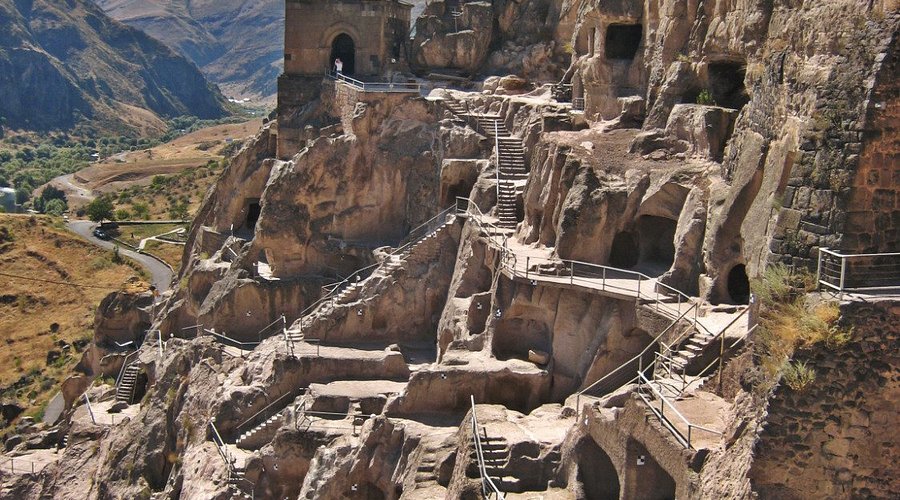 Built under King Giorgi III and completed by his famous daughter Tamar (Georgia's greatest ruler), Vardzia was designed as a refuge from invading Mongols. The cave city could house 50,000 people and featured everything from a bakery to scriptoriums where monks copied manuscripts. Today, about 300 caves remain accessible after a 17th-century earthquake collapsed much of the complex.
The dramatic cave dwellings clinging to the cliff face are mind-boggling, but it's the Church of the Dormition, with its beautiful 12th-century frescoes depicting Queen Tamar, that's the spiritual heart of Vardzia.
Distance from Tbilisi: 230 km (3-4 hours) | Entry: 15 GEL (₹450)
Built under King Giorgi III and completed by his famous daughter Tamar (Georgia's greatest ruler), Vardzia was designed as a refuge from invading Mongols. The cave city could house 50,000 people and featured everything from a bakery to scriptoriums where monks copied manuscripts. Today, about 300 caves remain accessible after a 17th-century earthquake collapsed much of the complex.
The dramatic cave dwellings clinging to the cliff face are mind-boggling, but it's the Church of the Dormition, with its beautiful 12th-century frescoes depicting Queen Tamar, that's the spiritual heart of Vardzia.
Distance from Tbilisi: 230 km (3-4 hours) | Entry: 15 GEL (₹450)
12. Explore Borjomi-Kharagauli National Park
Georgia's largest national park (85,047 hectares) is one of Europe's last intact mountain wilderness areas. Located in the Lesser Caucasus, the park protects diverse ecosystems from sub-alpine forests to rocky peaks and is home to brown bears, wolves, lynx, and numerous bird species.
The park offers well-marked trails ranging from easy day walks to challenging multi-day treks. The route from the tourist information center to the Amarati Trail is popular, offering beautiful forest scenery and the chance to spot wildlife. The park's mineral springs have made nearby Borjomi town famous – the Borjomi mineral water is Georgia's most famous export.
Entry: Free | Guide: 50 GEL/day (₹1,500) | Best Time: May-October
13. Visit the Stalin Museum in Gori
Whether you admire or revile him, Joseph Stalin remains one of history's most influential figures, and this fascinating museum in his birthplace of Gori is essential to understanding Georgia's Soviet past. The museum houses Stalin's personal railway carriage (in which he traveled to Yalta and Potsdam conferences), his death mask, numerous photos, gifts from world leaders, and his small childhood home.
The museum's propaganda-filled presentation offers a window into the Stalin cult of personality. A visit here, combined with exploring Gori's medieval fortress, makes for an intriguing half day.
Entry: 15 GEL (₹450) | Time: 1-2 hours | Combine with Uplistsikhe
14. Experience Georgian Polyphonic Singing
Georgian polyphonic singing, recognized by UNESCO as a Masterpiece of the Oral and Intangible Heritage of Humanity, is one of the world's oldest and most complex musical traditions. This three-part singing style, which predates Christianity, creates hauntingly beautiful harmonies that seem to come from another world.
Attend a concert in Tbilisi, or better yet, visit a rural village where singing remains part of daily life. The songs, often accompanied by the chuniri (three-stringed bowed instrument) and panduri (three-stringed lute), tell stories of love, war, harvest, and spiritual devotion. Many guesthouses arrange informal singing demonstrations.
15. Discover the Martvili Canyon
One of Georgia's most spectacular natural wonders, Martvili Canyon features emerald-green water cascading through 40-meter-high limestone cliffs. The canyon's dramatic rock formations, waterfalls, and caves create a magical atmosphere that feels like a film set.
You can take a boat ride (300 meters) along the canyon's river, walk the suspended footbridge, and hike the trails that offer different perspectives of this natural wonder. The nearby Abasha Falls add to the area's allure.
Distance from Kutaisi: 50 km | Entry: 17 GEL (₹510) | Boat: 15 GEL extra (₹450)
7-Day Georgia Itinerary
Classic Caucasus Circuit
| Day |
Location |
Activities |
| Day 1-2 |
Tbilisi |
Old Town exploration, Narikala Fortress, sulfur baths, wine bars |
| Day 3 |
Mtskheta & Gori |
Svetitskhoveli Cathedral, Jvari Monastery, Stalin Museum, Uplistsikhe |
| Day 4-5 |
Stepantsminda |
Gergeti Trinity Church, hiking in Kazbegi region, mountains |
| Day 6-7 |
Kakheti Region |
Sighnaghi, wine tasting, monastery visits, return to Tbilisi |
10-Day Extended Itinerary
| Day |
Location |
Activities |
| Day 1-3 |
Tbilisi |
City exploration, day trips to Mtskheta, David Gareja |
| Day 4-5 |
Stepantsminda |
Gergeti Church, hiking to Gergeti Glacier |
| Day 6-7 |
Svaneti |
Mestia towers, Ushguli village, medieval towers |
| Day 8-9 |
Kakheti |
Sighnaghi, wine tours, monastery visits |
| Day 10 |
Tbilisi |
Shopping, souvenir hunting, departure |
Georgia Travel Cost
| Expense Category |
Budget Traveler |
Mid-Range Traveler |
| Accommodation |
₹800-1,200 (hostels/guesthouses) |
₹2,500-4,500 (hotels) |
| Food |
₹1,000-1,500 (local eateries) |
₹2,000-3,500 (restaurants) |
| Transport |
₹500-800 (marshrutkas/buses) |
₹1,500-2,500 (private transfers) |
| Activities |
₹500-1,000 |
₹1,500-3,000 |
| DAILY TOTAL |
₹3,000-4,500 |
₹7,500-13,500 |
| 7-DAY TOTAL |
₹21,000-31,500 |
₹52,500-94,500 |
Best Time to Visit Georgia
| Season |
Months |
Temperature |
Best For |
| Spring |
April-May |
15-25°C |
Wildflowers, fewer crowds, lower prices |
| Summer |
June-August |
20-30°C |
Hiking, mountain access, festivals |
| Autumn |
Sept-Oct |
15-25°C |
Wine harvest, pleasant weather, hiking |
| Winter |
Nov-March |
-5 to 10°C |
Skiing (Gudauri, Bakuriani), fewer tourists |
How to Reach Georgia
From India
Direct Flights: Currently no direct flights from India to Georgia.
Connecting Flights: Fly via Dubai (Emirates), Doha (Qatar Airways), Istanbul (Turkish Airlines), or Warsaw (LOT)
Flight Time: 7-9 hours including layover
Major Airlines: Air India, Turkish Airlines, Qatar Airways, Emirates, flydubai
Airports in Georgia: Tbilisi International (TBS), Kutaisi International (KUT), Batumi International (BUS)
Visa for Indians
Visa Type: E-visa (electronic)
Cost: FREE for 90-day single entry
Processing Time: 3-5 business days
Required Documents: Passport (6 months validity), return ticket, hotel booking, travel insurance
Official Website: evisa.ge
Validity: 90 days within 180-day period
Getting Around Georgia
Transport Options
- Marshrutkas (minibuses): The most common and budget-friendly way to travel between cities. They depart when full and are faster but less comfortable than buses. Fares: ₹100-300 ($1-4) depending on distance.
- Trains: Georgian Railway connects major cities. The Tbilisi-Batumi overnight train is scenic and convenient. Prices: ₹400-1,500 ($6-22) depending on class.
- Private Taxis: Can be hired for day trips or intercity travel. Negotiate prices or use apps like Bolt (Georgia's version of Uber). Tbilisi-Batumi: ₹4,000-6,000 ($60-90).
- Rental Cars: Available in Tbilisi. Consider only if comfortable with mountain roads and aggressive driving. Daily: ₹3,000-5,000 ($45-75).
- Domestic Flights: Vanilla Air connects Tbilisi-Batumi-Mestia in summer. Flight time: 40 minutes. Prices: ₹4,000-8,000 ($60-120).
Where to Stay in Georgia
Tbilisi
- Old Town: Atmospheric, close to attractions, lots of restaurants and wine bars. Perfect for first-time visitors.
- Vera District: Upmarket area with parks, cafes, and embassy residences. Quieter than Old Town.
- Saburtalo: Residential district with metro access, good value hotels, shopping malls.
Stepantsminda (Kazbegi)
- Guesthouses: Family-run with home-cooked meals and mountain views. Prices: ₹1,500-3,500 ($22-52).
- Rooms Hotel Kazbegi: Luxury option with spectacular views. ₹8,000-15,000 ($120-225).
Sighnaghi (Kakheti)
- Old Town Guesthouses: Traditional family homes with balcony views of the Alazani Valley.
- Wineries: Several vineyards offer accommodation with wine-tasting packages.
Georgian Food Guide
Must-Try Dishes
- Khachapuri – Georgia's national dish, cheese-filled bread. Regional variations include Imeretian (circular), Adjarian (boat-shaped with egg), and Megrelian (extra cheese).
- Khinkali – Soup dumplings filled with spiced meat and herbs. Eat by biting the top, sipping the broth, then eating the rest. Don't eat the tough top knot!
- Chashushuli – Beef or veal stew with tomatoes, herbs, and spices.
- Lobio – Slow-cooked red beans with herbs and spices.
- Pkali – Vegetable spreads (spinach, beet, etc.) with ground walnuts and spices.
- Chakhokhbili – Chicken stew with tarragon, tomatoes, and herbs.
- Churchkhela – Walnuts threaded on string, dipped in grape must, and dried. The perfect snack!
- Nigvziani Badrijani – Eggplant rolls with walnut filling.
- Kuchmachi – Chicken liver or gizzards with walnuts and pomegranate.
- Kada – Traditional pastry with cheese or bean filling.
Dining Etiquette
- Supra: If invited to a traditional feast, accept! These elaborate meals feature endless toasts led by a tamada.
- Toasting: Georgians take toasting seriously. Wait your turn, make eye contact, and drink after saying "Gaumarjos!" (Cheers!)
- Sharing: Meals are communal. Don't be surprised if your plate is constantly refilled.
- Wine: Georgia makes excellent wine. Try local varieties – Saperavi, Rkatsiteli, Mtsvane.
- Chacha: Grape pomace brandy (40-60% ABV). Potent! Usually offered as a digestif.
Travel Tips for Georgia
Cultural Etiquette
- Guest is God: Georgians treat guests like royalty. You'll likely be invited into homes for food and wine – accept!
- Dress Modestly: Especially when visiting churches and monasteries. Women should cover their heads (scarves usually available at entrance).
- Respect Elders: Georgian society is hierarchical. Show respect to older people.
- Toast Ritual: During supra, never toast before the tamada or interrupt someone's toast.
- Gift Giving: If invited to someone's home, bring pastries, wine, or chocolate.
- Photography: Ask permission before photographing people, especially in rural areas.
Safety
- Very Safe: Georgia is one of Europe's safest destinations. Violent crime is rare.
- Driving: Road accidents are the main risk. Avoid night driving in mountains.
- Border Regions: Avoid areas near Abkhazia and South Ossetia (Russian-backed breakaway regions).
- Tap Water: Safe to drink in Tbilisi and major cities. Stick to bottled water in rural areas.
- Medical: Carry basic medications. Good hospitals in Tbilisi, limited in rural areas.
Connectivity
- SIM Cards: Magti, Geocell, and Silknet offer good coverage. Tourist SIMs available at airport. Price: ₹150-300 ($2-4).
- WiFi: Widely available in hotels, restaurants, and cafes in cities.
- Language: Georgian is the official language. Russian is understood by older generations. English is widely spoken in tourist areas.
Packing Essentials
- Layers: Mountain weather changes quickly. Pack for all conditions.
- Comfortable Shoes: Lots of walking on cobblestones and uneven surfaces.
- Modest Clothing: For church visits (cover shoulders and knees).
- Sun Protection: High altitude means strong UV rays.
- Power Adapter: Type C and F plugs (European standard). 220V.
- Cash: Credit cards accepted in cities, but cash is essential in rural areas.
Money-Saving Tips
- Eat Like a Local: Try khachapuri and khinkali at local bakeries instead of restaurants.
- Stay in Guesthouses: Family-run guesthouses are cheaper and more authentic than hotels.
- Use Marshrutkas: These minibuses are the cheapest way to travel between cities.
- Free Walking Tours: Available in Tbilisi – great way to orient yourself.
- Tap Water: Safe to drink in Tbilisi – no need to buy bottled water.
- Shoulder Season: Visit in May or October for better prices and fewer crowds.
Georgia vs. Armenia and Azerbaijan
Many travelers combine Georgia with its Caucasian neighbors. Here's how Georgia compares:
| Aspect |
Georgia |
Armenia |
Azerbaijan |
| Vibe |
Mediterranean, relaxed, wine-focused |
More somber, spiritual, ancient churches |
Modern, oil-rich, blend of East-West |
| Landscape |
Green, mountains, beaches |
Mountains, lakes, canyons |
Mountains, deserts, Caspian coast |
| Food |
Cheese, bread, herbs, wine |
Grilled meats, fresh herbs, brandy |
Rice, meat, saffron, tea |
| Budget |
₹3,000-6,000/day |
₹2,500-5,000/day |
₹3,500-7,000/day |
| Transport |
Good marshrutka network |
Less developed |
Good, more expensive |
| Tourism |
Developed, visitor-friendly |
Emerging, fewer tourists |
Emerging, more expensive |
Conclusion
Georgia is a destination that exceeds expectations in every way. From the moment you arrive, you'll be welcomed with the legendary Georgian hospitality that makes visitors feel like family rather than tourists. The country's unique location at the crossroads of civilizations has created a culture that's both distinct and familiar, blending influences from Europe, Asia, and the Middle East into something entirely its own.
What makes Georgia special isn't just its spectacular churches, dramatic mountains, or ancient wine tradition – it's the genuine warmth of the people, the pride in their heritage, and the joy they take in sharing it with visitors. Whether you're sipping wine in a Kakheti cellar, hiking to Gergeti Trinity Church at sunrise, or getting lost in Tbilisi's Old Town, Georgia rewards curiosity and slow travel.
The practicalities are straightforward: affordable prices, good infrastructure, easy visa processes, and excellent food make Georgia accessible to all types of travelers. Yet it retains an authentic feel that's increasingly rare in Europe's more discovered destinations.
Don't make the mistake of rushing through Georgia in three days. This is a country that rewards those who take time to explore – to linger over long meals with endless toasts, to hike its mountain trails, to learn a few words of this ancient language, to understand the complex history behind every church and fortress.
Pack your bags, bring your appetite and your hiking boots, and prepare to fall in love with the Caucasus. Georgia is waiting – and the Georgians are ready to welcome you with open arms and full wine glasses. Gaumarjos! (Cheers!)
If you're planning to explore more of the Caucasus region, consider extending your trip to include
Armenia's ancient monasteries and dramatic landscapes or
Azerbaijan's modern capital and fire temples. For wine enthusiasts specifically interested in Georgia's 8,000-year-old winemaking tradition, our complete guide to Georgian wine regions and varieties offers deeper insight into the world's oldest wine culture. Adventure travelers might also enjoy our
detailed guide to trekking in the Caucasus, covering multi-day routes in Svaneti, Tusheti, and beyond.