
Ajanta Ellora Caves: Complete Visit And Travel Plan

Neha Kapoor
February 20, 2026
Complete Ajanta Ellora travel guide featuring ancient cave temples, Buddhist paintings, Kailasa Temple, practical tips & visiting information.
Introduction to Ajanta and Ellora
Ajanta and Ellora, UNESCO World Heritage Sites located in Maharashtra, represent one of the most remarkable achievements of ancient Indian art, architecture, and religious expression. These rock-cut cave complexes, carved directly into cliff faces and hillsides, showcase centuries of evolution in Buddhist, Hindu, and Jain architecture, spanning from the 2nd century BCE to the 11th century CE. Together, they form one of India's most impressive cultural treasures and offer an unparalleled journey through India's spiritual and artistic heritage.
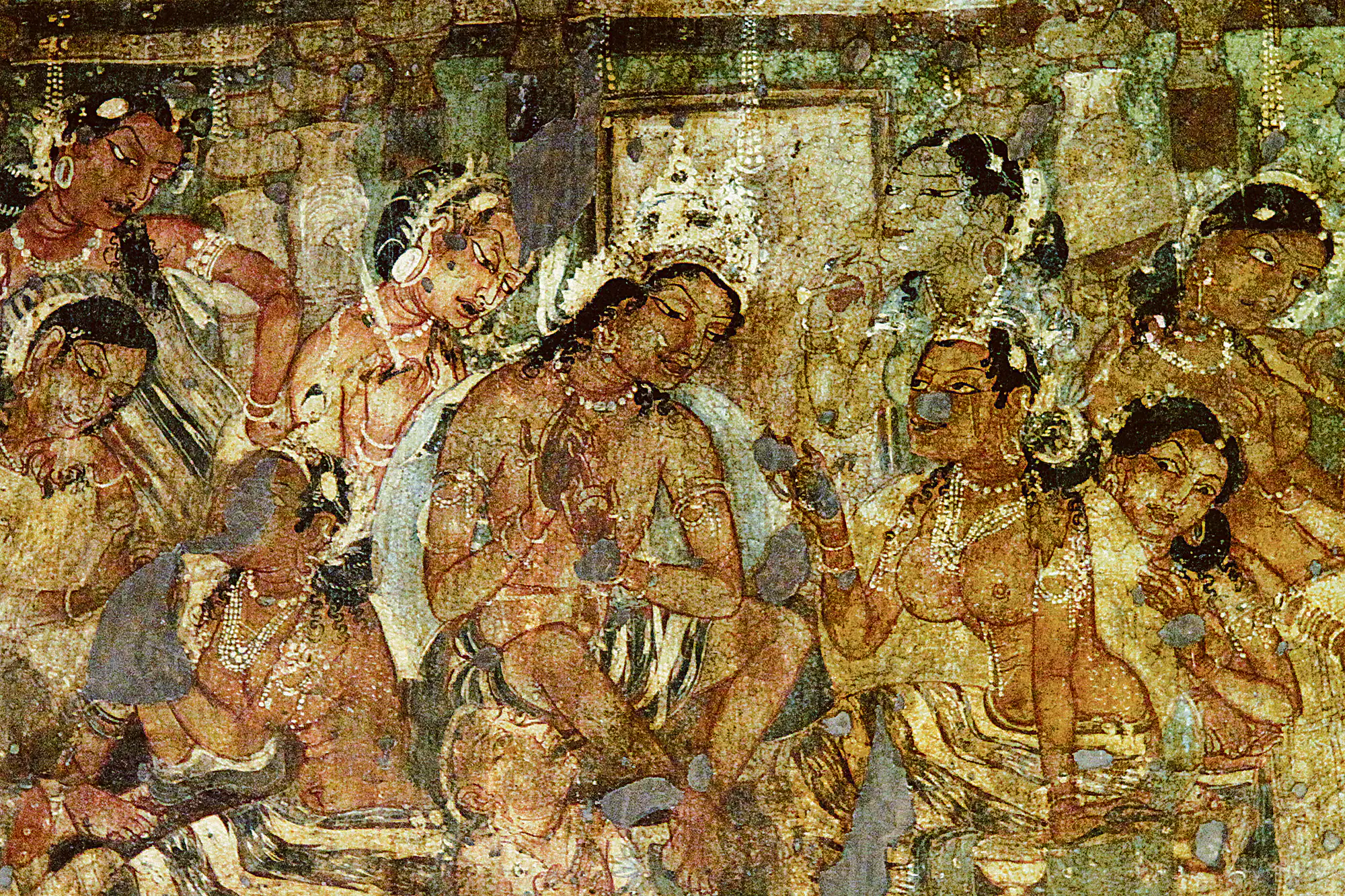
What makes these sites truly extraordinary is not just their antiquity but their artistic sophistication and religious significance. The Ajanta Caves, dating from the 2nd century BCE to about 480 CE, are renowned for their magnificent paintings - some of the finest surviving examples of ancient Indian art. These paintings, depicting the life of Buddha, Jataka tales, and various divinities, possess a grace, expressiveness, and attention to detail that rivals anything produced in the ancient world.
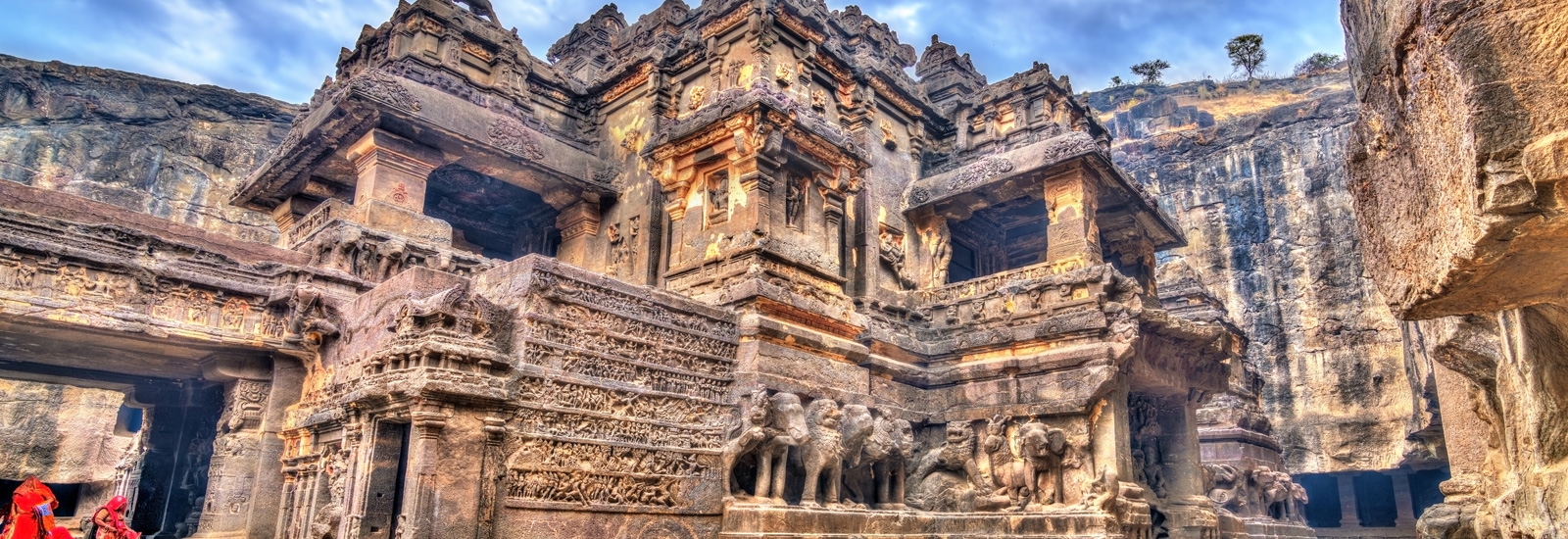
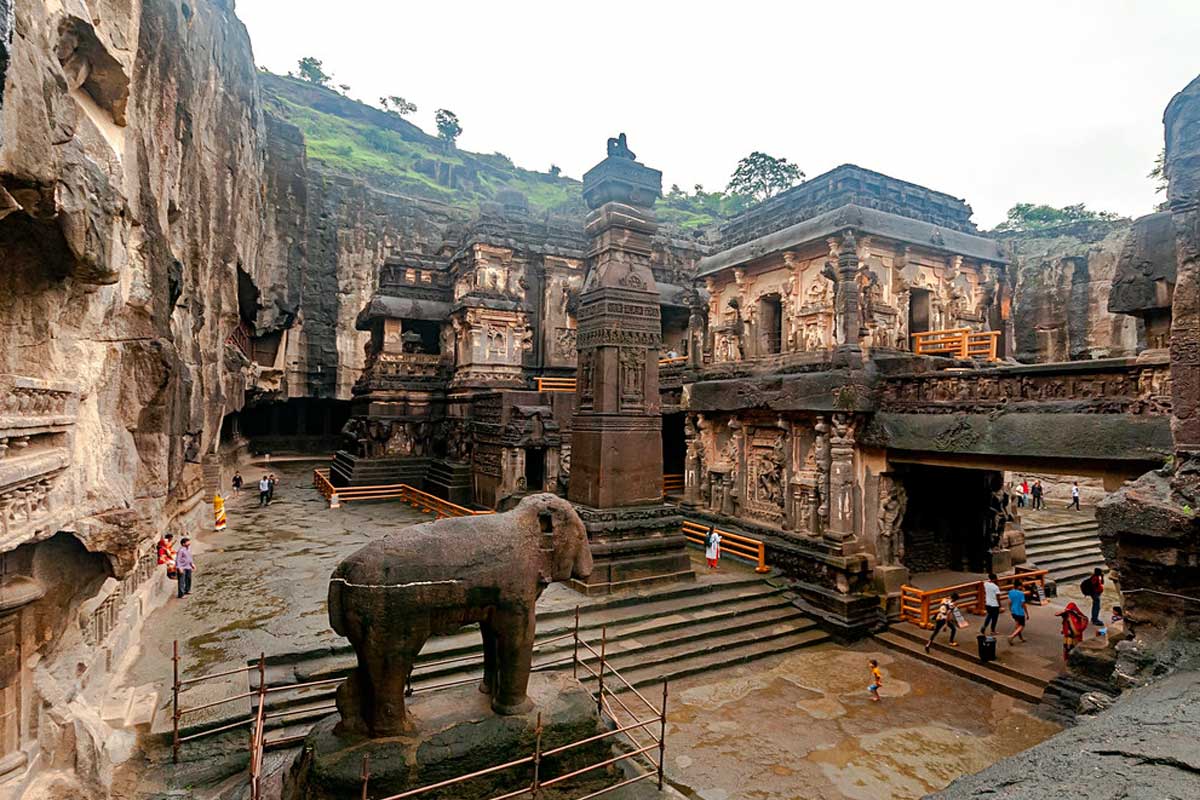
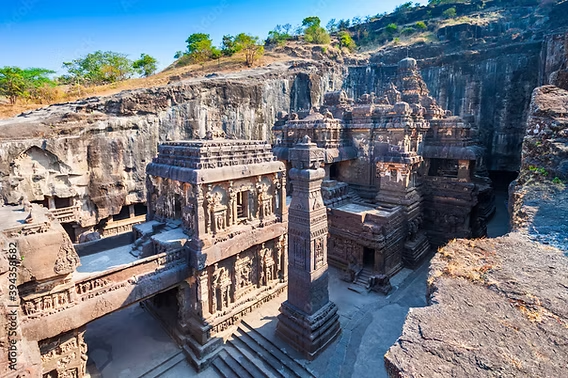
The Ellora Caves, slightly younger but equally impressive (constructed between the 6th and 11th centuries CE), showcase an even more diverse range of religious architecture. Here, Buddhist, Hindu, and Jain caves exist side by side, demonstrating India's remarkable religious pluralism. The centerpiece is the magnificent Kailasa Temple (Cave 16) - an enormous structure carved not constructed, where artisans carved an entire temple complex out of a single rock hill, removing over 200,000 tons of rock to create a structure that rivals any built temple in grandeur.
Visiting Ajanta and Ellora is more than just sightseeing - it's a pilgrimage through time and spirituality. You'll walk in the footsteps of ancient monks who meditated in these caves, witness the devotion that drove artisans to spend decades carving these masterpieces, and see how three great religions expressed their spiritual visions through art and architecture. The scale of human achievement here is difficult to comprehend - these caves represent thousands of years of collective artistic endeavor.
Ajanta Caves vs Ellora Caves
While both Ajanta and Ellora are rock-cut cave complexes that often get mentioned together, they have important differences that visitors should understand.
Ajanta Caves (30 caves) are older (2nd century BCE - 480 CE) and exclusively Buddhist. They're renowned primarily for their paintings, which are among the finest surviving examples of ancient Indian art. The paintings cover thousands of square meters and depict Buddha's life, Jataka tales (stories of Buddha's previous lives), and various divinities and bodhisattvas. The artistic style is characterized by graceful figures, expressive faces, rich colors (made from natural pigments), and sophisticated composition. The caves themselves include chaityas (prayer halls) and viharas (monasteries), showing where Buddhist monks lived and worshipped.
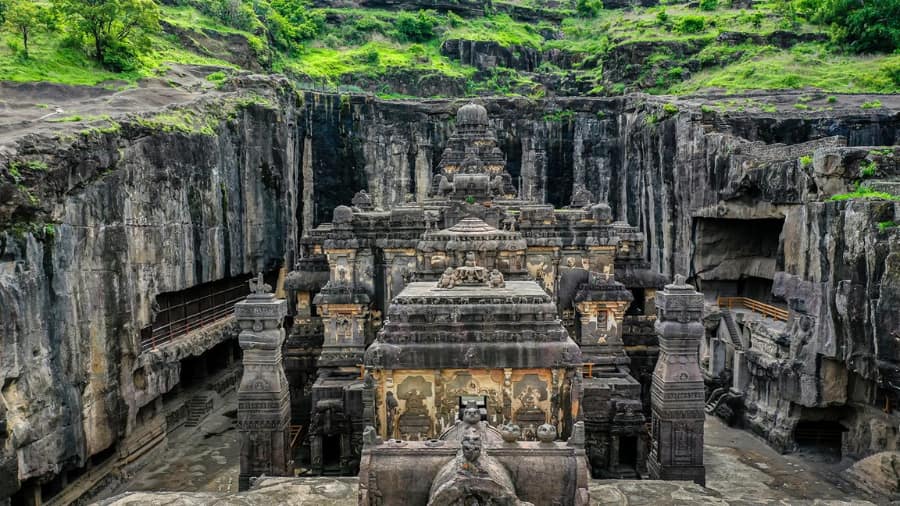
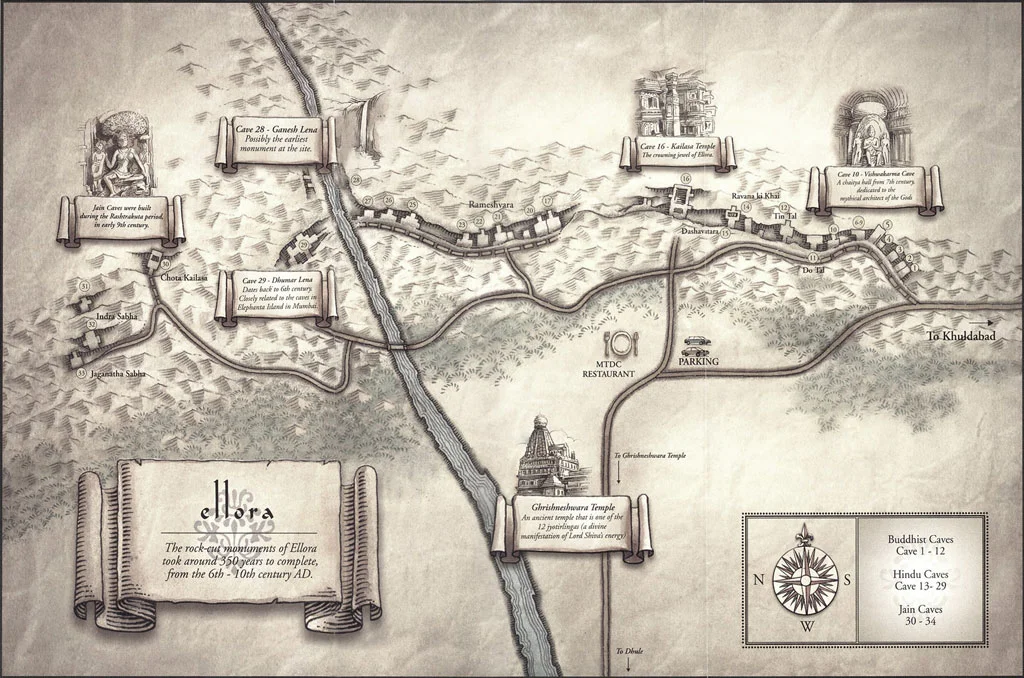
Ellora Caves (34 caves) are younger (6th - 11th centuries CE) and represent three religions - Buddhist (12 caves), Hindu (17 caves), and Jain (5 caves). Ellora is renowned more for its sculpture and architecture than paintings (most paintings have faded or disappeared). The caves show a progression from Buddhist caves in the southern part to Hindu caves in the middle to Jain caves in the north, demonstrating religious harmony over centuries. The centerpiece is the Kailasa Temple, an enormous free-standing temple carved from a single rock - the largest monolithic structure in the world.
Logistically, Ajanta is located approximately 107 kilometers northeast of Aurangabad (about 2.5 hours drive), while Ellora is much closer at approximately 30 kilometers northwest (about 1 hour drive). Both can be visited as day trips from Aurangabad. Most visitors allocate one full day for each site, though some ambitious travelers try to see both in one very long day (not recommended).
Both sites are UNESCO World Heritage Sites and are managed by the Archaeological Survey of India. Both require considerable walking, some climbing, and protection from sun and heat. However, Ajanta's paintings require more careful viewing and time to appreciate, while Ellora's architectural grandeur is immediately impressive even on quick viewing.
Best Time to Visit Ajanta and Ellora
The best time to visit Ajanta and Ellora is from October to March when the weather is pleasant and suitable for exploring these outdoor sites. The caves require considerable walking and some climbing, so comfortable temperatures are important.
October to March offers daytime temperatures ranging from 20°C to 30°C, ideal for walking around the cave complexes. December and January can get quite cool in the mornings (around 10-15°C), so carry a light jacket. The caves maintain a fairly constant temperature, so you'll be comfortable once inside. This period is peak tourist season, so expect larger crowds, especially during weekends and holidays. Book accommodations in Aurangabad well in advance if visiting during this period.
June to September is the monsoon season when the region receives moderate to heavy rainfall. The rains transform the landscape into lush green, making the journey to the caves scenic. Waterfalls appear in the hills around Ellora. The crowds are thinner, and prices for accommodations are lower. However, humidity can be high, and rain can disrupt your visit, especially at Ajanta where you need to walk in the open between caves. If you visit during monsoon, carry rain gear and be prepared for potential delays. The caves themselves are dry and can be visited during rain.
April to May is summer when temperatures can soar above 40°C, making outdoor exploration extremely uncomfortable. However, this is off-season with few tourists and lower prices. If you visit during summer, plan your visit for very early morning (the caves open at 6:00 AM in summer), carry plenty of water, use sun protection, and take breaks. The caves maintain cooler temperatures, offering some relief from the outside heat.
The Ajanta Ellora Ajanta Festival (usually held in November) features classical music and dance performances in the caves, creating a magical atmosphere. However, this also means larger crowds. Check festival dates if you're interested in this unique experience.
Getting to Ajanta and Ellora
Reaching Aurangabad
Aurangabad is the base for visiting both Ajanta and Ellora caves. The city has good connectivity to major Indian cities.
By Air: Aurangabad Airport (IXU) has direct flights from Delhi (2 hours), Mumbai (1 hour), Hyderabad, and other major cities. The airport is approximately 10 kilometers from the city center. Taxis and app-based cabs are readily available.
By Train: Aurangabad Railway Station is well-connected, though not on major trunk routes. Direct trains are available from Mumbai, Delhi, Hyderabad, and other cities. The Tapovan Express and Jan Shatabdi connect Aurangabad to Mumbai. The train journey from Mumbai takes approximately 7 hours.
By Road: Aurangabad is well-connected by road. The distance from Mumbai is approximately 335 kilometers (6-7 hours drive), from Pune approximately 235 kilometers (5 hours), and from Hyderabad approximately 500 kilometers (9-10 hours). State-run MSRTC buses and private buses connect Aurangabad to these cities. Self-driving is an option, and the roads are generally good.
Reaching Ellora Caves from Aurangabad
Ellora is located approximately 30 kilometers northwest of Aurangabad, and the journey takes about 1 hour by road. Several options are available:
Taxi: The most convenient option. Taxis can be hired for a half-day (approximately ₹1500-2000) or full-day (₹2500-3000) trip to Ellora. Most hotels can arrange taxis. This gives you flexibility to explore at your own pace.
Bus: MSRTC operates regular buses from Aurangabad Central Bus Station to Ellora. These are inexpensive (approximately ₹30-50 one way) but less convenient and crowded. Buses drop you near the caves but you may need to walk to the main entrance.
App-based Cabs: Uber and Ola operate in Aurangabad and are available for trips to Ellora, though availability may be limited for return trips from Ellora.
Reaching Ajanta Caves from Aurangabad
Ajanta is located approximately 107 kilometers northeast of Aurangabad, and the journey takes about 2.5 hours by road. The road is scenic, passing through rural Maharashtra.
Taxi: The most practical option. Hire a taxi for a full-day trip (₹3000-4000) from Aurangabad. This gives you the flexibility to leave early (recommended) and return at your own pace. Most hotels can arrange taxis for Ajanta trips.
Bus: MSRTC operates buses from Aurangabad to Ajanta. These are economical but take longer (approximately 3-3.5 hours) and may not connect well with cave visiting hours. Buses typically depart Aurangabad Central Bus Station in the early morning.
Tour: Many travel agencies in Aurangabad operate guided tours to Ajanta. These typically include transportation, guide services, and sometimes meals. Tours can be economical and informative but offer less flexibility than independent travel.
Exploring Ajanta Caves
Overview and Layout
The Ajanta Caves are carved into a horseshoe-shaped cliff along the Waghora River, which creates a picturesque setting. The 30 caves are numbered sequentially from east to west, not chronologically. Caves 1-12 are the main caves with significant paintings and sculptures, while Caves 13-29 are less significant (many are unfinished).
Caves 1, 2, 4, 6, 7, 9, 10, 11, 12, 15, 16, 17, 19, 20, 26, and 27 are the most important to visit. If you have limited time, focus on Caves 1, 2, 9, 10, 16, 17, 19, and 26 which contain the most impressive paintings and sculptures.
The caves fall into two categories: Chaityas (prayer halls) and Viharas (monasteries). Chaityas (Caves 9, 10, 19, 26) have stupas and were used for communal worship and meditation. Viharas were living quarters for monks, with cells arranged around a central hall.
Must-Visit Caves at Ajanta
Cave 1: This is perhaps the most famous cave at Ajanta, renowned for its magnificent paintings. The cave's verandah has scenes from Buddha's life, while the main hall contains beautiful paintings of bodhisattvas Padmapani and Vajrapani. The Padmapani (holding a lotus) painting is particularly celebrated for its grace and spiritual intensity - the figure's slightly elongated eyes and compassionate expression are iconic.

Cave 2: This vihara is famous for its ceiling paintings depicting celestial beings, animals, and decorative motifs. The paintings are remarkably well-preserved and showcase the sophisticated artistic techniques used. The cave also features beautiful sculpted figures.
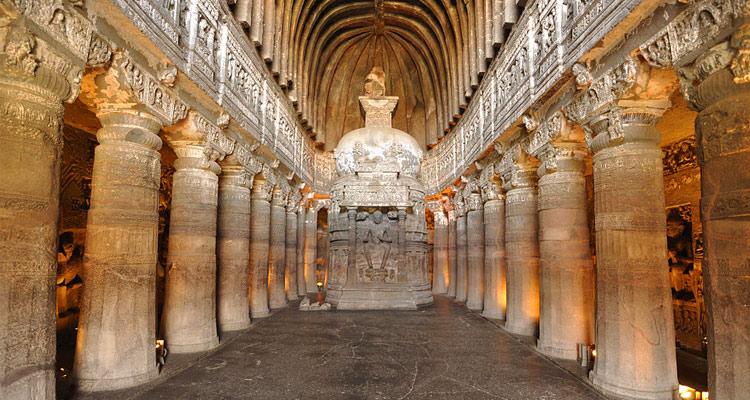
Caves 9 and 10: These are chaityas (prayer halls) and are among the oldest caves at Ajanta. While the paintings have largely faded, the architecture and atmosphere are impressive. Cave 10, in particular, has a magnificent stupa and impressive columns. These caves give insight into early Buddhist worship.
Cave 16: This cave is significant both for its architecture and paintings. It's located at a strategic point with beautiful views of the river gorge. The paintings here depict various scenes from Buddha's life and Jataka tales. The dying princess scene is particularly moving.
Cave 17: Considered by many art historians to have the finest paintings at Ajanta. The cave contains beautifully preserved paintings of Buddha in various mudras (gestures), scenes from the Jataka tales (including the famous Hasti Jataka - elephant story), and various divinities. The colors remain vibrant despite being 1,500+ years old.
Cave 19: This chaitya is architecturally stunning, with beautiful sculpted figures on the facade. The Buddha figure on the stupa is particularly elegant. The cave represents the pinnacle of chaitya architecture at Ajanta.
Cave 26: Another magnificent chaitya, this cave features a huge reclining Buddha sculpture depicting the Mahaparinirvana (Buddha's death). The figure, over 7 meters long, is beautifully carved with expressive faces of mourning attendants. The cave also has scenes from Buddha's life.
Practical Tips for Ajanta
Ajanta requires a minimum of 4-5 hours for a comprehensive visit. The site opens at 6:00 AM (summer) or 7:00 AM (winter) and closes at 5:00 PM (summer) or 4:30 PM (winter). Arrive as early as possible to avoid crowds and heat - the first two hours after opening offer the best experience with fewer tourists and better lighting for viewing paintings.
The cave complex requires considerable walking on uneven surfaces, including stairs. Wear comfortable walking shoes with good grip. The caves maintain a constant temperature, so you'll be comfortable once inside, but the passages between caves can be hot.
Photography without flash is permitted in most caves but prohibited in some with particularly fragile paintings. Look for signs prohibiting photography. Even where permitted, be respectful and don't use flash as it damages the ancient pigments. Tripods require special permission.
Hire an official guide (available at the entrance) or carry a good guidebook. The paintings tell stories and have religious significance that's difficult to appreciate without context. Audio guides are also available for rent at the entrance. The official Archaeological Survey of India guidebook is excellent and worth purchasing.
Facilities at Ajanta include a restaurant, tea stalls, restrooms, and a small museum. The restaurant is adequate but nothing special - consider carrying snacks and water. The museum near the entrance has reproductions of Ajanta paintings that help you understand what you'll see in the caves.
Exploring Ellora Caves
Overview and Layout
The Ellora Caves are spread along a 2-kilometer stretch with 34 caves carved into the Charanandri Hills. Unlike Ajanta's horseshoe shape, Ellora's caves are arranged in a rough line. The caves are numbered 1-34 from south to north, corresponding broadly to their chronological sequence: Buddhist caves (1-12) in the south, Hindu caves (13-29) in the middle, and Jain caves (30-34) in the north.
You can visit Ellora thoroughly in 5-6 hours, though hurried tourists can see the highlights in 3-4 hours. The site opens at 6:00 AM (summer) or 7:00 AM (winter) and closes at 6:00 PM (summer) or 5:00 PM (winter). Most visitors spend approximately 80% of their time in the Hindu caves, particularly the Kailasa Temple, which alone can take 2-3 hours to explore properly.
Must-Visit Caves at Ellora
Cave 10 (Vishvakarma Cave): This Buddhist cave is a chaitya (prayer hall) and architecturally impressive with its beautiful ribbed ceiling that resembles wooden beams. The Buddha figure in the shrine room is beautifully carved. This cave demonstrates the sophisticated understanding of structural engineering that ancient artisans possessed.
Cave 14 (Ravan ki Khai): This Hindu cave is dedicated to Shiva and contains impressive sculptures of various Hindu deities. The cave has beautiful carvings of Shiva, Parvati, and other gods. The name comes from a local legend associating it with the demon king Ravana.
Cave 15 (Dasavatara): This Hindu cave is dedicated to Vishnu and features beautiful sculptures of the ten avatars (incarnations) of Vishnu, including scenes from the Ramayana and Mahabharata. The carvings are intricate and well-preserved, showcasing the sophisticated artistic techniques of the period.
Cave 16 (Kailasa Temple): The undisputed highlight of Ellora and one of India's most remarkable architectural achievements. This enormous temple, dedicated to Lord Shiva, was carved out of a single rock from top to bottom. Artisans removed approximately 200,000 tons of rock to create this free-standing temple complex. The temple features impressive sculptures of Shiva, Parvati, and various deities, along with scenes from the Ramayana and Mahabharata. The two-story structure has a main shrine, surrounding corridors, subsidiary shrines, and beautiful sculptures everywhere. The sheer scale and the fact that it was carved, not built, make it mind-boggling. Allow at least 2-3 hours to explore Kailasa properly.
Cave 21 (Rameshwar): This Hindu cave is dedicated to Shiva and features beautiful sculptures including an impressive Nandi bull (Shiva's vehicle) at the entrance. The cave has various representations of Shiva and other deities, with particularly elegant figures of Ganga and Yamuna goddesses.
Cave 29 (Dhumar Lena): Another impressive Shiva cave, this one features beautiful sculptures of Shiva and Parvati. The cave has a particularly impressive figure of Shiva as Nataraja (Lord of Dance) and various representations of Shiva's different aspects.
Caves 30-34 (Jain Caves): These caves, though smaller and less grand than the Hindu caves, are beautifully carved and offer insight into Jain architecture and iconography. Cave 32 (Indra Sabha) is particularly impressive with its beautiful lotus carving on the ceiling and intricate sculptures of Jain Tirthankaras (spiritual teachers). The Jain caves demonstrate the religious harmony that existed at Ellora, with all three faiths creating sacred spaces in close proximity.
Practical Tips for Ellora
Start early - Ellora opens at 6:00 AM (summer) or 7:00 AM (winter). The first hour after opening is peaceful and offers the best lighting for viewing sculptures. Weekends are crowded - try to visit on a weekday if possible.
The cave complex requires walking on uneven surfaces and climbing stairs, particularly at Kailasa Temple. Wear comfortable walking shoes with good grip. The approach to Kailasa involves descending stairs, and you'll need to climb back up - take your time and be careful on the uneven steps.
Photography is permitted at Ellora (unlike the restrictions at Ajanta). However, be respectful of the sacred nature of the caves and don't use flash inside temples where people are worshipping. Tripods may require permission.
Hire an official guide at the entrance or carry a good guidebook. While the sculptures are visually impressive even without context, understanding the religious stories and symbolism enhances appreciation significantly. The official Archaeological Survey of India guidebook is excellent.
Facilities at Ellora include restaurants, tea stalls, and restrooms near the entrance. The restaurants serve basic Indian food and are adequate for a meal during your visit. There's also a small museum near the entrance worth a quick visit.
If you are extending your cave-heritage itinerary after Ajanta and Ellora, compare with Ajanta and Ellora overview, include deeper cave context from Ellora Caves, and pair with other architectural routes like Khajuraho Temples and Konark Sun Temple.
Nearby Attractions
Daulatabad Fort
Located approximately 15 kilometers from Ellora on the way back to Aurangabad, Daulatabad Fort is a magnificent 14th-century fort that's worth a visit. The fort, known for its ingenious defense systems, sits atop a 200-meter-high hill and offers spectacular views of the surrounding area. The fort features a complex maze, deep moat, and one of the world's most powerful cannons. The climb to the top is strenuous but rewarding. Allow 2-3 hours for the visit. The fort can be combined with Ellora in a single day trip.
Bibi Ka Maqbara
Located in Aurangabad city, Bibi Ka Maqbara is a mausoleum built in 1660 by Aurangzeb for his wife Rabia Durrani. Often called the "Poor Man's Taj" for its resemblance to the Taj Mahal, it's actually a beautiful structure in its own right. Set in well-maintained gardens, the mausoleum features elegant architecture and is particularly beautiful when illuminated at night. The visit takes about 1 hour and can easily be combined with city sightseeing.
Aurangabad Caves
Located on the outskirts of Aurangabad, these 12 Buddhist caves (not to be confused with Ajanta/Ellora) are less visited but worth seeing if you have extra time. Dating from the 6th-8th centuries, the caves feature some beautiful sculptures and offer insight into Buddhist rock-cut architecture. Less crowded than Ajanta/Ellora, they offer a more peaceful cave exploration experience.
Where to Stay
Aurangabad offers accommodation options for every budget, though book well in advance during peak season (October-March).
Budget: Numerous guesthouses and budget hotels (₹600-1000 per night) are available near the railway station and in the city center. These offer basic rooms and are adequate for short stays.
Mid-Range: Several good hotels (₹2000-4000 per night) offer comfortable rooms with amenities. The Ambassador Ajanta, Vits Hotel, and similar properties fall in this category and offer good value.
Luxury: The ITC Welcomhotel (formerly Welcomhotel Rama International) and The Talli are excellent luxury options (₹5000-8000+ per night) with pools, restaurants, and excellent service. These are particularly comfortable for relaxing after long days of cave exploration.
Travel Tips
Both Ajanta and Ellora involve considerable walking on uneven surfaces. Wear comfortable walking shoes with good grip. The caves maintain comfortable temperatures inside, but the areas between caves can be hot, especially in summer. Carry a hat, sunglasses, and sunscreen.
Water is available for purchase at both sites, but prices can be high. Carry your own water bottle and refill when possible. Stay hydrated, especially at Ajanta where the return walk from the furthest caves can be tiring.
Hire official guides or carry good guidebooks. The art and architecture have religious and historical significance that's difficult to appreciate without context. Official guides are available at both entrances. Audio guides are also available.
Respect the sacred nature of these sites. Many caves have active worship (particularly the Hindu caves at Ellora). Maintain silence, don't touch sculptures or paintings, and dress modestly. Remove shoes before entering shrines where required.
The best light for viewing paintings at Ajanta is in the morning when the caves are illuminated by natural light. Visit early not just to avoid crowds but for better viewing conditions.
Conclusion
Ajanta and Ellora represent the pinnacle of India's rock-cut architecture and ancient artistic achievement. The scale of human endeavor here - thousands of years of work by generations of artisans carving these masterpieces from solid rock - is difficult to comprehend. The paintings at Ajanta, with their grace, expressiveness, and sophisticated techniques, rank among the finest art ever produced. The architectural ambition at Ellora, particularly the Kailasa Temple carved from a single rock, has few parallels in human history.
But beyond the artistic and architectural achievements, these sites offer insight into India's spiritual heritage. Walking through these caves, you witness how three great religions - Buddhism, Hinduism, and Jainism - expressed their visions of the divine through art. The caves serve as a reminder of India's remarkable religious pluralism, with all three faiths creating sacred spaces in close proximity, sometimes simultaneously.
For travelers interested in art, architecture, history, or spirituality, Ajanta and Ellora are essential destinations. These UNESCO World Heritage Sites offer experiences that are both intellectually stimulating and spiritually moving. Many visitors find that these ancient caves, created so long ago with such devotion and skill, leave a lasting impression that outlasts more famous monuments.
Location
Frequently Asked Questions
Q1.What is the difference between Ajanta and Ellora caves?
Q2.How many days are needed for Ajanta and Ellora?
Q3.Is photography allowed in Ajanta and Ellora caves?
Q4.What is the best time to visit Ajanta and Ellora?
Q5.Is it worth hiring a guide at Ajanta and Ellora?
Q6.Which caves should I prioritize at Ajanta and Ellora?
Q7.Are Ajanta and Ellora caves safe for solo female travelers?
Q8.How do I get to Ajanta and Ellora from Mumbai?
Recommended For You
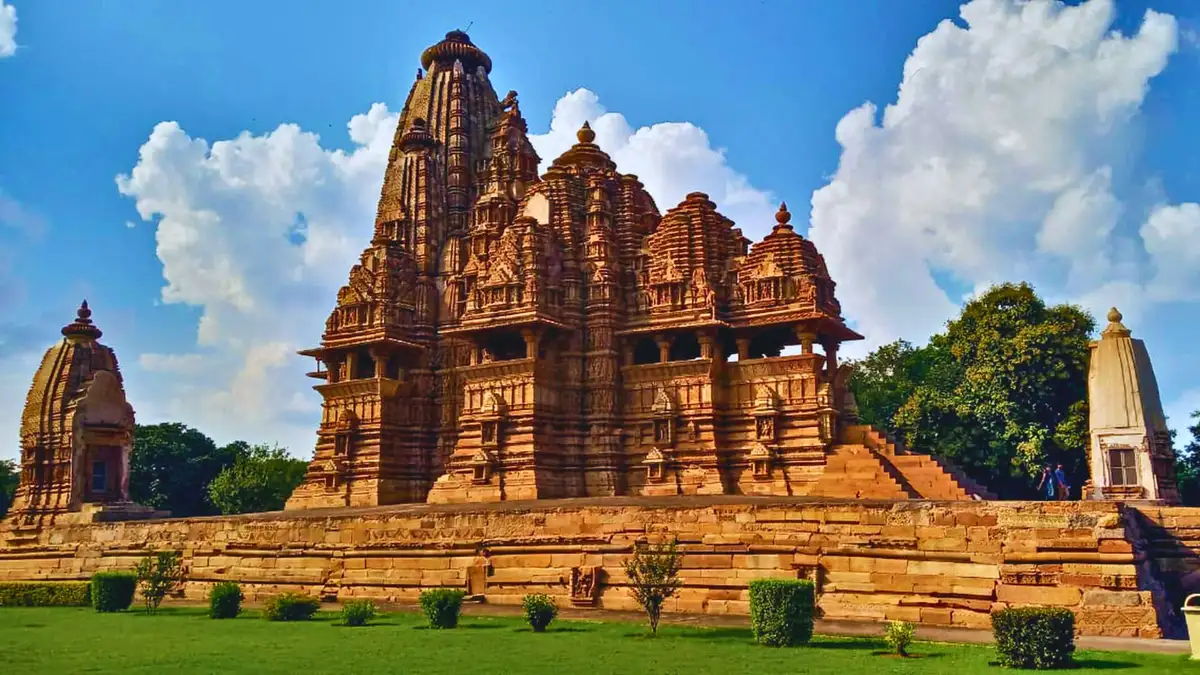
Khajuraho Temples: Complete Travel Plan And History
Complete Khajuraho travel guide featuring UNESCO temples, Chandela architecture, Panna National Park, dance festival & practical tips.
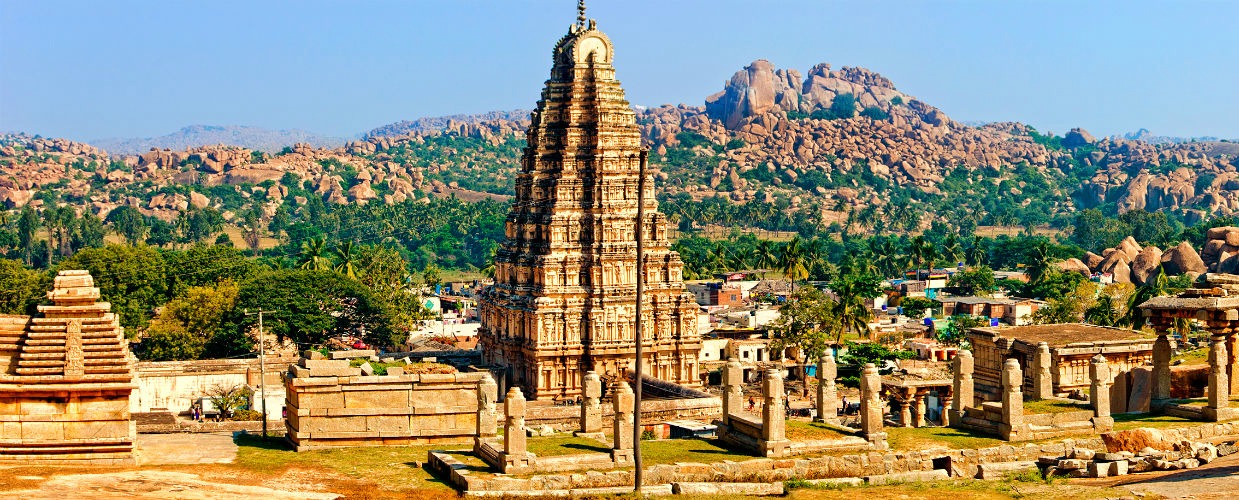
Hampi: Complete Travel Plan Temples And History
Complete Hampi travel guide featuring Vijayanagara ruins, Virupaksha Temple, Vittala Temple, Royal Enclosure, best time to visit & practical tips.
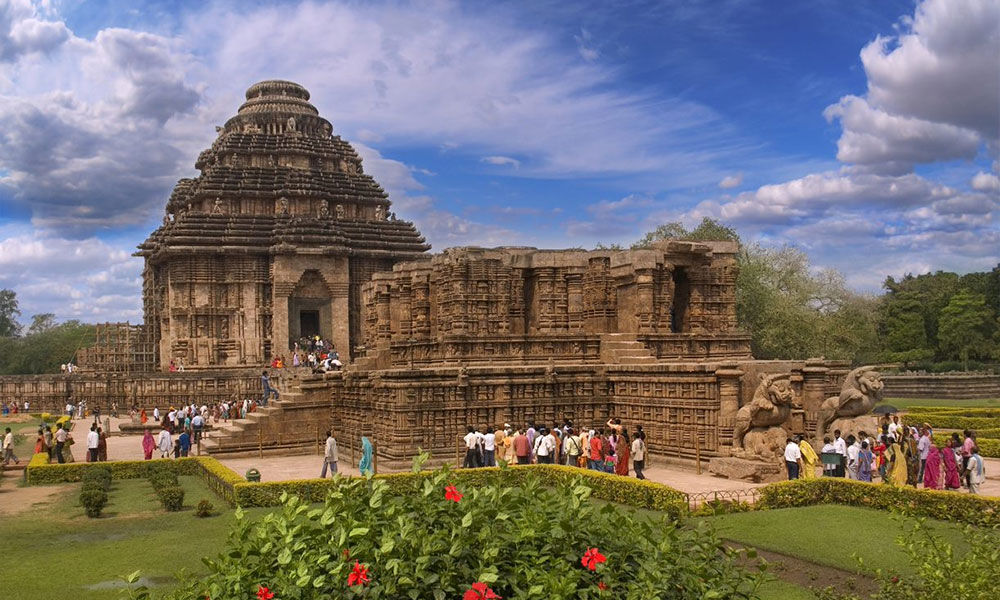
Konark Sun Temple Odisha: History, Timings & Visitor Tips
Visit Konark Sun Temple in Odisha - UNESCO World Heritage Site shaped like a chariot. Complete guide with timings, tickets, history & architecture.
Never Miss an Adventure
Get the latest trekking guides, travel tips, and exclusive offers delivered straight to your inbox.
