
Pilgrimage
Brahma Temple Pushkar: Timings, Aarti, History & Visit Details

Rohan Malhotra
February 12, 2026
13 min read3,153 views
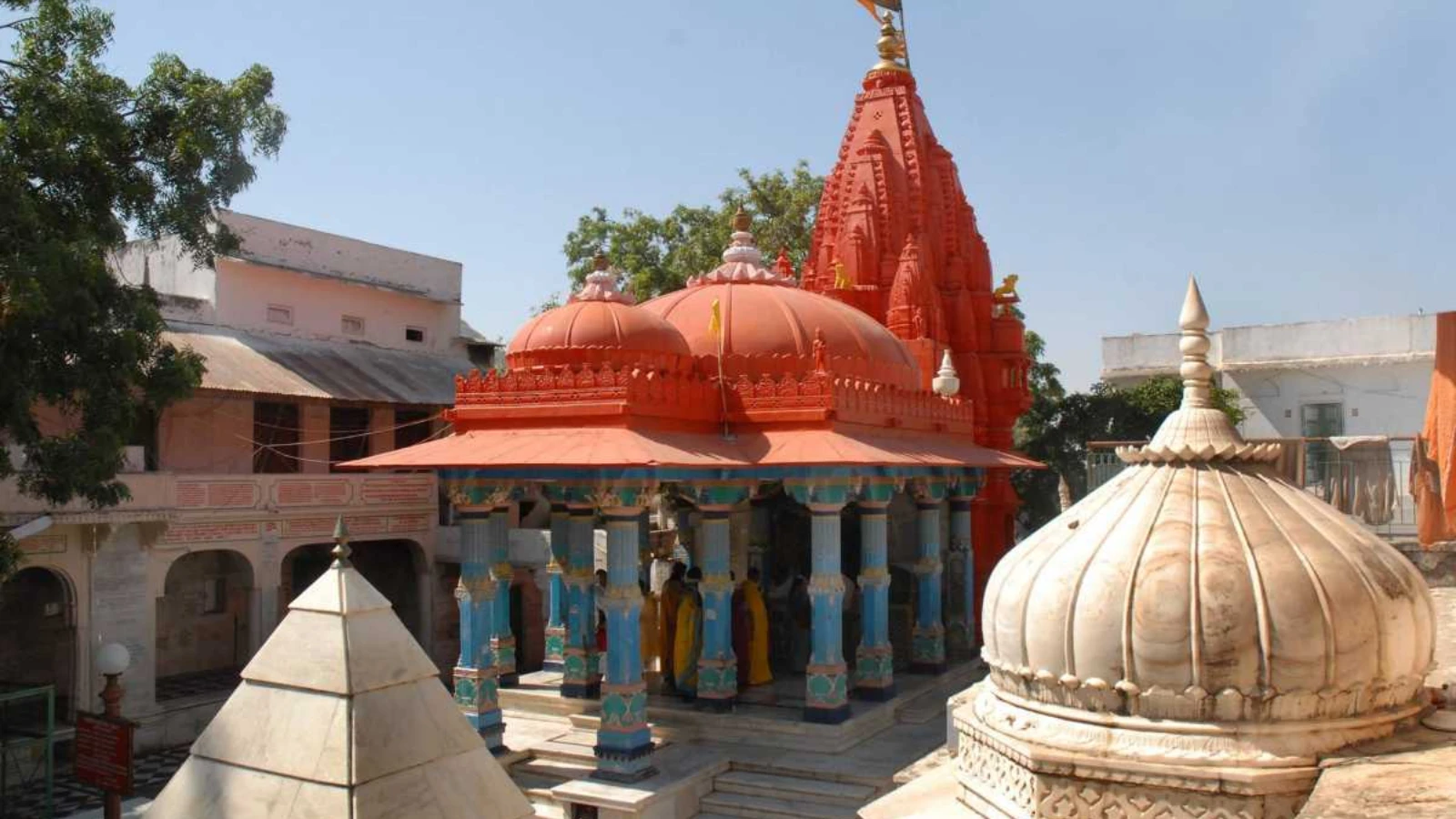
Discover Brahma Temple Pushkar - one of the world's few temples dedicated to Lord Brahma. Learn about timings, history, architecture, darshan guide, and how to reach this sacred 14th-century shrine in Rajasthan.
Introduction to the Sacred Brahma Temple Pushkar
Nestled in the holy town of Pushkar, Rajasthan, the Brahma Temple stands as a unique testament to Hindu devotion and mythology. As one of the very few temples in the world dedicated to Lord Brahma - the creator of the universe according to Hindu mythology - this sacred shrine attracts thousands of pilgrims and curious travelers every year. The temple's spiritual significance, combined with its stunning architecture and the mystical aura of Pushkar, makes it an essential destination for those seeking divine blessings and cultural immersion. What makes this temple truly extraordinary is its rarity. While Lord Vishnu and Lord Shiva have countless temples across India, Lord Brahma - despite being part of the Hindu Trinity (Trimurti) - has surprisingly few dedicated temples. The Brahma Temple in Pushkar is not just a place of worship; it's a living legend steeped in fascinating mythology that dates back thousands of years. For those exploring Pushkar tourist places, this temple is undoubtedly the crown jewel of their spiritual journey. If you're planning a broader pilgrimage across India, the sacred 12 Jyotirlingas represent some of the most significant Shiva temples in the country. Similarly, the Golden Temple in Amritsar offers a divine experience that shouldn't be missed.The Fascinating History and Legend Behind Brahma Temple
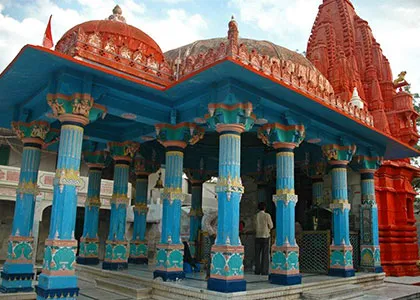 The origins of the Brahma Temple are intertwined with one of Hindu mythology's most captivating stories. According to ancient legends, Lord Brahma was in search of a suitable location to perform a grand yagna (sacred fire ritual). As he descended upon Earth, he dropped a lotus flower which landed in Pushkar, creating the sacred Pushkar Lake. This divine event led to the establishment of Pushkar as one of India's most sacred pilgrimage sites.
The mythology takes an interesting turn with the curse of Goddess Savitri. Legend has it that Lord Brahma needed to perform the yagna with his consort, Goddess Savitri. However, when she was delayed, Brahma married Gayatri, a local Gujarati girl, to complete the ritual on time. This enraged Goddess Savitri, who cursed Brahma that he would not be worshipped anywhere else on Earth. This curse explains why Pushkar houses one of the few temples dedicated exclusively to Lord Brahma.
Historically, the temple is believed to have been built by Sage Vishwamitra, though the current structure dates back to the 14th century. The temple has undergone several renovations over the centuries, with contributions from various rulers who recognized its spiritual significance. The Adi Shankaracharya, the great Hindu philosopher and theologian, is also said to have visited and blessed this sacred site during his travels across India.
The origins of the Brahma Temple are intertwined with one of Hindu mythology's most captivating stories. According to ancient legends, Lord Brahma was in search of a suitable location to perform a grand yagna (sacred fire ritual). As he descended upon Earth, he dropped a lotus flower which landed in Pushkar, creating the sacred Pushkar Lake. This divine event led to the establishment of Pushkar as one of India's most sacred pilgrimage sites.
The mythology takes an interesting turn with the curse of Goddess Savitri. Legend has it that Lord Brahma needed to perform the yagna with his consort, Goddess Savitri. However, when she was delayed, Brahma married Gayatri, a local Gujarati girl, to complete the ritual on time. This enraged Goddess Savitri, who cursed Brahma that he would not be worshipped anywhere else on Earth. This curse explains why Pushkar houses one of the few temples dedicated exclusively to Lord Brahma.
Historically, the temple is believed to have been built by Sage Vishwamitra, though the current structure dates back to the 14th century. The temple has undergone several renovations over the centuries, with contributions from various rulers who recognized its spiritual significance. The Adi Shankaracharya, the great Hindu philosopher and theologian, is also said to have visited and blessed this sacred site during his travels across India.
Architecture and Structure: A Marvel of Temple Design
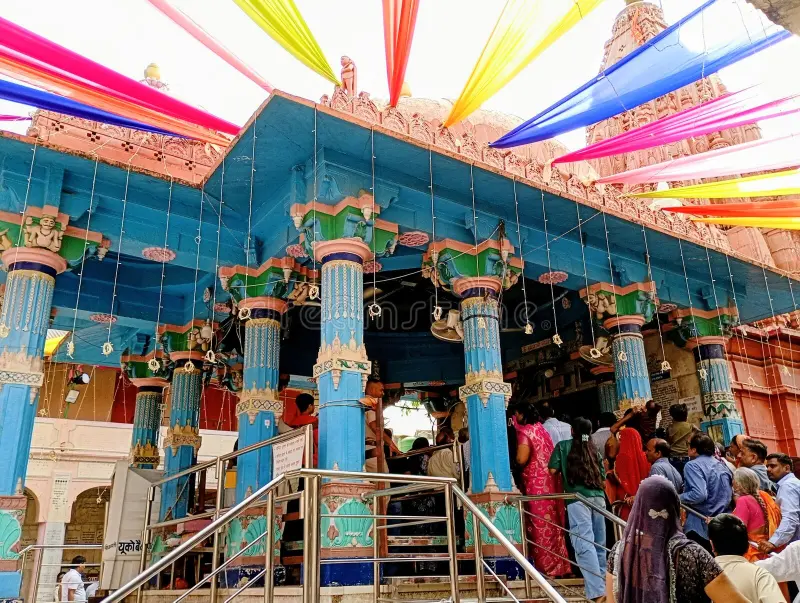 The Brahma Temple's architecture is a beautiful blend of traditional Rajasthani style and spiritual symbolism. The most striking feature is the temple's distinctive red spire (shikhara) that rises majestically above the sanctum, visible from a distance and guiding devotees to its sacred doors. The shikhara is adorned with intricate carvings and the symbol of a hans (swan) - Lord Brahma's divine vehicle.
As you approach the temple entrance, you'll notice a beautifully carved silver turtle that faces the sanctum sanctorum. This turtle is not merely decorative; it holds deep religious significance in Hindu mythology and is believed to represent stability and longevity. Devotees often touch this turtle as they enter, seeking blessings for a long and prosperous life.
The temple walls are embellished with exquisite marble carvings that depict various scenes from Hindu mythology. The sanctum houses the life-sized, four-faced idol of Lord Brahma (Vedmukha), with each face representing one of the four Vedas - Rig, Yajur, Sama, and Atharva. The idol, along with those of Goddess Gayatri and Goddess Savitri, is beautifully adorned with silver ornaments and garlands during festival times.
The temple's marble floor remains cool even during Rajasthan's scorching summers, providing relief to devotees. The overall architecture reflects a harmonious balance between spiritual purpose and artistic excellence, making it a photographer's delight and an architect's inspiration.
The Brahma Temple's architecture is a beautiful blend of traditional Rajasthani style and spiritual symbolism. The most striking feature is the temple's distinctive red spire (shikhara) that rises majestically above the sanctum, visible from a distance and guiding devotees to its sacred doors. The shikhara is adorned with intricate carvings and the symbol of a hans (swan) - Lord Brahma's divine vehicle.
As you approach the temple entrance, you'll notice a beautifully carved silver turtle that faces the sanctum sanctorum. This turtle is not merely decorative; it holds deep religious significance in Hindu mythology and is believed to represent stability and longevity. Devotees often touch this turtle as they enter, seeking blessings for a long and prosperous life.
The temple walls are embellished with exquisite marble carvings that depict various scenes from Hindu mythology. The sanctum houses the life-sized, four-faced idol of Lord Brahma (Vedmukha), with each face representing one of the four Vedas - Rig, Yajur, Sama, and Atharva. The idol, along with those of Goddess Gayatri and Goddess Savitri, is beautifully adorned with silver ornaments and garlands during festival times.
The temple's marble floor remains cool even during Rajasthan's scorching summers, providing relief to devotees. The overall architecture reflects a harmonious balance between spiritual purpose and artistic excellence, making it a photographer's delight and an architect's inspiration.
Brahma Temple Pushkar Timings and Aarti Schedule
Understanding the temple timings is crucial for planning your visit effectively. The Brahma Temple follows a structured schedule that allows devotees to participate in various rituals throughout the day. Here are the detailed timings: Morning Schedule: - Opening Time: 5:30 AM (Summer) / 6:00 AM (Winter) - Morning Aarti: 6:30 AM - 7:00 AM - Darshan Hours: 7:00 AM - 1:00 PM - Closing: 1:00 PM - 3:00 PM (Midday Break) Evening Schedule: - Reopening: 3:00 PM - Evening Aarti: 7:00 PM - 7:30 PM (Summer) / 6:30 PM - 7:00 PM (Winter) - Final Closing: 8:30 PM (Summer) / 8:00 PM (Winter) The temple remains open throughout the week, including during the famous Pushkar Mela Rajasthan, though timings may be extended during festivals and special occasions. The evening aarti is particularly enchanting, with the entire temple complex illuminated by oil lamps and the chanting of sacred mantras creating a mesmerizing atmosphere. Pro Tip: Arrive at least 30 minutes before the aarti to secure a good viewing position, especially during peak pilgrimage season and Kartik Purnima when devotees gather in large numbers.How to Reach Brahma Temple Pushkar
Reaching the Brahma Temple is relatively straightforward, with Pushkar being well-connected to major cities in Rajasthan. Here's a comprehensive guide: By Air: The nearest airport is Kishangarh Airport (KQH), located approximately 35 kilometers from Pushkar. However, for better connectivity, Jaipur International Airport (150 km away) is preferred. From the airport, you can hire a taxi or take a bus to Pushkar. By Train: Ajmer Junction is the nearest railway station, situated just 11 kilometers from Pushkar. Ajmer is well-connected to major cities like Delhi, Mumbai, Jaipur, and Ahmedabad. Regular trains run on these routes, making it a convenient option for rail travelers. From Ajmer station, you can hire an auto-rickshaw, taxi, or take a shared tempo to reach Pushkar. By Road: Pushkar has excellent road connectivity with National Highway 48 passing nearby. Regular buses operate from Jaipur (145 km), Delhi (400 km), and other major cities. The Jaipur to Pushkar route is particularly popular, with both state transport and private buses available. You can also drive down; the journey from Jaipur takes approximately 3 hours. Within Pushkar: The Brahma Temple is located in the heart of Pushkar, near Pushkar Lake. Once you reach Pushkar, you can easily walk to the temple from most parts of the town, or hire a cycle-rickshaw for a nominal fare.Best Time to Visit Brahma Temple Pushkar
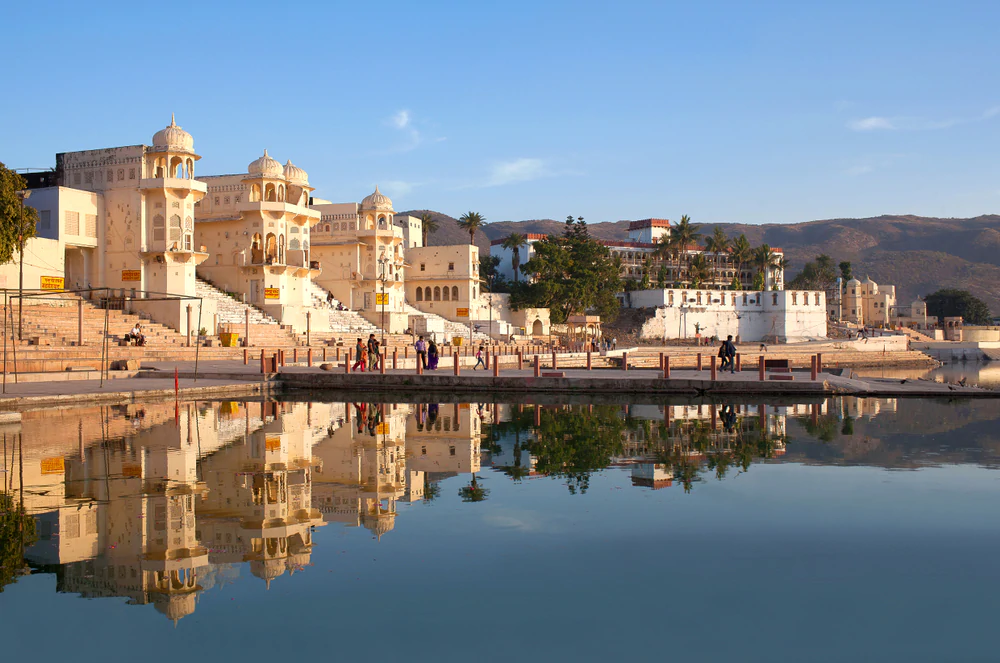 Choosing the right time to visit can significantly enhance your spiritual experience. Here's a seasonal breakdown:
Winter (October - March):
This is the ideal time to visit Pushkar. The weather is pleasant with temperatures ranging from 8°C to 25°C, making temple visits comfortable. The peak period is during Kartik Purnima (usually October/November), when the famous Pushkar Camel Fair takes place. The temple sees maximum footfall during this time, with special celebrations and extended darshan hours.
Summer (April - June):
Summers are extremely hot in Rajasthan, with temperatures soaring above 40°C. While the temple remains open, the heat can make exploration uncomfortable. However, if you don't mind the heat, this is the best time for budget travelers as accommodation prices drop significantly.
Monsoon (July - September):
The monsoon brings relief from the heat but also humidity. Pushkar looks beautiful during light rains, and the temple surroundings are washed clean. This is an off-peak period, so you'll encounter fewer crowds.
Festival Seasons:
- Kartik Purnima (October/November): The most auspicious time, coinciding with the Pushkar Fair
- Holi: Celebrated with great enthusiasm
- Diwali: The temple is beautifully decorated
For the best time to visit Rajasthan and experience the temple's spiritual grandeur, plan your trip between October and March.
Choosing the right time to visit can significantly enhance your spiritual experience. Here's a seasonal breakdown:
Winter (October - March):
This is the ideal time to visit Pushkar. The weather is pleasant with temperatures ranging from 8°C to 25°C, making temple visits comfortable. The peak period is during Kartik Purnima (usually October/November), when the famous Pushkar Camel Fair takes place. The temple sees maximum footfall during this time, with special celebrations and extended darshan hours.
Summer (April - June):
Summers are extremely hot in Rajasthan, with temperatures soaring above 40°C. While the temple remains open, the heat can make exploration uncomfortable. However, if you don't mind the heat, this is the best time for budget travelers as accommodation prices drop significantly.
Monsoon (July - September):
The monsoon brings relief from the heat but also humidity. Pushkar looks beautiful during light rains, and the temple surroundings are washed clean. This is an off-peak period, so you'll encounter fewer crowds.
Festival Seasons:
- Kartik Purnima (October/November): The most auspicious time, coinciding with the Pushkar Fair
- Holi: Celebrated with great enthusiasm
- Diwali: The temple is beautifully decorated
For the best time to visit Rajasthan and experience the temple's spiritual grandeur, plan your trip between October and March.
Darshan Guide and Temple Etiquette
For a fulfilling spiritual experience, it's essential to follow proper darshan etiquette: Dress Code: - Wear modest, conservative clothing covering shoulders and knees - Traditional Indian attire is preferred but not mandatory - Remove footwear before entering the temple premises (storage facilities available) - Avoid carrying leather items inside the temple Darshan Procedure: 1. Enter through the main gateway after removing shoes 2. Offer prayers at the silver turtle facing the sanctum 3. Join the queue for the main sanctum darshan 4. Offer flowers, sweets, or dakshina (donation) at the altar 5. Circumambulate (pradakshina) the main shrine clockwise 6. Spend time in meditation in the temple courtyard Special Poojas: The temple offers various special poojas for devotees: - Abhishekam: Ritual bathing of the deity - Archana: Recitation of Lord Brahma's names - Satyanarayan Puja: For prosperity and peace Photography Rules: Photography is strictly prohibited inside the main sanctum sanctorum. However, you can take photographs of the temple exterior, architecture, and courtyard. Always seek permission from temple authorities before capturing any religious ceremonies or sadhus (holy men).Nearby Attractions and Pilgrimage Sites
Your visit to Brahma Temple can be combined with other sacred sites in Pushkar and nearby areas: In Pushkar: - Pushkar Lake: Just steps away from the temple, this sacred lake has 52 ghats where pilgrims take holy dips - Savitri Temple: Located on Ratnagiri Hill, dedicated to Goddess Savitri; offers panoramic views of Pushkar - Rangji Temple: A beautiful South Indian style temple dedicated to Lord Rangji (Lord Vishnu) - Varaha Temple: Dedicated to Lord Vishnu's boar incarnation; one of the oldest temples in Pushkar - Apteshwar Temple: An ancient Shiva temple believed to have been built by Lord Brahma himself Near Pushkar: - Ajmer Sharif Dargah: Located just 11 km away, this famous Sufi shrine is a symbol of religious harmony - Man Mahal: A beautiful palace built by Raja Man Singh of Amber, now a heritage hotel - Rose Gardens: Pushkar is famous for its rose farms; visit to see how rose oil and products are made For those exploring things to do in Pushkar, the temple serves as an excellent starting point for a spiritual and cultural tour of this holy town.Temple Facilities and Amenities
The Brahma Temple offers several facilities to ensure a comfortable visit for devotees: Available Facilities: - Shoe storage stands near the entrance - Drinking water facilities - Clean restroom facilities - Prayer materials shop (flowers, incense, coconuts) - Prasad distribution counter - Seating areas for elderly devotees Accommodation: Pushkar offers diverse accommodation options: - Budget guesthouses and dharamshalas near the temple - Mid-range hotels with temple views - Luxury heritage properties - Special accommodation during the Pushkar Fair needs advance booking Dining: Several pure vegetarian restaurants around the temple serve: - Traditional Rajasthani thali - South Indian breakfast - Multi-cuisine options - Special prasad meals Shopping: Don't miss exploring: - Religious souvenirs and rudraksha malas - Silver jewelry and traditional handicrafts - Textiles and tie-dye fabrics - Rose products unique to PushkarTips for First-Time Visitors
To make your visit smooth and spiritually fulfilling: Planning Tips: - Start early in the morning to avoid crowds and heat - Carry minimal belongings; valuables are not allowed inside - Keep small change for donations and purchases - Hire an authorized guide to understand the temple's history Health & Safety: - Stay hydrated, especially in summer - Apply sunscreen and wear a hat during day visits - Be prepared to walk barefoot on hot marble floors - Carry basic medications Photography & Documentation: - Respect the no-photography rule inside sanctum - Don't photograph sadhus without explicit permission - Carry your ID proof for hotel check-ins Spiritual Preparation: - Fast or eat light before temple visit - Maintain silence and respect the sacred atmosphere - Participate in the aarti for a complete experience - Spend time in meditation by Pushkar Lake after darshanThe Spiritual Significance of Brahma Worship
Understanding why Lord Brahma is worshipped here adds depth to your visit: Why Brahma is Rare: According to Hindu mythology, Lord Brahma's role in creation was complete once he created the universe. Unlike Vishnu (preserver) and Shiva (destroyer), who have ongoing cosmic duties, Brahma's work was considered finished. This, combined with Goddess Savitri's curse, explains the scarcity of Brahma temples. The Four Faces: Lord Brahma's four faces represent: - The four Vedas (ancient Hindu scriptures) - The four yugas (cosmic ages) - The four varnas (social divisions) - The four directions (symbolizing omnipresence) Pushkar's Sacred Status: Pushkar is one of the five sacred dhams (pilgrimage sites) for Hindus. A dip in Pushkar Lake during Kartik Purnima is believed to absolve all sins. The confluence of Brahma's presence and the sacred lake makes Pushkar spiritually potent.Festivals and Celebrations at Brahma Temple
The temple comes alive during various festivals: Kartik Purnima (October/November): The most important festival, celebrating the day Lord Brahma performed the yagna. The entire town hosts the famous Pushkar Camel Fair, with cultural programs, camel races, and religious ceremonies. Brahma Jayanti: The birthday of Lord Brahma is celebrated with special abhishekam and processions. Holi & Diwali: Celebrated with traditional fervor; the temple is beautifully decorated. Navratri: Nine days dedicated to Goddess worship; special prayers offered to Gayatri and Savitri.Conservation and Preservation Efforts
The Archaeological Survey of India (ASI) maintains and protects this ancient temple. Conservation efforts focus on: - Preserving the 14th-century architecture - Maintaining the marble carvings - Protecting the silver ornaments and turtle - Managing tourist footfall during peak seasons Devotees and visitors are requested to: - Avoid touching walls and carvings - Not write on temple structures - Respect the temple's sanctity by maintaining cleanlinessPlanning Your Complete Pushkar Pilgrimage
For a comprehensive spiritual experience: Recommended Itinerary (2 Days): Day 1: Morning Brahma Temple darshan, visit Pushkar Lake ghats, evening Savitri Temple sunset, Rangji Temple Day 2: Sunrise at the lake, Apteshwar Temple, Varaha Temple, shopping, evening aarti at Brahma Temple If you're visiting during the Pushkar Fair, extend your stay to 3-4 days to experience the cultural extravaganza alongside temple visits. Consider combining your pilgrimage with a visit to the nearby Ajmer Sharif Dargah, just 11 kilometers away, for a spiritual journey that showcases India's religious diversity.Conclusion
A visit to the Brahma Temple Pushkar is more than just a religious pilgrimage; it's an immersive journey into Hindu mythology, Rajasthani culture, and spiritual tranquility. Whether you're a devout believer seeking blessings or a curious traveler exploring India's rich heritage, this rare temple dedicated to the Creator God offers an experience that's both enlightening and transformative. Plan your visit during the winter months, participate in the sacred rituals, and let the spiritual energy of Pushkar - enhanced by centuries of devotion - touch your soul. The Brahma Temple stands not just as a monument of faith, but as a bridge between the mortal and the divine, inviting all who seek to understand the mystical depths of Hindu spirituality.Location
Frequently Asked Questions
Q1.What is special about Brahma Temple Pushkar?
Brahma Temple Pushkar is one of the very few temples in the world dedicated to Lord Brahma, the creator god in Hindu mythology. It's special because despite being part of the Hindu Trinity (Trimurti) alongside Vishnu and Shiva, Lord Brahma has very few dedicated temples due to a mythical curse. This 14th-century temple houses a unique four-faced idol of Lord Brahma and is located near the sacred Pushkar Lake, making it one of India's most important pilgrimage sites.
Q2.What are the timings of Brahma Temple Pushkar?
Brahma Temple opens at 5:30 AM (6:00 AM in winter) and closes at 8:30 PM (8:00 PM in winter). The temple has a midday break from 1:00 PM to 3:00 PM. Morning aarti is from 6:30-7:00 AM, and evening aarti is at 7:00-7:30 PM. It's open all days of the week, and timings may extend during festivals like Kartik Purnima and the Pushkar Fair.
Q3.What is the history of Brahma Temple Pushkar?
According to legend, Lord Brahma performed a yagna (sacred ritual) at Pushkar Lake, where he dropped a lotus that created the lake. Sage Vishwamitra built the original temple, though the current structure dates to the 14th century. The mythology includes a curse from Goddess Savitri explaining why Brahma isn't worshipped elsewhere. The temple has been renovated multiple times by various rulers who recognized its spiritual significance.
Q4.What is the best time to visit Brahma Temple Pushkar?
The best time to visit is from October to March during winter when the weather is pleasant (8°C to 25°C). The most auspicious period is during Kartik Purnima (usually October/November) when the famous Pushkar Camel Fair takes place and the temple hosts special celebrations. Summers (April-June) are extremely hot (above 40°C) but less crowded.
Q5.How do I reach Brahma Temple Pushkar?
By air: Kishangarh Airport (35 km) or Jaipur Airport (150 km). By train: Ajmer Junction (11 km) is the nearest railhead, well-connected to major cities. By road: Pushkar is 145 km from Jaipur on NH48, with regular bus services. From Ajmer railway station, you can hire an auto-rickshaw or taxi to reach Pushkar. The temple is in the heart of Pushkar town, near Pushkar Lake.
Q6.What is the aarti schedule at Brahma Temple?
Morning aarti is conducted from 6:30 AM to 7:00 AM, and evening aarti from 7:00 PM to 7:30 PM (6:30-7:00 PM in winter). The aarti is a beautiful ritual with oil lamps, chanting, and offerings. Evening aarti is particularly enchanting with the temple illuminated. Arrive 30 minutes early during festivals for good viewing positions.
Q7.What is the dress code for visiting Brahma Temple?
Visitors should wear modest, conservative clothing covering shoulders and knees. Traditional Indian attire is preferred but not mandatory. Footwear must be removed before entering (storage available). Avoid carrying leather items inside the temple. During winter, carry a shawl or stole as marble floors can be cold.
Q8.Can we take photos inside Brahma Temple Pushkar?
Photography is strictly prohibited inside the main sanctum sanctorum. However, you can take photographs of the temple exterior, architecture, courtyard, and the silver turtle at the entrance. Always seek permission before photographing religious ceremonies, priests, or sadhus (holy men). Respect the sacred atmosphere and avoid using flash.
Q9.What are the main festivals celebrated at Brahma Temple?
The most important festival is Kartik Purnima (October/November), coinciding with the Pushkar Camel Fair, celebrating Lord Brahma's yagna. Other festivals include Brahma Jayanti (Brahma's birthday), Holi, Diwali, and Navratri (especially for Goddesses Gayatri and Savitri). The temple is beautifully decorated during these times with special rituals and extended darshan hours.
Q10.Is there any entry fee for Brahma Temple Pushkar?
No, there is no entry fee for visiting Brahma Temple Pushkar. Darshan is free for all devotees. However, donations are accepted for temple maintenance. You may need to pay for offerings like flowers, prasad, or special poojas if you choose to perform them. Photography charges may apply for commercial shoots.
Recommended For You
City Guides
Best Places to Visit in Jaipur: Forts, Bazaars & Royal Landmarks
Discover the best places to visit in Jaipur with forts, palaces, markets, timings strategy, transport tips, and practical 2-3 day itinerary planning.
Jan 10Read More
Pilgrimage
Ajmer Sharif Dargah: Complete Guide for Pilgrims
Complete guide to Ajmer Sharif Dargah including history, rituals, best time to visit, how to reach, and travel tips for pilgrims.
Feb 19Read More
Spiritual
Pushkar: Complete Travel Plan Places And Weather
Complete Pushkar travel guide featuring Brahma Temple, Pushkar Lake, Camel Fair, spiritual experiences, shopping & practical tips.
Feb 20Read More
Never Miss an Adventure
Get the latest trekking guides, travel tips, and exclusive offers delivered straight to your inbox.
