
Eklingji Temple Udaipur: Timings, History & Architecture Highlights

Ananya Sharma
February 20, 2026
Discover Eklingji Temple Udaipur - the sacred 8th-century Shiva temple with a unique four-faced lingam. Explore timings, history, architecture, rituals, festivals, and travel tips for this divine shrine in Rajasthan.
The Divine Abode of Lord Shiva in Udaipur
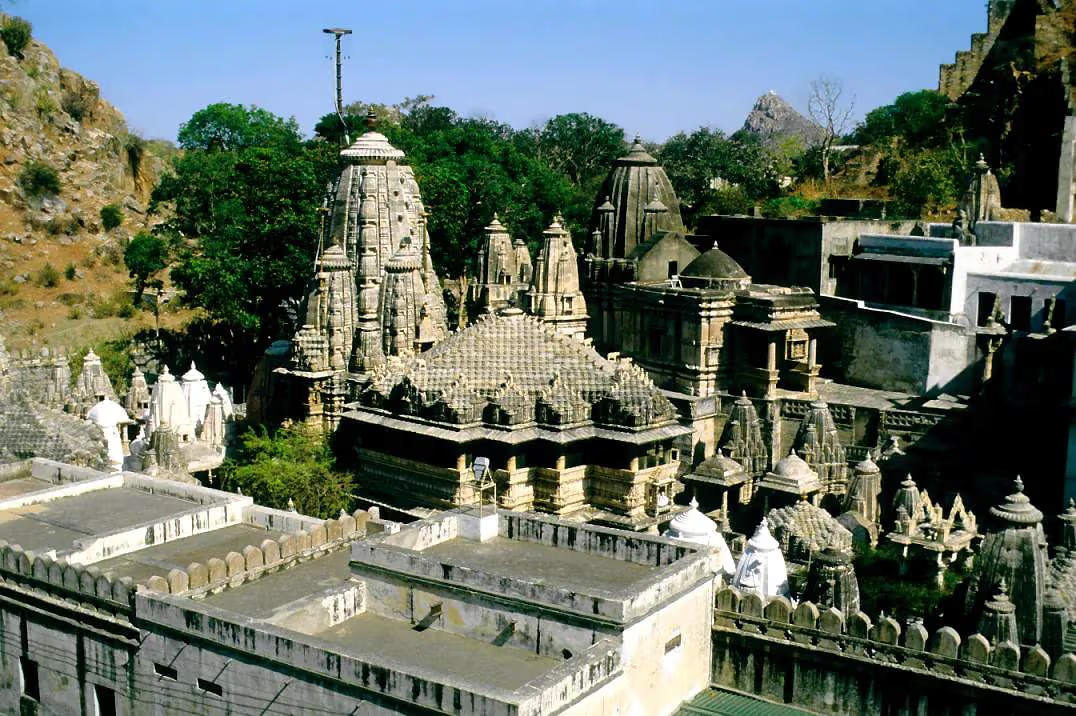
Nestled in the picturesque valley of Rajasthan, approximately 22 kilometers from Udaipur, lies the sacred Eklingji Temple - one of the most revered pilgrimage sites dedicated to Lord Shiva in India. This ancient temple complex, dating back to the 8th century, serves as the presiding deity of the Mewar dynasty and continues to be a living testament to unwavering devotion and architectural excellence. The temple's spiritual aura, combined with its stunning location in the Aravalli hills, creates an atmosphere of transcendental peace that attracts thousands of devotees and curious travelers every year.
What makes Eklingji Temple truly extraordinary is its unique four-faced Shiva lingam, a rare feature found in very few temples across India. Each face represents a different aspect of the divine - facing east is Surya (Sun), west represents Prajapati (Lord of Creatures), north depicts Vishnu, and the south-facing face shows the fierce form of Rudra. This symbolic representation embodies the temple's philosophy of unity in diversity and the all-encompassing nature of Lord Shiva. For those exploring Rajasthan's spiritual heritage, Eklingji Temple offers an authentic glimpse into the deep-rooted Shaivite tradition that has flourished in this region for over 1,200 years.
The temple complex, spread across a sprawling area, houses not just the main shrine but also 108 smaller temples, each with its own unique architectural and spiritual significance. The intricate carvings, towering spires, and sacred tanks create a mesmerizing tableau that transports visitors to a bygone era of royal patronage and artistic excellence. Whether you're a devout pilgrim seeking blessings, a history enthusiast exploring ancient architecture, or simply a traveler looking to experience Rajasthan's spiritual heart, Eklingji Temple promises an experience that's both transformative and unforgettable.
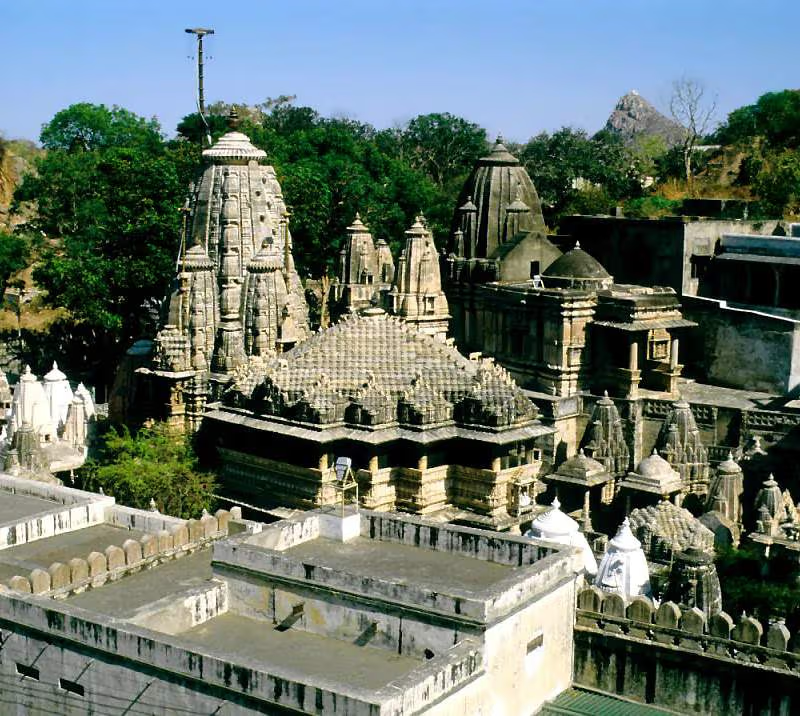
The magnificent Eklingji Temple complex rising majestically against the backdrop of the Aravalli hills
Historical Legacy and Mythological Significance
The history of Eklingji Temple is deeply intertwined with the founding of the Mewar dynasty and represents one of the oldest continuously worshipped Shiva shrines in Rajasthan. According to historical records and temple inscriptions, the original temple was constructed in 734 AD by Bappa Rawal, the founder of the Mewar dynasty. Legend has it that Bappa Rawal, a young prince seeking spiritual guidance, received a divine vision of Lord Shiva at this spot, who appeared to him and instructed him to build a magnificent temple. This divine blessing is believed to have provided the Mewar rulers with the strength and protection they needed to establish one of Rajasthan's most enduring kingdoms.
The temple's name derives from "Ekling" (meaning "the one God" or "the lone Lord"), emphasizing the concept of Shiva as the supreme divine force. Over the centuries, the temple has been renovated and expanded by various Maharanas of Mewar, each adding their own architectural contributions while maintaining the sanctity of the original structure. The most significant renovations were carried out by Maharana Raimal (15th century) and Maharana Kumbha (15th century), who were great patrons of art and architecture. These rulers not only maintained the temple but also added the magnificent pillared halls and ornate carvings that visitors admire today.
| Aspect | Details |
|---|---|
| Original Construction | 734 AD by Bappa Rawal |
| Major Renovations | 15th Century (Maharana Raimal & Kumbha) |
| Deity | Four-Faced Shiva Lingam (Eklingji) |
| Architectural Style | Indo-Aryan with Rajputana influences |
| Temple Complex | 108 temples within the complex |
| Royal Connection | Presiding Deity of Mewar Dynasty |
What sets Eklingji apart from other temples is its unique status as the kuldevata (family deity) of the Mewar royal family. For over 1,200 years, the ruling Maharanas of Mewar have considered themselves the diwans (servants) of Eklingji, administering the kingdom in the deity's name. This tradition continues even today, with the current head of the Mewar family regularly visiting the temple to offer prayers. The temple has witnessed the rise and fall of empires, weathered invasions, and stood as a symbol of Mewar's indomitable spirit and unwavering faith. During times of crisis, when the Mewar rulers faced external threats, it was to Eklingji that they turned for spiritual strength and guidance.
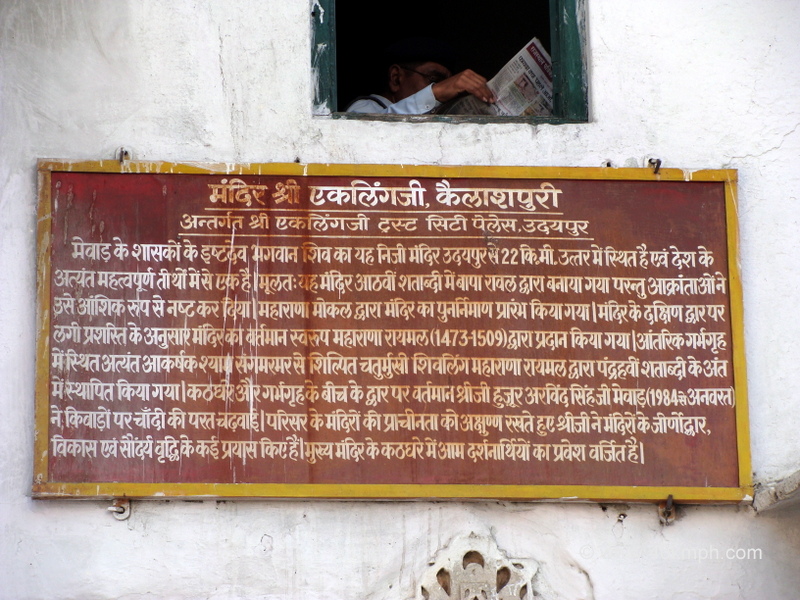
Ancient inscriptions on temple walls narrating the 1,200-year history of this sacred shrine
The temple complex also houses shrines dedicated to other deities, including Goddess Amba, Lord Ganesha, and Lord Kartikeya, reflecting the inclusive nature of Hindu worship. The presence of these deities alongside the main Shiva lingam creates a harmonious spiritual environment where devotees can offer prayers to multiple forms of the divine. Throughout its history, the temple has been a center of Shaivite philosophy and has attracted saints, sages, and scholars who have contributed to its spiritual legacy.
Architectural Grandeur and Temple Complex
The Eklingji Temple complex represents the pinnacle of Indo-Aryan temple architecture with distinctive Rajputana influences. The main temple, built from sandstone and marble, features a massive pyramidal shikhara (spire) that rises to a height of approximately 50 feet, dominating the surrounding landscape. This imposing structure is adorned with intricate carvings depicting various deities, celestial beings, and scenes from Hindu mythology. The architectural precision and artistic detail displayed in every corner of the temple reflect the exceptional craftsmanship of medieval Indian artisans.
The Main Temple Structure
The main temple is entered through a beautifully carved gateway that leads into a spacious mandapa (pillared hall). This hall, supported by ornately carved pillars, features a silver throne that was historically used by the Maharana of Mewar during his visits. The pillars themselves are masterpieces of sculptural art, each one telling stories from Hindu epics through their detailed carvings. The ceiling of the mandapa features geometric patterns and floral motifs that showcase the mathematical precision and aesthetic sensibility of the temple's architects.
Beyond the mandapa lies the antarala (vestibule) which leads to the garbhagriha (sanctum sanctorum) - the innermost chamber housing the sacred four-faced Shiva lingam. This sanctum is constructed in such a way that it remains naturally cool throughout the year, creating an ideal environment for the deity and for devotees engaged in prolonged meditation. The lingam itself, rising to a height of about four feet, is made from black marble and is surrounded by silver serpents representing the Naga tradition closely associated with Lord Shiva.
The Unique Four-Faced Lingam
The most remarkable feature of Eklingji Temple is its four-faced Shiva lingam, known as the Chaturmukha Lingam. Each face has its own significance and symbolism:
- East-facing (Surya): Represents the Sun God and symbolizes creation and enlightenment. This face is believed to bless devotees with wisdom and spiritual knowledge.
- West-facing (Prajapati): Represents the Lord of Creatures and symbolizes preservation and sustenance. This face is associated with prosperity and family well-being.
- North-facing (Vishnu): Represents the preserver aspect of the divine and symbolizes protection and dharma. This face is worshipped for strength and courage.
- South-facing (Rudra): Represents the fierce form of Shiva and symbolizes transformation and liberation. This face is associated with destroying negativity and granting moksha (liberation).
Devotees believe that circumambulating (pradakshina) this sacred lingam and viewing all four faces brings complete blessings from Lord Shiva in all his aspects. The unique representation of multiple divine forms in a single lingam emphasizes the temple's philosophy of the underlying unity of all manifestations of the divine.
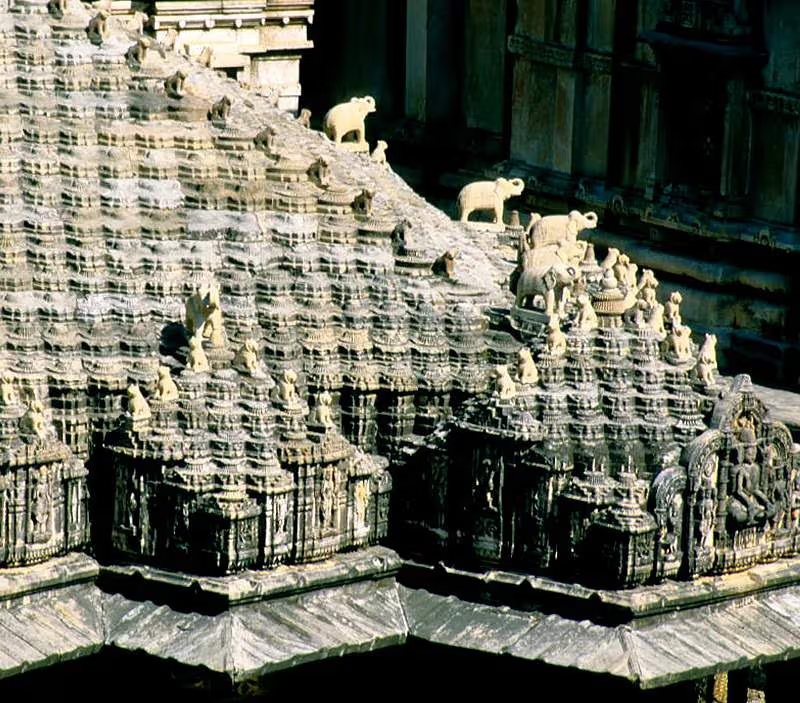
Detailed stone carvings on temple pillars depicting scenes from Hindu mythology
Temple Complex Features
The Eklingji complex extends far beyond the main temple, encompassing 108 smaller temples spread across the compound. These include:
- Lakulish Temple: Dedicated to Lakulish, the 28th incarnation of Shiva and founder of the Pashupata sect
- Amba Mata Temple: Dedicated to the Goddess Amba, an important deity in Rajasthani folklore
- Ganesha Temple: Housing a beautiful idol of Lord Ganesha, the remover of obstacles
- Kartikeya Temple: Dedicated to Lord Kartikeya, the god of war and son of Shiva
- Nandi Shrine: Featuring a magnificent black stone Nandi (Shiva's bull) facing the main sanctum
The complex also features two sacred tanks - the Tulasi Kund and the Shiva Kund - where devotees take ritual baths before entering the main temple. These tanks are fed by natural springs and are considered to have purifying properties. The surrounding walls of the complex are adorned with sculptures of various deities, celestial dancers (apsaras), and mythological creatures, creating an immersive spiritual environment.
Architectural Elements and Symbolism
- Shikhara: The pyramidal tower represents Mount Kailash, the abode of Lord Shiva
- Mandapa: The pillared hall symbolizes the transitional space between the mundane and the divine
- Garbhagriha: The inner sanctum represents the womb of creation and the heart of consciousness
- Pradakshina Path: The circumambulation path facilitates the ritual walk around the deity
- Nandi Mandapam: The pavilion housing Nandi represents devotion and listening to divine wisdom
Eklingji Temple Timings and Ritual Schedule
Understanding the temple timings and ritual schedule is essential for planning your visit effectively. The Eklingji Temple follows a strict schedule of daily rituals that have been performed continuously for over 1,200 years. These rituals create a powerful spiritual atmosphere that devotees can experience by timing their visits appropriately.
| Time Period | Activity | Details |
|---|---|---|
| 4:30 AM - 5:00 AM | Mangala Aarti | First awakening of the deity with sacred chants and offerings |
| 5:00 AM - 7:00 AM | Abhishekam | Sacred bath of the lingam with milk, honey, and other substances |
| 7:00 AM - 12:00 PM | Morning Darshan | Open for devotees, archana services available |
| 12:00 PM - 1:00 PM | Midday Aarti | Special noon prayers and offerings |
| 1:00 PM - 4:00 PM | Temple Closure | Temple closes for afternoon break |
| 4:00 PM - 7:00 PM | Evening Darshan | Open for devotees, special decorations |
| 7:00 PM - 7:30 PM | Sandhya Aarti | Evening prayer ceremony with lamps and chants |
| 7:30 PM - 8:30 PM | Shayan Aarti | Sleeping ceremony, putting the deity to rest |
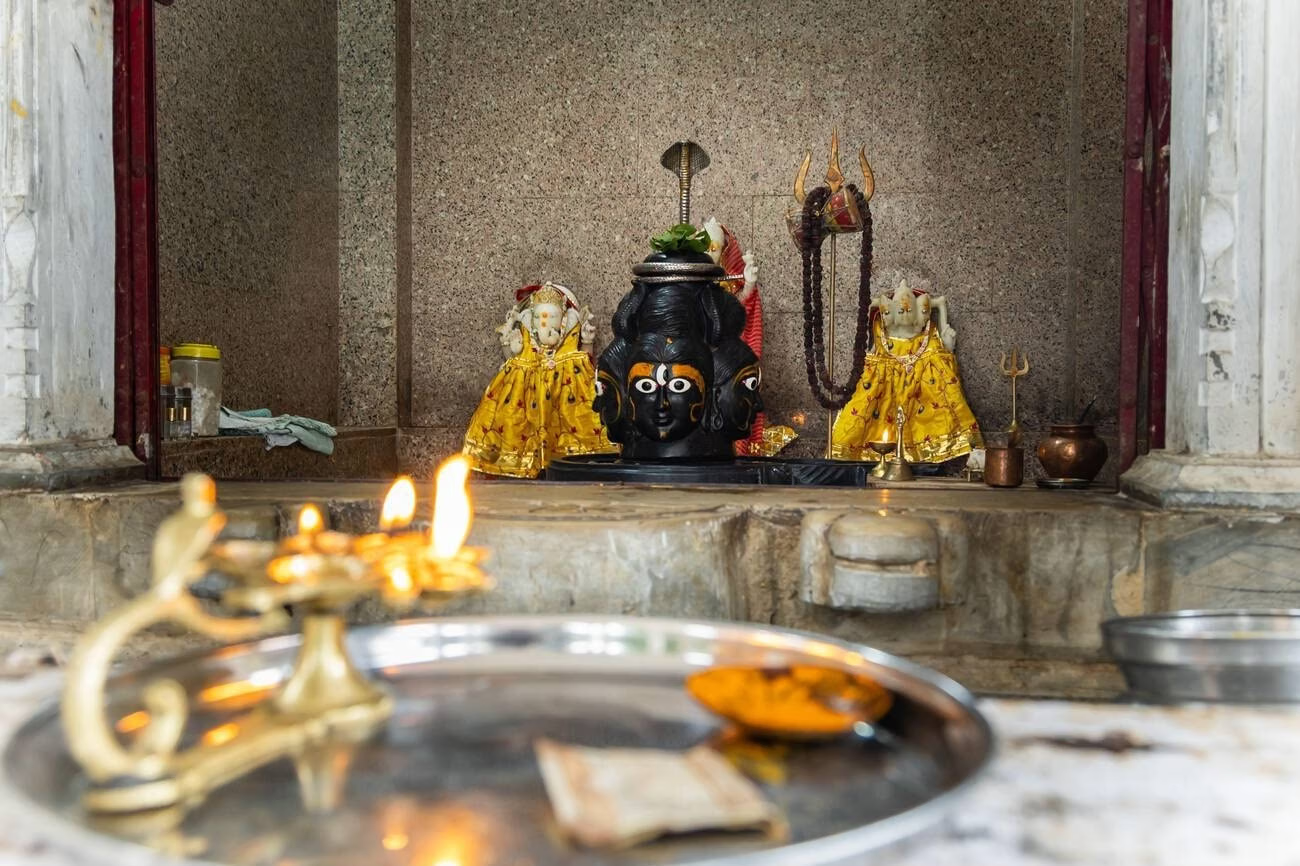
The sacred morning aarti ceremony illuminating the temple with divine light
Best Time to Visit for Darshan
The early morning hours (5:00 AM to 7:00 AM) offer the most spiritually charged experience at Eklingji Temple. During this time, you can witness the abhishekam ceremony and the morning aarti, both of which create an atmosphere of intense devotion and divine presence. The temple is relatively less crowded in the early hours, allowing for a more intimate darshan experience. The cool morning air, combined with the chanting of Vedic mantras and the fragrance of incense, creates the perfect setting for meditation and prayer.
The evening hours (6:00 PM to 7:30 PM) are equally enchanting, especially during the sandhya aarti when the temple is illuminated by hundreds of oil lamps. The evening aarti is a visual and auditory spectacle, with the rhythmic chanting of priests, the sound of temple bells, and the sight of the decorated deity creating a mesmerizing experience. If you're visiting during winter months, the evening aarti is particularly pleasant as the cool weather adds to the spiritual ambiance.
Special Poojas and Offerings
Devotees can participate in various special poojas by purchasing seva tickets from the temple office:
- Rudrabhishekam: Elaborate ritual bathing of the lingam with Vedic mantras
- Laghu Rudrabhishekam: Shorter version of the Rudrabhishekam
- Maha Abhishekam: Grand abhishekam with multiple sacred substances
- Archana: Recitation of Lord Shiva's names with offerings
- Sahasranama Archana: Recitation of the thousand names of Shiva
Festivals and Celebrations
Eklingji Temple comes alive during various festivals throughout the year, with celebrations that showcase the rich cultural heritage of Rajasthan. These festivals attract thousands of devotees and offer a unique opportunity to witness traditional rituals and cultural performances.
Maha Shivaratri (The Great Night of Shiva)
The most important festival at Eklingji is Maha Shivaratri, usually falling in February or March. On this day, the temple witnesses an unprecedented influx of devotees who fast throughout the day and keep vigil throughout the night. Special abhishekam ceremonies are performed throughout the night, and the entire temple complex is decorated with flowers and lights. The atmosphere is electric with devotion, and the chanting of "Om Namah Shivaya" reverberates throughout the complex. If you plan to visit during Maha Shivaratri, be prepared for large crowds and book your accommodation well in advance.
Shravan Month (July - August)
The entire month of Shravan is considered highly auspicious for Lord Shiva worship. During this month, devotees observe fasts on Mondays (Somvar) and offer special prayers. The temple organizes special processions, and the lingam is decorated with different flowers and ornaments each day. Many devotees undertake the Kanwar Yatra, carrying holy water from the Ganges to offer to Eklingji during this sacred month.
Diwali and Annakuta
On Diwali, the festival of lights, Eklingji Temple is illuminated with thousands of oil lamps, creating a spectacular sight. The day following Diwali is celebrated as Annakuta (mountain of food), when devotees offer elaborate food preparations to the deity. This festival symbolizes gratitude for the harvest and prosperity.
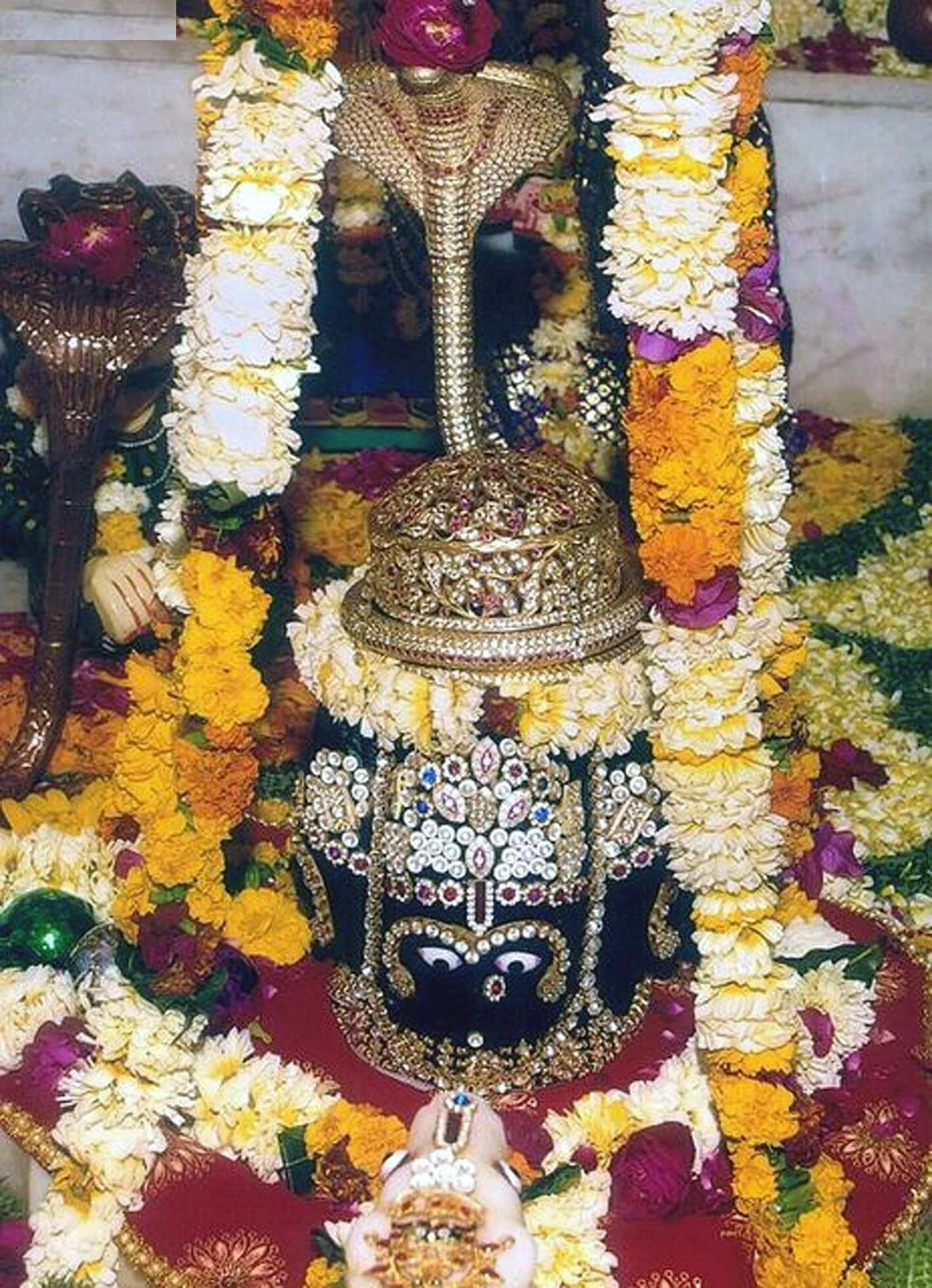
Devotees offering prayers during the grand Mahashivratri festival celebrations
Other Festivals
- Navratri: Nine days dedicated to the Divine Mother, with special decorations
- Kartik Purnima: Full moon day in Kartik month, considered highly auspicious
- Makar Sankranti: Harvest festival with special offerings
- Holi: Festival of colors celebrated with traditional fervor
How to Reach Eklingji Temple from Udaipur
Reaching Eklingji Temple is relatively straightforward, and several transportation options are available depending on your budget and preferences. The temple's location, approximately 22 kilometers north of Udaipur, makes it an ideal destination for a half-day trip or as part of a larger tour of Udaipur's attractions.
By Road from Udaipur
The most convenient way to reach Eklingji Temple is by road from Udaipur. The journey typically takes 45 minutes to 1 hour, depending on traffic conditions. The route via NH 48 and then the temple road is well-maintained and offers scenic views of the Rajasthan countryside and the Aravalli hills. You can hire a private taxi or use app-based cab services like Ola and Uber for the round trip. The cost for a private taxi typically ranges from ₹1000 to ₹1500 for a half-day excursion, including waiting time.
For budget travelers, auto-rickshaws are available, though the journey might be less comfortable due to the distance and open-air nature of the vehicle. Some auto drivers may be willing to make the trip, but be prepared to negotiate. Expect to pay between ₹600 to ₹800 for a round trip by auto-rickshaw.
Public Transportation
State-run buses operate between Udaipur and Eklingji, with buses departing from the Udaipur city bus stand. This is the most economical option, with fares typically under ₹50 per person. However, buses might be less frequent, and you'll need to check the current schedule. The journey takes approximately 1.5 hours by bus due to stops along the way. From the Eklingji bus stop, the temple is a short walk of about 500 meters.
| Transportation Mode | Distance | Approximate Time | Estimated Cost |
|---|---|---|---|
| Private Taxi/App Cab | 22 km from Udaipur | 45 minutes - 1 hour | ₹1000 - ₹1500 (round trip) |
| Auto-Rickshaw | 22 km from Udaipur | 1 - 1.5 hours | ₹600 - ₹800 (round trip, negotiable) |
| State Bus | 22 km from Udaipur | 1.5 hours | ₹30 - ₹50 per person |
| Nearest Railway Station | Udaipur City Railway Station | 22 km from temples | - |
| Nearest Airport | Maharana Pratap Airport (UDR) | 35 km from temples | - |
By Train and Air
The nearest railway station is Udaipur City Railway Station, located approximately 22 kilometers from the temple. From the station, you can hire a taxi or auto-rickshaw to reach Eklingji. For those traveling by air, Maharana Pratap Airport (also known as Dabok Airport) in Udaipur is about 35 kilometers away. Taxis are readily available at both the railway station and the airport for the onward journey to the temple.
Self-Driving Option
If you're comfortable driving in India, renting a car or motorcycle gives you the flexibility to explore at your own pace. The roads to Eklingji are generally in good condition, and the route is well-signposted. The drive offers beautiful views of the Aravalli hills, especially during the monsoon season when the landscape is lush and green. Parking is available near the temple complex for a nominal fee.
Best Time to Visit Eklingji Temple
Choosing the right time to visit Eklingji Temple can significantly enhance your experience. The region experiences distinct seasons, each offering a different perspective on this sacred site. Understanding the weather patterns and planning accordingly will help you make the most of your visit.
Winter Season (October - March)
This is undoubtedly the best time to visit Eklingji Temple. The weather during these months is pleasantly cool, with daytime temperatures ranging between 15°C to 25°C. This comfortable climate allows you to explore the temple complex at leisure without the discomfort of extreme heat. The winter sky is usually clear, providing excellent conditions for photography and outdoor exploration. December and January are particularly popular months, so you might encounter more visitors during this time. However, the temple rarely feels overwhelmingly crowded, and you can still find quiet moments for reflection and worship.
Winter is also the festive season, with major festivals like Diwali and Maha Shivaratri usually falling during these months. If you want to experience the temple's festive atmosphere while avoiding the extreme crowds of Maha Shivaratri, visiting during Diwali (October/November) offers a great compromise - you get to see the temple beautifully decorated while still having space for peaceful darshan.
Summer Season (April - June)
Summer in Rajasthan can be extremely harsh, with temperatures often exceeding 40°C. Visiting during these months is not recommended, as the intense heat can make outdoor exploration uncomfortable and even dangerous. The stone surfaces of the temple complex absorb heat, making the vicinity particularly hot. However, if you must visit during summer, plan your trip for early morning (around 5 AM) when temperatures are relatively cooler, and the temple is conducting the morning abhishekam.
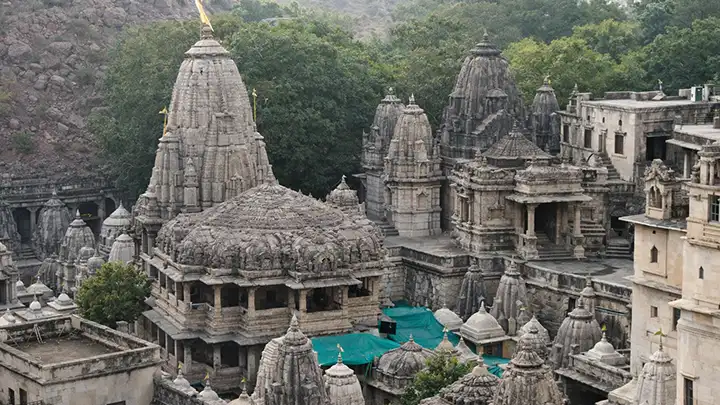
The serene temple complex bathed in pleasant winter light, the ideal season for exploration
Monsoon Season (July - September)
The monsoon brings relief from the scorching summer heat and transforms the landscape around the temple. The surrounding Aravalli hills turn lush green, and the temple's water tanks fill up, creating a beautiful backdrop for the ancient stone structures. While rainfall can be unpredictable, light showers add to the mystical atmosphere of the site. The temperatures during monsoon are moderate, ranging between 25°C to 30°C, making it a decent time to visit if you don't mind occasional rain. The temple looks particularly beautiful during and immediately after rain, when the wet stone surfaces glisten and the air is fresh and clean.
Recommended Time of Day
Regardless of the season, the best time to visit Eklingji Temple is early morning, between 5 AM and 7 AM. During these hours, you can witness the sacred abhishekam ceremony, the site is relatively quiet, the lighting is perfect for photography, and the temperature is at its most comfortable. If you're visiting in winter, late afternoon (4 PM to 6 PM) can also be pleasant, especially if you want to catch the golden hour light on the temple spires and stay for the evening aarti.
Nearby Attractions and Combining Visits
One of the advantages of visiting Eklingji Temple is its proximity to several other important historical and religious sites. This makes it easy to plan a comprehensive tour of the region's cultural heritage in a single trip. Combining visits allows you to make the most of your travel time and experience the diverse attractions that the Udaipur region has to offer.
Sas-Bahu Temples (2 km away)
Located just 2 kilometers from Eklingji in the ancient town of Nagda, the Sas-Bahu Temples are a must-visit for history and architecture enthusiasts. These 10th-century temples, dedicated to Lord Vishnu and Lord Shiva respectively, are renowned for their exquisite Maru-Gurjara architecture and intricate stone carvings. Despite being partially ruined, the temples retain their grandeur and offer a fascinating glimpse into the architectural achievements of medieval India. Combining a visit to both temples allows you to experience two different aspects of Rajasthan's spiritual heritage - the living religious tradition of Eklingji and the ancient archaeological wonder of Sas-Bahu.
Nathdwara (45 km away)
About 45 kilometers from Eklingji lies Nathdwara, home to the famous Shrinathji Temple, one of the most important pilgrimage sites for followers of the Pushtimarg tradition of Vaishnavism. The temple houses a beautiful black marble idol of Lord Krishna as Shrinathji. The town is also known for its Pichwai paintings and traditional handicrafts. A visit to Nathdwara offers a contrast to the Shaivite tradition of Eklingji, showcasing the diversity of Hindu religious practices.
Haldighati (40 km away)
Located approximately 40 kilometers from Eklingji, Haldighati is famous for the historic battle fought in 1576 between Maharana Pratap of Mewar and the Mughal forces. The site features a museum that provides insights into this crucial chapter of Rajput history. The pass itself, known for its yellow-colored soil (which gives it the name Haldighati or "Yellow Vale"), offers scenic views and is of great historical significance.
Return to Udaipur City Attractions
On your return journey to Udaipur, you can visit several iconic attractions within the city:
- City Palace Udaipur: The magnificent palace complex on the banks of Lake Pichola, representing the architectural grandeur of the Mewar dynasty
- Gangaur Ghat: A scenic ghat on Lake Pichola, perfect for witnessing sunset and the spiritual atmosphere of Udaipur
- Bagore Ki Haveli: A beautifully preserved haveli (mansion) showcasing Rajasthani architecture and culture
- Sajjangarh Monsoon Palace: Hilltop palace offering panoramic views of Udaipur and its lakes
- Fatehsagar Lake: Picturesque lake perfect for evening boat rides and relaxation
Suggested Itinerary for Combined Visit
Half-Day Itinerary:
- Early Morning (5:00 AM): Reach Eklingji Temple for abhishekam darshan
- Mid-Morning (8:00 AM): Visit Sas-Bahu Temples in Nagda
- Late Morning (10:00 AM): Return to Udaipur, breakfast en route
- Afternoon: Visit City Palace and Bagore Ki Haveli
- Evening: Sunset at Gangaur Ghat or Lake Pichola
Full-Day Itinerary:
- Morning: Eklingji Temple and Sas-Bahu Temples
- Afternoon: Visit to Nathdwara Shrinathji Temple
- Late Afternoon: Stop at Haldighati Museum
- Evening: Return to Udaipur for sunset at Fatehsagar Lake
Essential Travel Tips and Temple Etiquette
To make your visit to Eklingji Temple as enjoyable and meaningful as possible, keep these practical tips in mind. Proper planning and awareness will help you navigate the site comfortably and respect its cultural significance.
Dress Code and Temple Etiquette
As with any religious site in India, modest dressing is essential. Avoid wearing shorts, sleeveless tops, or revealing clothing. Both men and women should dress conservatively, covering shoulders and knees. Traditional Indian attire is preferred but not mandatory. Carrying a scarf or dupatta is advisable, especially for women, as it can be used to cover the head when entering the sanctum areas, though this is not strictly enforced.
Footwear must be removed before entering the temple premises. There's a designated area near the entrance where you can leave your shoes. Wearing socks is optional, but be aware that the stone surfaces can be hot in summer and cold in winter. Carrying a small bag to hold your footwear is a good idea. The temple provides shoe storage facilities for a nominal fee.
Photography Guidelines
Photography is permitted in the exterior areas of the temple complex and is actually encouraged given the temple's photogenic architecture. However, photography is strictly prohibited inside the main sanctum where the four-faced lingam is housed. This restriction is out of respect for the deity's sanctity. Always look for signage and follow the instructions of temple priests and security personnel regarding photography restrictions.
The best photography spots include:
- Temple Entrance: Capture the grand gateway and approach to the main temple
- Nandi Shrine: Photograph the magnificent black stone Nandi facing the main sanctum
- Pillared Hall: Document the intricate carvings on pillars (if photography is permitted)
- Temple Tanks: Capture the reflection of the temple in the sacred tanks
- Shikhara Views: Photograph the towering spire against the sky, especially during golden hour
Temple Offerings and Prasad
Devotees can bring offerings for the deity, including:
- Flowers: Marigolds, roses, and lotus flowers are preferred
- Fruits: Bananas, coconuts, and seasonal fruits
- Sweets: Laddu, peda, or other traditional sweets
- Milk: For abhishekam (sacred bath)
- Bilva Leaves: Sacred leaves specially offered to Lord Shiva
These offerings can be purchased from shops near the temple entrance. After the puja, you'll receive prasad (blessed food) which is typically distributed to all devotees. The prasad at Eklingji Temple is considered especially sacred due to the temple's antiquity and spiritual significance.
Facilities and Amenities
The temple complex has basic facilities for visitors:
- Drinking Water: Free drinking water is available near the entrance
- Restrooms: Basic restroom facilities are available
- Shoe Storage: Paid shoe storage facilities near the entrance
- Prasad Counter: Where you can purchase offerings and receive blessed prasad
- Seating Areas: Designated areas for elderly devotees to rest
However, facilities are limited, so it's advisable to carry water, especially if you're visiting during hot weather. There are no restaurants within the temple complex, so plan accordingly. Small shops outside the temple sell snacks, religious items, and souvenirs.
Hiring a Guide
While not strictly necessary, hiring a local guide can significantly enhance your experience. A knowledgeable guide can explain the historical context, point out architectural details you might miss, share interesting stories and legends associated with the temple, and help you navigate the complex more efficiently. Guides are usually available near the temple entrance, or you can book one through your travel agent or hotel. Expect to pay around ₹200-₹500 for a guided tour, depending on duration and the guide's expertise.
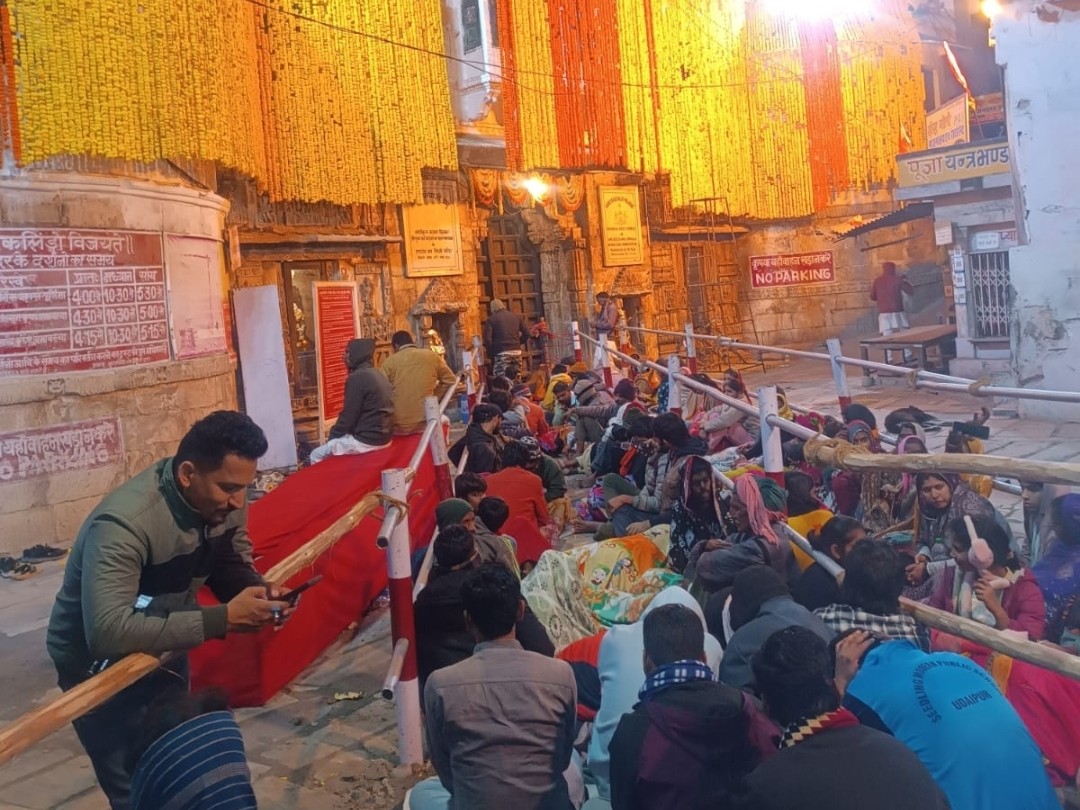
Devotees offering prayers and performing rituals in the temple courtyard
Best Practices for Devotees
- Arrive Early: Reach the temple early to avoid crowds and have a peaceful darshan
- Maintain Silence: Keep conversations low and respect the spiritual atmosphere
- Follow Queue: Join the designated queue for darshan rather than pushing forward
- Respect Rituals: Do not disrupt priests conducting ceremonies
- Circumambulate Clockwise: Perform pradakshina (circumambulation) in a clockwise direction
- Accept Prasad Gracefully: Receive prasad with both hands as a mark of respect
- Donation: Consider making a donation for temple maintenance (receipts are provided)
Accessibility Information
The temple complex has some accessibility challenges due to its ancient design. There are steps at various points, and the terrain is uneven in places. Wheelchair users may face difficulties navigating certain areas. However, the main temple is partially accessible, and priests are generally helpful in facilitating darshan for elderly and differently-abled devotees. If you have specific accessibility needs, consider visiting during less crowded times and seek assistance from temple staff.
Health and Safety Tips
- Stay Hydrated: Carry water, especially during summer visits
- Sun Protection: Apply sunscreen and wear a hat during day visits
- Comfortable Footwear: Wear shoes that are easy to remove and put back on
- Medications: Carry any necessary medications, as medical facilities are limited nearby
- Valuables: Avoid bringing expensive jewelry or large amounts of cash
- Children: Keep children close, as the complex can get crowded
Spiritual Significance and Religious Importance
Understanding the deeper spiritual significance of Eklingji Temple adds profound meaning to your visit. This sacred site is not just an architectural monument but a living center of Shaivite philosophy and practice that has sustained devotees for over 12 centuries.
The Concept of Ekling - The One God
The term "Ekling" derives from "Eka" (one) and "Ishvara" (Lord), literally meaning "The One God" or "The Sole Lord." This name reflects the temple's foundational philosophy of Lord Shiva as the singular, ultimate reality from which all creation emerges. In the Shaivite tradition, Shiva is not merely one among many gods but represents the supreme consciousness that pervades everything in the universe. The four faces of the lingam, while representing different aspects of the divine, ultimately emphasize that all these diverse forms are manifestations of the one supreme reality.
For the rulers of Mewar, Eklingji was not just their family deity but the true king of the kingdom. The Maharanas considered themselves the diwans (ministers) of Eklingji, governing the realm as temporal representatives of the divine king. This unique concept of divine kingship provided Mewar with its moral strength and enabled it to resist foreign domination for centuries, even when surrounding kingdoms fell.
Connection to Pashupata Tradition
Eklingji Temple has strong historical connections to the Pashupata sect, one of the oldest Shaivite traditions in India. The presence of the Lakulish Temple within the complex is significant, as Lakulish is believed to be the 28th incarnation of Lord Shiva and the founder of the Pashupata sect. This sect emphasizes meditation, yoga, and devotion to Shiva as the Lord of Animals (Pashupati), symbolizing Shiva's mastery over both the animal and human aspects of nature.
The temple's architecture and rituals incorporate elements from this ancient tradition, making it an important site for scholars studying the evolution of Shaivism in India. The continued practice of these ancient rituals connects modern devotees to a spiritual lineage that stretches back unbroken for over a millennium.
The Sacred Geography
Eklingji Temple's location in the Aravalli hills is not accidental. In Hindu tradition, temples are built at places of natural spiritual power, often identified through vision, dream, or divine instruction. The valley surrounding Eklingji is considered sacred due to its natural features - the surrounding hills symbolize protection, the natural springs represent purity, and the peaceful atmosphere facilitates meditation and spiritual practice.
The two sacred tanks - Tulasi Kund and Shiva Kund - are believed to have healing properties, and devotees often take ritual baths in these waters before entering the main temple. The practice of ritual purification before entering sacred spaces is an ancient Hindu tradition that continues to be observed at Eklingji, linking modern visitors to practices followed by devotees over a thousand years ago.
Living Tradition
What makes Eklingji particularly special is that it remains a living temple where continuous worship has been maintained for over 1,200 years. Unlike many ancient temples that have become archaeological monuments, Eklingji continues to function as an active religious center where daily rituals are performed with the same devotion and adherence to tradition as they were centuries ago. This living tradition creates a powerful spiritual atmosphere that visitors can feel the moment they enter the temple complex.
The priests who serve at Eklingji Temple come from families that have served here for generations. The knowledge of rituals, mantras, and procedures is passed down orally from father to son, preserving an unbroken lineage of temple service. This continuity of tradition is rare in the modern world and makes Eklingji an important repository of India's intangible cultural heritage.
Planning Your Eklingji Temple Visit
A visit to Eklingji Temple is more than just sightseeing - it's an immersive journey into Rajasthan's spiritual heart, a encounter with 1,200 years of unbroken tradition, and an opportunity to experience the profound peace that comes from spending time in a truly sacred space. Whether you're a devotee seeking Lord Shiva's blessings, a history enthusiast exploring ancient architecture, or a traveler curious about India's rich cultural heritage, Eklingji Temple offers an experience that's both deeply spiritual and culturally enriching.
Recommended Visit Duration
Plan to spend at least 1-2 hours at the temple complex. This gives you enough time to:
- Observe the main deity and perform darshan
- Explore the various smaller temples within the complex
- Walk around the sacred tanks
- Admire the architectural details and carvings
- Sit in meditation and absorb the spiritual atmosphere
- Shop for religious souvenirs if desired
If you're particularly interested in architecture or photography, or if you want to participate in extended rituals, you might want to allocate 3-4 hours for a more leisurely and thorough exploration.
Sample 2-Day Udaipur Spiritual Itinerary
Day 1: Ancient Temples
- Early Morning (5:00 AM): Depart from Udaipur for Eklingji Temple
- Morning (6:00 AM - 9:00 AM): Abhishekam darshan and exploration of Eklingji Temple
- Late Morning (9:30 AM - 11:00 AM): Visit Sas-Bahu Temples in Nagda
- Afternoon: Return to Udaipur, lunch, rest at hotel
- Evening: Sunset at Gangaur Ghat, dinner at a lakeside restaurant
Day 2: Udaipur Heritage
- Morning: Visit City Palace Udaipur and Bagore Ki Haveli
- Afternoon: Lunch, visit Jagdish Temple
- Late Afternoon: Boat ride on Lake Pichola
- Evening: Visit Sajjangarh Monsoon Palace for sunset views
Making the Most of Your Spiritual Journey
To truly absorb the spiritual energy of Eklingji Temple, consider these suggestions:
- Participate in Rituals: Don't just observe - participate in the abhishekam or offer your own puja
- Meditate: Find a quiet corner in the temple complex and sit in meditation for at least 15-20 minutes
- Circumambulate: Perform pradakshina (circumambulation) around the main shrine with mindfulness and devotion
- Learn the History: Hire a guide or read about the temple's history before visiting to add depth to your experience
- Observe Details: Don't rush - take time to notice the small carvings, symbols, and architectural features
- Respect Locals: Observe and respect the devotion of local pilgrims - their sincerity adds to the atmosphere
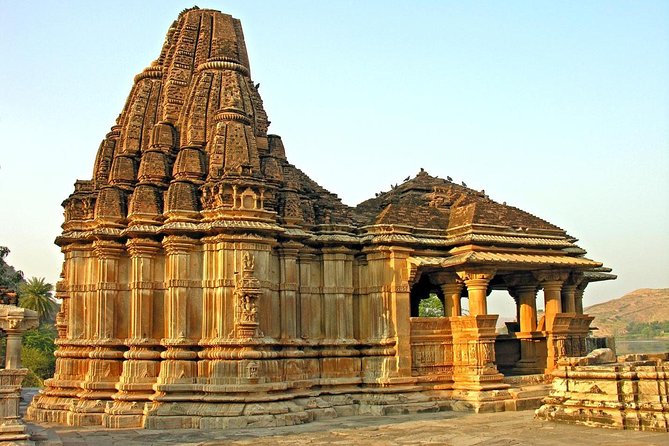
The sacred temple complex bathed in the golden light of sunset, a perfect time for reflection
Conclusion
Eklingji Temple stands as a timeless testament to the devotion, artistry, and spiritual wisdom of ancient India. For over 1,200 years, this sacred shrine has been a beacon of Shaivite tradition, a symbol of Mewar's indomitable spirit, and a source of blessing for countless devotees who have walked through its hallowed portals. The temple's unique four-faced Shiva lingam, its stunning architecture, and its living tradition create an experience that transcends mere tourism and touches something deeper within the human spirit.
Whether you're drawn to Eklingji by faith, curiosity, or a love of history and architecture, the temple rewards all who visit with its profound sense of peace and its palpable spiritual energy. In a world that's increasingly fast-paced and disconnected from its roots, places like Eklingji Temple offer sanctuary - a space where time seems to slow down, where ancient traditions continue unbroken, and where the divine feels accessible and present.
As you plan your visit to Eklingji, approach it not just as another sightseeing destination but as an opportunity for spiritual connection and cultural immersion. Participate in the rituals, observe the traditions, spend time in quiet contemplation, and let the temple's sacred atmosphere work its magic on you. You may find, as countless devotees have over the centuries, that a visit to Eklingji is not just a journey through space but a journey into something timeless and transcendent.
May your visit to Eklingji Temple bring you peace, blessings, and a deeper appreciation for India's rich spiritual heritage. Har Har Mahadev!
Location
Frequently Asked Questions
Q1.What is Eklingji Temple famous for?
Q2.What are the timings of Eklingji Temple Udaipur?
Q3.How far is Eklingji Temple from Udaipur?
Q4.What is the history of Eklingji Temple?
Q5.What is the best time to visit Eklingji Temple?
Q6.What is the significance of the four-faced Shiva lingam?
Q7.Is there an entry fee for Eklingji Temple?
Q8.What are the main festivals celebrated at Eklingji Temple?
Q9.Can non-Hindus visit Eklingji Temple?
Q10.What should I wear when visiting Eklingji Temple?
Q11.How long does it take to visit Eklingji Temple?
Recommended For You
Bagore Ki Haveli Udaipur: Museum, Puppet Show Timings & Tickets
Discover Bagore Ki Haveli Udaipur: 18th-century mansion turned museum with Dharohar dance, puppet shows, turban gallery & stunning Lake Pichola views.
25 Famous Hindu Temples in Rajasthan: Darshan Highlights by Region
Explore 25 famous Hindu temples in Rajasthan with location, timings & history. Includes Dilwara, Brahma, Eklingji & more. Complete guide with route maps.
Best Time to Visit Udaipur: Weather, Festivals & Best Travel Months
Find the best time to visit Udaipur with a season-by-season weather guide, monthly breakdown, festival context, and practical planning tips.
Never Miss an Adventure
Get the latest trekking guides, travel tips, and exclusive offers delivered straight to your inbox.
