
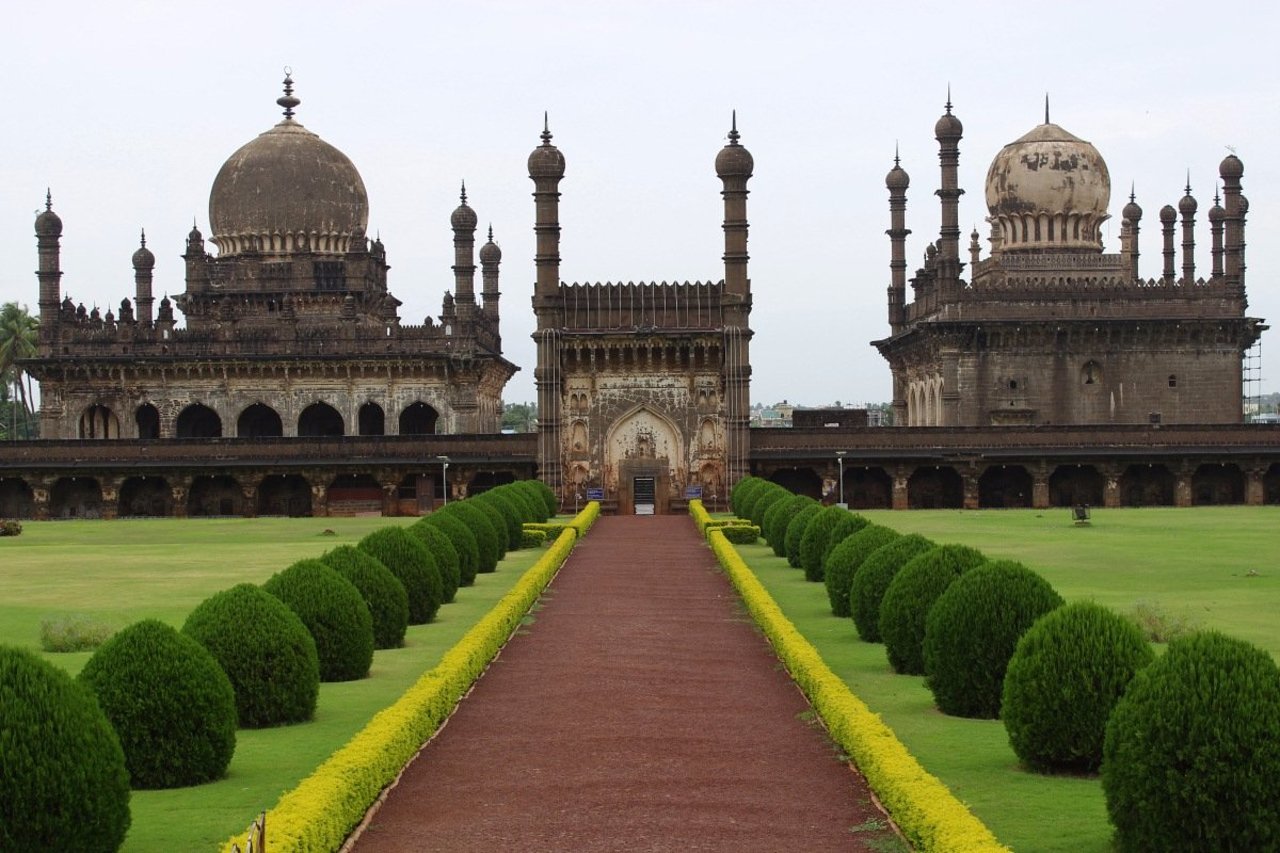
Famous Places to Visit in Bijapur: 15 Historic Attractions

Ananya Sharma
February 20, 2026
Explore Bijapur (Vijayapura) - home to Gol Gumbaz's whispering gallery, Ibrahim Roza, and magnificent Adil Shahi architecture. Complete travel guide to Karnataka's historical treasure.
Introduction to Bijapur (Vijayapura) - The City of Victory
Bijapur, officially known as Vijayapura, stands as one of India's most remarkable historical destinations, bearing testimony to the grandeur of the Adil Shahi dynasty that ruled the Deccan from 1489 to 1686. This city in northern Karnataka earned its name "Bijapur" meaning "City of Victory" and was once the capital of one of the five great Deccan sultanates. Today, it remains a living museum of Islamic architecture, housing some of the most impressive monuments built in medieval India. What makes Bijapur truly special is its extraordinary concentration of architectural marvels within a relatively small area. Unlike many historical sites where monuments are scattered across vast distances, Bijapur's treasures are clustered together, making it possible for visitors to experience centuries of history in just a few days of exploration. The city's monuments showcase a unique architectural style that blends Persian, Turkish, and indigenous Indian influences, creating structures that are not just visually stunning but also engineering marvels of their time. For history enthusiasts, architecture buffs, and curious travelers alike, Bijapur offers an unparalleled journey through India's medieval past. The city's monuments, particularly the iconic Gol Gumbaz, represent the pinnacle of Islamic architecture in South India. What's particularly remarkable is that these structures were built during a period of intense political rivalry, yet they reflect an artistic sensibility that transcended religious and cultural boundaries.Gol Gumbaz: The Whispering Monument
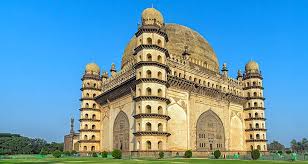 The Gol Gumbaz stands as Bijapur's most iconic monument and the undisputed highlight of any visit to the city. Built in 1656 by the architect Yaqut of Dabul, this monumental mausoleum houses the tomb of Mohammed Adil Shah, the seventh ruler of the Adil Shahi dynasty. What makes the Gol Gumbaz truly extraordinary is its dome - the second largest in the world after St. Peter's Basilica in Rome, and remarkably, built without any pillars to support it.
Architectural Marvel
The dome of Gol Gumbaz spans an incredible 38 meters (124 feet) in diameter and stands 51 meters high, dominating the Bijapur skyline. What's particularly fascinating about this structure is that it was built entirely without any central support system - a feat of engineering that continues to awe architects and engineers even today. The walls of the mausoleum are 3 meters thick, designed to support the massive weight of the dome.The Whispering Gallery
The most famous feature of Gol Gumbaz is its whispering gallery, located at the base of the dome. This circular gallery has a unique acoustic property - even the faintest whisper made on one side can be heard clearly on the opposite side, approximately 38 meters away. This phenomenon occurs due to the dome's perfect hemispherical shape, which reflects sound waves with remarkable efficiency. Visitors to the gallery often spend hours testing this acoustic wonder, whispering messages to friends standing at the opposite end.Tomb and Interior
The central hall houses the tomb of Mohammed Adil Shah, his wives, and other family members. The tomb itself is relatively simple, surrounded by an elevated platform where visitors can walk around and view the structure from different angles. The octagonal towers at the seven corners of the building house staircases that lead to the whispering gallery above.Best Time to Visit and Photography Tips
The best time to visit Gol Gumbaz is early morning when the light is soft and the crowds are thin. The monument is particularly beautiful during sunset when the golden light bathes the massive dome. Photography enthusiasts should bring a wide-angle lens to capture the full scale of the structure. The view from the whispering gallery offers panoramic vistas of Bijapur city, making the climb absolutely worth it.Practical Information
- Timings: 6:00 AM to 6:00 PM daily
- Entry Fee: ₹5 for Indians, ₹100 for foreigners
- Video Camera: ₹25 additional
- Duration: Plan 1-2 hours for complete exploration
- Best Time: Early morning or late afternoon
Ibrahim Roza: The Taj of the South
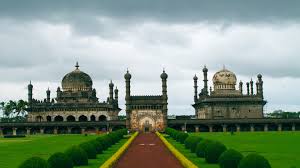 Often referred to as the "Taj of the South," Ibrahim Roza is widely considered the most beautiful structure in Bijapur. Built by Ibrahim Adil Shah II as a tomb for his queen, Taj Sultana, and later for himself, this monument showcases the artistic zenith of Adil Shahi architecture. What makes Ibrahim Roza particularly special is its perfect symmetry and the extraordinary delicacy of its carvings, which many art historians consider superior to those at the Taj Mahal.
Architectural Beauty
The Ibrahim Roza complex consists of two buildings - a tomb and a mosque, separated by a small tank and fountain. Both structures are built on a single raised platform and share identical architectural elements, creating a perfectly balanced composition. The buildings are crowned by elegant domes, with the tomb's dome being slightly larger than the mosque's.Intricate Carvings
What truly sets Ibrahim Roza apart is the exquisite quality of its stone carvings. The walls are covered with delicate lace-like traceries, arabesques, and Quranic inscriptions that showcase the incredible skill of the artisans who created them. The carvings are so fine in places that they appear to have been executed with a needle rather than a chisel. The brackets supporting the cornice are particularly noteworthy, carved in the shape of mythical creatures and floral motifs.The Legend
Local legend has it that Ibrahim Adil Shah was so enamored with this monument that he issued a decree that anyone wishing to build a similar structure would have their hands cut off. Whether true or not, the story speaks to the unparalleled beauty of Ibrahim Roza and the pride it inspired in its creator.Photography Opportunities
Ibrahim Roza is a photographer's delight, particularly during the golden hours. The delicate carvings catch the light beautifully, creating intricate patterns of shadow and illumination. The reflection of the buildings in the central tank adds another dimension to photographs. The site is best visited early morning or late afternoon when the soft light enhances the architectural details.Jumma Masjid: Grand Mosque of Bijapur
The Jumma Masjid, also known as the Jama Masjid, is the largest mosque in Bijapur and one of the finest examples of Islamic architecture in South India. Construction of this magnificent structure began during the reign of Ali Adil Shah I and was completed by his son, Ibrahim Adil Shah II, making it a project that spanned multiple rulers and nearly 60 years of work.Architectural Grandeur
The mosque's prayer hall is massive, measuring approximately 70 meters from north to south and 23 meters from east to west. It is said that the hall can accommodate up to 5,000 worshippers at a time, a testament to its enormous scale. The building is entered through five large doorways, each framed by an elaborately carved archway.Unique Features
One of the most striking features of the Jumma Masjid is its courtyard, which is one of the largest in India. The courtyard measures 225 feet by 180 feet and was originally used for gatherings and religious assemblies. The mosque's mihrab (prayer niche indicating the direction of Mecca) is particularly ornate, covered with exquisite Quranic inscriptions and geometric patterns. The mosque's construction is interesting from an engineering perspective. Unlike many mosques which are built on a raised platform, the Jumma Masjid sits at ground level, which required elaborate water management systems to keep the interior dry during heavy rains.Malik-e-Maidan: The Monarch of the Field
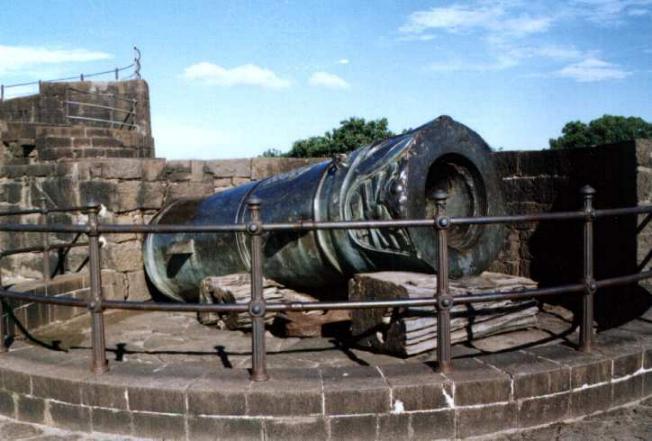 The Malik-e-Maidan, meaning "Monarch of the Field," is one of Bijapur's most fascinating attractions - a massive medieval cannon that continues to awe visitors with its sheer size and the remarkable engineering that went into its creation. Cast in 1549 by Muhammad Bin Hasan Rumi, a Turkish engineer, this cannon is believed to be the largest medieval cannon in the world.
Technical Specifications
The cannon measures an impressive 4.45 meters (14.6 feet) in length and has a bore diameter of nearly 1.5 meters. It weighs approximately 55 tons and is mounted on a specially designed platform that allowed it to be rotated and aimed. What makes this cannon particularly remarkable is that it was brought to Bijapur all the way from Ahmadnagar, a distance of nearly 500 kilometers, in the 17th century - an extraordinary logistical achievement for its time.Historical Significance
The cannon was commissioned by the Bijapur sultanate to defend the city against invading armies. Its most famous use was during the Battle of Talikota in 1565, where it played a crucial role in the Deccan sultanate's victory over the Vijayanagara Empire. Despite its enormous size, the cannon was remarkably accurate and could fire projectiles weighing up to 50 kilograms over distances of several kilometers.Unique Design Features
The cannon's muzzle is shaped like a dragon's head with open jaws, from which the cannonball would emerge. The surface of the cannon is decorated with intricate carvings including inscriptions, animal motifs, and geometric patterns. A particularly interesting feature is the small elephant carved on the cannon - legend has it that the cannon was so powerful that it could frighten elephants.Upli Buruj: Watch Tower with Panoramic Views
The Upli Buruj, also known as the Hyder Burj, is a 24-meter high watch tower that offers the best panoramic views of Bijapur. Built during the reign of Ibrahim Adil Shah II, this tower was part of the city's defensive system and was used to monitor approaching armies and communicate with other fortifications through signal fires.Architecture and Design
The tower is circular in plan with a diameter of approximately 10 meters at the base. Two rounds of cannons can still be seen mounted on the tower, pointing in different directions to defend against potential attacks. The walls are approximately 3 meters thick, designed to withstand cannon fire.Climbing Experience
Climbing to the top of Upli Buruj involves ascending a narrow spiral staircase with 80 steps. The climb can be challenging in hot weather, but the views from the top make every step worthwhile. From the summit, you can see the entire Bijapur skyline, including Gol Gumbaz, Ibrahim Roza, and various other monuments spread across the city.Best Time to Visit
The best time to climb Upli Buruj is during sunset when the fading light creates a magical atmosphere and the city below is bathed in golden hues. The tower is particularly popular among photographers who come to capture panoramic views of Bijapur's monuments silhouetted against the evening sky.Bara Kaman: The Unfinished Masterpiece
Bara Kaman, meaning "12 arches," is the unfinished mausoleum of Ali Adil Shah II, and it stands as one of Bijapur's most intriguing monuments - not for what it is, but for what it was meant to be. The structure gets its name from the 12 horizontal and vertical arches that were planned but never completed.The Ambitious Plan
Ali Adil Shah II envisioned Bara Kaman as a monument that would rival even Gol Gumbaz in grandeur. The plan called for 12 arches arranged vertically and horizontally, creating a magnificent structure that would have been even larger than Gol Gumbaz. However, work on the monument was never completed - some say due to the king's death, others claim it was stopped because it would have overshadowed Gol Gumbaz.What Remains Today
Today, only the basement and partial walls of Bara Kaman remain, giving visitors a glimpse into what might have been. The incomplete nature of the structure adds to its mystique and has made it a subject of fascination for historians and architects who study the plans and imagine the completed monument.Photography Opportunities
The unfinished arches create dramatic geometric patterns that photographers find particularly appealing. The monument is especially photogenic during the golden hours when the light creates interesting shadows and highlights the architectural details of what was built.More Architectural Gems of Bijapur
Asar Mahal
Built in 1646 by Mohammed Adil Shah, the Asar Mahal was originally used as a Hall of Justice. The building houses some hair from the Prophet Muhammad's beard, making it a significant religious site for Muslims. The upper story of the building offers beautiful views of the surrounding area and features some interesting frescoes that have partially survived the passage of time.Gagan Mahal (Sky Palace)
Built by Ibrahim Adil Shah II, the Gagan Mahal served as the royal palace and audience hall. The building is an interesting blend of Hindu and Islamic architectural styles and features a massive durbar hall where the sultan would hold court. The palace's most striking feature is its tall central arch, which creates an impressive sense of space and grandeur.Anand Mahal (Palace of Joy)
The Anand Mahal was built by Ibrahim Adil Shah II as a pleasure palace and residence for the royal ladies. The palace is surrounded by beautiful gardens and water features, creating a serene and luxurious environment. While much of the original splendor has faded, the palace still gives visitors a sense of the opulence in which the Adil Shahi rulers lived.Mehtar Mahal
This small but beautifully proportioned building is often called the "Sweeper's Palace" due to a local legend that it was built by a sweeper who saved the sultan's life. The building is architecturally significant for its ornate brackets and delicate carvings, which showcase the refined aesthetic sensibilities of the Adil Shahi period.Taj Bawdi
This massive stepwell was built by Ibrahim Adil Shah II in honor of his queen, Taj Sultana. The well was an engineering marvel, designed to provide a reliable water supply to the palace complex. The octagonal well is accessed by a series of symmetrical flights of stairs on three sides, with the fourth side featuring a raised platform where the royal family could sit and enjoy the cool air rising from the well.Islamic Architecture in Bijapur
The monuments of Bijapur represent a unique architectural style that evolved during the 200-year reign of the Adil Shahi dynasty. This style, known as the Deccani style of Islamic architecture, blends elements from Persian, Turkish, Central Asian, and indigenous Indian traditions to create something entirely new and distinctive.Key Architectural Elements
Large Domes: Bijapur is famous for its massive domes, which were engineering marvels built without central support systems. The domes are typically spherical rather than bulbous, distinguishing them from Mughal domes. Ornate Carvings: The walls of Bijapur's monuments are covered with intricate stone carvings featuring geometric patterns, arabesques, calligraphy, and sometimes figurative motifs. Bracketed Cornices: A distinctive feature of Deccani architecture is the use of ornately carved brackets to support cornices. These brackets are often shaped like mythical creatures or stylized floral elements. pointed Arches: Unlike the horseshoe arches common in North Indian Islamic architecture, Bijapur's monuments typically feature pointed arches that give the buildings a sense of verticality and grace.Influence on Later Architecture
The architectural innovations of Bijapur influenced later structures across South India and even beyond. The building techniques developed here, particularly for constructing large domes without central support, were studied and adapted by architects in other regions. The decorative elements, especially the delicate stone carvings, set standards that influenced Islamic architecture across the Deccan.Best Time to Visit Bijapur
| Season | Months | Pros | Cons |
|---|---|---|---|
| Winter | October - February | Pleasant weather (20-30°C), ideal for monument exploration | Peak tourist season, more crowds |
| Summer | March - June | Fewer tourists, lower hotel prices | Very hot (35-42°C), not ideal for daytime sightseeing |
| Monsoon | July - September | Green surroundings, pleasant temperature | Humid, some outdoor exploration can be challenging |
Recommended: October to March offers the best weather for exploring Bijapur's monuments. December and January are particularly pleasant.
How to Reach Bijapur
- By Air: The nearest airport is in Belgaum (approximately 205 km away). From Belgaum, you can hire a taxi or take a bus to Bijapur. The journey takes about 4-5 hours by road.
- By Train: Bijapur has its own railway station connected to major cities in Karnataka and neighboring states. Direct trains are available from Bangalore, Hyderabad, and other major cities.
- By Road: Bijapur is well connected by road to major cities. State-run buses and private taxis are available from Bangalore (approximately 530 km, 10-11 hours), Hyderabad (approximately 380 km, 7-8 hours), and Belgaum (205 km, 4-5 hours).
Where to Stay in Bijapur
Bijapur offers a range of accommodation options:- Heritage Hotels: Converted havelis and historic buildings offer a unique stay experience. These properties typically combine historic charm with modern amenities.
- Mid-Range Hotels: Several good mid-range hotels offer comfortable rooms, air conditioning, and restaurants serving both local and continental cuisine.
- Budget Accommodations: Budget hotels and guest houses offer clean, basic rooms at affordable rates. These are typically located near the city center and close to major monuments.
- Government Guest Houses: The government operates guest houses that offer basic but clean accommodation at reasonable rates.
Travel Tips for Bijapur
- Hire a Guide: The monuments of Bijapur have fascinating stories that aren't apparent from just looking at the architecture. Hiring a licensed guide will greatly enhance your experience.
- Start Early: Begin your monument visits early in the morning when the light is good and the crowds are thin.
- Carry Water: Bijapur can get very hot, especially in summer. Carry plenty of water and stay hydrated.
- Dress Modestly: While there's no strict dress code, modest dress is recommended, especially when visiting religious sites like mosques.
- Wear Comfortable Shoes: You'll be doing a lot of walking, and many monuments have stairs to climb.
- Combine with Nearby Attractions: Consider visiting nearby attractions like Badami caves, Pattadakal temples, and Aihole - all UNESCO World Heritage Sites within driving distance of Bijapur.
Conclusion: Bijapur's Timeless Appeal
Bijapur represents everything that's wonderful about heritage tourism in India. Here you'll find architectural marvels that continue to awe visitors centuries after they were built, stories of kings and queens who shaped the course of history, and an artistic legacy that showcases the incredible skill and vision of medieval craftsmen. What makes Bijapur truly special is its accessibility. Unlike many heritage destinations where you need to travel long distances between attractions, Bijapur's treasures are clustered within a small area, making it possible to experience centuries of history in just a few days. The monuments are remarkably well-preserved, and the absence of overwhelming crowds means you can explore at your own pace and truly absorb the atmosphere. Whether you're standing beneath the massive dome of Gol Gumbaz testing the acoustics of the whispering gallery, admiring the delicate carvings of Ibrahim Roza, or marveling at the engineering of Malik-e-Maidan, Bijapur offers experiences that connect you with India's rich past in a way that few other destinations can. For history buffs, architecture enthusiasts, and curious travelers, Bijapur is not just worth visiting - it's essential. Come and discover why this city of monuments continues to captivate visitors from around the world, centuries after its builders laid down their tools.Location
Frequently Asked Questions
Q1.What is Bijapur famous for?
Bijapur (now officially called Vijayapura) is famous for its exceptional collection of Islamic architecture from the Adil Shahi dynasty period. Here's what makes it famous:
Most Famous Attractions:
• Gol Gumbaz: World's second-largest dome (after St. Peter's Basilica) and its famous whispering gallery
• Ibrahim Roza: Known as the "Taj of the South" for its exquisite beauty
• Malik-e-Maidan: World's largest medieval cannon
• Jumma Masjid: One of South India's largest mosques
Architectural Significance:
• Deccan Sultanate Architecture: Bijapur showcases unique Islamic architecture that blends Persian, Turkish, and Indian styles
• Engineering Marvels: Massive domes built without central support
• Intricate Carvings: Some of the finest stone carvings in India
• UNESCO World Heritage Nearby: Close to Badami, Pattadakal, and Aihole
Historical Importance:
• Capital of the Adil Shahi dynasty (1489-1686)
• One of the five great Deccan sultanates
• Important center of art, culture, and learning in medieval India
Why Visit:
Bijapur is famous because it offers an unparalleled concentration of historical monuments in a relatively small area, making it possible to see multiple architectural masterpieces in just a few days.
Q2.How many days are needed to visit Bijapur?
For a comprehensive Bijapur experience, plan 2-3 days minimum.
Minimum 1 Day (Very rushed):
• Morning: Gol Gumbaz, Ibrahim Roza
• Afternoon: Jumma Masjid, Malik-e-Maidan
• Evening: Upli Buruj for sunset views
Recommended 2 Days:
• Day 1: Gol Gumbaz (morning), Ibrahim Roza, Jumma Masjid, lunch break, Bara Kaman
• Day 2: Malik-e-Maidan, Upli Buruj, Asar Mahal, Mehtar Mahal, Gagan Mahal, Taj Bawdi
Ideal 3 Days:
• Day 1-2: All major Bijapur monuments
• Day 3: Day trip to Badami caves (120 km away)
With Extended Travel (5-7 Days):
• Combine with Badami, Pattadakal, and Aihole (all UNESCO World Heritage Sites)
• This creates a complete heritage circuit of North Karnataka
Activity-Specific:
• Quick visit: 1 day covers main highlights
• Architecture enthusiast: 2-3 days for detailed exploration
• Photography: 2-3 days for golden hour shots at each monument
• Heritage circuit: 5-7 days including Badami, Pattadakal, Aihole
Recommendation: Plan 2 full days in Bijapur to see all major monuments without rushing. Add another 2-3 days if you want to explore the UNESCO sites nearby.
Q3.Why is Gol Gumbaz famous?
Gol Gumbaz is famous for several remarkable features that make it one of India's most unique monuments:
1. World's Second-Largest Dome:
• Diameter: 38 meters (124 feet)
• Height: 51 meters
• Only St. Peter's Basilica in Rome has a larger dome
• Built in 1656 by Mohammed Adil Shah as his mausoleum
2. Built WITHOUT Central Support:
• This is the most incredible engineering achievement
• The massive dome is supported solely by the thick walls (3 meters)
• No pillars, no central support system
• An architectural marvel that continues to awe engineers today
3. The Whispering Gallery:
• Located at the base of the dome
• Unique acoustic property: A whisper on one side can be heard clearly on the opposite side (38 meters away)
• Created by the dome's perfect hemispherical shape
• One of the most fascinating acoustic phenomena in the world
• Visitors spend hours testing this incredible feature
4. Engineering Achievement:
• Built by architect Yaqut of Dabul
• Took 20 years to complete
• The weight of the dome is distributed through eight intersecting arches
• The walls are 3 meters thick to support the dome's massive weight
5. Panoramic Views:
• Climbing to the whispering gallery offers 360° views of Bijapur
• You can see other monuments from the top
• Particularly beautiful at sunset
6. Historical Significance:
• Houses the tomb of Mohammed Adil Shah, the 7th Sultan
• Also contains tombs of his wives, daughters, and grandson
• Symbol of the Adil Shahi dynasty's architectural prowess
Quick Facts:
• Entry Fee: ₹5 (Indians), ₹100 (foreigners)
• Timings: 6 AM - 6 PM daily
• Best Time: Early morning or late afternoon
• Photography: Allowed (small fee for video cameras)
Why It's Worth Visiting:
Gol Gumbaz is famous because it represents the peak of Islamic architecture in South India - a monument that combines engineering brilliance with aesthetic beauty. The whispering gallery alone makes it worth visiting, offering an experience unlike anything else in India.
Q4.What is special about the whispering gallery in Gol Gumbaz?
The whispering gallery in Gol Gumbaz is one of the world's most fascinating acoustic phenomena. Here's what makes it special:
What It Is:
• A circular gallery located at the base of the massive dome
• Approximately 38 meters (124 feet) in diameter
• Accessible via a narrow staircase (80 steps) from the ground floor
The Acoustic Magic:
• Whisper clearly audible on the opposite side: Even the faintest whisper made at one point can be heard distinctly by someone standing at the exact opposite point, 38 meters away
• Works in all directions - not just one fixed path
• The sound reflects off the curved dome surface and travels clearly across the entire gallery
• No amplification needed - the dome's shape naturally amplifies and carries the sound
How It Works:
• The dome's perfect hemispherical shape reflects sound waves efficiently
• Sound waves travel along the curve of the dome without losing clarity
• The gallery's height and proportions are mathematically perfect for this acoustic phenomenon
• Similar to the whispering gallery at St. Paul's Cathedral in London, but Gol Gumbaz's is larger
Visitor Experience:
• Most visitors spend 30-60 minutes here testing the acoustics
• People whisper messages, clap, or make soft sounds that travel across
• It's common to see visitors at opposite ends having whispered conversations
• Children and adults alike are fascinated by the experience
Tips for Experiencing:
• Go during less crowded times (early morning) for best experience
• Position yourself directly opposite your partner/friend
• Cup your hands and speak towards the wall for best results
• Try different sounds - whispers, claps, soft singing
• Be patient and listen carefully
Other Acoustic Features:
• Echoes are particularly clear in the central hall below
• Footsteps on the gallery create interesting sound patterns
• The entire building has remarkable acoustic properties
Historical Note:
• The architects likely didn't design this intentionally - it's a happy result of the dome's perfect geometry
• The acoustic properties were discovered after construction
• It has become the most famous feature of Gol Gumbaz
Why It's Special:
The whispering gallery is special because it creates an interactive experience that connects visitors across time with a simple human act - whispering. In an age before microphones and amplifiers, this architectural marvel created a space where intimate communication could happen across vast distances. It's not just an engineering curiosity; it's a magical experience that leaves visitors in awe.
Q5.How do I reach Bijapur from Bangalore?
Reaching Bijapur from Bangalore (Bengaluru) is straightforward with multiple options available:
Distance: Approximately 530 km
Option 1: By Road (Self-Drive or Taxi)
• Route: Bangalore → Tumkur → Vijayapura (Bijapur)
• Travel Time: 10-11 hours (depending on traffic and stops)
• Route: NH 50 (via Chitradurga, Hospet)
• Road conditions: Generally good, some patches under construction
• Recommended departure: Early morning (5-6 AM) to reach by evening
• Cost (Self-drive): Approximately ₹4,000-5,000 (fuel + tolls)
• Cost (Hired taxi): Approximately ₹10,000-12,000 (one way) or ₹15,000-18,000 (round trip)
Option 2: By Train
• Direct trains available from Bangalore City Junction (SBC) and Yasvantpur Junction (YPR)
• Popular Trains:
- Gol Gumbaz Express (16535): Daily, departure ~6:00 AM from SBC, arrival ~6:00 PM (12 hours)
- Basava Express (17307): Daily, departure ~2:00 PM from SBC, arrival ~2:00 AM (next day)
- Karnataka Express (12628): Daily, departure ~7:00 PM from SBC, arrival ~5:00 AM (next day)
• Classes available: Sleeper, 3A, 2A, 1A
• Recommended: Gol Gumbaz Express for daytime travel and scenic views
• Cost: Approximately ₹300-1,500 depending on class
Option 3: By Bus
• KSRTC (Karnataka State Road Transport Corporation) operates both regular and luxury buses
• Types of buses:
- Ordinary/Express buses (budget-friendly, basic comfort)
- Rajahamsa Executive (comfortable push-back seats)
- Airavat/Ambari (volvo/multi-axle AC buses)
• Departure points: Kempegowda Bus Station (Majestic)
• Travel Time: 10-12 hours
• Cost: ₹400-1,200 depending on bus type
• Recommended: Night buses (depart ~9-10 PM, arrive early morning)
Option 4: By Air + Road
• Fly to Belgaum Airport (from Bangalore: 1 hour flight)
• Then drive from Belgaum to Bijapur (205 km, 4-5 hours)
• Total travel time: 6-7 hours (including connections)
• Cost: Flight (₹3,000-6,000) + taxi (₹3,000-4,000)
• Recommended for: Those who prefer to avoid long road journeys
Recommended Option:
Train (Gol Gumbaz Express) - Most convenient, comfortable, and reasonably priced. You can relax, enjoy the journey, and arrive refreshed.
Alternative: Night bus if you prefer to travel while sleeping and save on accommodation.
Q6.What is the entry fee for Gol Gumbaz?
The entry fee for Gol Gumbaz is quite reasonable and varies for Indian and international visitors:
Current Entry Fees (2025):
For Indian Citizens:
• Adults: ₹5 per person
• Children (up to 15 years): Free
For Foreign Nationals:
• Adults: ₹100 per person
• Children (up to 15 years): ₹25 per person
Additional Charges:
• Video Camera: ₹25 extra
• Still Photography: Free (no charge)
• Mobile Phone Photography: Free
Timings:
• Open: 6:00 AM to 6:00 PM (all days of the week)
• Best Time: Early morning (6-9 AM) or late afternoon (3-6 PM)
Ticket Purchase:
• Tickets can be purchased at the entrance gate
• Cash payment accepted
• No online booking system currently available
What's Included:
• Entry to the main mausoleum
• Access to climb the tower to reach the whispering gallery (80 steps)
• Access to the tomb chamber
• Photography (still cameras/mobile phones)
Money-Saving Tips:
• Visit on weekdays for fewer crowds
• Go during off-peak hours (early morning/late afternoon)
• No guide included in entry fee - hire separately if needed (₹200-500)
Free Entry Days:
• Sometimes free entry on Independence Day (August 15)
• Sometimes free entry on World Heritage Day (April 18)
• Confirm locally as policies may change
Comparison with Other Monuments in Bijapur:
Most other monuments in Bijapur have similar or lower entry fees (₹5-25 for Indians), making it very affordable to visit multiple sites in one day.
Budget Planning:
For a full day of sightseeing in Bijapur, budget approximately:
• Indian visitor: ₹50-100 for all monuments
• Foreign visitor: ₹500-600 for all monuments
The low entry fees make Bijapur one of India's most budget-friendly heritage destinations.
Q7.Is Bijapur worth visiting?
Yes, absolutely! Bijapur is definitely worth visiting, especially if you appreciate history, architecture, and culture. Here's why:
Who Should Visit:
1. History & Architecture Enthusiasts:
• One of India's richest concentrations of Islamic architecture
• Gol Gumbaz's dome is an engineering marvel
• Ibrahim Roza's carvings rival the Taj Mahal
• Living museum of the Adil Shahi dynasty (1489-1686)
2. Photographers:
• Incredible architectural photography opportunities
• Golden hour lighting at monuments
• Unique geometrical patterns and structures
• Reflection shots in tanks and water bodies
3. Culture Seekers:
• Authentic Deccani culture and cuisine
• Off the mainstream tourist trail (less crowded than Agra or Hampi)
• Local markets with traditional handicrafts
• Rich history presented in an accessible way
4. Budget Travelers:
• Very affordable entry fees (₹5 for most monuments)
• Budget-friendly accommodation options
• Affordable food and local transport
5. Heritage Tour Combinations:
• Easy to combine with Badami, Pattadakal, Aihole (all UNESCO sites)
• Creates a perfect North Karnataka heritage circuit
What Makes Bijapur Special:
1. Architectural Uniqueness:
• Large domes built WITHOUT central support (unheard of in that era)
• Blending of Persian, Turkish, and Indian styles
• Distinct from Mughal architecture - it's uniquely Deccani
2. Concentration of Monuments:
• Multiple major sites within a small area
• Can see everything in 2-3 days
• Minimal travel time between attractions
3. Authentic Experience:
• Not overrun by tourists (unlike Taj Mahal)
• No aggressive touting or commercialization
• Can explore at your own pace
4. Educational Value:
• Learn about the Deccan Sultanates
• Understand medieval Indian history
• Appreciate Islamic art and architecture
Who Might Skip Bijapur:
• Those seeking luxury resorts (bijapur has limited luxury options)
• Travelers wanting beaches/backwaters (this is a heritage destination)
• People who prefer modern attractions (this is purely historical)
• Families with very young children (lots of walking and climbing)
Verdict:
If you have any interest in history, architecture, or culture, Bijapur is absolutely worth visiting. It offers world-class monuments without the crowds, authentic experiences, and incredible value for money.
Recommended For: History buffs, architecture students, photographers, culture enthusiasts, budget travelers, heritage tour combinations.
Q8.How far is Badami from Bijapur?
Badami is located approximately 120 kilometers (75 miles) from Bijapur (Vijayapura).
Travel Details:
By Road:
• Distance: 120 km
• Travel Time: 2.5 - 3 hours by car/taxi
• Route: Bijapur → Bagalkot → Badami
• Road Condition: Generally good, some patches under construction
• Taxi Cost: Approximately ₹2,500-3,500 (one way) or ₹4,000-5,500 (round trip)
By Bus:
• KSRTC and private buses available
• Frequency: Every 1-2 hours
• Travel Time: 3-4 hours
• Cost: ₹100-150 per person
• Departure from: Bijapur KSRTC Bus Stand
By Train:
• No direct train between Bijapur and Badami
• Option: Take a train to Bagalkot (nearest station), then road to Badami (30 km)
• Not recommended due to transfers required
Recommended Itinerary - Same Day Trip:
• Depart Bijapur: 7:00 AM
• Arrive Badami: 9:30 AM
• Explore Badami caves: 9:30 AM - 1:00 PM
• Lunch break: 1:00 PM - 2:00 PM
• Visit Badami Fort & Temples: 2:00 PM - 4:00 PM
• Depart Badami: 4:30 PM
• Return to Bijapur: 7:00 PM
Recommended Itinerary - Overnight Stay:
If you have more time, consider an overnight trip to also visit Pattadakal (22 km from Badami) and Aihole (35 km from Badami) - both UNESCO World Heritage Sites.
• Day 1: Bijapur → Badami (overnight in Badami)
• Day 2: Badami → Pattadakal → Aihole → return to Bijapur or proceed to Hampi
Heritage Circuit:
Bijapur → Badami → Pattadakal → Aihole forms a perfect heritage circuit of North Karnataka, showcasing:
- Islamic architecture (Bijapur)
- Chalukya temple architecture (Badami, Pattadakal, Aihole)
- Rock-cut caves (Badami)
- UNESCO World Heritage Sites (Pattadakal)
Best Time for Day Trip:
• Winter (October - March): Best weather for exploration
• Start Early: Leave by 7 AM to maximize sightseeing time
• Hire a Car: Most convenient for day trip
Summary:
At just 2.5-3 hours away, Badami makes for an excellent day trip from Bijapur. If you're visiting Bijapur, it's highly recommended to combine it with Badami (and nearby Pattadakal/Aihole if time permits) to experience both Islamic and Hindu temple architecture of the Deccan region.
Recommended For You
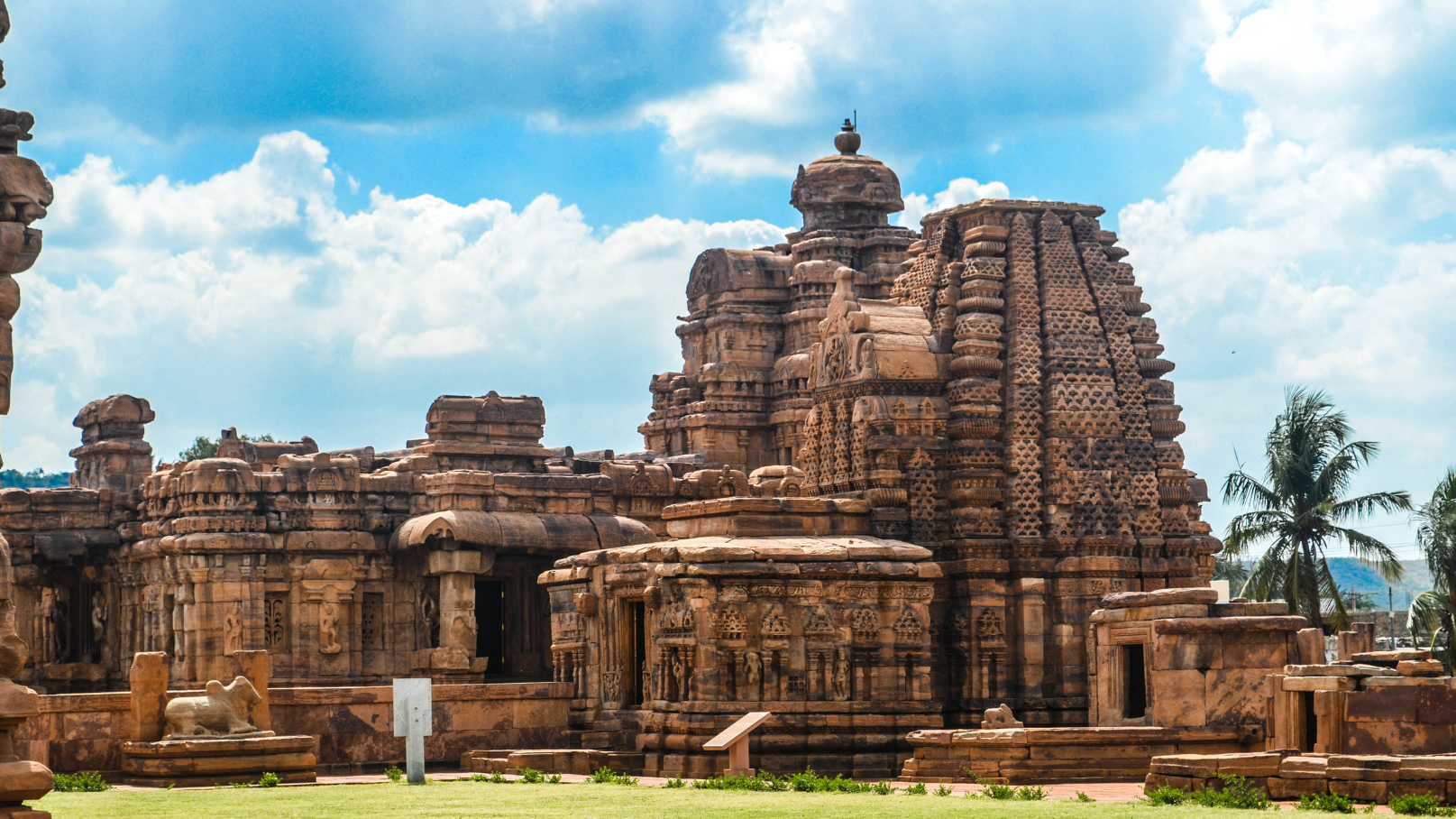
Aihole Temples: Cradle of Chalukya Architecture
Visit Aihole temples, the cradle of Chalukya architecture. Discover 125+ ancient temples, Durga Temple, history & travel guide.
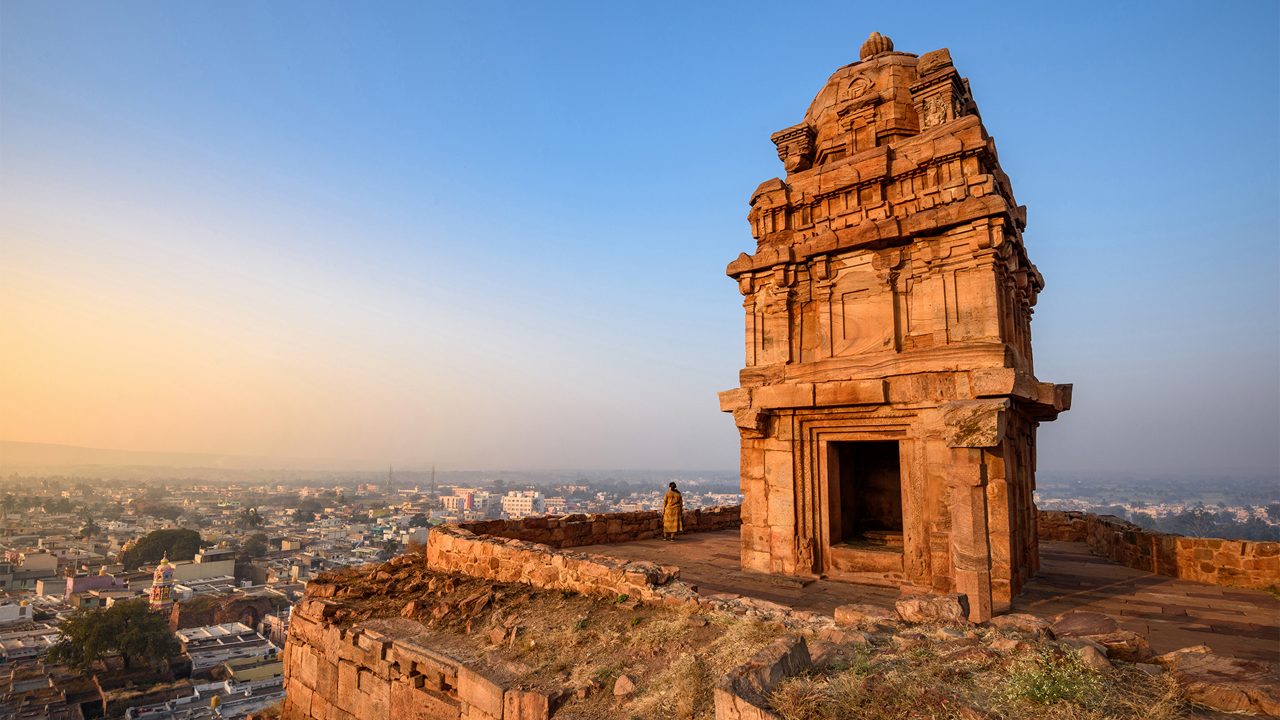
Badami Caves Karnataka: Rock-Cut Temples, Timings & Route
Explore Badami caves, magnificent rock-cut temples from 6th century. Discover Chalukya architecture, sculptures, timings & travel guide.
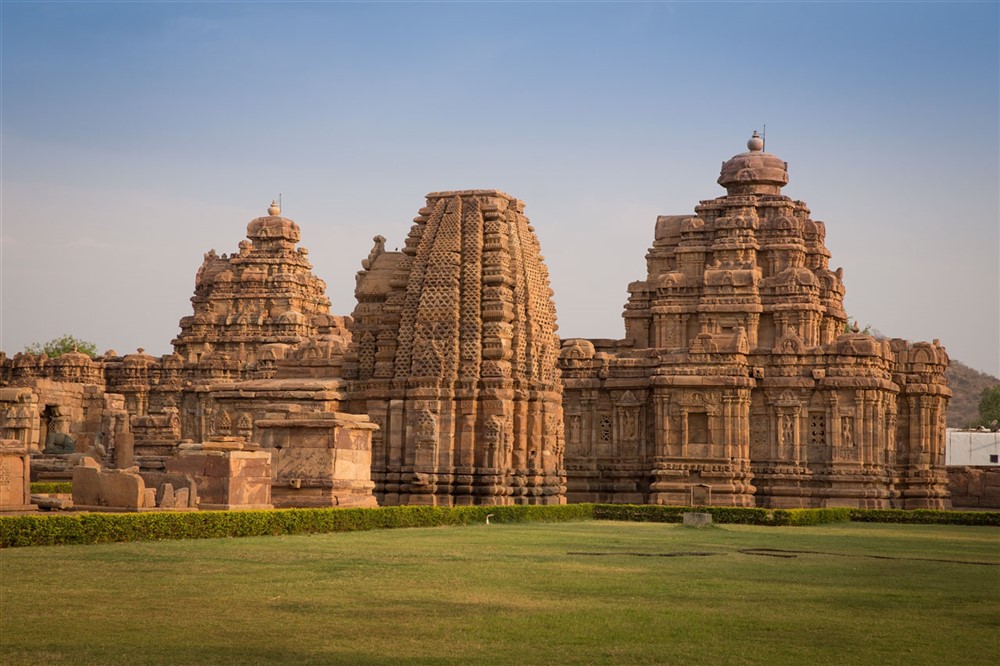
Pattadakal Temples Karnataka: UNESCO Site Highlights, Timings & Route
Visit Pattadakal temples, UNESCO World Heritage Site. Discover Chalukya architecture, Virupaksha Temple, history & travel guide.
Never Miss an Adventure
Get the latest trekking guides, travel tips, and exclusive offers delivered straight to your inbox.
