
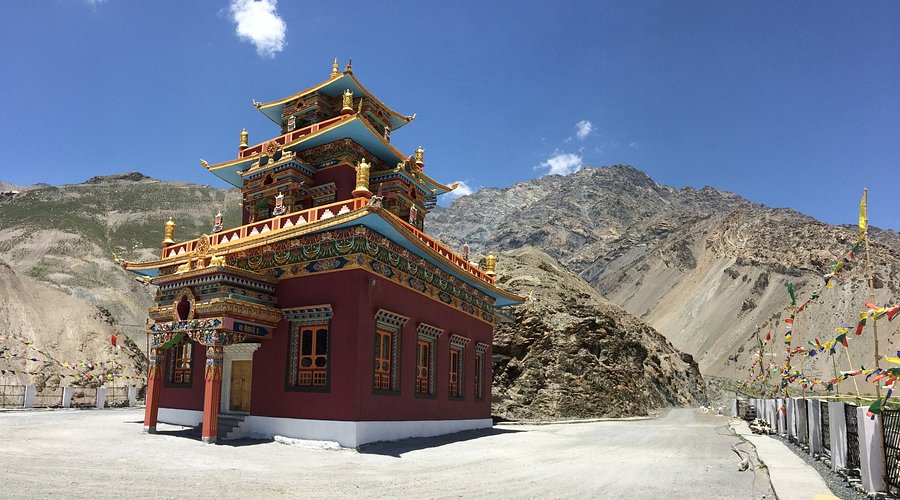
Gue Monastery Spiti: Mummy Temple History, Timings & Route

Priya Mehta
November 23, 2025
Visit Gue Monastery in Spiti Valley! Discover 500-year-old mummy, timings, how to reach from Kaza & complete guide.
Introduction to Gue Monastery
Gue Monastery Spiti Valley is one of the most unusual and spiritually powerful sites in the Himalayas. Hidden in a small village landscape, this monastery is known worldwide for preserving the 500-year-old mummy of a Buddhist monk called Sangha Tenzin. Unlike ordinary historical displays, this is a living spiritual space where history, faith, and mystery exist together. The quiet environment, high-altitude desert terrain, and rare relic make the visit deeply memorable even for travelers who are not specifically on a religious journey.
The monastery is modest in size, but its global significance is huge because naturally preserved human mummies are extremely rare in India. Most visitors come with curiosity and leave with respect for the discipline and inner strength associated with Tibetan Buddhist practices. This guide explains gue monastery timings, how to reach from Kaza, road conditions, altitude planning, history, photography etiquette, and nearby places to include in your route. For a complete Spiti circuit, you can pair this visit with tabo-monastery-spiti-valley and activity planning from things-to-do-in-kaza.
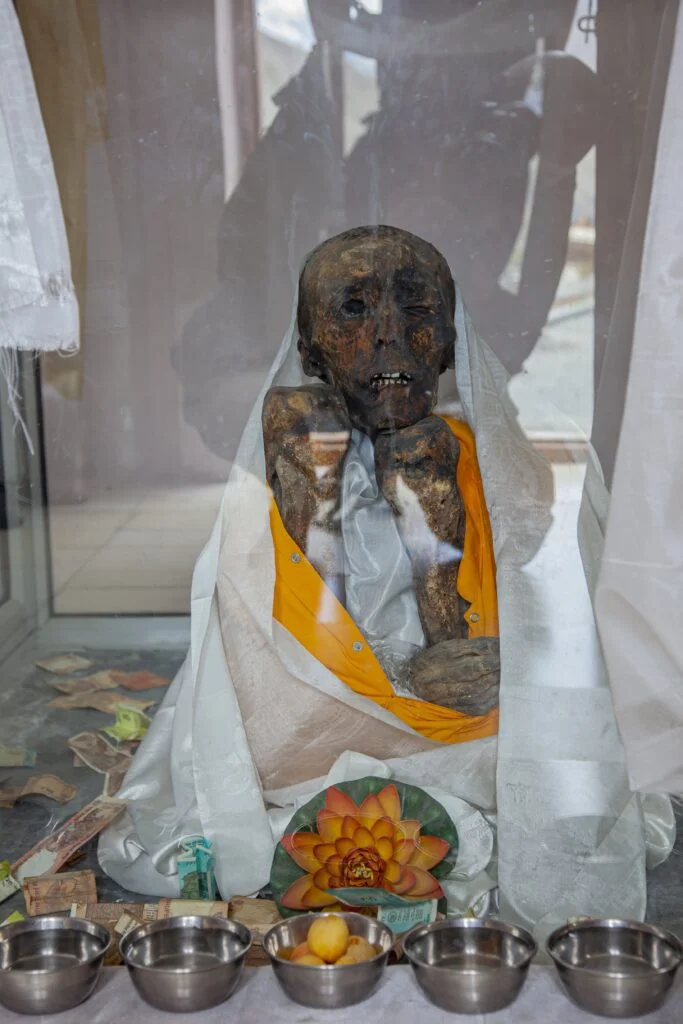
The 500-Year-Old Mummy of Sangha Tenzin
Who Was Sangha Tenzin?
Sangha Tenzin is believed to have been a Buddhist monk from the 16th century. Local oral traditions and monastery narratives describe him as a deeply disciplined practitioner who entered a prolonged meditative process associated with self-mummification traditions. His remains are preserved in seated meditative posture, making this one of the most unique spiritual artifacts in Himachal Pradesh.
How the Mummy Was Preserved
The preservation is generally linked to a combination of meditative preparation, low humidity, and Spiti's extremely cold, dry climate. While modern researchers and monks may describe details differently, the site is treated with sacred reverence rather than scientific display language.
- Estimated age: Around 500 years
- Preservation style: Natural mummification context
- Condition: Skin and skeletal features visibly preserved
- Religious role: Sacred relic and symbol of devotion
Gue Monastery Timings
Gue Monastery generally remains accessible in the daytime, especially during the summer travel season.
- Summer months (May to October): Around 6:00 AM to 6:00 PM
- Winter months (November to April): Access depends on weather and road status
- Best visiting slot: 8:00 AM to 10:00 AM or 4:00 PM to 6:00 PM
- Time required: 1 to 2 hours for visit and photo stops
Always keep buffer time because mountain roads can slow down due to weather or traffic blocks.
Best Time to Visit Gue Monastery Spiti Valley
June to September is the most practical period for most travelers. Roads are relatively better, weather is manageable, and sightseeing can be combined with other Spiti highlights. October also offers clear views with fewer tourists, but nights are colder and you should carry stronger layers.
| Season | Conditions | Travel Suitability |
|---|---|---|
| May to June | Mild cold, opening season roads | Good for early-season travelers |
| July to September | Stable weather and wider access | Best overall time |
| October | Clear skies, colder nights | Great for photography and fewer crowds |
| November to April | Extreme cold, snow-risk roads | Only for experienced winter travelers |
How to Reach Gue Monastery from Kaza
The most common route starts from Kaza, the main hub of Spiti Valley. The total distance is around 45 km, but travel time can be 2 to 3 hours depending on road conditions and halts.
Route Breakdown
- Kaza to Tabo: About 40 km, mostly better road sections.
- Tabo to Gue: About 5 km approach with rough patches and village road turns.
Shared taxis and private cabs are both used on this route. Self-drive travelers should start early, keep fuel planned from major stops, and avoid night driving in this stretch.
Location, Altitude, and Acclimatization
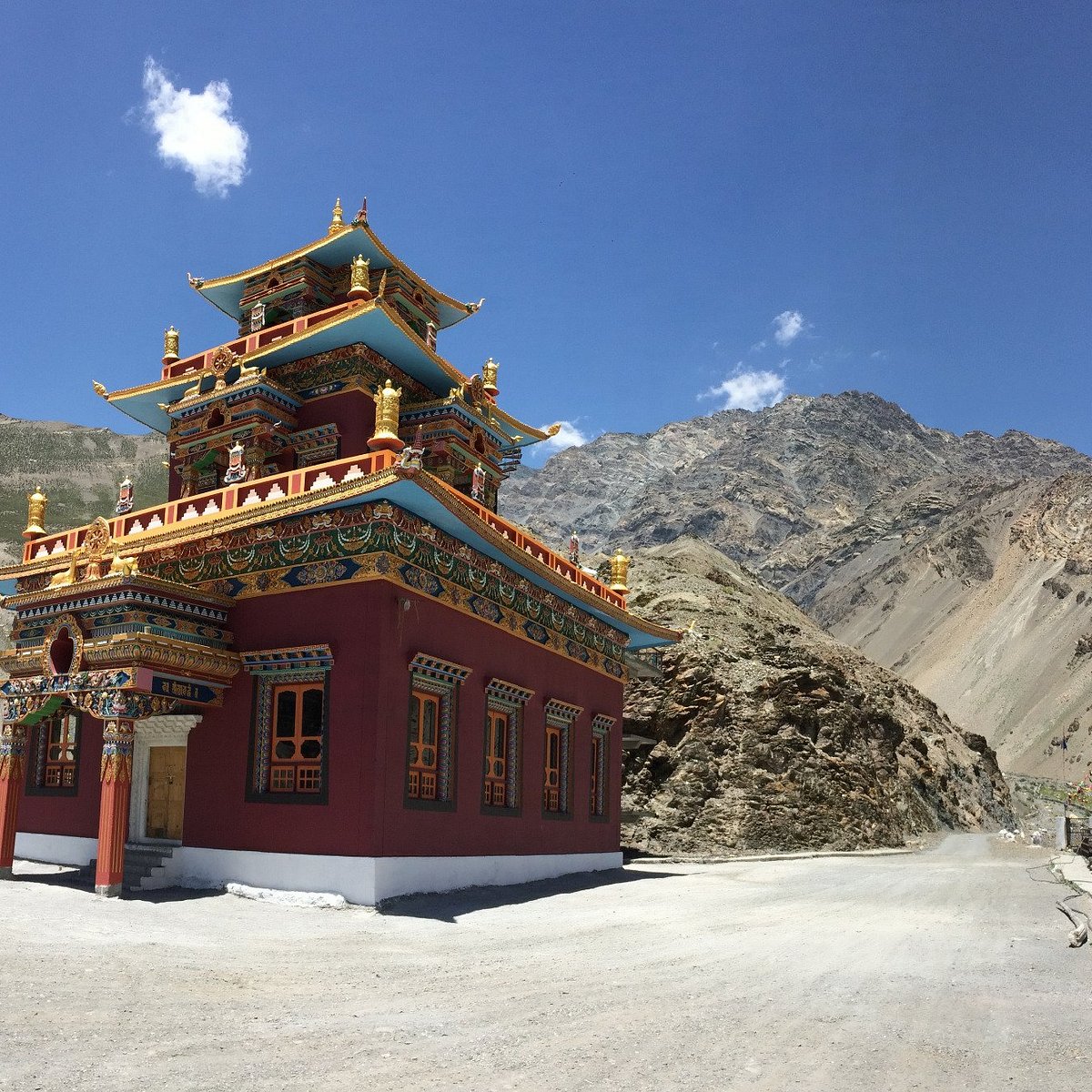
Gue village lies in the high-altitude desert zone of Spiti at roughly 10,000 ft (about 3,050 m). Even though the height is lower than some major passes, altitude symptoms can still affect visitors coming directly from plains. Spend a day or two acclimatizing in Kaza or nearby villages before covering long sightseeing circuits.
- Drink water regularly and avoid sudden exertion.
- Eat light before travel to reduce discomfort on rough roads.
- Carry basic medicines advised by your doctor.
- Do not ignore headache, nausea, or unusual fatigue.
Monastery History and Cultural Significance
Beyond the mummy, gue monastery history reflects the broader Buddhist heritage of the trans-Himalayan region. Monasteries in Spiti historically served as centers of learning, spiritual practice, and local community continuity. Gue's identity is now strongly tied to Sangha Tenzin's relic, but it remains a sacred place first and a tourist stop second.
Visitors should treat the monastery with the same respect given to active prayer spaces. Silence, modest dress, and mindful movement are not just etiquette; they preserve the dignity of the site for future pilgrims and travelers.
The Mummy Discovery Story
The mummy gained broad attention after being reported around the period of the 1975 earthquake. Over time, the monastery and local administration arranged safer preservation and visitor access. Today, the relic is displayed in a controlled shrine-like setting so people can observe respectfully without disturbing the sanctity.
Many travelers describe this as the most thought-provoking stop in Spiti because it raises questions about faith, body discipline, and historical continuity in one small room.
Photography Guidelines at Gue Monastery
Photography policies can vary by situation, so always ask local caretakers before clicking inside sensitive areas. Exterior landscape photography is usually straightforward, while interior shots may have restrictions.
- Avoid flash near sacred displays.
- Do not place camera gear on shrine surfaces.
- Take photos quickly if others are waiting for darshan.
- Do not treat the mummy as entertainment content.
Nearby Attractions to Combine with Gue
- Tabo Monastery: Historic Buddhist center, about 5 km.
- Dhankar Monastery: Dramatic cliff setting and old gompa architecture.
- Pin Valley side routes: Nature-focused extension for longer trips.
- Kaza town: Best base for stay, food, fuel, and transport.
You can expand the route with planning ideas from things-to-do-in-spiti-valley if you are staying multiple days.
Travel Tips for a Comfortable Visit
- Start early from Kaza to avoid late return on mountain roads.
- Keep cash ready; digital payments may fail in remote stretches.
- Carry layered clothing even in summer.
- Do not rush in and out; allow time for calm observation.
- Respect local communities and avoid loud behavior.
- Check weather and road advisories one day before travel.
Conclusion
Gue Monastery Spiti Valley is not just another stop on a road trip map. It is a rare spiritual destination where the 500-year-old Sangha Tenzin mummy, the silence of high mountains, and the cultural depth of Spiti come together in a profound way. Plan your visit with care, travel responsibly, and approach the place with humility. That mindset turns a short visit into one of the most meaningful memories of a Spiti journey.
Location
Frequently Asked Questions
Q1.What is the Gue Monastery mummy?
Q2.Who is Sangha Tenzin?
Q3.How old is the mummy in Gue Monastery?
Q4.How to reach Gue Monastery from Kaza?
Q5.What are Gue Monastery timings?
Q6.Best time to visit Gue Monastery?
Q7.Is photography allowed in Gue Monastery?
Q8.How much time to spend at Gue Monastery?
Recommended For You

Things to Do in Spiti Valley: Monasteries, Villages & Routes
Discover the top 15 things to do in Spiti Valley including Key Monastery, Chandratal Lake, Pin Valley, ancient villages, and high-altitude adventures. Complete guide with itineraries, costs, and travel tips.
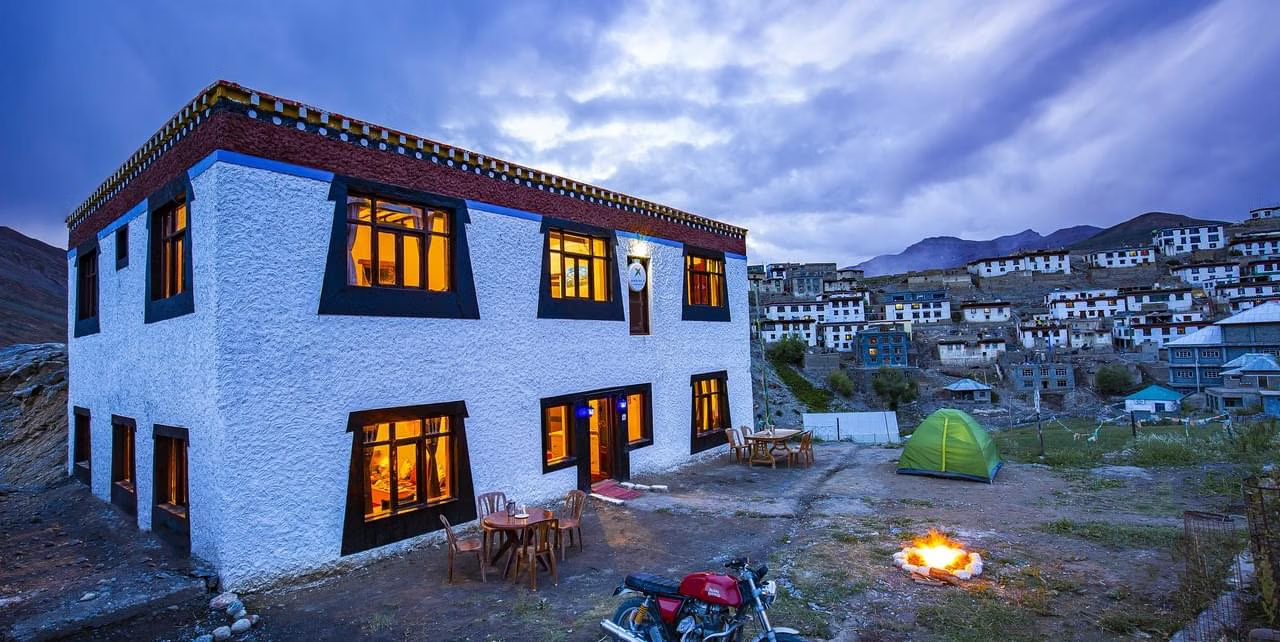
Best Homestays in Spiti Valley: Villages, Prices and Tips
Best homestays in Spiti Valley with village-wise stay options, pricing, facilities, booking strategy, and practical travel tips for high-altitude comfort.

Spiti Valley Road Trip: The Ultimate Guide to Himalayan Adventure
Spiti Valley road trip guide: routes from Shimla/Manali, best time, permits, vehicles, itinerary, accommodation & tips for the ultimate Himalayan adventure.
Never Miss an Adventure
Get the latest trekking guides, travel tips, and exclusive offers delivered straight to your inbox.
