
Kynrem Falls Meghalaya: Height, Best Season & Viewing Points

Rahul Garg
January 12, 2026
Visit Kynrem Falls, Meghalaya's tallest 3-tiered waterfall. Trek guide, best time, how to reach from Shillong & complete travel information.
Introduction: Meghalaya's Tallest Waterfall
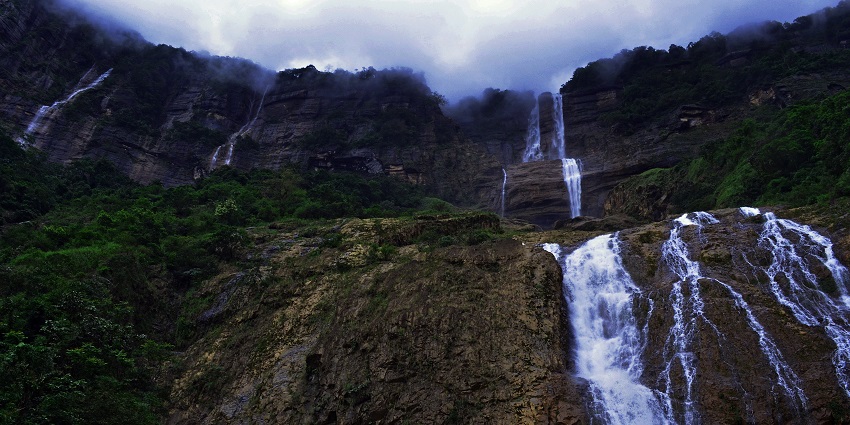
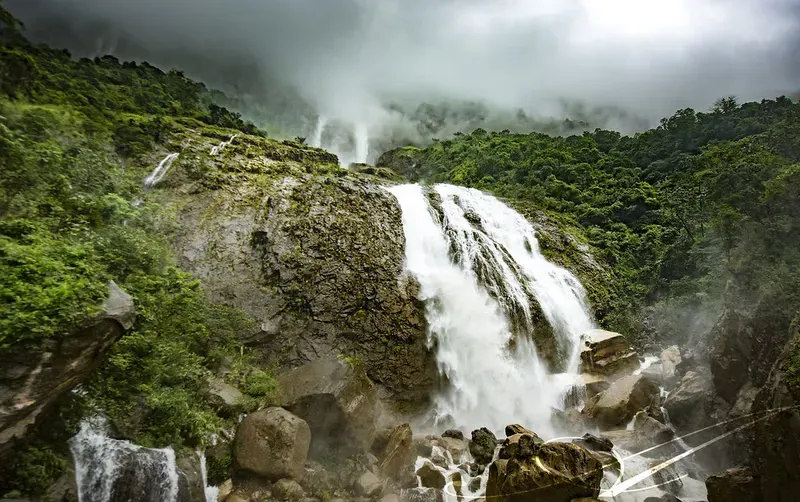
Kynrem Falls stands as the tallest waterfall in Meghalaya, India's abode of clouds. Located in the East Khasi Hills district near Cherrapunji (locally known as Sohra), this magnificent three-tiered waterfall plunges from approximately 1,001 feet (305 meters), creating a spectacular sight that draws nature enthusiasts and adventure seekers from across the country. Unlike its more famous counterpart Nohkalikai Falls, Kynrem remains relatively less crowded, offering visitors a serene experience amidst Meghalaya's lush tropical landscapes.
The waterfall cascades down the verdant hills in three distinct tiers, each more impressive than the last. What makes Kynrem Falls truly special is its accessibility within Thangkharang Park, a protected forest area that allows visitors to view the falls from a safe and well-maintained observation deck. During the monsoon season, when Meghalaya receives some of the heaviest rainfall in the world, Kynrem transforms into a thundering cascade of incredible power, while the post-monsoon months offer clearer views and perfect trekking weather.
About Kynrem Falls
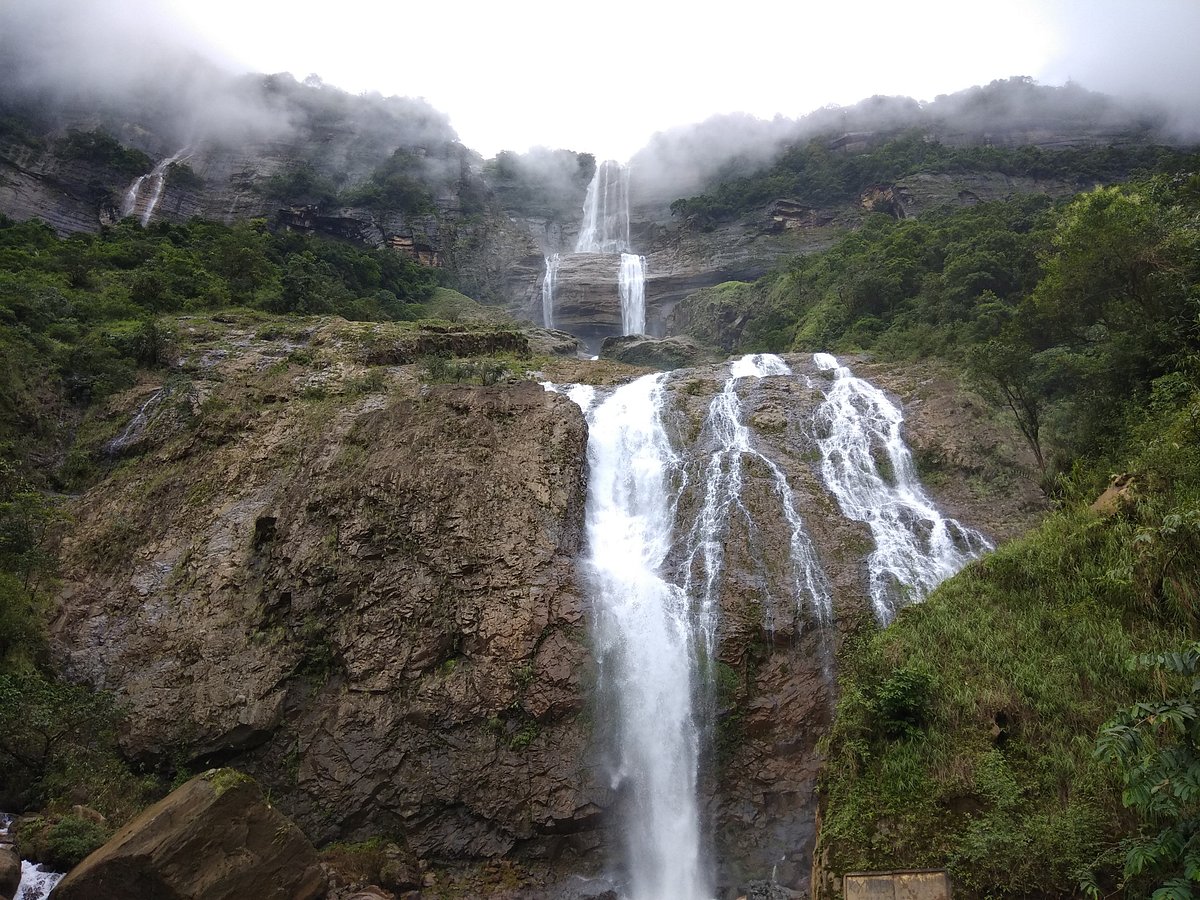
Kynrem Falls is formed by the Kynrem River, which originates in the lush tropical forests of the East Khasi Hills. The waterfall drops approximately 1,001 feet (305 meters), making it not only the tallest waterfall in Meghalaya but one of the highest in all of India. The waterfall consists of three distinct cascades, giving it a unique multi-tiered appearance that sets it apart from other waterfalls in the region.
Location & Geographic Setting
Kynrem Falls is located within Thangkharang Park, approximately 12 kilometers from Cherrapunji town and 57 kilometers from Shillong, the state capital. The waterfall flows through dense tropical forests that are part of the Meghalaya subtropical forests ecoregion. This area is known for its rich biodiversity, including rare orchids, exotic birds, and diverse plant life that thrives in the exceptionally wet climate.
Formation & Structure
The waterfall is formed as the Kynrem River flows over the edge of a plateau carved out of limestone and sandstone rock formations. The water drops in three distinct stages, with each tier creating its own pool before flowing into the next cascade. From the main viewpoint within Thangkharang Park, visitors can see all four cascades that make up this impressive waterfall system. The surrounding rock formations have been shaped by centuries of flowing water, creating dramatic cliffs and deep gorges.
Natural Environment
The area surrounding Kynrem Falls is a pristine tropical forest teeming with life. The constant mist from the waterfall creates a microclimate that supports unique flora, including mosses, ferns, and orchids that cling to the rocky surfaces. The forest is home to numerous bird species, making it a paradise for birdwatchers. During the monsoon, the entire region comes alive with vibrant green vegetation, while the winter months offer clearer views of the waterfall's structure against the rocky backdrop.
Unique Features
One of the most remarkable features of Kynrem Falls is the presence of a rainbow arch that often forms across the waterfall on sunny days. The combination of sunlight hitting the mist created by the falling water creates this natural spectacle, making it a photographer's delight. The sound of the cascading water can be heard from a considerable distance, adding to the immersive experience of visiting this natural wonder.
Best Time to Visit
Monsoon Season (June - September)
The monsoon season is when Kynrem Falls is at its most spectacular and powerful. Cherrapunji receives some of the highest rainfall in the world during these months, and the waterfall swells to incredible proportions. The water volume is at its peak, creating a thunderous roar that can be heard from far away. However, this is also when visiting is most challenging - roads can be treacherous, the viewing area may be misty, and trekking becomes difficult. For adventure seekers who don't mind getting wet and navigating challenging conditions, monsoon visits offer the most dramatic waterfall experience.
Post-Monsoon (October - November)
This is widely considered the best time to visit Kynrem Falls. The waterfall still maintains impressive flow from the monsoon rains, but weather conditions are much more favorable. Skies are clearer, allowing for better visibility and photography. The temperature is pleasant, ranging from 15-20°C during the day, making outdoor activities comfortable. Roads are in better condition, and the trek to the viewpoint is safer. October and November offer the perfect balance of impressive water volume and accessible conditions.
Winter (December - February)
Winter brings the clearest views of Kynrem Falls. While the water volume decreases compared to the monsoon months, you can see the rocky structure and all three tiers more clearly. The weather is cold, with temperatures sometimes dropping to 5°C at night and reaching 15°C during the day. This season attracts fewer tourists, so you're more likely to have the viewpoint to yourself. If you prefer clear views over maximum water flow, winter is an excellent choice.
Summer (March - May)
Before the monsoon arrives, summer offers moderate water flow and pleasant weather. Temperatures range from 20-25°C during the day, making it comfortable for outdoor activities. The landscape is lush from the pre-monsoon showers that typically begin in May. This is a good time for trekking and exploring the surrounding area, as conditions are generally dry and stable. May sees the beginning of the monsoon, so you might catch the waterfall as it starts to gain volume.
Recommended Timing
Best Overall: September-October offers the ideal combination of good water flow and favorable weather conditions.
For Maximum Flow: Visit during July-August, but be prepared for challenging conditions.
For Clear Views: December-February provides the best visibility, though with reduced water flow.
For Photography: Early morning visits (8-10 AM) during October-November provide the best light and clearest conditions.
How to Reach from Shillong
Distance and Route
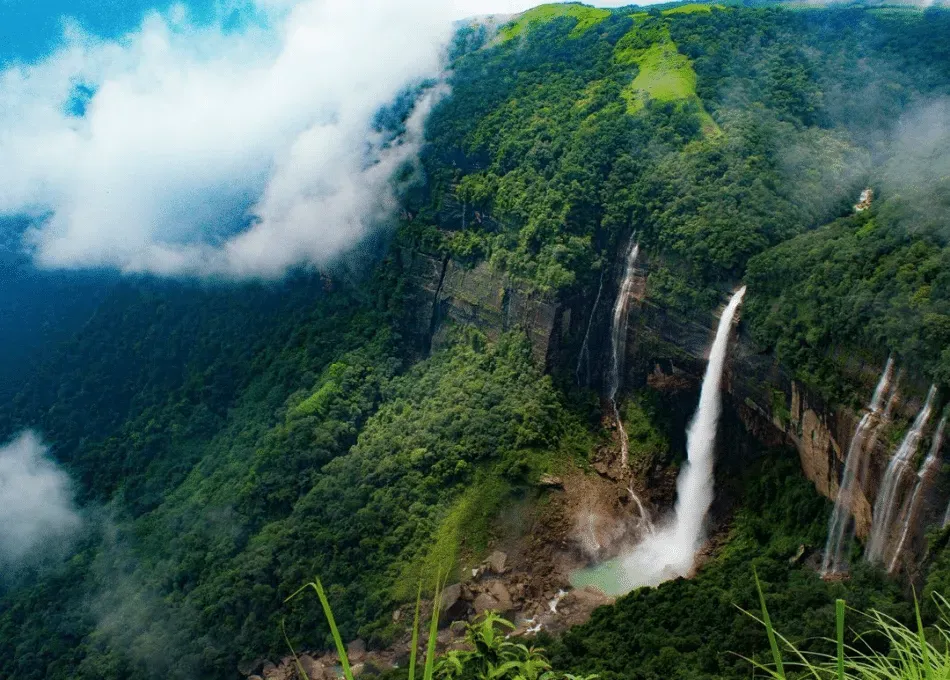
Kynrem Falls is approximately 57 kilometers from Shillong, the capital of Meghalaya. The journey takes about 2-2.5 hours by car, depending on road conditions and weather. The route from Shillong goes through Upper Shillong, past Mawkdok, and continues towards Cherrapunji (Sohra). The road is scenic but winding, passing through beautiful landscapes of rolling hills, deep valleys, and occasional waterfalls along the way.
From Shillong
Start your journey early in the morning to avoid traffic and make the most of your day. From Police Bazaar in Shillong, take the road towards Upper Shillong. As you leave the city, you'll be treated to beautiful views of the hills. The road quality is generally good, though there are some steep sections and sharp curves. Fill up on fuel before leaving Shillong, as petrol stations are fewer once you're on the highway to Cherrapunji.
From Guwahati
If you're traveling from Guwahati, the distance is approximately 150 kilometers, taking 4-5 hours. The route goes via Shillong, so you'll need to navigate through Shillong's traffic before heading towards Cherrapunji. Many travelers choose to break this journey with an overnight stay in Shillong. Many travelers choose to break this journey with an overnight stay in Shillong. The road from Guwahati to Shillong is well-maintained and scenic, passing through the beautiful Barapani (Umiam Lake) area.
From Cherrapunji Town
Kynrem Falls is about 12 kilometers from Cherrapunji town center, taking approximately 30 minutes by car. From Cherrapunji market area, head towards Thangkharang Park. The road is narrower and more winding than the main Shillong-Cherrapunji highway, but still motorable. Signs for Thangkharang Park are visible along the route. If you're staying in Cherrapunji, visiting Kynrem Falls as part of a day exploring nearby attractions is convenient.
Transportation Options
| Transport Type | Pros | Cons | Approximate Cost |
|---|---|---|---|
| Private Taxi | Most convenient, flexible timing, door-to-door service | Most expensive option | ₹2,500-3,500/day from Shillong |
| Shared Cab | Budget-friendly, regular service | Fixed schedule, crowded, need to connect to local transport | ₹200-300 per person to Cherrapunji |
| Self-Drive | Maximum flexibility, freedom to explore | Challenging mountain roads, requires confidence | Cost of fuel + vehicle rental |
| Tour Package | Includes guide, multiple stops, hassle-free | Fixed itinerary, less flexibility | ₹3,500-5,000 per day |
Road Conditions
The main highway from Shillong to Cherrapunji is generally in good condition, though it's a winding mountain road with many curves and steep sections. During heavy monsoon rains, landslides can occasionally block sections of the road, causing temporary closures. Always check current road conditions before starting your journey, especially during peak monsoon months. The final stretch from the main road to Thangkharang Park is narrower and requires careful driving.
What to Expect on the Journey
The drive from Shillong to Kynrem Falls is part of the experience. You'll pass through beautiful landscapes including deep gorges, rolling hills covered in green, and stunning valley views. There are several viewpoints along the way where you can stop for photos. The route goes past other famous attractions including the Mawkdok Dympep Valley Viewpoint and several smaller waterfalls. Plan time in your journey for these scenic stops.
The Trek Experience
Main Viewpoint Trek
The primary way to experience Kynrem Falls is from the designated viewpoint within Thangkharang Park. This is a short, easy trek of approximately 1-2 kilometers from the parking area. The trail is well-defined and passes through dense forest, offering glimpses of the surrounding valleys. Most visitors complete this trek in 30-45 minutes round trip. The path includes some stairs but is generally accessible to people of all fitness levels, including families with children.
Trek Difficulty
The trek to the main viewpoint is considered easy to moderate. The distance is short, and the path is well-maintained with safety railings in steeper sections. However, the trail can be slippery when wet, which is often the case in this region. Wear good walking shoes with grip, and take your time, especially if it has been raining. The descent from the parking area to the viewpoint is gradual, and the return climb is manageable for most people.
Adventure Trek to Base
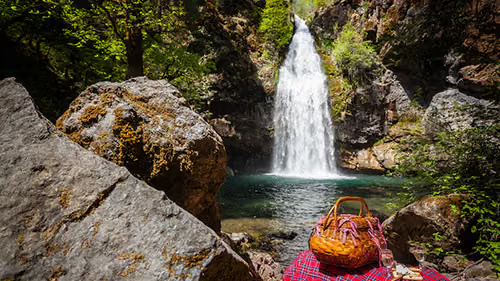
For adventure seekers, it's possible to trek closer to the base of Kynrem Falls, though this requires a local guide and is considerably more challenging. This trek involves descending steep, slippery slopes through dense vegetation. It's only recommended during dry weather and for experienced trekkers with proper equipment. A local guide is essential not just for navigation but also for safety, as the terrain can be treacherous.
Trail Features
The trail to the main viewpoint offers beautiful forest scenery. You'll walk through dense tropical vegetation with towering trees, exotic plants, and colorful birds. The sound of the waterfall grows louder as you approach, building anticipation. There are several spots along the trail where you can catch glimpses of the falls through the trees. These preview views make the final reveal at the viewpoint even more impressive.
Time Required
Plan for 1-2 hours at Kynrem Falls, including the trek to the viewpoint and time to enjoy the view. The actual trekking takes about 30-45 minutes round trip, but you'll want to spend time at the viewpoint taking photos and simply admiring the waterfall. If you're doing the adventure trek to the base, allow 3-4 hours total and come prepared with proper trekking gear.
Safety Considerations
- Always stay on marked paths and within designated viewing areas
- Never cross safety barriers - they're there for your protection
- Wear appropriate footwear with good grip
- Check weather conditions before attempting any trekking
- Carry water and snacks - facilities are limited
- For the base trek, always hire a local guide
Viewpoints & Photography
Main Observation Deck
The primary viewpoint within Thangkharang Park offers an unobstructed view of all three tiers of Kynrem Falls. This elevated observation deck provides the perfect vantage point for photography and safe viewing of the waterfall. The deck is positioned at an angle that allows you to see the full height of the falls while maintaining a safe distance. This is the most popular and accessible viewpoint, suitable for all visitors.
Photography Tips
Timing: Early morning (8-10 AM) provides the best lighting conditions. The soft morning light illuminates the waterfall evenly without harsh shadows. During monsoon, mist can obscure views, so visit in the afternoon when skies are likely to be clearer.
Equipment: A wide-angle lens is essential to capture the full height of the waterfall. A telephoto lens allows you to isolate individual cascades or details. Bring a tripod if you plan to shoot during low light or want to capture the silky water effect with slow shutter speeds.
Settings: Use a small aperture (f/8-f/16) to keep everything in focus from foreground to background. For the silky water effect, use a slow shutter speed (1/15 to 1/60 second) and a tripod. During bright conditions, use a neutral density filter to enable slower shutter speeds.
Capturing Rainbows
On sunny days, rainbows often form in the mist of Kynrem Falls. To capture this phenomenon, visit when the sun is behind you, illuminating the waterfall mist. Late morning to early afternoon typically provides the best angle for rainbow photography. Be patient and wait for the sun to emerge from clouds - the rainbow appears and disappears with changing light conditions.
Composition Ideas
Full Waterfall: Capture all three tiers in a vertical composition, showing the waterfall's impressive height.
Detail Shots: Focus on individual cascades or the water crashing onto rocks below. These intimate details often make compelling images.
Environmental Portrait: Include the surrounding forest and valley in your composition to show the waterfall in its natural setting.
Foreground Interest: Use vegetation, rocks, or the observation deck railing as foreground elements to add depth to your images.
Best Angles
From the main observation deck, you have several angles to choose from. Move around the deck to find the composition that works best for you. The left side of the deck often provides a cleaner view with fewer obstructions. The center offers the classic straight-on view, while the right side allows you to include more of the surrounding valley in your frame.
Nearby Attractions
Seven Sisters Falls
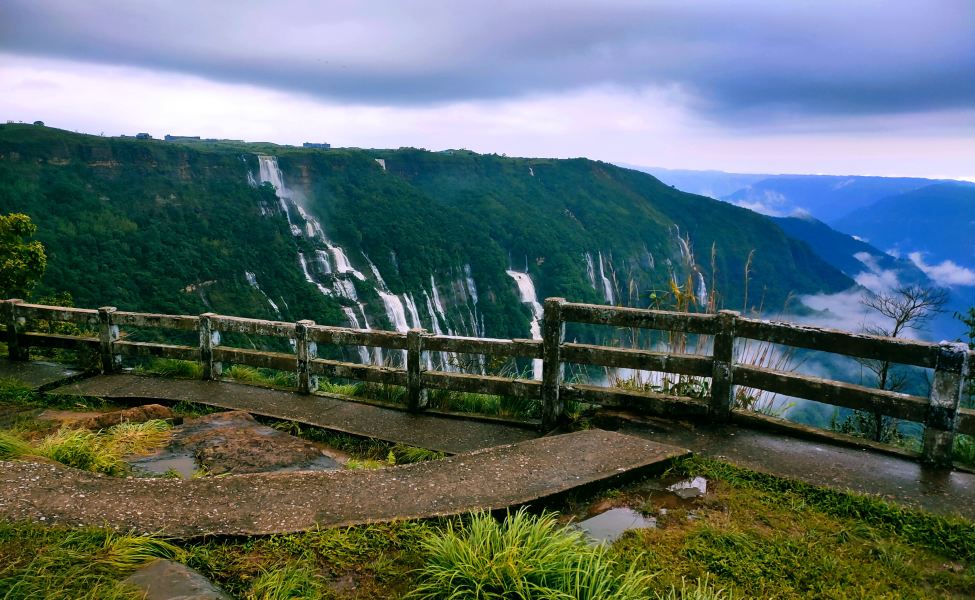
Located just 5 kilometers from Kynrem Falls, Seven Sisters Falls (Nohsngithiang Falls) is one of Meghalaya's most famous waterfalls. This seven-segment cascade is spectacular during monsoon and is easily visible from the roadside. It's one of the highest waterfalls in India and makes an excellent combination visit with Kynrem Falls.
Nohkalikai Falls
Approximately 10 kilometers away, Nohkalikai Falls is the tallest plunge waterfall in India, dropping from 1,115 feet. The falls are named after a tragic local legend and are surrounded by lush green forest. There's a viewing platform that offers safe views of this magnificent waterfall. It's a must-visit when in the Cherrapunji area.
Mawsmai Cave
This spectacular limestone cave is located about 8 kilometers from Kynrem Falls. Mawsmai is one of the few caves in Meghalaya that is fully lit and accessible to tourists. The cave features impressive stalactites and stalagmites, narrow passages, and natural skylights. A guided tour takes about 30-45 minutes and is a fascinating experience for all ages.
Eco Park Cherrapunji
Located 5 kilometers from Kynrem Falls, this beautifully maintained park offers stunning views of the surrounding valleys and waterfalls. The park features well-laid pathways, viewing platforms, and native orchids. It's particularly beautiful during the monsoon when the entire region is lush green. The park is an excellent place for a relaxed stroll and photography.
Living Root Bridges
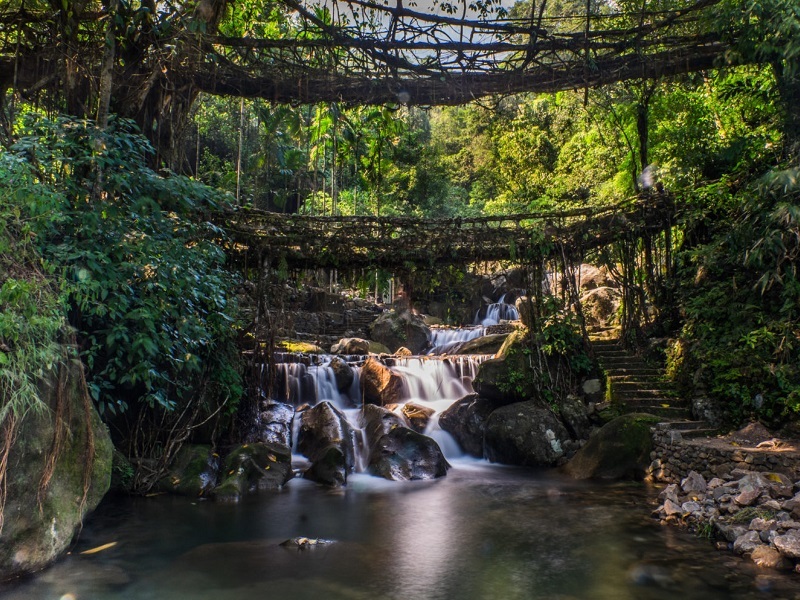
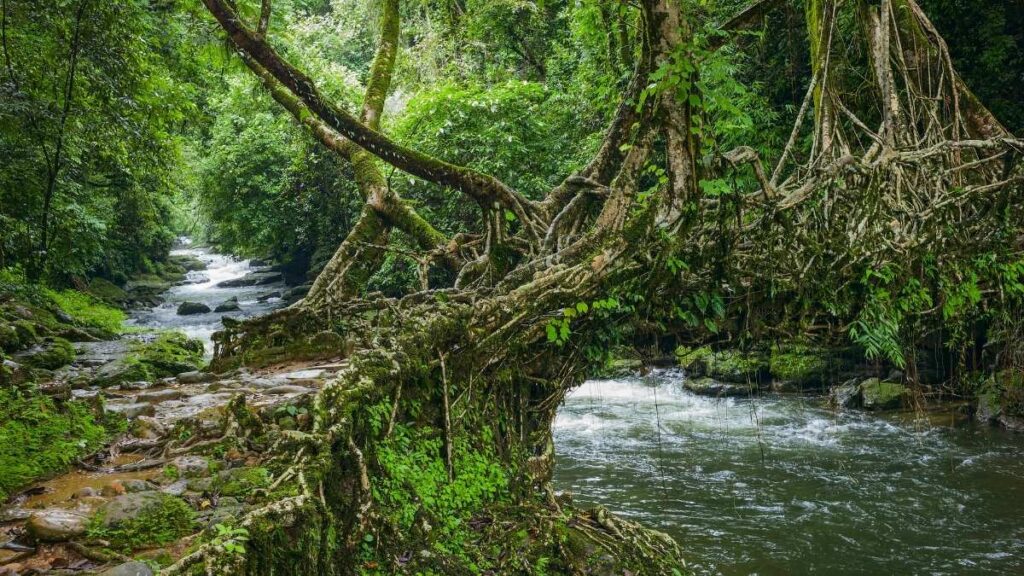
The famous living root bridges of Meghalaya are located 15-20 kilometers from Kynrem Falls. These unique bridges are made from the aerial roots of rubber fig trees and are strengthened over time by the local Khasi people. The Double Decker Root Bridge in Nongriat village is the most famous, though the trek to reach it is challenging. Several easier-to-reach root bridges are also accessible.
Mawlynnong Village
Known as Asia's cleanest village, Mawlynnong is approximately 30 kilometers from Kynrem Falls. This beautiful village is famous for its cleanliness, living root bridges, and stunning views of the Bangladesh plains. It's worth the drive if you have extra time in your itinerary.
Double Decker Root Bridge
Located about 25 kilometers away in the village of Nongriat, this two-tiered living root bridge is a marvel of bio-engineering. The trek to reach it involves descending 3,000+ steps, but the experience is unforgettable. Plan for 4-5 hours for this trek, and consider hiring a local guide.
Travel Tips & Guidelines
Entry Fee & Timings
Thangkharang Park charges a nominal entry fee of approximately ₹50-100 per person. There may be additional fees for camera use, especially for professional equipment. The park is generally open from 8:00 AM to 5:00 PM, but these hours can vary depending on weather conditions and season. Arrive early to avoid crowds and get the best lighting for photography.
What to Carry
- Rain gear: Essential year-round, as Cherrapunji can receive rain unexpectedly
- Comfortable trekking shoes: With good grip for potentially slippery paths
- Water and snacks: Limited facilities available within the park
- Light jacket: The weather can be cool, especially in the morning
- Insect repellent: Mosquitoes can be present in the forested areas
- Camera with weather protection: For capturing the beautiful scenery
- Backpack: To carry your essentials hands-free
Facilities Available
Thangkharang Park has basic facilities including a parking area, small tea stalls selling refreshments, and restrooms. However, don't expect luxury amenities - the park maintains a rustic, natural character. There are benches at the viewpoint where you can rest and enjoy the scenery. For more substantial meals, plan to eat in Cherrapunji town before or after your visit.
Safety Tips
- The path can be extremely slippery when wet - walk slowly and carefully
- Stay within designated areas and never cross safety barriers
- Weather can change rapidly - check forecasts and be prepared to turn back if conditions deteriorate
- Carry a basic first aid kit for minor injuries
- Ensure your phone is charged and has emergency numbers saved
- For adventure trekking, always go with a guide and inform someone of your plans
Best Time of Day to Visit
Early morning (8-10 AM) is ideal for visiting Kynrem Falls. You'll beat the tour groups, enjoy better lighting for photography, and have a more peaceful experience. If you're not an early riser, late morning (11 AM - 1 PM) also provides good conditions. Avoid visiting too late in the afternoon as light can fade quickly in the valley, especially during monsoon when clouds roll in.
Responsible Tourism
Help preserve Kynrem Falls and Thangkharang Park by carrying out all your trash. Avoid using single-use plastics when possible. Stay on marked paths to protect the fragile forest ecosystem. Respect the natural environment - don't pick plants, disturb wildlife, or damage rock formations. If you see litter, consider picking it up - every small action helps maintain this beautiful area for future visitors.
Cultural Respect
The area around Kynrem Falls is home to local Khasi communities. Respect local customs and traditions. Ask permission before photographing people. Be mindful of noise levels - this is a natural area that deserves quiet appreciation. If you encounter any ceremonies or rituals taking place, observe respectfully from a distance and don't interrupt.
Kynrem Falls offers a spectacular glimpse into Meghalaya's incredible natural beauty. As the tallest waterfall in the state, it provides an unforgettable experience that combines adventure, natural wonder, and the unique charm of the abode of clouds. Whether you're a serious photographer, nature enthusiast, or simply someone who appreciates majestic landscapes, Kynrem Falls delivers an experience that will stay with you long after you've returned home.
Location
Frequently Asked Questions
Q1.Where is Kynrem Falls located?
Q2.What is the height of Kynrem Falls?
Q3.What is the best time to visit Kynrem Falls?
Q4.How far is Kynrem Falls from Shillong?
Q5.Is there a trek to Kynrem Falls?
Q6.Is Kynrem Falls worth visiting?
Q7.What are Kynrem Falls timings?
Q8.Is there an entry fee for Kynrem Falls?
Recommended For You
Living Root Bridges Meghalaya: Trek Routes, Villages & Local Tips
Discover Meghalaya's incredible living root bridges - nature's bioengineering marvel grown by the Khasi tribes. Complete trekking guide to the Double Decker Root Bridge in Nongriat, best time to visit, how to reach, difficulty level, and photography tips.
How to Reach Cherrapunji Meghalaya: Complete Travel Guide 2026
Complete guide on how to reach Cherrapunji Meghalaya - flights, trains, road routes from Guwahati, best time to visit, and travel tips.
Meghalaya in Monsoon: Travel Guide & Tips
Explore Meghalaya in monsoon - wettest place on Earth. Waterfalls, root bridges, safety tips & travel guide.
Never Miss an Adventure
Get the latest trekking guides, travel tips, and exclusive offers delivered straight to your inbox.
