
Sarkhej Roza Ahmedabad: History, Architecture & Visit Planning

Priya Mehta
February 20, 2026
Sarkhej Roza Ahmedabad guide with history, architecture, tomb and mosque layout, access tips, and best-time visit planning for heritage travelers.
Introduction: Why Sarkhej Roza Is Called Ahmedabad's Acropolis
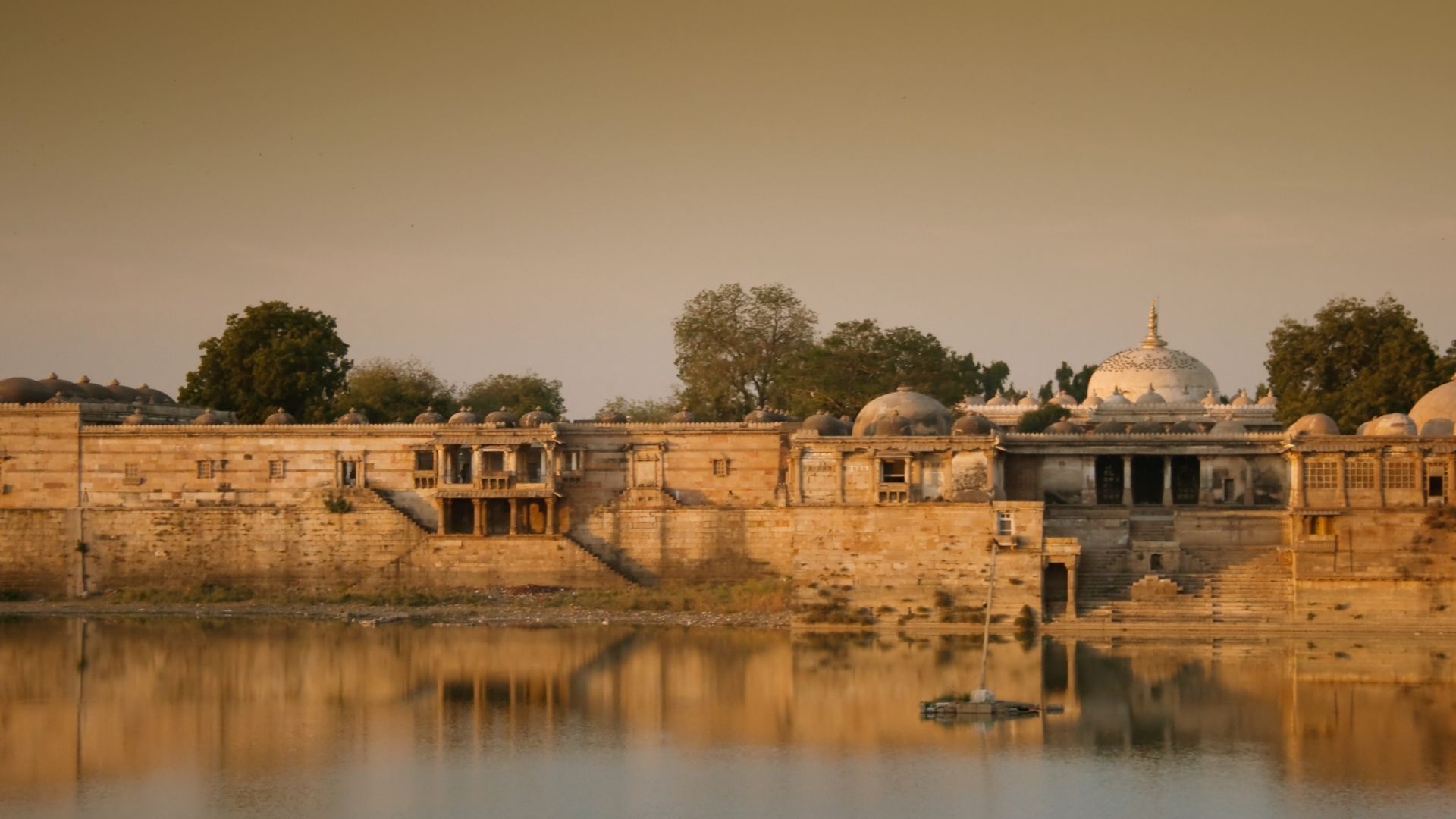
Sarkhej Roza is one of Ahmedabad's most important heritage complexes and one of the strongest examples of Indo-Islamic design evolution in western India. It is not a single monument but a layered ensemble of mausoleums, mosque structures, pavilions, and a large water body once integrated into royal and spiritual life. Travelers who spend time here understand that Sarkhej Roza is less about one dramatic facade and more about spatial composition, silence, scale, and geometry.
The site reflects both Sufi legacy and Gujarat Sultanate patronage. That dual identity gives it uncommon depth: devotional memory, courtly architecture, and environmental planning in one complex. Even today, changing light across stone surfaces and open courtyards makes the place especially rewarding for history lovers and photographers.
This guide covers historical timeline, architecture vocabulary, visiting details, route planning, and practical tips. For a broader old-city narrative, combine it with Sidi Saiyyed Mosque, Rani Sipri's Mosque, and Bhadra Fort.
Historical Background
Sarkhej Roza developed across phases linked to the memory of Shaikh Ahmed Khattu Ganj Baksh and subsequent royal patronage under the Gujarat Sultanate. Over time, the site expanded from a devotional focus into a larger architectural and courtly landscape. This historical layering is visible in the way sacred spaces, open courts, and hydrological design elements interact.
The site demonstrates how medieval Gujarat integrated faith, governance symbolism, and climatic adaptation. The tank and surrounding built forms were not decorative add-ons; they supported both environmental comfort and ceremonial logic.
Why the timeline matters
- Explains mixed architectural vocabulary across sections.
- Shows gradual expansion rather than one-time construction.
- Connects spiritual lineage with royal political patronage.
Architecture: The Indo-Islamic Synthesis
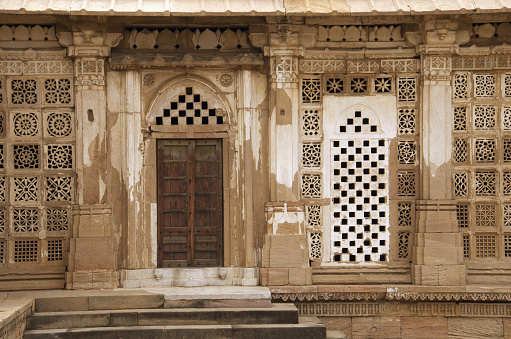
Sarkhej Roza is often referenced in discussions on Indo-Islamic architecture because of its structural clarity, restrained ornament, and regional adaptation. You will see arcaded spaces, domed volumes, carved stone elements, and geometric planning that balances monumentality with climatic practicality.
Unlike highly vertical mosque typologies elsewhere, Sarkhej Roza emphasizes horizontality and proportional calm. Open courtyards and edges around the tank create depth in movement and view framing. This is why the site feels cinematic even without excessive surface ornament.
| Architectural Element | Function | Visitor Observation Tip |
|---|---|---|
| Arcades and colonnades | Circulation and shade | Observe rhythm from diagonal angles |
| Domed chambers | Sacred and ceremonial volume | Note light contrast across interior surfaces |
| Tank edge planning | Climate and spatial integration | Study reflections during low-angle sunlight |
Tombs, Mosque Zones and Spatial Hierarchy
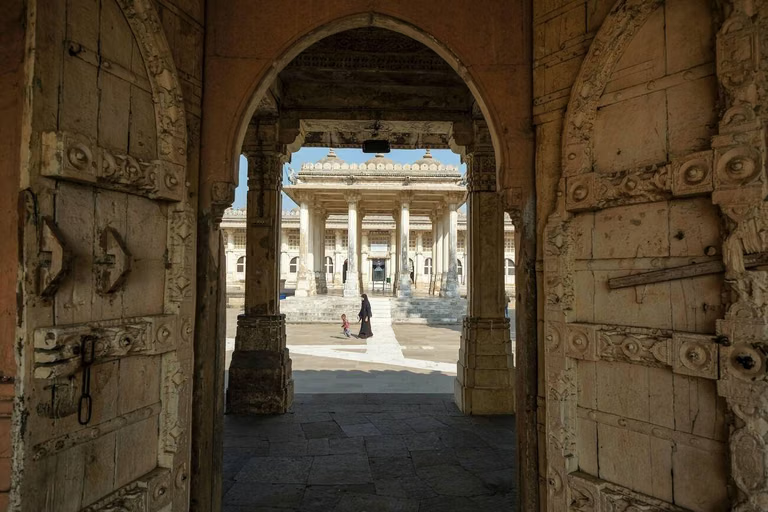
At Sarkhej Roza, tomb architecture and congregational prayer zones form the emotional core of the site. These spaces are connected by transitional courts and passage lines that support both devotional use and processional movement. The hierarchy is subtle but deliberate.
For visitors, the best way to understand the layout is to move slowly and observe alignments between built volumes and open space. Do not rush from one labeled point to another. The real value lies in how the complex unfolds as a continuous environment.
- Main tomb clusters with strong spiritual significance
- Mosque structures with austere but elegant detailing
- Open courts that mediate light, movement, and scale
The Tank and Environmental Intelligence
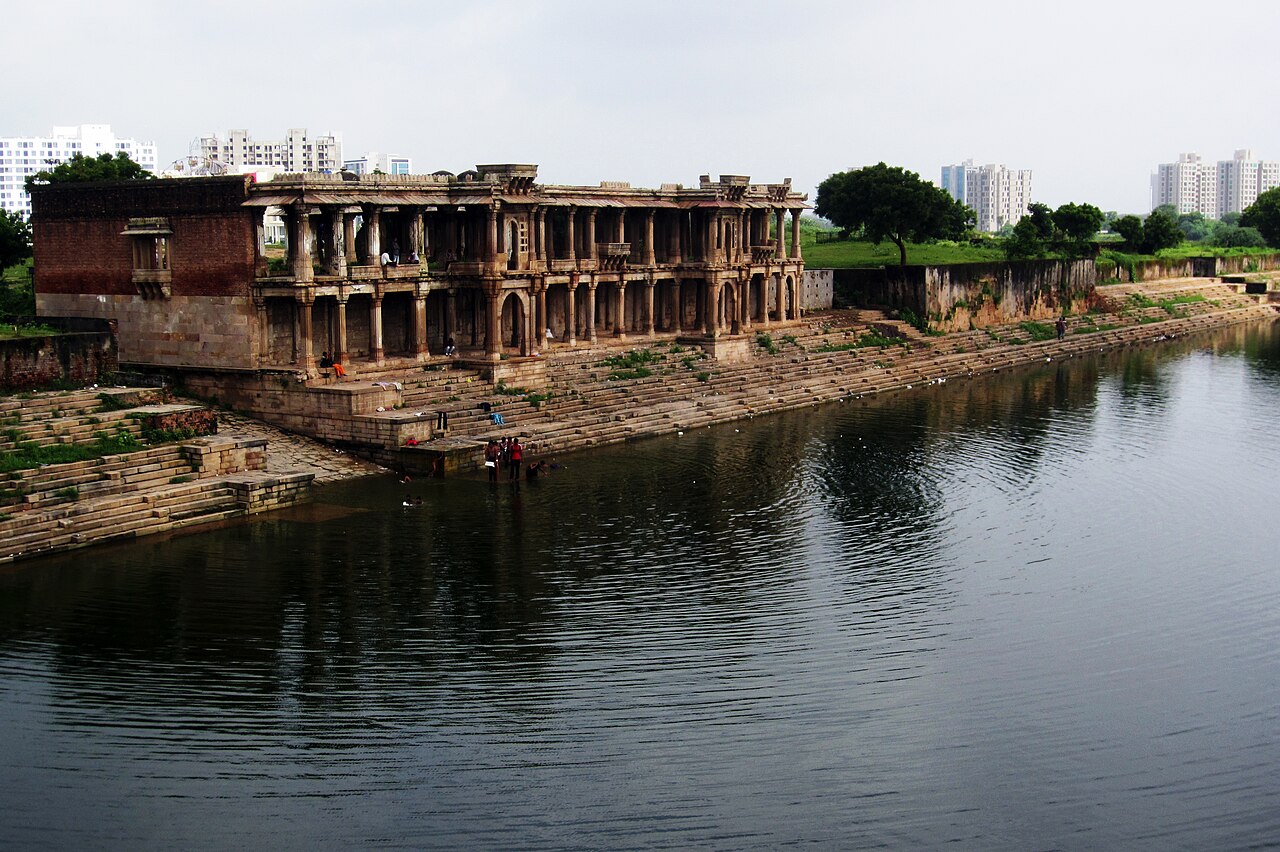
The large tank at Sarkhej Roza is central to site identity. Historically, it served practical and symbolic roles, including cooling effect, water management, and reflective spatial drama. In dry-season and post-monsoon conditions, the visual relationship between water and stone becomes one of the most striking features of the entire complex.
Modern visitors should view this as an example of pre-modern environmental design thinking rather than only a scenic background. The tank demonstrates how heritage architecture in semi-arid climates embedded climate response directly into site planning.
How to Reach Sarkhej Roza
Sarkhej Roza is accessible from major Ahmedabad zones by taxi, app-cab, and local transport networks. Travel time depends on city traffic, so buffer planning is essential if you are combining multiple heritage stops in one day.
- From central Ahmedabad: Commonly reachable in city-route travel window.
- From railway zones: Plan with peak-hour traffic buffer.
- By app-cab: Easiest for first-time visitors.
- By local transport: Possible with route planning and time margin.
Timings, Entry and Visit Duration
Visitors should verify current opening schedules locally, but heritage-site visits are generally best planned in daylight windows. Entry details can change over time, so always confirm before departure.
- Best visit slot: early morning or late afternoon.
- Ideal duration: 1.5 to 2.5 hours for meaningful walkthrough.
- Photography value: high during softer light periods.
If you are documenting architecture, carry enough time for repeat angles as light shifts across arcades and stone textures.
Photography and Exploration Tips
- Use wide and mid focal lengths for spatial storytelling.
- Capture tank reflections when light is low and directional.
- Include human scale in corridor frames for depth perception.
- Avoid blocking pathways in active devotional areas.
Sarkhej Roza rewards patient composition. The strongest images often come from quiet corners rather than obvious central viewpoints.
Suggested Heritage Circuit in Ahmedabad
| Session | Route | Purpose |
|---|---|---|
| Morning | Sarkhej Roza | Low-crowd architectural immersion |
| Midday | City break and lunch | Reset before old-city monuments |
| Afternoon | Mosque and fort cluster | Comparative heritage understanding |
Reading Sarkhej Roza Like an Architectural Sequence
Many visitors treat Sarkhej Roza as a photo location and miss its deeper spatial logic. A better approach is to read it as sequence architecture. Start from approach edges, then observe transitions into built courts, then move toward tomb and mosque zones while noting scale change, light modulation, and circulation rhythm. This method helps you understand why the complex is often discussed in academic and design circles as a milestone in regional Indo-Islamic planning.
Focus on three visual systems: mass, void, and water. Mass includes built stone volumes and domed structures. Void includes courtyards, corridor pauses, and open sky cuts. Water includes the tank and reflective edges that connect built forms into one visual field. When these systems are observed together, the site feels cohesive rather than fragmented.
Material reading also matters. Stone surfaces, carved details, and structural proportions are best appreciated at slow pace. Instead of taking only frontal shots, walk oblique lines to understand depth and alignment. This approach reveals architectural intelligence that straight-on views often hide.
Heritage Visit Etiquette and On-Site Care
Sarkhej Roza remains a culturally sensitive heritage environment. Visitors should maintain respectful behavior and avoid climbing on fragile edges or undocumented sections for photos. Keep movement gentle in enclosed and devotional parts of the complex.
- Do not litter or leave food waste near heritage stonework.
- Avoid loud music and intrusive video behavior.
- Respect prayer activity and local visitors using sacred zones.
- Do not scratch or touch carved surfaces unnecessarily.
Responsible behavior ensures this complex remains accessible and meaningful for both travelers and local communities.
How to Build a Full Ahmedabad Heritage Day Around Sarkhej
| Phase | Stop Type | Objective |
|---|---|---|
| Early morning | Sarkhej Roza | Architecture-first immersion |
| Midday | City core meal and break | Heat management and transit reset |
| Afternoon | Mosque/fort heritage stops | Comparative style study |
| Evening | Old-city walk or riverfront | Contextual urban closure |
This sequencing prevents overload and gives enough time for interpretation, not just check-ins. Travelers following this structure usually retain far more of the city's historical narrative.
Interpreting Sarkhej Roza for Students and Researchers
Sarkhej Roza is particularly useful for architecture students, conservation researchers, and design professionals because it presents a clear study case of climate-responsive heritage planning. The relationship between built mass, open courts, and water body allows direct observation of how medieval builders handled heat, light, and circulation in semi-arid conditions. This makes the site valuable beyond tourism.
Field notes here should include proportions, shadow patterns, movement lines, and transitions between sacred and civic zones. Even simple sketching sessions can reveal structural rhythm not obvious in quick photographs. Visitors doing academic documentation should arrive early, keep route discipline, and use fixed observation points for comparative reading through the day.
By approaching Sarkhej as a living design archive, visitors gain far deeper understanding than a standard monument checklist walk.
Even a short extra walk across secondary courtyards can reveal proportion changes and shadow behavior that are easy to miss in a quick one-loop visit.
If you are interested in comparative heritage interpretation, revisit one section of Sarkhej Roza at a different hour in the same day. The shift in shadow depth, stone contrast, and reflected light around the tank can significantly change your reading of scale and proportion. This repeat-observation method is especially useful for architecture learners and photographers documenting form, rhythm, and spatial transitions in historic complexes.
That extra patience often turns Sarkhej from a stopover into one of Ahmedabad's most intellectually rewarding heritage experiences.
Use one final panoramic pause before exit to absorb the site's scale and spatial calm.
Conclusion
Sarkhej Roza Ahmedabad is one of the most important heritage experiences in the city for travelers interested in architecture, history, and spatial design. Its value lies in composition and continuity rather than surface spectacle. When explored patiently, it reveals the intelligence of medieval Gujarat's built environment.
Plan your visit around light, keep enough time for slow observation, and connect it with other Ahmedabad heritage landmarks for a richer historical narrative.
Travelers building a broader old-city heritage day can pair this visit with the intricately carved pillars of Hathisingh Jain Temple, giving a fuller picture of how different eras and faiths approached sacred architecture in the region.
Location
Frequently Asked Questions
Q1.What is Sarkhej Roza famous for?
Q2.Who is associated with Sarkhej Roza's spiritual history?
Q3.What architectural style is seen at Sarkhej Roza?
Q4.How much time is needed to visit Sarkhej Roza?
Q5.Is Sarkhej Roza suitable for architecture photography?
Q6.How to reach Sarkhej Roza from Ahmedabad city?
Q7.What is the best time to visit Sarkhej Roza?
Q8.Can Sarkhej Roza be combined with other Ahmedabad monuments?
Recommended For You
Things to Do in Ahmedabad: Heritage Walks, Food & Evening Plans
Plan the best things to do in Ahmedabad with heritage walks, food circuits, markets, museums, family activities, and practical 2-3 day itineraries.
Jhulta Minara Ahmedabad: Mystery, History and Timings
Explore Jhulta Minara in Ahmedabad with history, mystery, timings, architecture, how to reach, and practical tips for planning a smart heritage visit.
20 Best Places to Visit in Ahmedabad: Heritage & Fun
Explore top places to visit in Ahmedabad with heritage landmarks, food streets, shopping hubs, and practical 1-day/2-day itinerary planning.
Never Miss an Adventure
Get the latest trekking guides, travel tips, and exclusive offers delivered straight to your inbox.
