

Tabo Caves Spiti: Meditation & History
Rohit Verma
January 24, 2026
Tabo Caves in Spiti guide! Ancient meditation caves, history, how to reach & trekking. Discover Buddhist monks' retreat caves.
Introduction: Ancient Meditation Retreat
Perched dramatically on the cliffs overlooking the historic Tabo village in Spiti Valley, the Tabo Caves represent one of the most profound spiritual destinations in the Indian Himalayas. For over a millennium, these natural caves have served as meditation retreats for Buddhist monks seeking solitude, silence, and spiritual enlightenment. Today, they offer visitors a rare glimpse into an ancient tradition of meditation that continues uninterrupted to this day.
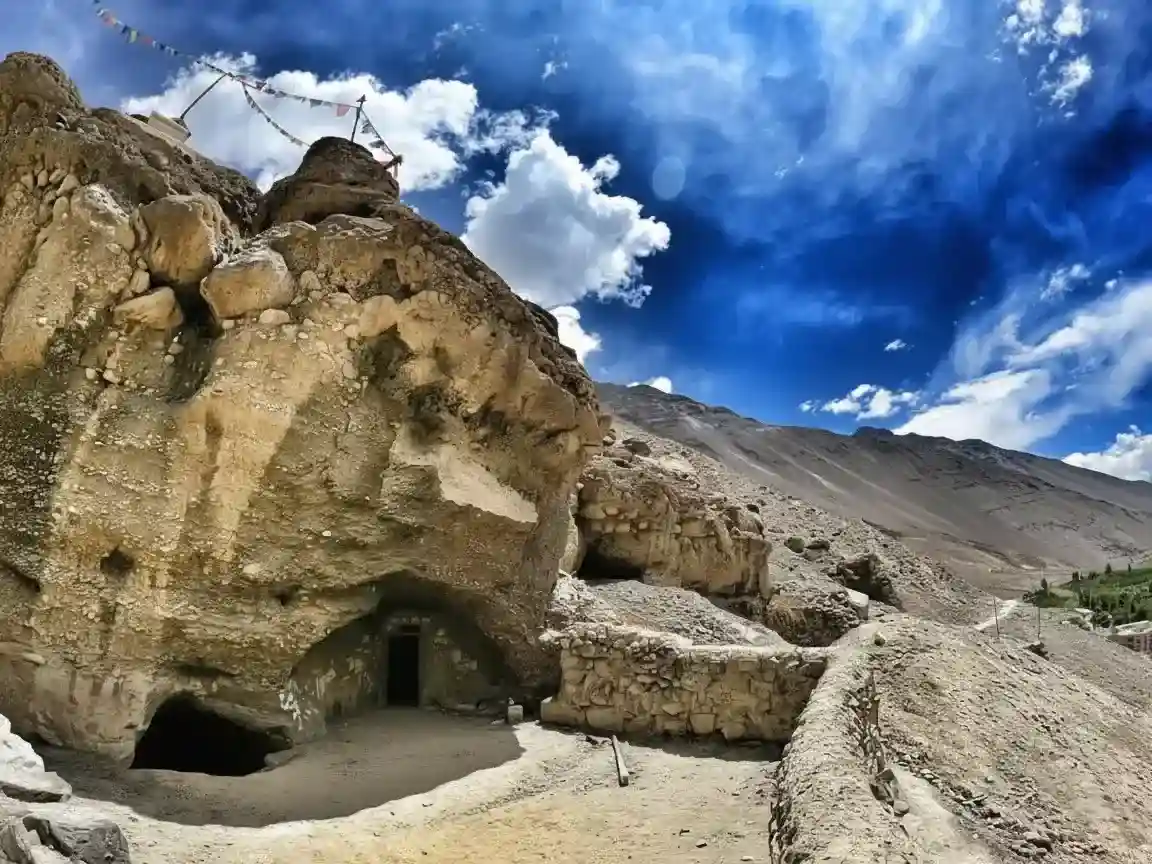
The Tabo Caves are not natural formations adapted for human use - they are carefully excavated meditation chambers carved into the sheer rock face of the cliff. Their strategic location, visible from the famous Tabo Monastery below, is no accident. The caves were intentionally positioned to be close to the monastery yet sufficiently isolated to allow for deep meditation practice. This balance between community support and solitary retreat is central to Tibetan Buddhist spiritual training.
What makes visiting the Tabo Caves such a powerful experience is that this is not a dead historical site or a museum - it's a living spiritual tradition. Even today, monks from Tabo Monastery continue to use these caves for meditation retreats, some lasting months or even years. When you visit, you're walking in the footsteps of countless practitioners who have sought spiritual wisdom in these humble rock chambers for over 1,000 years.
History & Significance
Ancient Origins
The Tabo Caves date back to the same period as the famous Tabo Monastery - founded in 996 CE by the great translator Rinchen Zangpo. This period, known as the 'later diffusion' of Buddhism in Tibet, was a time of intense religious and cultural activity. Monasteries, temples, and meditation caves were established throughout the trans-Himalayan region, creating a network of Buddhist practice that continues to this day.
The caves were excavated by monks who wanted a place for intensive meditation practice away from the distractions of daily life. Carving meditation chambers into solid rock was an act of devotion that required enormous effort and commitment. The very act of creating these caves was seen as a form of spiritual practice, generating merit for both the creators and those who would use them.
Ngari Lotsawa's Connection
According to local tradition, the great translator Ngari Lotsawa (also known as Rinchen Zangpo) spent time meditating in these caves. Ngari Lotsawa was one of the most important figures in the revival of Buddhism in Tibet, translating numerous texts from Sanskrit into Tibetan. His association with the Tabo Caves adds to their spiritual significance and sanctity.
For practitioners of Tibetan Buddhism, meditating in the same location where great masters like Ngari Lotsawa practiced is believed to be especially beneficial. The spiritual energy accumulated by generations of practitioners is said to make these caves particularly conducive to meditation and spiritual progress.
Spiritual Practice Tradition
The caves represent a tradition of solitary retreat that is central to Tibetan Buddhism. In this tradition, practitioners spend extended periods in isolation, engaging in intensive meditation practice. These retreats can last from weeks to years, depending on the practitioner's goals and the specific practices they're undertaking.
The purpose of these retreats is to deepen one's meditation practice, gain direct experiential understanding of Buddhist teachings, and sometimes to complete specific practices (sadhanas) that require accumulation of mantras or other rituals. The isolation of the cave environment, with its natural silence and simplicity, creates ideal conditions for this intensive practice.
Living Tradition
Perhaps what's most remarkable about the Tabo Caves is that they continue to be used for their original purpose. Unlike many historical sites that have become museums, the Tabo Caves remain active meditation retreats. Monks from Tabo Monastery still come here for solitary retreat, maintaining a tradition that has continued unbroken for over 1,000 years.
This living tradition means that when you visit, you need to be respectful and quiet. You might encounter monks who are in retreat or signs indicating that certain caves are currently in use. The fact that these caves continue to serve as meditation retreats makes them unique among historical sites in the Himalayas.
The Meditation Experience
Monk's Life in Retreat
Understanding what meditation retreat in the Tabo Caves entails helps visitors appreciate the spiritual significance of this place. A monk's retreat here follows traditional patterns established over centuries:
Daily Routine: A typical day in retreat begins early, often before dawn. The practitioner engages in meditation sessions throughout the day, interspersed with breaks for meals and rest. The exact schedule varies depending on the specific practices being undertaken, but generally involves many hours of meditation daily.
Diet: Food is kept simple, often brought from the monastery below by fellow monks or lay supporters. The diet is vegetarian, designed to support rather than hinder meditation practice. Some practitioners undertake fasting retreats, but this is done under guidance.
Sleep: Sleep is minimized in some traditions, with practitioners sometimes adopting special meditation postures that allow for 'sleep meditation.' Other traditions emphasize adequate rest to maintain clarity of mind.
Duration: Retreats can vary from short periods of a few weeks to extended retreats lasting years. The most serious practitioners may undertake traditional three-year retreats, though this is less common in the Tabo Caves specifically.
Solitude and Silence
The defining characteristic of cave meditation is the profound solitude and silence it offers. In a world where silence is increasingly rare, the Tabo Caves provide an environment of natural quiet that is both rare and precious:
- Auditory Silence: The caves' location away from the village and the monastery means that human-made sounds are minimal. The primary sounds are natural - wind, birds, and perhaps the distant sound of the river below.
- Visual Simplicity: The cave interior is bare and simple, reducing visual distractions. This simplicity helps the mind settle and focus internally.
- Physical Isolation: Being alone in the cave removes the social distractions and obligations of daily life, allowing the practitioner to turn their attention inward.
This isolation isn't just about removing distractions - it's also about facing oneself. In the silence of the cave, practitioners confront their own minds directly, seeing both the clarity and the turbulence that exists within. This confrontation is considered essential for spiritual progress in Buddhism.
Spiritual Energy
For those sensitive to such things, the spiritual energy of the Tabo Caves is palpable. Generations of practitioners have meditated here, and Buddhist tradition holds that places where serious practice has been conducted accumulate spiritual energy:
- Blessings of the Place: Tibetan Buddhism teaches that locations where masters have practiced are especially blessed. Meditating in such places is believed to accelerate spiritual progress.
- Connection to Lineage: Practicing in the same caves where great masters like Ngari Lotsawa meditated creates a sense of connection to the lineage of practitioners stretching back over 1,000 years.
- Supportive Environment: The atmosphere in the caves is conducive to meditation - the silence, the simplicity, and the natural beauty create an environment that supports spiritual practice.
Modern Retreats and Visitor Meditation
While most visitors won't undertake extended retreats in the Tabo Caves, it's sometimes possible to arrange shorter meditation sessions:
- Guided Meditation: Some guides who take visitors to the caves may offer brief guided meditation sessions, allowing you to experience the caves' peaceful atmosphere.
- Personal Practice: If you have a meditation practice, you can sit quietly in one of the unoccupied caves for a period of time. Even 10-15 minutes of meditation can give you a taste of the caves' peaceful energy.
- Respectful Observation: Even if you don't meditate, simply sitting quietly and absorbing the atmosphere can be a meaningful experience.
Cave Exploration
Number and Layout
There are multiple caves at Tabo, though the exact number varies depending on how you count them. The main caves that are accessible to visitors are approximately half a dozen, though there may be additional caves that are less accessible or currently in use by monks in retreat.
The caves are spread across the cliff face at different levels, connected by a steep path. The climb up to the caves requires some effort but is manageable for most reasonably fit people. The path offers beautiful views of the valley below and Tabo Village.
Cave Features
The caves are relatively simple in their construction, reflecting their purpose as meditation retreats rather than living quarters:
- Excavated Chambers: Each cave is essentially a chamber excavated into the rock face. The size varies, but most are just large enough for one or two people to sit or lie down.
- Ventilation: Small openings or shafts provide ventilation, ensuring fresh air while maintaining privacy and protection from the elements.
- Entrances: Cave entrances often have some form of protection from wind and rain - either natural rock formations or simple constructions.
- Interior: The cave interiors are typically bare, sometimes with small niches for religious images or offerings. The simplicity is intentional, designed to minimize distractions.
Mural Paintings and Art
While not as elaborate as the famous paintings in Tabo Monastery below, some caves contain mural paintings and artistic elements:
- Religious Images: Some caves have painted images of Buddhas, bodhisattvas, or protective deities. These images serve as objects of contemplation during meditation.
- Sacred Syllables: You may find mantras or sacred syllables painted on cave walls. Common ones include 'Om Ah Hum' or 'Om Mani Padme Hum.'
- Offering Shelves: Small niches or carved shelves may hold butter lamps, water offerings, or other ritual objects.
The artwork in the caves is typically simpler and less refined than in the monastery below, but it has its own raw spiritual power. These paintings are not art for art's sake - they are spiritual tools, meant to support meditation practice.
Views and Setting
One of the most striking aspects of the Tabo Caves is their setting and the views they offer:
- Valley Views: From the cave entrances, you have panoramic views of the Spiti Valley below. The stark desert landscape, with the Spiti River winding through, creates a dramatic backdrop for meditation.
- Tabo Village: Looking down, you can see Tabo Village and the famous Tabo Monastery. This view connects the solitary practice in the caves with the community life below.
- Surrounding Mountains: The caves are surrounded by the towering mountains of the Spiti Valley, creating a sense of both isolation and connection to the natural world.
Difficulty and Accessibility
Reaching and exploring the Tabo Caves requires some physical effort:
- Climb: The path up to the caves is steep and rocky. It takes approximately 20-30 minutes of climbing from the base, depending on your fitness level.
- Altitude: At over 3,000 meters, altitude is a factor. Take your time, rest when needed, and stay hydrated.
- Footing: The path can be loose and slippery, especially if there's been recent rain. Wear good hiking shoes with grip.
- Uneven Surfaces: Inside the caves, the floor is uneven and may be low or narrow. Watch your head and step carefully.
How to Reach Tabo Caves
From Tabo Village
The Tabo Caves are located approximately 1 kilometer from Tabo Village. The access path starts near the village and ascends the cliff face. The caves are visible from the village, perched high on the cliff above.
From Kaza
Kaza, the headquarters of Spiti Valley, is approximately 47 km from Tabo. The drive takes about 1.5-2 hours, depending on road conditions. Many travelers combine a visit to Tabo Caves with exploring the Key Monastery, which is located near Kaza and is one of the most important Buddhist centers in the region.
- By Road: Take the road from Kaza towards Tabo. The road is generally in good condition but can be rough in patches.
- By Bus: There are occasional buses between Kaza and Tabo, but they're infrequent. Check schedules in advance.
- By Taxi: Taxis can be hired in Kaza for the day trip to Tabo. This gives you flexibility to explore at your own pace.
Road Conditions
The roads in Spiti Valley are mountain roads, characterized by steep drops, sharp turns, and occasionally rough surfaces:
- Driving: If you're driving yourself, take your time and be prepared for slow going. The roads require concentration and careful driving.
- Altitude: The entire journey is at high altitude. Factor in rest stops and acclimatization time.
- Weather: Roads can become difficult or impassable during and after rain. Check conditions before setting out.
Best Transport Options
- Hired Taxi with Driver: The most recommended option. Local drivers know the roads and can navigate safely.
- Private Vehicle: Gives flexibility but ensure you're comfortable with mountain driving.
- Motorcycle: For the adventurous, motorcycles offer an exciting way to see Spiti. However, roads can be challenging for two-wheelers.
Trek Option
For those who enjoy trekking, it's possible to walk from Tabo Village to the caves. This is a short but steep hike of approximately 30-45 minutes. The path is scenic and gives you a closer connection to the landscape. Make sure you're acclimatized to the altitude before attempting the climb.
Best Time to Visit
Summer (June-September)
This is the best time to visit the Tabo Caves, when weather is most favorable:
- June-July: Pleasant temperatures and generally clear weather. This is peak tourist season in Spiti Valley.
- August-September: Still good weather, though August can see some monsoon rain. The landscape is beautiful and green.
- Accessibility: Roads are open and passable during these months. The path up to the caves is dry and safe.
Winter (October-May)
Winter brings extreme challenges:
- Heavy Snowfall: The region receives heavy snow, and roads become blocked. Tabo becomes largely inaccessible.
- Extreme Cold: Temperatures drop well below freezing. Even if you could reach the caves, they would be buried in snow.
- Monastery Closure: Tabo Monastery has limited winter operations, and monks often retreat to lower altitudes.
Recommended Timing
July-September is the optimal window for visiting the Tabo Caves. During these months, you have the best chance of good weather, accessible roads, and an enjoyable experience. Plan your visit for the morning when temperatures are cooler and the light is better for photography.
Daily Timing
The best time of day to visit the caves is:
- Early Morning (8-10 AM): Cool temperatures, soft light for photography, and fewer crowds.
- Late Afternoon (4-6 PM): Beautiful golden hour light, but be mindful of time for the return climb.
Avoid midday (11 AM - 3 PM) during summer when it can get quite hot, especially on the climb up to the caves.
Nearby Attractions
Tabo Monastery
The Tabo Monastery, founded in 996 CE, is the oldest continuously operating Buddhist enclave in India. Often called the 'Ajanta of the Himalayas' for its exquisite wall paintings, the monastery is a must-visit. It houses priceless thangkas, statues, and manuscripts. The monastery complex includes 9 temples and 23 chortens. A visit here complements the caves perfectly, showing both the communal monastic life and the solitary meditation tradition. The region is also home to other significant monasteries in Lahaul and Spiti worth exploring.
Dhankar Monastery
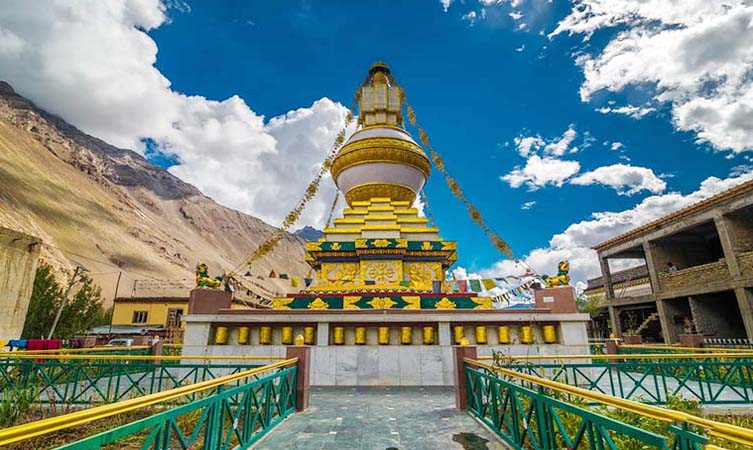
Approximately 32 km from Tabo, Dhankar Monastery is dramatically perched on a cliff overlooking the confluence of the Spiti and Pin rivers. The monastery, dating back to the 12th century, offers stunning views and beautiful art. The Dhankar Lake above the monastery is worth the trek. Dhankar can be visited as a day trip from Tabo or incorporated into a Spiti Valley itinerary, and pairs well with a stay in nearby Tabo Monastery village.
Pin Valley
The Pin Valley, accessible from near Dhankar, is a beautiful valley known for its wildlife, including the snow leopard. Kungri Monastery, the main monastery of the Nyingma school in Spiti, is located here. The Pin Valley is less visited than the main Spiti Valley and offers a more remote, pristine experience.
Kaza
Kaza, the headquarters of Spiti Valley, has accommodation, restaurants, and serves as a base for exploring the region. Key Monastery, the largest in Spiti, is just 12 km from Kaza. Kaza also has a market, fuel station, and medical facilities - practical considerations for extended travel in Spiti. If you're planning a comprehensive Spiti Valley itinerary, Kaza serves as an excellent central base.
Suggested Itinerary
A typical itinerary incorporating Tabo Caves might look like:
- Day 1: Arrive in Tabo from Kaza. Visit Tabo Monastery. Overnight in Tabo.
- Day 2: Morning visit to Tabo Caves. Afternoon departure to Kaza or continuation towards Dhankar.
Or combine Tabo Caves with a broader Spiti Valley circuit covering Kaza, Key Monastery, Kibber, and other attractions.
Practical Travel Tips
Preparation
- Acclimatize: Spend at least a couple of days acclimatizing to the altitude before attempting the climb to the caves.
- Fitness: Ensure you're reasonably fit. The climb requires effort, especially at high altitude.
- Water and Snacks: Bring water and some energy snacks for the climb. There are no facilities once you start climbing.
- Rest: Take your time climbing. Rest when needed. There's no rush.
What to Bring
- Sturdy Shoes: Hiking shoes with good grip are essential. The path is rocky and potentially slippery.
- Sun Protection: At high altitude, UV radiation is strong. Bring sunscreen, sunglasses, and a hat.
- Water: Carry at least 1 liter of water per person.
- Camera: The views are spectacular. Bring a camera with a good zoom lens.
- Light Jacket: Even in summer, it can be cool, especially if there's wind.
Respecting the Sacred Space
Remember that the Tabo Caves are not just a tourist attraction - they are active meditation retreats:
- Quiet: Maintain absolute quiet, especially near caves that might be in use.
- No Photography Inside: Do not photograph inside caves, especially if someone is meditating.
- Respect Retreats: If you see signs indicating a cave is in use, stay away and be quiet.
- No Disturbance: Don't touch religious objects or disturb offerings.
- Leave No Trace: Take back everything you bring. Don't leave trash in this sacred space.
Guides
While you can visit the caves independently, hiring a local guide can enhance your experience:
- Guides know which caves are accessible and which are in use.
- They can explain the history and significance of the caves.
- They can ensure you don't accidentally disturb retreats.
- Guides may be able to arrange brief meditation sessions in unoccupied caves.

Safety Considerations
- Altitude Sickness: Be aware of symptoms of AMS. If you experience headache, nausea, or dizziness, descend immediately.
- Weather: Mountain weather can change quickly. Be prepared for sudden changes.
- Path Conditions: The path can be loose and steep. Watch your footing, especially on the descent.
- Tell Someone: Let someone at your guesthouse know you're heading to the caves and when you expect to return.
Accommodation
Tabo has basic accommodation options:
- Guesthouses: Simple but clean guesthouses are available in Tabo village.
- Homestays: Local families offer homestay accommodation, giving you a more authentic experience.
- Monastery Guest House: Tabo Monastery sometimes offers basic accommodation.
Book in advance during peak season (July-August). For more options, stay in Kaza and visit Tabo as a day trip.
The Tabo Caves offer more than just an interesting historical site to visit - they provide a window into a living spiritual tradition that has continued for over 1,000 years. Whether you're a serious practitioner of meditation, a student of Buddhist culture, or simply a traveler seeking unique experiences, the Tabo Caves have something profound to offer. The combination of ancient history, living spiritual practice, dramatic natural setting, and the challenge of the climb itself creates an experience that is both physically and spiritually rewarding. In the silence of these caves, you can connect with a tradition of seekers who have come here for generations, looking for the same thing that brings travelers here today - peace, wisdom, and a deeper understanding of themselves and their place in the world.
Location
Frequently Asked Questions
Q1.What are Tabo Caves famous for?
Q2.Where are the Tabo Caves located?
Q3.Can anyone meditate in Tabo Caves?
Q4.How many caves are there in Tabo?
Q5.What is the history of Tabo Caves?
Q6.Is there an entry fee for Tabo Caves?
Q7.How do I reach Tabo Caves?
Q8.What is the best time to visit Tabo Caves?
Recommended For You
Things to Do in Spiti Valley: Monasteries, Villages & Routes
Discover the top 15 things to do in Spiti Valley including Key Monastery, Chandratal Lake, Pin Valley, ancient villages, and high-altitude adventures. Complete guide with itineraries, costs, and travel tips.
Best Homestays in Spiti Valley: Villages, Prices and Tips
Best homestays in Spiti Valley with village-wise stay options, pricing, facilities, booking strategy, and practical travel tips for high-altitude comfort.
Monasteries in Lahaul Spiti: Buddhist Heritage
Explore ancient monasteries in Lahaul Spiti. Complete guide to Tabo, Ki, Dhankar, Kye & other Buddhist monasteries with travel tips.
Never Miss an Adventure
Get the latest trekking guides, travel tips, and exclusive offers delivered straight to your inbox.
