
Zanskar Valley: Ladakh's Remote Paradise (Complete Travel Guide)
Rohan Malhotra
November 21, 2025
Complete travel guide to Zanskar Valley Ladakh. Best time to visit, how to reach, top places to visit, treks including Chadar, accommodation, cost, and practical tips for this remote Himalayan paradise.
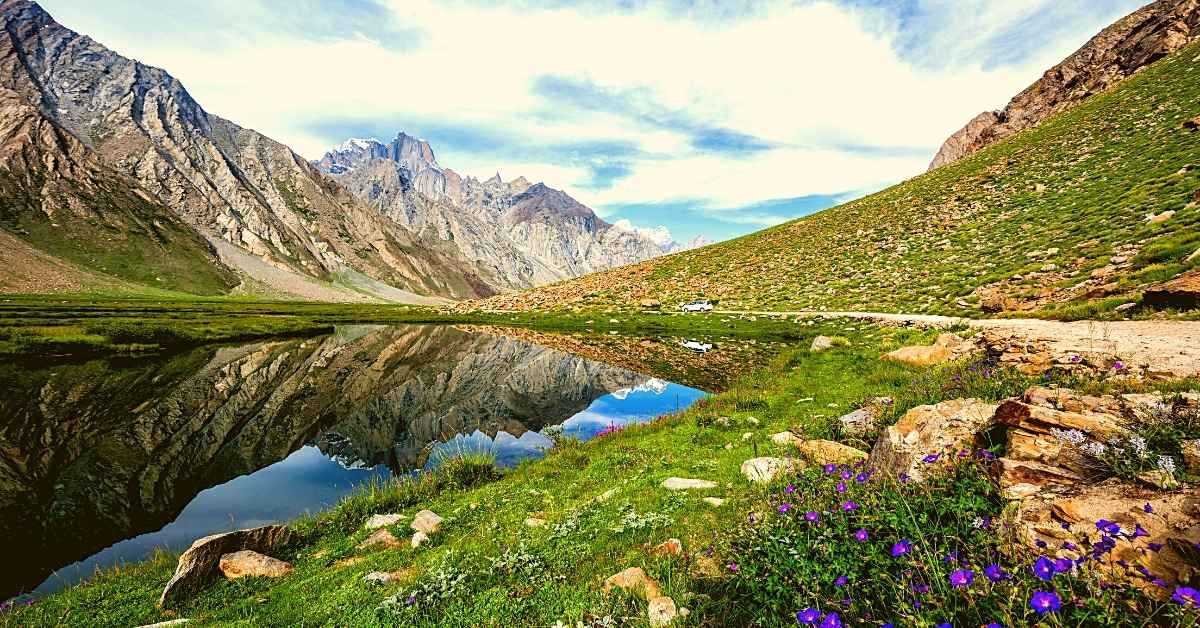
Tucked away in a corner of Ladakh that time forgot, Zanskar Valley is one of the last remaining places on Earth where you can experience true Himalayan wilderness. Cut off from the world for nearly eight months each year by heavy snow, this remote valley has preserved a way of life that has remained virtually unchanged for centuries. Ancient monasteries perched on cliffs, traditional Tibetan Buddhist culture, dramatic landscapes of towering peaks and deep gorges, and a silence so profound you can hear your own heartbeat—this is Zanskar.
Located at an average altitude of 3,800 meters (12,500 feet), Zanskar is accessible only by road for a few months each year (July-September) when the Zojila Pass opens. The rest of the year, the valley is isolated, accessible only by the legendary Chadar Trek—a frozen river walk that has achieved almost mythical status among adventure seekers.
This comprehensive guide covers everything you need to know about visiting Zanskar Valley, from practical information on how to reach and when to visit, to the top attractions, trekking opportunities, and cultural experiences that make this corner of the Himalayas so special.
Why Visit Zanskar Valley?
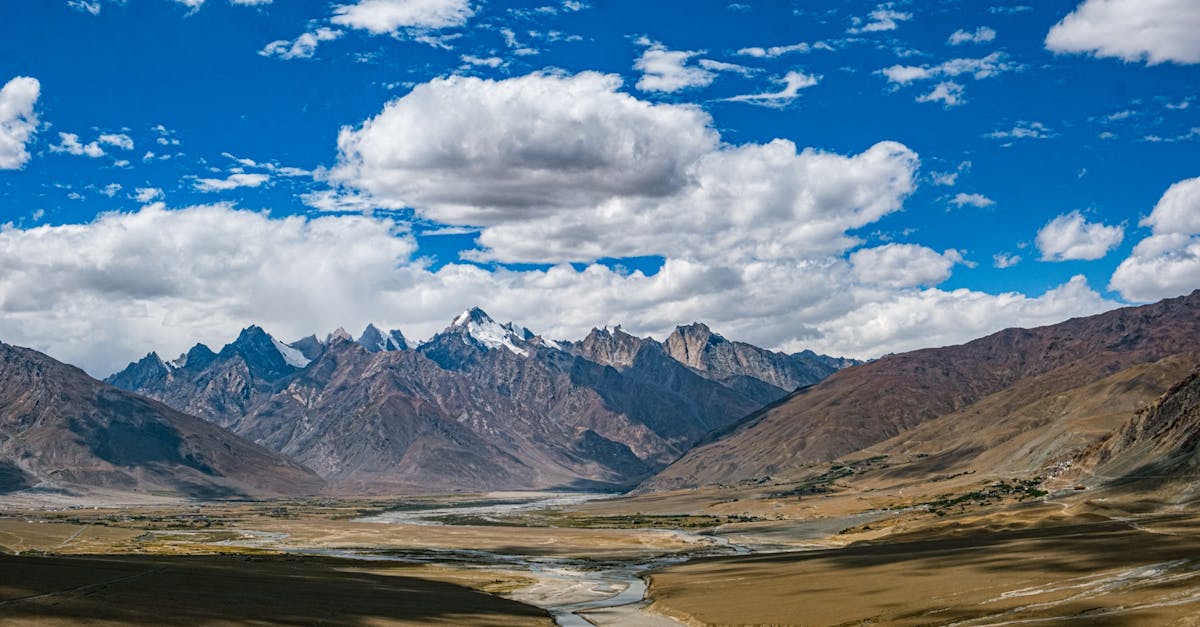
Zanskar offers an authentic Himalayan experience that's increasingly rare to find. Unlike Leh which sees hundreds of thousands of tourists annually, Zanskar receives only a few thousand visitors each year. The valley has no luxury resorts, no cafés serving cappuccino, no shopping malls—just pristine nature, ancient culture, and warm hospitality.
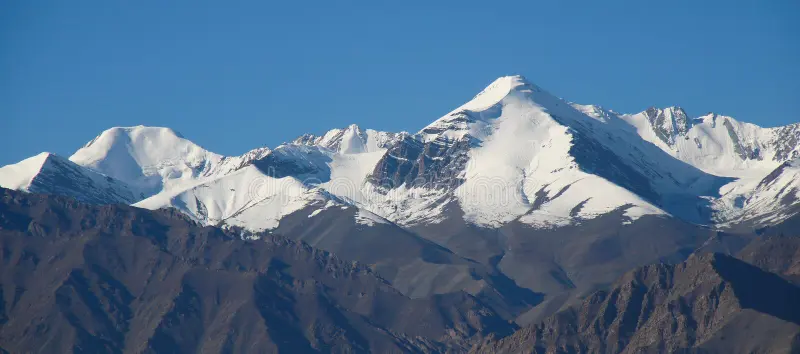
The landscape is dramatic on a scale that's hard to comprehend. Towering peaks rise over 6,000 meters, the Suru and Zanskar rivers carve through deep gorges, and glaciers pour down valleys like frozen rivers. The colors are remarkable—green villages stand out against brown mountains, turquoise glacial lakes reflect snow-capped peaks, and in autumn, the valley turns golden as barley is harvested.
For culture enthusiasts, Zanskar is a treasure trove. The valley follows Tibetan Buddhism and is dotted with ancient monasteries (gompas) that date back over a thousand years. The traditional way of life continues here—yaks graze in high pastures, barley is harvested by hand, and monks perform ceremonies that have been repeated for generations.
Zanskar Valley at a Glance
| Feature | Details |
|---|---|
| Altitude | Average 3,800 meters (12,500 feet) |
| Best Time to Visit | July to September (summer), January to February (Chadar Trek) |
| Access | Road from Kargil (240 km) or via Chadar Trek from Leh (winter) |
| Major Towns | Padum (headquarters), Karsha, Zangla, Stongdey |
| Language | Zanskari (Tibetan dialect), Hindi, Ladakhi |
| Religion | Tibetan Buddhism |
| Currency | Indian Rupee (INR) |
| Time Zone | IST (UTC+5:30) |
| Permit Required | Inner Line Permit for foreigners, Indians need no permit |
Best Time to Visit Zanskar Valley
Zanskar experiences two distinct tourist seasons—summer when the road is open, and winter when the valley is accessible only via the Chadar Trek.
Summer Season (July - September)
July:
The road from Kargil typically opens by early July after winter snow clears. Temperatures are pleasant (15-25°C during day, 5-10°C at night). The valley is lush and green, wildflowers bloom in meadows, and the Suru and Zanskar rivers flow powerfully. This is an excellent time for cultural tours, monastery visits, and jeep safaris.
August:
Peak season with the most stable weather. Days are warm (20-25°C), nights cool (5-10°C). All tourist facilities are operational. The harvest season begins toward the end of August, offering opportunities to see traditional farming practices. This is the best month for trekking—high passes are snow-free and trails are in good condition.
September:
Shoulder season with cooler temperatures (15-20°C day, 0-5°C night). The valley turns golden as barley ripens and is harvested. Tourist numbers decrease, offering a more peaceful experience. By late September, nights drop below freezing and snow can begin on high passes. The road typically closes by early to mid-October.
Winter Season (January - February)
This is when adventure seekers attempt the legendary Chadar Trek—a walk on the frozen Zanskar River. The trek is extremely challenging, with temperatures dropping to -30°C at night. Only experienced trekkers with proper gear and guides should attempt this. The frozen landscape offers a surreal, otherworldly experience unlike anywhere else on Earth.
When NOT to Visit
October to December and March to June—the valley is cut off by snow. The road is closed, and even the Chadar Trek is not possible during these transition months when the river is neither completely frozen nor safely flowable.
How to Reach Zanskar Valley
By Road (Summer Only - July to September)
Route 1: Srinagar → Kargil → Padum (Most Common)
- Srinagar to Kargil: 204 km via Sonamarg and Zojila Pass (6-7 hours)
- Kargil to Padum: 240 km via Suru Valley (10-12 hours)
- Total: 444 km, 2-day journey recommended
Break the journey with an overnight stay in Kargil. The Kargil-Padum road is challenging but spectacular, crossing the Pensila Pass (4,400 meters) and following the Suru River through stunning landscapes.
Route 2: Leh → Kargil → Padum
- Leh to Kargil: 217 km via Fotu La Pass (5-6 hours)
- Kargil to Padum: 240 km (10-12 hours)
- Total: 457 km, 2-day journey recommended
This route is longer but offers diverse scenery, crossing two high passes (Fotu La and Pensila).
By Air
The nearest airports are:
- Srinagar Airport (SXR): 444 km from Padum (2-day road journey)
- Leh Airport (IXL): 457 km from Padum (2-day road journey)
- Kargil Airport: Proposed but not yet operational
Fly to Srinagar or Leh, then travel by road to Kargil and onward to Padum.
By Chadar Trek (Winter Only - January to February)
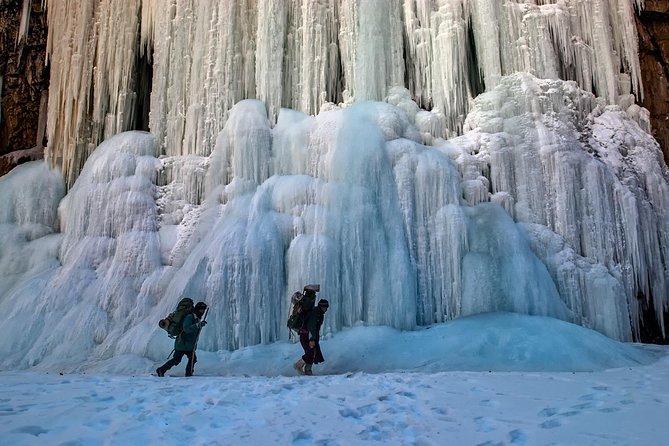
The Chadar Trek follows the frozen Zanskar River from Chilling to Padum:
- Distance: 105 km one way
- Duration: 7-9 days
- Difficulty: Extreme (-30°C temperatures, walking on ice)
- Requirement: Must go with registered tour operator, experienced guides, and proper gear
- Note: Due to climate change, the Chadar is becoming less reliable each year. Some years it doesn't form completely, making the trek impossible.
Top Places to Visit in Zanskar Valley
1. Padum - The Capital
Padum is the administrative headquarters and largest town in Zanskar, though "town" is generous—it's more a collection of houses, guesthouses, and government buildings scattered along the banks of the Tsarap River. This is the base for exploring Zanskar and has the most tourist facilities.
Attractions in Padum:
- Stagrimo Monastery: A small monastery above town with ancient frescoes and statues
- Pipiting Village: Traditional Zanskari village with barley fields and chortens (stupas)
- Local Market: Small market selling basic supplies—stock up here before heading to remoter areas
Where to Stay in Padum:
Options are basic but comfortable. Popular guesthouses include Hotel Greenland, Zanskar Hotel, and several homestays. Expect simple rooms, communal bathrooms, and traditional Zanskari meals.
2. Karsha Monastery
Distance from Padum: 9 km
Time Required: 2-3 hours
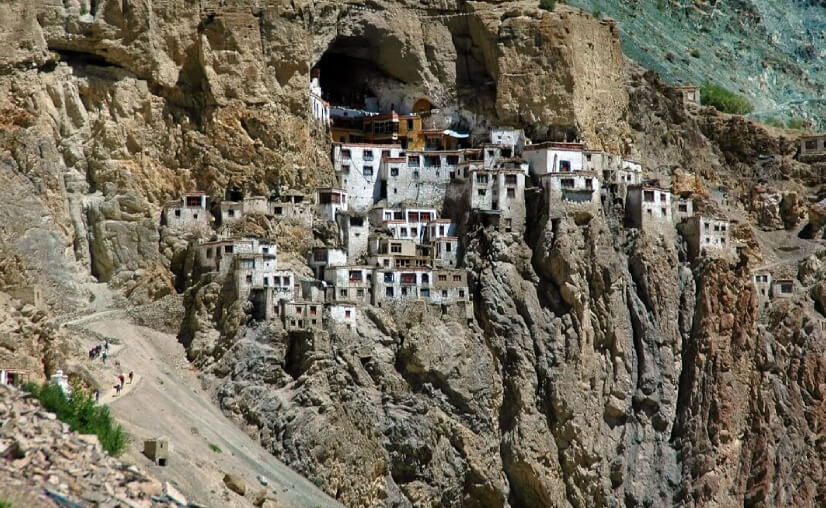
Karsha Gompa is the largest and most important monastery in Zanskar, home to around 100 monks. Perched dramatically on a cliff overlooking the Padum Valley, the monastery dates back to the 10th century and is affiliated with the Gelugpa school of Tibetan Buddhism.
The monastery complex includes several temples, the most important being the Dusum Khyipa temple with ancient murals and statues. The views from the monastery over the valley are spectacular. If you visit during a festival (usually in July), you'll witness colorful masked dances performed by monks.
3. Phugtal Monastery
Distance from Padum: 45 km
Time Required: Full day (or 2-day trek from Padum)
Phugtal (or Phuktal) is perhaps the most spectacularly located monastery in all of Ladakh. Built into a cliffside cave above the Tsarap River, the monastery appears to grow organically from the rock face. The cave itself is believed to have been visited by ancient sages and scholars, with the monastery established here in the 12th century.
Reaching Phugtal is part of the adventure—there's no road access. You must hike from the village of Cha or Khangsaar, following the Tsarap River through a dramatic gorge. The walk takes 4-5 hours one way and can be done as a very long day trip or preferably as an overnight camping trip.
The monastery itself is small but atmospheric, with ancient murals, a library of sacred texts, and a meditation cave where monks still retreat for years at a time.
4. Zangla Palace and Monastery
Distance from Padum: 35 km
Time Required: Half day
Located in the remote Zangla region, the Zangla Palace (fort) dates back to the 17th century and was once the residence of the Zanskar royal family. Today, the palace is mostly in ruins but offers a fascinating glimpse into Zanskar's history. The adjacent Zangla Monastery is small but active, with friendly monks who welcome visitors.
The drive to Zangla is spectacular, following the Zanskar River through a deep gorge. This area is also the starting point for treks to the remote Lungnak Valley and the Zanskar River confluence.
5. Stongdey Monastery
Distance from Padum: 18 km
Time Required: 2 hours
Stongdey (or Stongde) is the second-largest monastery in Zanskar after Karsha. Perched on a ridge overlooking the valley, the whitewashed buildings of the monastery create a striking contrast against the brown mountains. Founded in the 11th century, the monastery belongs to the Gelugpa school and houses around 60 monks.
The climb from the road to the monastery is steep but rewarding, with excellent views of the surrounding valleys. The monastery has several temples with ancient statues and thangkas (religious paintings). The annual Stongdey monastery festival usually takes place in July or August.
6. Sani Monastery
Distance from Padum: 6 km
Time Required: 1 hour
Sani Gompa is one of the oldest religious sites in Zanskar, believed to date back to the 2nd century. The monastery is unique in that it's associated with the Nyingma school of Tibetan Buddhism, whereas most Zanskar monasteries follow Gelugpa.
The main attraction is the ancient chorten (stupa) said to contain relics of the Buddhist saint Padmasambhava. The monastery also has a small cave meditation retreat where monks still spend years in isolation. The location beside a stream and willow grove makes it particularly peaceful.
7. Suru Valley
Distance from Padum: The valley stretches from Kargil to Padum (140 km)
Time Required: 1-2 days
The Suru Valley is the gateway to Zanskar and offers some of the most dramatic scenery in Ladakh. The Suru River flows through the valley, fed by the Parkachik Glacier which is visible from the road. Unlike much of Ladakh, the Suru Valley is surprisingly green, with villages, barley fields, and willow groves creating a striking contrast against the mountains.
Key Stops in Suru Valley:
- Panikhar: Largest village in the valley, with stunning views of the Nun-Kun massif (7,135 meters)
- Rangdum: Remote village with a monastery perched dramatically on a hill
- Parkachik Glacier: The glacier reaches almost to the road—you can walk up to it
- Sankoo: Picturesque village known for apricot orchards and ancient rock carvings
Treks in Zanskar Valley
Zanskar is a trekker's paradise, with routes ranging from day hikes to multi-day expeditions. The best trekking season is July to September when passes are snow-free.
Chadar Trek (January - February Only)
Difficulty: Extreme
Duration: 7-9 days
Distance: 105 km one way
The legendary Chadar Trek follows the frozen Zanskar River from Chilling to Padum. Walk on ice that's several feet thick, camp in caves, and experience a winter landscape unlike anywhere else. Temperatures drop to -30°C at night. Only for experienced trekkers with proper gear and guides.
Zanskar Valley Trek (Padum to Lamayuru)
Difficulty: Moderate to Challenging
Duration: 10-12 days
Distance: 125 km
One of the most popular treks in Ladakh, this route crosses several high passes (the highest being Singge La at 5,100 meters) and takes you through remote villages and ancient monasteries. The trek ends at Lamayuru Monastery, one of Ladakh's oldest and most spectacular.
Phugtal Round Trek
Difficulty: Moderate
Duration: 4-5 days
Distance: 50 km
A circular route from Padum visiting Phugtal Monastery and returning via a different route through remote villages. This trek offers an intimate experience of Zanskari village life and the opportunity to visit monasteries that see very few tourists.
Pensi La Trek
Difficulty: Moderate
Duration: 3-4 days
Distance: 35 km
A shorter trek crossing the Pensi La Pass (4,400 meters) between the Suru Valley and Zanskar. This trek offers spectacular views of the Drang Drung Glacier and is an excellent option for those with limited time.
Where to Stay in Zanskar Valley
Accommodation in Zanskar is basic. Don't expect luxury—you're visiting one of the most remote places on Earth.
Padum
Padum has the most options:
- Guesthouses: Hotel Greenland, Zanskar Hotel, Juneyal Guest House. Rooms are basic but clean. ₹800-1,500 per night
- Homestays: Several families offer rooms in their homes. ₹600-1,000 per night including meals
Other Villages
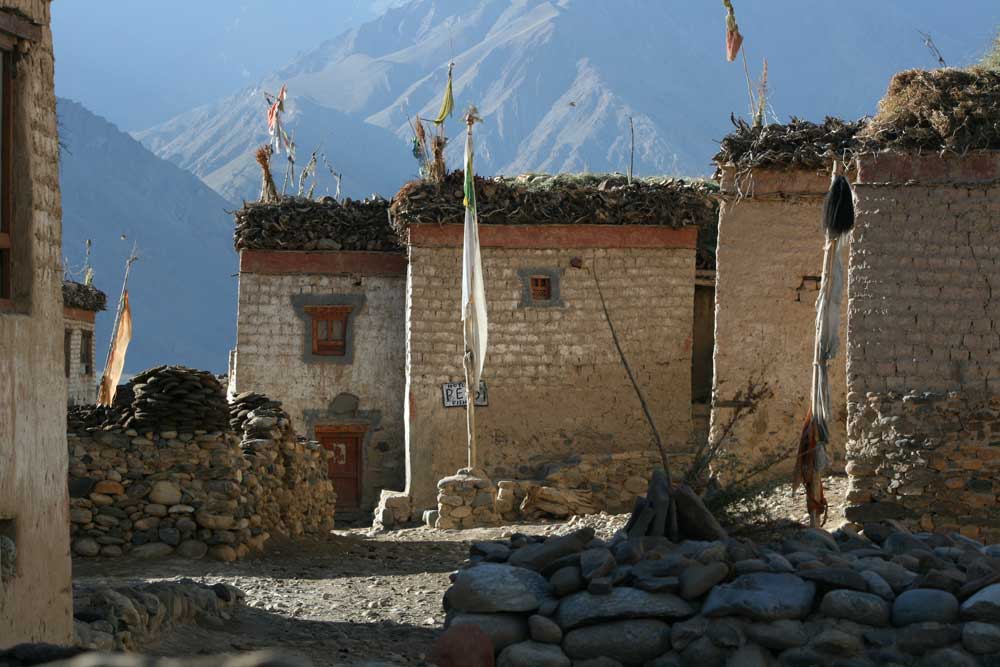
Most larger villages have basic guesthouses or homestays:
- Karsha: Monastery guesthouse and village homestays
- Zangla: Basic homestays
- Stongdey: Monastery guesthouse
Camping
Wild camping is possible throughout Zanskar. Carry all your own gear, respect local customs, and leave no trace. It's polite to ask permission from villagers before camping near their settlement.
What to Eat in Zanskar
Zanskari food is simple, nutritious, and designed for the harsh climate:
- Skyu: A thick stew made with wheat pasta, root vegetables, and sometimes meat
- Thukpa: Noodle soup with vegetables or meat
- Momos: Steamed or fried dumplings filled with meat or vegetables
- Chutagi: Bow-tie shaped pasta in a vegetable broth
- Khambir: Local brown bread, baked in traditional ovens
- Butter Tea: Salty tea made with yak butter—essential for energy in the cold
- Chang: Local barley beer, mildly alcoholic
Vegetarian options are available at most guesthouses. If you have dietary restrictions, inform your host in advance.
Practical Information for Visiting Zanskar
Permits
- Indian Nationals: No permit required for Zanskar Valley
- Foreign Nationals: Require a Protected Area Permit (PAP). Available in Leh or Kargil. Cost: approximately ₹500-700 per week. Required documents: passport, visa, passport-size photos
- Pangong Lake and Nubra Valley: Require Inner Line Permits (ILP) if combining these with your Zanskar trip
ATMs and Connectivity
- ATMs: There are NO ATMs in Zanskar. Last ATM is in Kargil (J&K Bank, SBI). Carry sufficient cash from Kargil or Leh
- Phone: BSNL has limited connectivity in Padum. Other networks don't work. No phone in most villages
- Internet: Very limited and slow. Available only in Padum at a few guesthouses. Don't rely on it
Health and Safety
- Altitude Sickness: Zanskar is at high altitude (average 3,800 meters). Acclimatize properly in Kargil or Leh (2-3 nights). Drink 3-4 liters of water daily. Carry Diamox after consulting your doctor
- Medical Facilities: Basic medical centers in Padum and larger villages. For serious conditions, evacuate to Leh or Srinagar. Carry a comprehensive first aid kit
- Travel Insurance: Essential. Ensure it covers high-altitude travel and helicopter evacuation
What to Pack
- Clothing: Layers are essential. Even in summer, nights drop to 0-5°C. Bring thermals, fleece, down jacket, warm hat, gloves, and sturdy walking shoes
- Sun Protection: At high altitude, UV radiation is intense. Bring sunscreen (SPF 50+), sunglasses, and lip balm
- Wet Wipes & Hand Sanitizer: Running water is not always available
- Power Bank: Electricity is limited and often available only in evenings
- Medications: Personal medications, first aid kit, water purification tablets
- Cash: Sufficient for entire stay (ATMs not available)
Zanskar Trip Cost
| Expense | Budget (per person) | Mid-Range (per person) |
|---|---|---|
| Accommodation (per night) | ₹600-1,000 (homestay) | ₹1,000-1,500 (guesthouse) |
| Food (per day) | ₹500-700 (homestay meals) | ₹800-1,200 (guesthouse) |
| Transport (taxi per day) | N/A (shared taxi) | ₹8,000-12,000 (private taxi from Kargil) |
| Permits | ₹0 (Indian) / ₹700 (foreigner) | ₹0 (Indian) / ₹700 (foreigner) |
| 5-Day Trip Total | ₹8,000-12,000 | ₹20,000-30,000 |
*These are approximate costs and vary based on season, type of vehicle, and travel style. Costs are higher during the short peak season (July-August).
Sample Zanskar Itinerary (7 Days / 6 Nights)
Day 1: Arrive in Srinagar, explore the city. Overnight in Srinagar.
Day 2: Srinagar to Kargil via Sonamarg and Zojila Pass (204 km, 6-7 hours). Visit Drass War Memorial en route. Overnight in Kargil.
Day 3: Kargil to Padum via Suru Valley (240 km, 10-12 hours). Stop at Panikhar, Rangdum, and cross Pensila Pass. Overnight in Padum.
Day 4: Explore monasteries around Padum—Karsha, Stongdey, and Sani. Overnight in Padum.
Day 5: Day trip to Phugtal Monastery (long day) OR visit Zangla Palace and Monastery. Overnight in Padum.
Day 6: Padum to Kargil (240 km, 10-12 hours). Return via Suru Valley. Overnight in Kargil.
Day 7: Kargil to Srinagar (204 km, 6-7 hours). Depart from Srinagar.
Cultural Experiences in Zanskar
- Monastery Festivals: If visiting in July or August, try to attend a monastery festival featuring colorful masked dances (cham) performed by monks
- Homestay Experience: Stay with a Zanskari family to experience traditional life firsthand. Join in farming activities, learn to make butter tea, and hear stories that have been passed down for generations
- Archery Competitions: Traditional archery is popular in Zanskar. If a competition is happening during your visit, watch or even participate
- Butter Tea Ceremony: Experience the traditional salted butter tea—acquired taste but essential for understanding Zanskari culture
- Apricot Harvest: If visiting in September, help with the apricot harvest in Suru Valley villages
Conclusion
Zanskar Valley is one of those rare places that exceeds even the highest expectations. The landscapes are dramatic on a scale that's hard to comprehend, the culture is ancient and authentic, and the isolation offers a glimpse into a way of life that's rapidly disappearing from our modern world.
Yes, getting to Zanskar requires effort. The roads are rough, the facilities are basic, and the altitude demands respect. But isn't that what makes travel worthwhile? The most rewarding destinations are always the ones that don't come easy. And Zanskar rewards those who make the journey with experiences and memories that will last a lifetime.
Whether you're a trekker seeking challenge, a culture enthusiast interested in Tibetan Buddhism, or simply a traveler wanting to experience one of the last true wildernesses on Earth, Zanskar Valley delivers. The mountains are waiting, the monasteries are calling, and the silence of the Zanskar wilderness is ready to embrace you.
So pack your warmest clothes, prepare your spirit for adventure, and set out to discover Zanskar—a land where time stands still and the Himalayas reveal their most secret treasures.
For activity-level planning, continue with Zanskar Valley activities and compare routes with the Spiti Valley road trip guide.
Location
Frequently Asked Questions
Q1.When is the best time to visit Zanskar Valley?
Q2.How do I reach Zanskar Valley?
Q3.Do I need a permit to visit Zanskar Valley?
Q4.Is altitude sickness a concern in Zanskar?
Q5.How many days do I need for Zanskar Valley?
Q6.Where can I stay in Zanskar Valley?
Q7.What should I pack for Zanskar Valley?
Q8.What is the Chadar Trek and how difficult is it?
Recommended For You
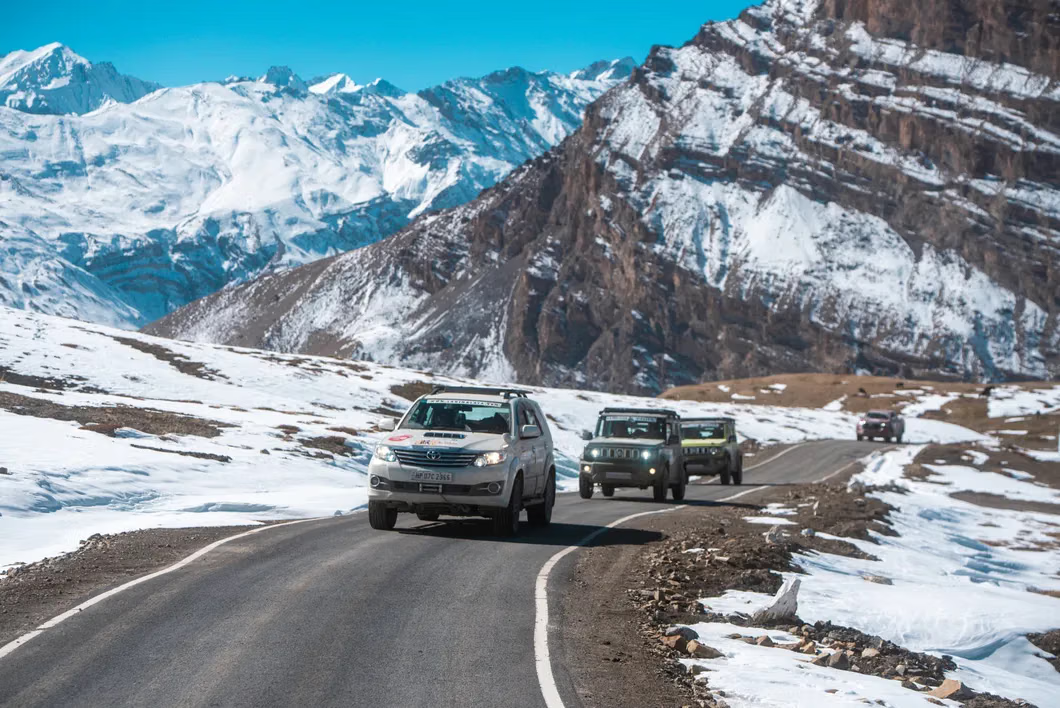
Spiti Valley Road Trip: The Ultimate Guide to Himalayan Adventure
Spiti Valley road trip guide: routes from Shimla/Manali, best time, permits, vehicles, itinerary, accommodation & tips for the ultimate Himalayan adventure.
Kargil Trip Guide: How to Plan, Best Time & Places to Visit
Complete Kargil trip guide covering best time to visit, how to reach, places to visit, accommodation, things to do, cost, and practical tips for traveling to this historic Ladakhi town.
Nubra Valley Ladakh: Itinerary, Permits, Route & Stay Options
Plan your Nubra Valley Ladakh trip with route strategy, acclimatization tips, season guidance, and practical budget planning.
Never Miss an Adventure
Get the latest trekking guides, travel tips, and exclusive offers delivered straight to your inbox.
