
Bibi Ka Maqbara: History, Access and Travel Tips

Rahul Garg
February 18, 2026
Visit Bibi Ka Maqbara with history and architecture context, practical timing guidance, and route-planning tips for a better Aurangabad heritage day.
Bibi Ka Maqbara: Mini Taj Heritage Guide with Practical Travel Planning
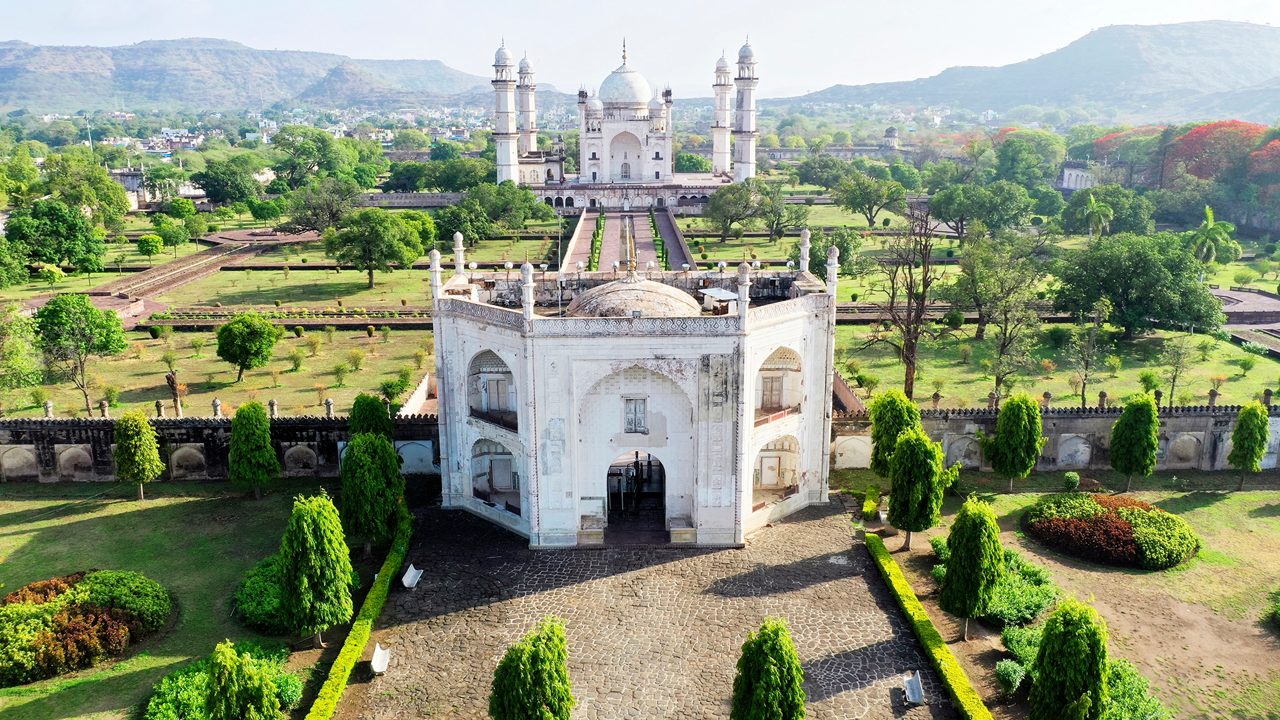
Bibi Ka Maqbara in Aurangabad is one of the most recognizable Mughal-era monuments in the Deccan and is often called the “Mini Taj.” While the comparison draws attention, the monument deserves to be understood on its own historical and architectural terms. It reflects a distinct regional expression of imperial funerary design, scaled for local material realities and period priorities.
A stronger itinerary pairs this site with architectural context from Ellora Caves, broader heritage sequencing via Ajanta and Ellora Caves, and comparison references such as Taj Mahal Agra. This combination helps travelers read similarity and difference with more accuracy.
History of Bibi Ka Maqbara
Bibi Ka Maqbara was commissioned in memory of Dilras Banu Begum, and its creation reflects dynastic memory practices of the Mughal period in the Deccan region. The monument stands as a major historical identity marker for Aurangabad and remains one of the city’s most visited heritage landmarks.
For visitors, the key is to approach history in layers: patronage context, political setting, and architectural ambition. This gives better understanding than treating the site only as a “smaller Taj.”
Architecture and Design Features
The complex follows a classical garden-tomb planning framework with axial symmetry, central mausoleum focus, and surrounding landscape order. Minarets, pathways, and visual framing create an arrival sequence that is both ceremonial and geometric.
While comparisons with Agra are common, Bibi Ka Maqbara has its own identity in proportion, material expression, and regional execution. Travelers should observe surface treatment, platform transitions, and garden-axis perspective to appreciate this difference.
| Design Element | What to Notice | Visitor Tip |
|---|---|---|
| Central Mausoleum | Symmetry and dome-driven composition | Take one full frontal frame before moving in |
| Garden Axis | Linear depth and perspective control | Walk the axis slowly for best visual sequence |
| Corner Minarets | Spatial framing of the complex | Use angled viewpoints for balanced photos |
This observation method gives a much richer architectural read.

Best Time to Visit Bibi Ka Maqbara
Cooler months are generally best for extended walking and photography. In warmer periods, early morning or late afternoon windows are more comfortable. Midday sun can flatten architectural textures and reduce visit comfort in open garden sections.
- Morning: clearer light and lighter footfall for detailed observation.
- Evening: softer visuals, but keep exit timing in mind.
- Peak holidays: expect heavier crowds and slower movement.
- Monsoon season: greener surroundings, with occasional weather interruption.
Weather-aware timing improves both experience quality and energy management.
Timings, Entry, and Practical Duration
Always verify latest entry timings and ticket information before travel day, as operational details can change. Most visitors need 60-90 minutes for a meaningful walkthrough that includes garden axis, central structure, and photo stops. Rushed visits often miss the monument’s spatial choreography.
If you are building a multi-stop Aurangabad day, keep this as one dedicated heritage block and avoid stacking too many distant locations immediately after.
How to Reach and Route Strategy
Bibi Ka Maqbara is accessible from key city transit points, but route quality depends on stop sequence. Plan one primary heritage objective for the first half of the day and one secondary objective later. Over-ambitious lists lead to rushed movement and lower interpretation quality.
For broader regional circuit planning, you can also map this within a Rajasthan-Maharashtra contrast route using references such as historical places Rajasthan and best places to visit Rajasthan for style comparison journeys.
Photography Tips for Better Outputs
Best photo results come from sequencing: one wide entry frame, one centered axis frame, one side-angle monument frame, and one detail frame from carving or parapet context. This set captures both monument form and mood without excessive repetition.
Avoid blocking pathways or lawns for long shoots. Keep photo sessions efficient and respectful to other visitors.

Common Mistakes and Better Alternatives
Common mistakes include arriving late in peak heat, expecting a short 15-minute stop, and viewing the monument only through Taj comparison. Better alternatives are early timing, fixed 75-minute exploration blocks, and site-specific observation goals.
When travelers set clear objectives before arrival, the visit becomes calmer and more informative.

One-Day Aurangabad Heritage Structuring Tips
A realistic one-day structure is to begin with Bibi Ka Maqbara, then choose either cave heritage or city-site follow-up, not both in a rushed sequence. This keeps transfer pressure low and allows enough time for architecture interpretation. Many travelers over-schedule and end up with short, low-quality stops.
Use fixed blocks: monument exploration, meal break, and one secondary attraction. If traffic or weather affects timing, drop the secondary stop rather than shortening the primary heritage block.
Bibi Ka Maqbara vs Taj Mahal: Practical Comparison
The comparison with Taj Mahal is useful only when treated analytically. Look at planning logic, material expression, and regional execution differences, not only scale and visual similarity. Bibi Ka Maqbara offers strong Deccan context and should be valued as an independent historical work.
Travelers who use comparative reading often gain deeper architectural understanding. Keep your expectations balanced and avoid binary judgments based on fame alone.
Visitor Preparation and On-Site Etiquette
Carry sun protection, water, and comfortable walking shoes for garden and axis movement. Respect fenced or protected areas and avoid climbing on structural edges for photos. Calm, respectful behavior helps preserve both monument quality and visitor flow.
If you are continuing toward broader state circuits, planning references like best time to visit in Jaisalmer can help compare climate strategy across western routes, but keep each heritage stop context-specific.
Final Practical Note for First-Time Visitors
If this is your first Aurangabad heritage day, prioritize clarity over ambition: one strong monument session, one well-timed meal stop, and one optional secondary attraction. This rhythm gives enough space to appreciate Bibi Ka Maqbara without fatigue-driven decisions.
Travelers who follow this simple structure usually leave with better historical understanding, better photos, and a more comfortable overall day.
Conclusion
Bibi Ka Maqbara is one of the Deccan’s most important Mughal-era monuments and deserves a context-first visit. Plan for architecture observation, practical timing, and route discipline rather than a rushed checklist stop. With that approach, the site offers a strong, memorable heritage experience that stands on its own merits.
Location
Frequently Asked Questions
Q1.Why is Bibi Ka Maqbara famous?
Q2.When should I visit?
Q3.How much time is needed?
Q4.Can I pair with nearby attractions?
Q5.Is it suitable for families?
Q6.Should I check current access updates?
Q7.What improves visit quality?
Q8.Can photographers benefit from early visits?
Recommended For You

Best Local Food in Agra: Must-Try Dishes and Tips
Best local food in Agra guide with breakfast-to-dinner sequencing, street food timing, sweet-shop planning, and practical budget tips.

Best Restaurants in Ujjain: Food Guide and Tips
Best restaurants in Ujjain guide with temple-aware meal timing, route planning, and practical family-friendly dining strategy.

Historic Forts in Rajasthan: Top 20 Majestic Forts
Discover 20 historic forts in Rajasthan with UNESCO highlights, architecture insights, practical circuits, seasonal guidance, and smart travel tips for first-time and repeat visitors.
Never Miss an Adventure
Get the latest trekking guides, travel tips, and exclusive offers delivered straight to your inbox.
