
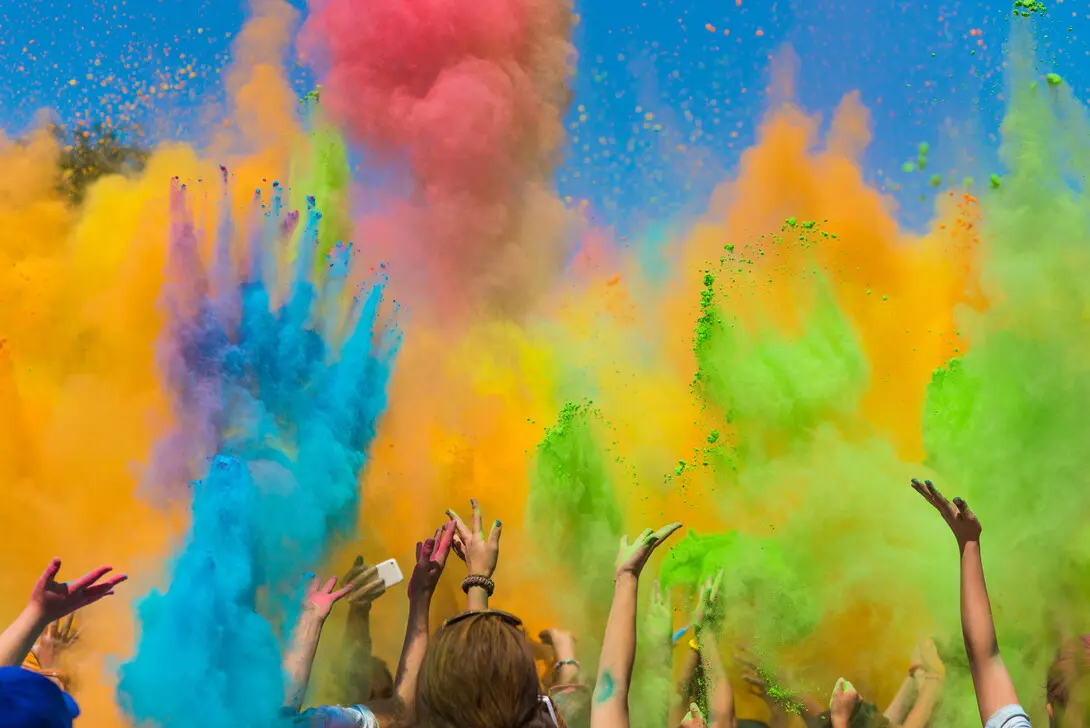
Holi in South India: Discover Kama Dahanam and Southern Holi Traditions

Priya Mehta
November 27, 2025
Experience Holi in South India - Kama Dahanam, Dol Jatra & unique traditions! Discover temple ceremonies, regional variations, cultural significance & complete guide for 2026.
Holi in South India offers a fascinating contrast to the vibrant celebrations of North India. While the festival of colors is celebrated with equal enthusiasm, South India's version is more restrained, spiritually oriented, and richly diverse across states. Known by various names like Kama Dahanam, Dol Jatra, and Phakuwa, the southern celebration focuses more on rituals, temple ceremonies, and cultural performances than the chaotic throwing of colors that characterizes northern celebrations.
The Distinctive Nature of South Indian Holi
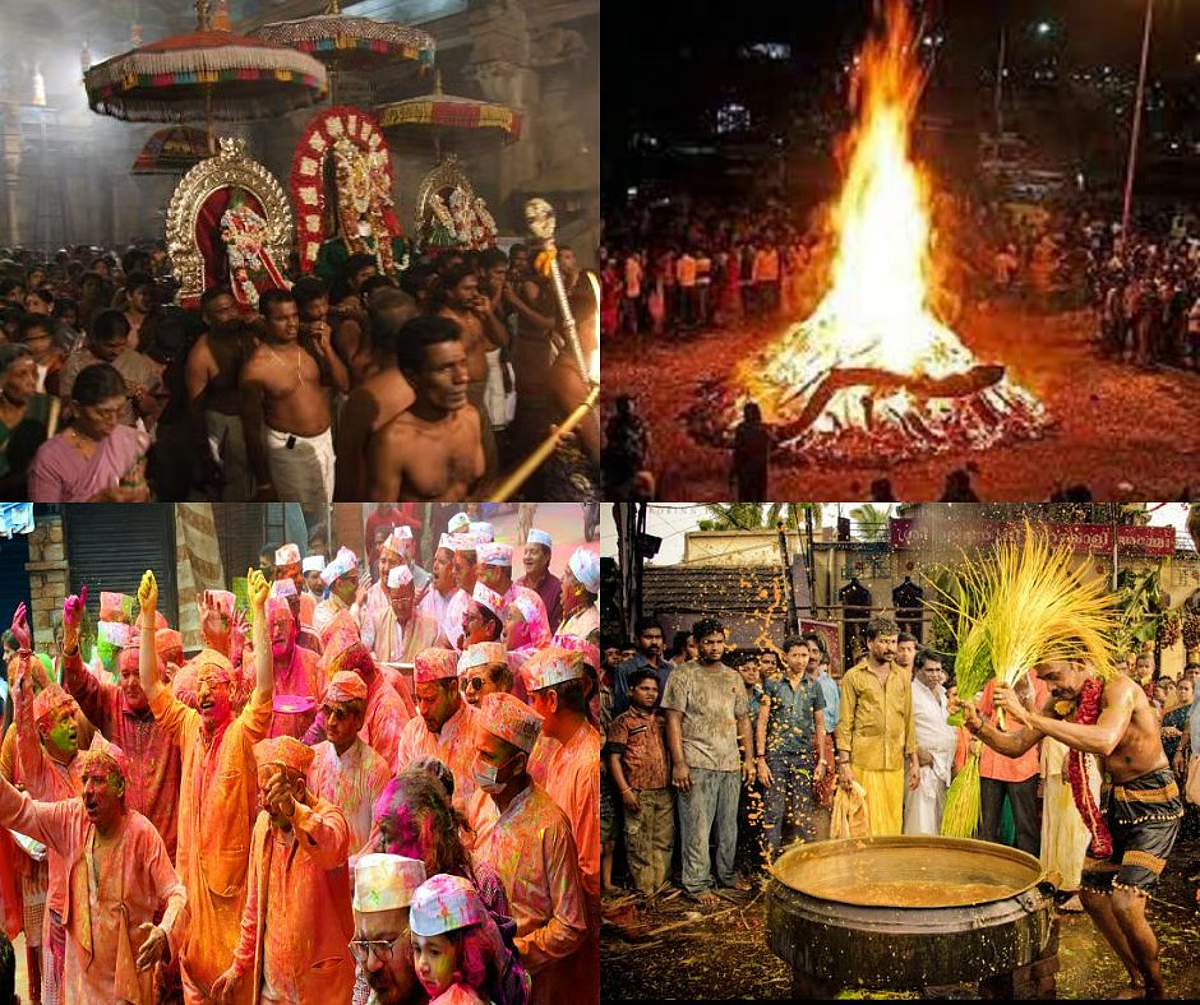
South India's approach to Holi differs significantly from the North's exuberant color play. Here, the emphasis is on the religious and mythological aspects of the festival, particularly the legend of Kama Deva (the god of love) and his sacrifice. This focus gives South Indian Holi a more contemplative, temple-centered character that's deeply rooted in Dravidian traditions.
What makes South Indian Holi special is its regional diversity. Each state - Karnataka, Tamil Nadu, Andhra Pradesh, Telangana, and Kerala - has developed its unique traditions and names for the festival. In Karnataka, it's primarily Kama Dahanam. In parts of Tamil Nadu, it's called Kaman Pandigai. Odisha celebrates Dol Jatra, while Assam calls it Doul Utsav. This regional variation means that experiencing Holi across South India offers multiple distinct celebrations rather than a single standardized version.
The southern celebrations are generally more family-oriented and less chaotic than their northern counterparts. Instead of streets filled with people throwing colored powder, you'll find temple rituals, traditional music performances, and community gatherings. This makes South India an excellent destination for those who want to experience Holi's cultural and spiritual dimensions without the overwhelming intensity of massive color fights.
Kama Dahanam in Karnataka and Tamil Nadu
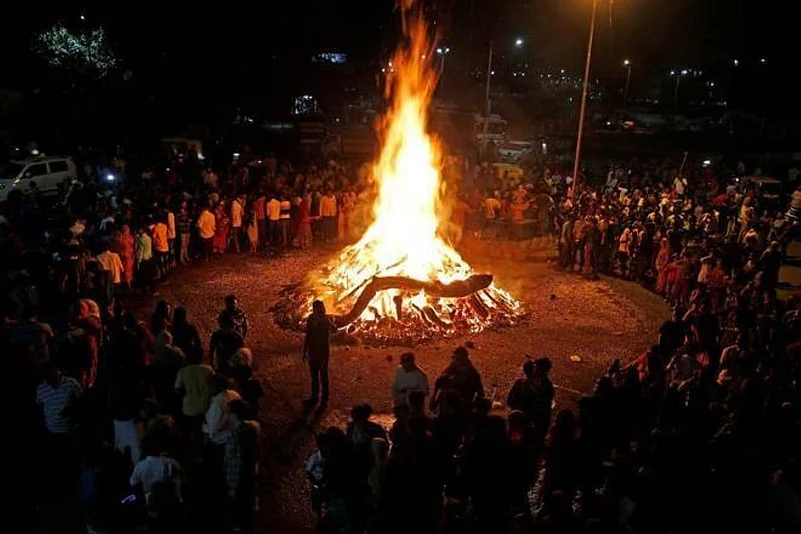
In Karnataka and parts of Tamil Nadu, Holi is celebrated as Kama Dahanam, which literally means "the burning of Kama." The festival here commemorates the legend of Kama Deva, who shot his love arrow at Lord Shiva to wake him from deep meditation and help the gods defeat the demon Tarakasura. Enraged by the disturbance, Lord Shiva opened his third eye and burnt Kama Deva to ashes. The festival celebrates Kama's sacrifice and the triumph of devotion.
The celebrations begin with the Holika Dahan bonfire, but in South India, this fire specifically symbolizes the burning of Kama Deva. In Bangalore, Mysore, and other Karnataka cities, communities gather for elaborate bonfire ceremonies. People sing traditional folk songs and perform dances around the fire, creating a spiritually charged atmosphere.
Unlike North India, the playing with colors is minimal in these regions. In many parts of Karnataka, Holi is a one-day affair focused entirely on the bonfire ceremony. However, in urban areas like Bangalore, you'll find organized celebrations that include some color play, especially in areas with North Indian communities.
In Tamil Nadu, particularly in Chennai and other cities, Kaman Pandigai is observed with temple ceremonies. Devotees offer sandalwood to Kama Deva, symbolizing the soothing of his burns. The celebrations here are dignified and family-oriented, with families gathering for special meals rather than street celebrations.
Dol Jatra in Odisha and Bengal
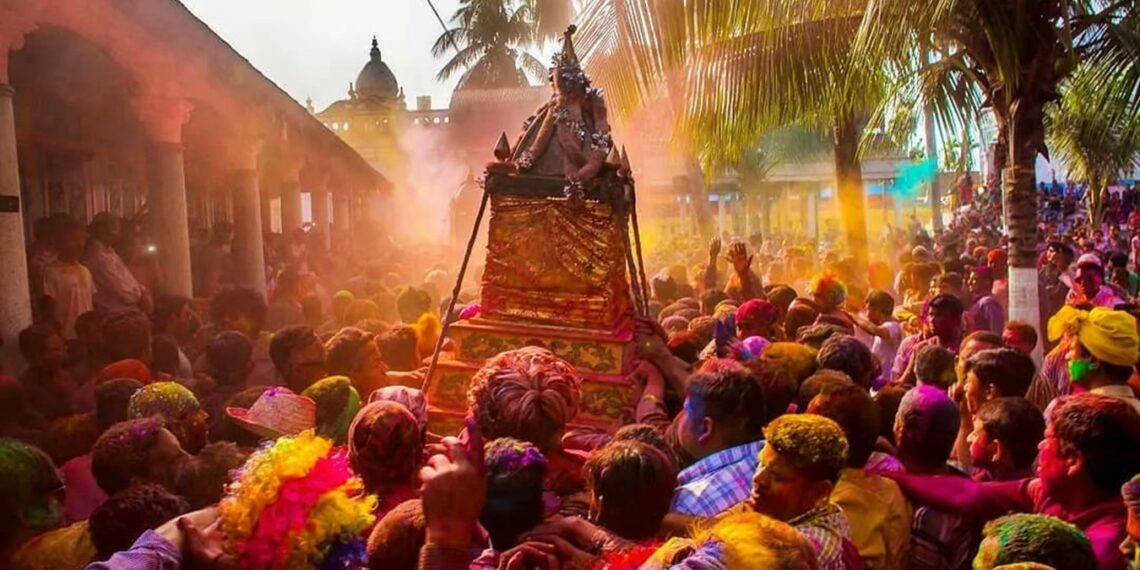
In Odisha and parts of eastern India, Holi is celebrated as Dol Jatra or Dol Purnima, with a focus on Lord Krishna and Radha rather than the Holika-Prahlad legend. The name comes from the "dol" (swing) on which Krishna idols are placed in temples.
The celebrations in Puri, Konark, and other Odisha cities are particularly beautiful. Krishna temples become the center of festivities, with devotees placing idols of Krishna and Radha on decorated swings and rocking them while singing devotional songs. The atmosphere is one of devotion rather than revelry, with bhajans (devotional songs) continuing through the night.
In Puri, the famous Jagannath Temple and various Krishna temples organize special Dol Jatra ceremonies that attract thousands of devotees. The celebrations here are centuries old and follow strict traditional protocols. Devotees apply abir (colored powder) to the deities rather than to each other, maintaining the spiritual focus of the festival.
The day after Dol Purnima is called "Pahit Dola" in Odisha, when people do play with colors. However, even this celebration is more restrained than North Indian Holi, with families applying small amounts of colored powder (called "abir") to each other as a blessing rather than dousing each other with colored water.
Doul Utsav in Assam
In Assam, Holi is celebrated as Doul Utsav with great enthusiasm, and these celebrations are among the most vibrant in eastern India. The famous Barpeta Satra (Vaishnavite monastery) in Assam organizes a three-day Doul Utsav that attracts visitors from across the northeast.
The celebrations at Barpeta Satra are particularly noteworthy. The festival here features traditional Assamese music, dance performances, and the playing of colors in a more organized, community-oriented manner. The Satra grounds become a celebration zone with cultural programs continuing throughout the day.
In Guwahati and other Assamese cities, Doul Utsav celebrations include processions with Krishna idols, community feasting, and traditional games. The color playing here is more spirited than in South India but still less chaotic than in the North. Assamese communities organize events that blend spiritual devotion with joyous celebration, creating a balanced Holi experience.
Yashoda and Krishna Traditions in Tamil Nadu
In parts of Tamil Nadu, particularly in areas with strong Vaishnavite traditions, Holi is celebrated as the union of Krishna and his foster mother Yashoda. This version of the festival focuses on maternal love and devotion rather than romantic love or the victory of good over evil.
Temples in Tamil Nadu organize special ceremonies where priests narrate stories of Krishna's childhood. Devotees perform traditional dances and sing songs about Yashoda's love for Krishna. The celebrations here are dignified and deeply spiritual, focusing on the emotional bonds of family and devotion.
In Chennai, temples like the Parthasarathy Temple (dedicated to Krishna) organize special Holi ceremonies. These events attract devotees from across Tamil Nadu and offer a glimpse into the state's unique interpretation of the festival.
Temple Ceremonies and Spiritual Significance
What sets South Indian Holi apart is the centrality of temple ceremonies. Across Karnataka, Tamil Nadu, Andhra Pradesh, and Telangana, temples become the focal point of celebrations. Priests perform special abhishekam (ritual bathing) of deities with colored water or sandalwood paste. Devotees gather for special prayers and bhajan sessions that can continue for hours.
In Hampi and other temple towns in Karnataka, the celebrations are particularly elaborate. The ancient temples here provide a stunning backdrop for Holi ceremonies, with rituals that have been performed for centuries. The combination of historical architecture, traditional rituals, and spiritual devotion creates an atmosphere that's unmatched by modern celebrations.
The spiritual significance of Holi in South India is emphasized through various rituals. In many temples, devotees offer special prayers for marital harmony and family well-being, reflecting Kama Deva's role as the god of love. The festival is seen as an auspicious time to seek blessings for relationships and family prosperity.
South Indian Holi Foods and Sweets
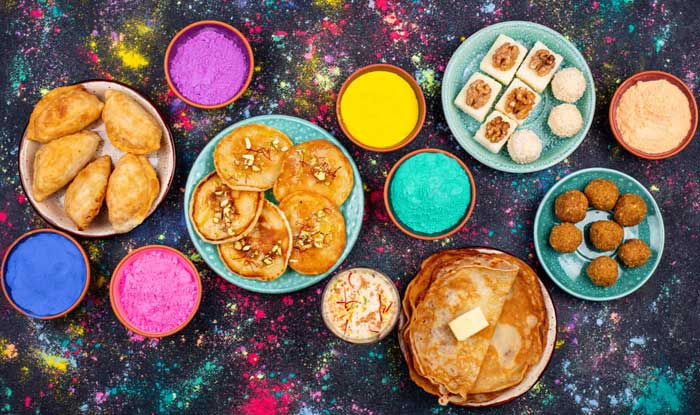
Food plays an important role in South Indian Holi celebrations, with each region preparing special dishes. In Karnataka, families prepare "Holige" (sweet flatbread stuffed with jaggery and lentils) and "Obbattu" (similar to puran poli). These sweets are distributed to neighbors and visitors, embodying the community spirit of the festival.
In Tamil Nadu, traditional Holi sweets include "Adhirasam" (deep-fried rice and jaggery sweets) and "Mysore Pak" (gram flour fudge). Families also prepare "Vadai" (savory lentil fritters) and other snacks for guests. The emphasis is on traditional recipes that have been passed down through generations.
In Andhra Pradesh and Telangana, "Ariselu" (rice and jaggery discs) and "Bobbatlu" (sweet stuffed bread) are popular Holi preparations. The state's famous "Pulihora" (tamarind rice) is often prepared as an offering to deities and then distributed as prasad (blessed food).
Unlike North India, bhang (cannabis-infused drinks) is rarely consumed in South Indian Holi celebrations. Instead, the focus is on traditional beverages like "Panakam" (jaggery water flavored with cardamom and ginger) and "Buttermilk," which are refreshing in the March heat.
Modern Holi Celebrations in South Indian Cities
While traditional celebrations remain popular, South India's major cities have developed their own modern Holi traditions. Chennai, Bangalore, Hyderabad, and other metro cities now host organized Holi events that combine traditional elements with contemporary celebration styles.
In Bangalore's tech hubs like Whitefield and Electronic City, you'll find corporate Holi events with organic colors, food stalls, and DJ performances. These events attract a diverse crowd of IT professionals, students, and expats. The celebrations here are more North Indian in style but with a distinctly South Indian organizational approach.
Hyderabad's Holi celebrations are particularly vibrant, with the city's Nawabi heritage adding a unique flavor. Organized events often include traditional Hyderabadi food alongside standard Holi snacks. The old city around Charminar sees community celebrations that blend Hindu and Muslim participation, reflecting Hyderabad's syncretic culture.
Chennai's Marina Beach and other public spaces host Holi events that attract the city's youth. While color playing here is more restrained than in North India, the enthusiasm is evident. Many cultural centers and clubs organize Holi programs that include music, dance, and food.
Best Places to Experience Holi in South India
Mysore, Karnataka - The Mysore Palace and various temples organize traditional Kama Dahanam ceremonies. The city's royal heritage adds grandeur to the celebrations. The bonfire ceremony at Mysore Palace grounds is particularly spectacular.
Puri, Odisha - The Jagannath Temple and various Krishna temples host Dol Jatra ceremonies that attract thousands of devotees. The celebrations here are deeply spiritual and follow centuries-old traditions. The day after Dol Purnima offers opportunities for modest color playing.
Barpeta, Assam - The Barpeta Satra's three-day Doul Utsav is among the most vibrant Holi celebrations in eastern India. The festival features traditional Assamese music, dance, and community celebrations that balance spirituality with joy.
Chennai, Tamil Nadu - The Parthasarathy Temple and other Krishna temples organize special Kaman Pandigai ceremonies. The city's cultural centers also host events that combine traditional rituals with modern celebrations.
Hampi, Karnataka - The ancient temple town offers a unique setting for Holi celebrations. The combination of historical architecture and traditional rituals creates an unforgettable atmosphere. The Virupaksha Temple and other monuments host special ceremonies.
Tips for Celebrating Holi in South India
If you're planning to experience Holi in South India, be prepared for a more restrained, spiritual celebration compared to North India. The focus here is on temple ceremonies rather than street celebrations, so plan to visit temples early in the day.
Dress modestly, especially when visiting temples. South Indian temples generally require conservative attire - women should wear sarees or salwar kameez that cover their legs and shoulders, men should wear dhotis or pants with shirts. Avoid Western clothing like shorts and sleeveless tops.
Respect the spiritual nature of the celebrations. South Indian Holi is more contemplative than the northern version. Maintain quiet in temple areas and observe rituals from a respectful distance. Ask permission before photographing religious ceremonies.
Be prepared for minimal color playing. Unlike North India, South Indian Holi involves very little throwing of colors. If you want to experience color play, look for organized events in urban areas or consider combining South India with a North Indian destination for a more complete Holi experience.
Sample the traditional sweets. Each region has its own Holi specialties, and trying these is an essential part of experiencing the festival. Visit local sweet shops in the days leading up to Holi to find fresh preparations.
Cultural Significance and Contemporary Relevance
South Indian Holi offers a different perspective on the festival - one that emphasizes devotion, family, and tradition over revelry. This focus on the spiritual dimensions of Holi reflects broader cultural differences between South and North India.
The southern version also highlights India's incredible regional diversity. The fact that the same festival can be celebrated so differently in different parts of the country is a testament to India's cultural complexity. South Indian Holi isn't inferior to the North Indian version - it's simply different, with its own rich traditions and significance.
For modern Indians, South Indian Holi represents a connection to ancient Dravidian traditions and temple culture. In an era of rapid urbanization and cultural homogenization, these distinctive celebrations help preserve regional identities and cultural practices.
For international visitors, experiencing Holi in South India offers a more accessible, less overwhelming introduction to the festival. The spiritual focus and temple-centered celebrations provide cultural context that enhances understanding of Holi's significance beyond just the colorful celebrations.
Whether you're witnessing the solemn Kama Dahanam ceremonies in Karnataka, the beautiful Dol Jatra celebrations in Odisha, or the vibrant Doul Utsav in Assam, Holi in South India offers a deeper, more contemplative experience of this ancient festival. It's a reminder that Holi, at its core, is about faith, family, and the triumph of devotion - themes that resonate regardless of how the festival is celebrated.
Location
Frequently Asked Questions
Q1.How is Holi celebrated in South India?
Q2.What is Kama Dahanam?
Q3.What is Dol Jatra in Odisha?
Q4.Do people play with colors in South Indian Holi?
Q5.What are traditional Holi foods in South India?
Q6.Where are the best places to celebrate Holi in South India?
Q7.What should I wear for Holi in South India?
Q8.Is South India good for celebrating Holi?
Recommended For You
Konark Dance Festival Odisha: Dates, Performances & Ticket Info
Konark Dance Festival guide with dates-verification workflow, ticket strategy, travel routes, accommodation options, and practical evening-attendance tips.
Meenakshi Temple Madurai: Complete Guide to the Temple City
Explore the magnificent Meenakshi Temple in Madurai - a 7th-century architectural marvel with 12 towering gopurams, musical pillars, and sacred tanks. Discover history, timings, Chittirai festival, travel tips, and nearby attractions in this comprehensive guide.
Temples of Hampi: Complete Guide to Vijayanagara Empire's Sacred Heritage
Discover the magnificent temples of Hampi, a UNESCO World Heritage Site. Explore Virupaksha, Vittala, and more Vijayanagara empire temples with our complete travel guide.
Never Miss an Adventure
Get the latest trekking guides, travel tips, and exclusive offers delivered straight to your inbox.
