
Leh Palace Ladakh: Timings, History & Rooftop City Views

Rohan Malhotra
December 13, 2025
Leh Palace Ladakh guide with history, architecture, timings, access, nearby attractions, and practical tips for an informed heritage visit.
Introduction: The Crown of Old Leh
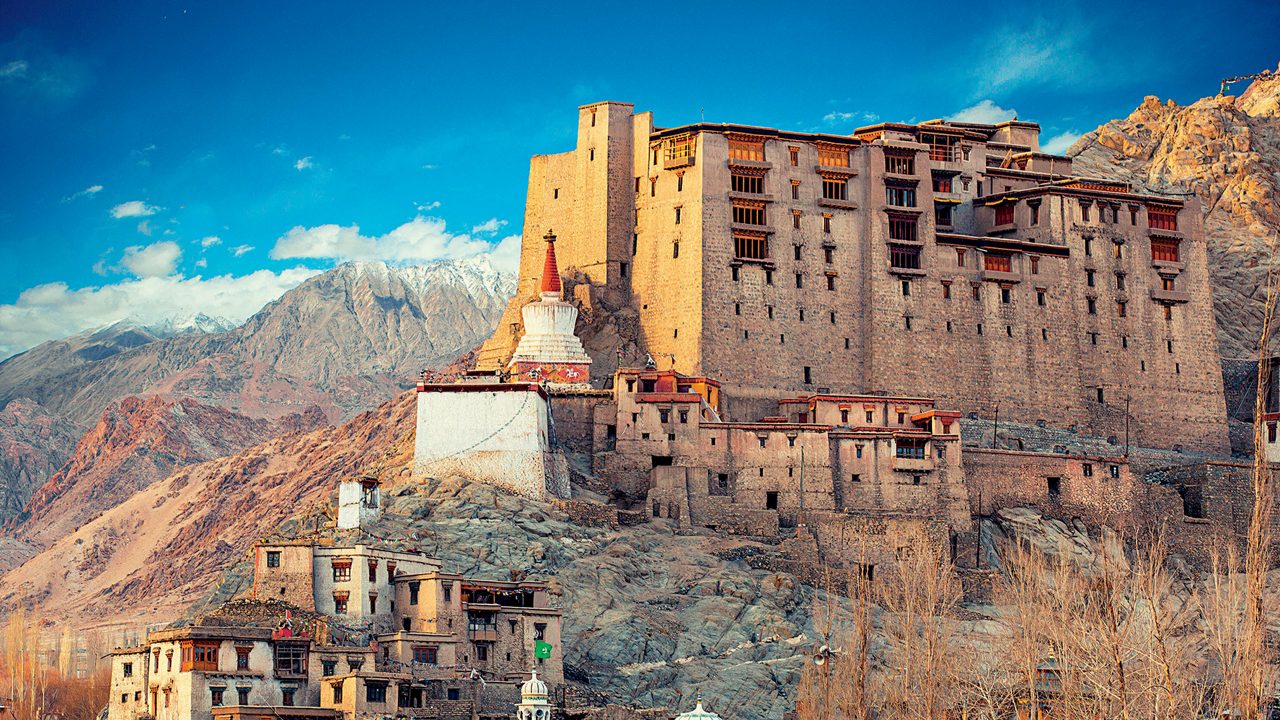
Leh Palace Ladakh is one of the most recognizable landmarks in the region and a must-visit stop for travelers interested in history, architecture, and panoramic views. Rising above Leh town on a rocky slope, this nine-storey palace represents the political and cultural legacy of the Namgyal dynasty. From a distance, the layered silhouette of the structure resembles a mountain extension, and from inside, each level offers a different perspective of the town, the Indus valley, and surrounding ranges.
Many visitors arrive expecting only a quick photo point, but the palace rewards slower exploration. Its walls, wooden balconies, prayer spaces, and museum sections collectively tell the story of royal Ladakh, trade-era movement, and later decline after political shifts. The monument is partially restored and managed under conservation efforts, so you experience both historical grandeur and the visible marks of time. If you are planning a Leh heritage circuit, combine this guide with Shanti Stupa, Leh Bazaar, and places to visit in Leh Ladakh.
History of Leh Palace
Leh Palace is associated with the reign of King Sengge Namgyal, one of Ladakh’s most influential rulers. Construction is generally traced to the 16th-17th century period, when Leh was a strategic center connected to trade routes linking Tibet, Kashmir, and Central Asia. The palace was built not only as a royal residence but also as a power statement—an elevated fortress-like seat overlooking the valley and town movement below.
The Namgyal dynasty used this complex for administration, ceremonial life, and residential purposes. Over time, political conflict and regional invasions weakened royal control, and the royal family later shifted toward Stok Palace after Dogra pressure in the 19th century. As active royal use declined, the structure faced weathering, neglect, and material loss, especially in upper and exposed sections.
Today, the palace stands as a historical monument where restoration and conservation continue in phases. Walking through it gives insight into how hilltop architecture was adapted for climate, defense, and symbolic authority in high-altitude Ladakh.
Architecture and Design Highlights
Architecturally, Leh Palace blends Tibetan-influenced massing with regional material logic suitable for Ladakh’s cold, dry climate. Thick earthen and stone walls, timber elements, and compact vertical stacking helped with thermal behavior and structural resilience on steep terrain. The design is often compared in spirit to the Potala style influence, though on a smaller scale and with its own local variation.
| Feature | Description | Why It Matters |
|---|---|---|
| Nine-storey massing | Vertically layered structure stepping upward | Strategic visibility and functional zoning |
| Mud-stone walls | Thick insulated construction | Improves thermal comfort in cold climate |
| Timber details | Wooden beams and balcony lines | Adds structural flexibility and visual texture |
| Hilltop position | Built above town on elevated slope | Defense, surveillance, and symbolic presence |
| Inner chambers | Storage, prayer and royal-use spaces | Shows mixed civic-royal function |
One of the most striking elements is how light behaves inside the structure. Narrow openings, shaded passages, and sudden view windows create a rhythm of dark-to-bright transitions. This makes the interior experience different from modern monuments where everything is uniformly lit and easily legible.
Inside Leh Palace: What You Can See
The lower zones historically handled utilitarian needs such as storage and support activities, while upper sections carried greater ceremonial and residential value. Today, visitor movement usually follows accessible corridors and museum-designated areas, with some sections restricted for safety and conservation reasons.
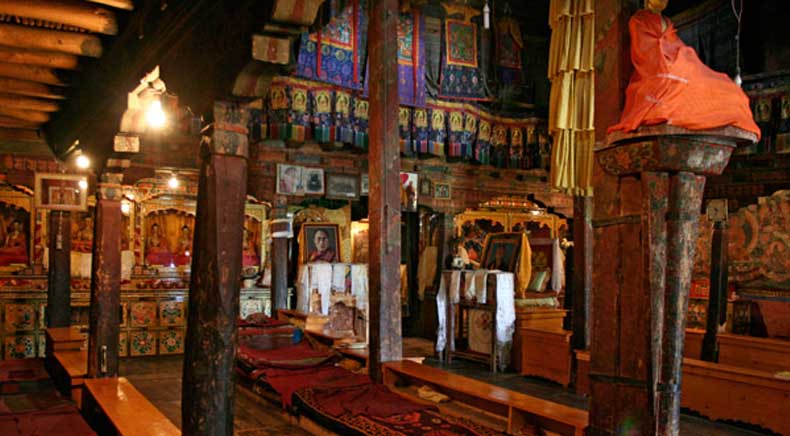
Within the museum displays, you may find thangkas, ritual objects, ornaments, and archival visual material that help place the palace within Ladakh’s broader heritage network. Even when labels are brief, the artifacts provide a useful bridge between architecture and lived history. Keep enough time to pause near viewing openings—many of the best frames of Leh town appear unexpectedly through small windows or terrace edges.
Climbs between sections can be steep and uneven, so wear stable footwear and pace yourself, especially if you are still acclimatizing to altitude. Visitors with limited mobility may prefer enjoying lower accessible zones and exterior viewpoints rather than pushing through all vertical levels.
Leh Palace Timings, Entry Fee and Visit Duration
Timings and ticket details can change seasonally or by management update, so always verify on arrival or through latest official/local information in Leh. In general, the palace is visited during daytime hours and is best explored in soft morning or late-afternoon light.
| Visitor Detail | Typical Guidance | Planning Tip |
|---|---|---|
| Opening window | Daytime access hours | Start early for calmer entry |
| Entry fee | Separate rates by visitor category | Carry small cash and digital option |
| Photo policy | Allowed in many sections | Follow restricted-area signs |
| Visit duration | About 1 to 2 hours | Add more time if photography-focused |
| Best light | Morning/evening | Avoid harsh midday contrast |
If you are combining multiple sites in one day, schedule Leh Palace before or after the strongest noon sun and keep one easy meal break nearby in Leh town. This helps conserve energy and improves comfort at altitude.
Best Time to Visit Leh Palace
The broader Ladakh travel season from late spring to early autumn is generally the easiest for most visitors. Roads are better, services are wider, and weather is comparatively stable. However, shoulder months can be excellent for photography and quieter monument exploration if you are prepared for colder mornings.
Daily timing matters as much as season. Early morning offers cleaner light and fewer crowds, while late afternoon can create dramatic shadow play across the town and mountain backdrop. Midday is manageable but often harsher for both climbing comfort and photography. In winter windows, visits are possible depending on local conditions, though cold and service limitations increase.
How to Reach Leh Palace
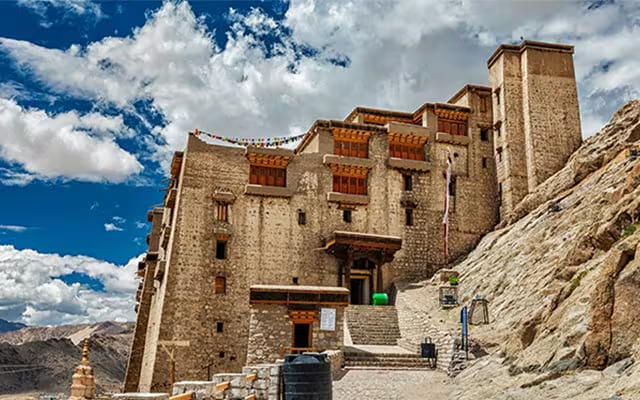
Leh Palace is located above the old-town side of Leh and is reachable by a short uphill approach from central areas. Most travelers begin from Leh market zones and either walk or drive to the closest accessible point before continuing on foot. The final section typically includes a moderate climb with steps or sloped pathways.
- From Leh Bazaar: short drive or 15-25 minute uphill walk depending on pace.
- From hotel zones: taxi drop followed by brief climb is common.
- Best approach: start with water, sun cap, and steady pace.
At altitude, even short climbs can feel intense if you are newly arrived. Plan palace visits after initial acclimatization day when possible. If you are combining with Shanti Stupa, balance the order based on your energy and driver routing.
Nearby Attractions to Combine with Leh Palace
Leh Palace works best as part of a compact heritage circuit rather than a standalone rushed stop. Nearby attractions allow you to build a full half-day cultural route with minimal transfer stress.
- Leh Bazaar: food, local movement, and easy pre/post palace break.
- Shanti Stupa: strong panoramic viewpoint and sunset option.
- Monastery routes: combine with selected monasteries on a separate day.
If you are mapping a larger regional plan, use monasteries in Ladakh and best time to visit Ladakh for sequence decisions.
Photography Tips at Leh Palace
Leh Palace is excellent for layered composition: foreground walls, mid-ground town textures, and distant mountain ridges. For best results, shoot in early or late light and avoid overexposing bright sky through narrow openings. A standard zoom range is usually enough; ultra-wide can work in compact interiors but may distort vertical lines heavily.
Respect people’s space in narrow passages and avoid blocking windows where others queue for views. If you use a tripod, do so only where permitted and without obstructing movement. The strongest visual storytelling often comes from details—door frames, weathered surfaces, and contrasting light bands—rather than only from wide landscape shots.
Practical Visitor Tips and Common Mistakes
Tip: Keep the palace on Day 2 or later if you are not acclimatized. Mistake: visiting immediately after landing and overexerting on uphill sections.
Tip: Carry a light layer even in sunny weather; wind shifts can cool quickly. Mistake: assuming daytime sun means stable comfort inside shaded stone areas.
Tip: Pair palace timing with nearby attractions for efficient routing. Mistake: cramming too many altitude climbs in one day.
These small planning choices improve both safety and overall experience quality, especially for first-time Ladakh visitors.
Suggested Route Flow for First-Time Visitors
A smooth Leh heritage half-day can follow this order: start early at Leh Palace for cooler climbs and clearer photography, descend toward old-town lanes, take a short café or hydration break in Leh Bazaar, and then head to Shanti Stupa later when light becomes softer. This flow reduces altitude strain and improves sightseeing continuity. Avoid jumping between far points without purpose, because repeated climbs at high altitude can cause fatigue faster than expected. Keep at least one flexible hour in your plan for weather or traffic adjustments around town approach roads.
Final Takeaway
Leh Palace Ladakh is more than a historic building—it is a viewpoint into Ladakh’s royal past, climatic architecture, and urban evolution. With thoughtful timing, realistic pacing, and basic altitude-aware preparation, the site offers one of the most rewarding cultural experiences in Leh. Explore slowly, respect conservation boundaries, and use the monument as a starting point for understanding the deeper heritage fabric of Ladakh.
Location
Frequently Asked Questions
Q1.What are Leh Palace timings?
Q2.What is the entry fee for Leh Palace?
Q3.When was Leh Palace built?
Q4.How long does it take to explore Leh Palace?
Q5.Is photography allowed inside Leh Palace?
Q6.Is Leh Palace worth visiting?
Q7.Who built Leh Palace?
Q8.Why was Leh Palace abandoned?
Recommended For You
Leh Ladakh Bike Trip: Complete Route And Itinerary Plan
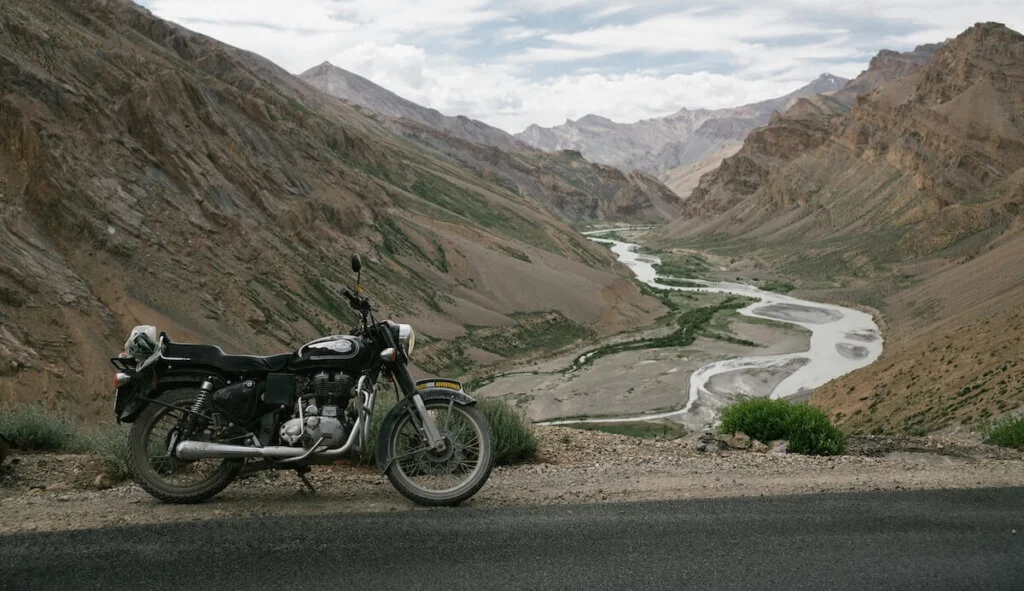
Plan Leh Ladakh bike trip with route choices, itinerary, cost, permits, acclimatization tips, and practical riding prep for a safer high-altitude ride.
Leh Bazaar Ladakh: Shopping, Cafes & Local Tibetan Market Finds
Explore Leh Bazaar, the heart of Ladakh. Shopping for Pashmina, souvenirs, Tibetan jewelry & local food. Timings, best buys & tips.
Best Time to Visit Ladakh: Season, Road Openings & Temperature
Find the best time to visit Ladakh with season-wise weather, road opening windows, monthly travel insights, and practical tips for road trips, trekking, and Chadar plans.
Never Miss an Adventure
Get the latest trekking guides, travel tips, and exclusive offers delivered straight to your inbox.
