
Phugtal Monastery Ladakh: Trek Route, Stay & Travel Planning

Ananya Sharma
November 21, 2025
Complete trek guide to Phugtal Monastery in Ladakh. One of the oldest cave monasteries. Trek route, best time, homestay & tips.
Introduction: The Cave Monastery Wonder
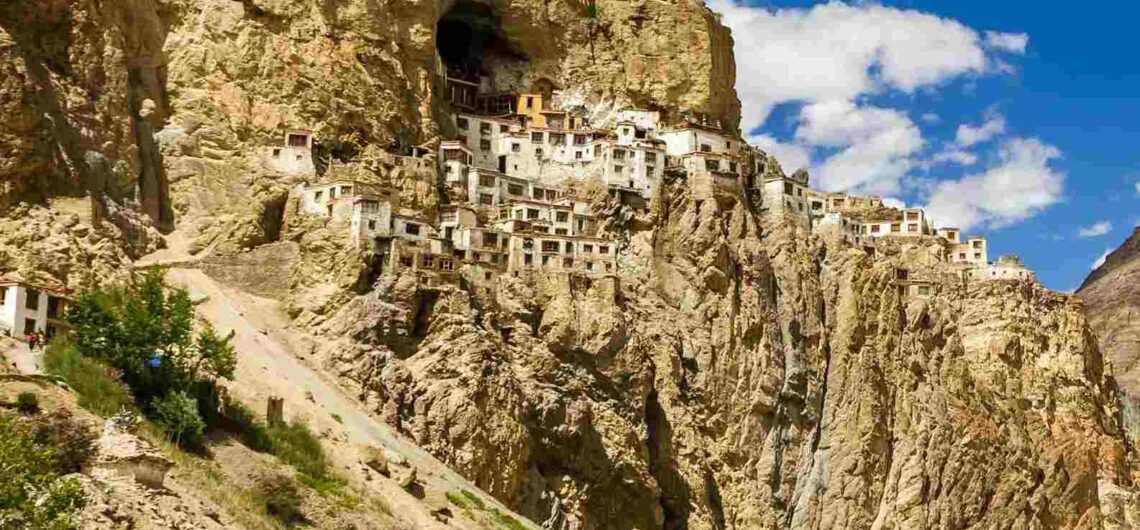
Phugtal Monastery stands as one of Ladakh's most spectacular and remote Buddhist sites, carved into cliffside caves along the Lungnak River gorge in Zanskar region. Dating back to the 12th century, this monastery represents a unique synthesis of natural cave formations and Buddhist architecture, creating spiritual settings that seem suspended between earth and sky. What makes Phugtal extraordinary is its dramatic location - the monastery appears to grow organically from the cliff face, with the Lungnak River flowing far below and the Zanskar landscape stretching into distance.
Reaching Phugtal requires commitment - it's not a roadside stop accessible by vehicle but involves trekking through Zanskar's dramatic valleys and villages. This isolation has preserved Phugtal's authenticity and spiritual intensity, making the journey as meaningful as the destination. This guide covers the monastery's history and significance, location details, trek routes, accommodation options, best visiting times, and practical preparations for this remarkable Ladakh experience.
For related Ladakh monastery experiences, explore monasteries in Lahaul Spiti and Ladakh in December.
History & Significance
Phugtal Monastery's history and spiritual significance provide context that enriches visits beyond mere sightseeing. Understanding this background helps appreciate the monastery's role in Zanskar's Buddhist heritage.
Founded by Gangsem Sherap Sampo
Phugtal Monastery was founded in the early 12th century by Gangsem Sherap Sampo, a renowned Buddhist scholar and teacher associated with the Gelugpa school of Tibetan Buddhism. The monastery's founding story involves Gangsem Sherap Sampo searching for a location representing the head of an elephant, which he found in Phugtal's cave formation resembling an elephant head. This legend connects the monastery's physical setting with Buddhist symbolism and adds mystical dimensions to its establishment.
Cave Formation Significance
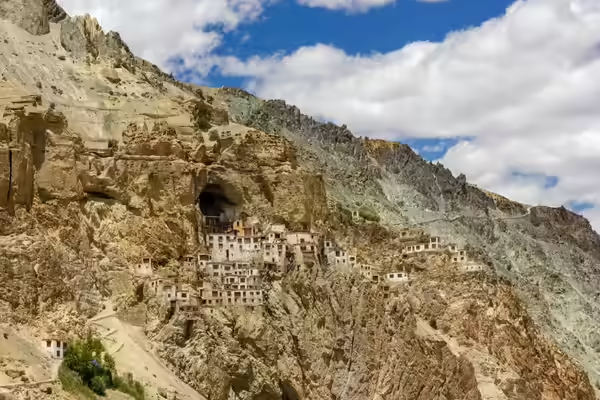
The cave formation that houses Phugtal Monastery is the site's most remarkable feature. Natural caves in the cliff face have been expanded and incorporated into monastery structures over centuries. The primary shrine and assembly hall occupy these cave spaces, with additional rooms and quarters built onto the cliff face. This integration of natural caves with constructed architecture creates unique monastery settings that feel ancient and organic rather than built structures.
Buddhist Practices
Phugtal Monastery follows traditional Buddhist practices with daily prayer sessions, meditation periods, and ritual observances. The resident monastic community maintains practices passed down through generations, preserving authentic Buddhist traditions in Zanskar. Visitors might witness morning prayers, chanting sessions, or butter lamp lighting ceremonies. These practices provide insights into Buddhist monastic life and create contemplative atmospheres for visitors even if not participating directly.
Monastic Community
The monastery houses a small monastic community of monks who maintain Phugtal's religious functions, preservation, and hospitality for visitors. These monks undergo traditional training in Buddhist philosophy, rituals, and monastic discipline. Their presence adds living spirituality to the site rather than leaving Phugtal as abandoned monument. Interacting respectfully with monks and observing their practices provides insights into Zanskar's continuing Buddhist traditions.
Location & Geography
Phugtal Monastery's location in Zanskar's remote Lungnak River gorge creates dramatic geographic context that defines visitor experiences.
Lungnak River Gorge
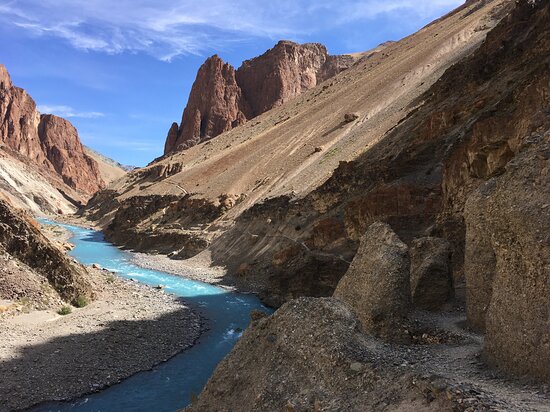
The Lungnak River flows in a deep gorge below Phugtal Monastery, carving through mountains over millennia. The monastery perches on the cliff above this gorge, creating vertical drop-offs that provide sweeping views of the river valley below. The gorge's steep walls and dramatic formations make the monastery appear even more impressive - it seems to cling precariously to cliff edge. The river's seasonal flow varies - powerful in summer when fed by glacial melt, calmer in autumn and frozen in winter.
Zanskar Region
Phugtal Monastery sits in Zanskar region, one of Ladakh's most remote and culturally preserved areas. Zanskar was historically isolated by high mountain passes, maintaining distinct Buddhist traditions and cultural practices different from central Ladakh. The region's landscape features high-altitude deserts, snow-capped peaks, and narrow valleys carved by glacial rivers. This remoteness and dramatic geography make Zanskar special but also create challenges for access and logistics.
Cliff-Side Architecture
The monastery's architecture exploits the natural cliff face, with structures built onto vertical rock surfaces. Main shrine and prayer halls occupy natural caves, while residential quarters, storerooms, and auxiliary structures extend along the cliff at different levels. This vertical architecture required ingenious construction techniques using local materials and adapting to cliff constraints. The result is a monastery that appears to grow from the rock rather than being built upon it.
Surrounding Landscape
Views from Phugtal Monastery across Zanskar landscape are spectacular in all directions. Snow-capped peaks dominate horizons, glacial valleys stretch into distance, and the Lungnak River carves a silver line through the gorge below. The monastery's elevation provides observation points over traditional Zanskar villages, terraced fields, and monastic settlements. The landscape varies dramatically with seasons - summer brings greenery to valleys, autumn transforms peaks into golden displays, winter coats everything in snow, and spring reveals emerging life from frozen terrain.
How to Reach
Reaching Phugtal Monastery requires planning because vehicle access is limited and trekking is necessary. Multiple routes exist from different starting points, each with distinct characteristics.
Via Padum (Base Camp)
Padum serves as the primary base camp for reaching Phugtal Monastery. Padum is Zanskar's administrative center with road connections to Kargil and Leh. From Padum, the trek to Phugtal typically takes 2-3 days depending on pace and route variations. The route follows Lungnak River valley, passing through villages like Cha, Shade, and Purne. Trekking from Padum is the most established and frequently used approach, with homestays available en route.
Road Journey from Kargil
Reaching Padum from Kargil involves road journey through Zanskar via Pensi La Pass. The Kargil-Padum road is approximately 240 kilometers and takes 8-10 hours depending on conditions. This road passes through mountainous terrain with high passes and dramatic scenery. Pensi La Pass is over 4,400 meters and can have snow or difficult conditions. Road journey requires early start from Kargil to reach Padum with daylight, allowing same-day or next-day departure to Phugtal trek.
From Leh via Manali
Reaching Phugtal via Leh involves longer route with different challenges. Travel from Leh to Manali by road (via Keylong) or flight to Manali, then road journey from Manali to Padum via Zanskar passes. The Manali-Padum route takes 2-3 days, covering high passes like Shinku La (5,090 meters) and Kunzum La (4,590 meters). This route is more demanding than Kargil approach but offers alternative access and different landscapes.
Helicopter Options (Seasonal)
Helicopter services to Padum exist from Leh or Kargil during summer months when weather permits. These services significantly reduce travel time and eliminate road journeys but are expensive and subject to weather conditions and availability. Helicopter access to areas closer to Phugtal might be possible with special arrangements, but most trekkers still require final approach by foot from drop-off points due to terrain.
The Trek Experience
The trek to Phugtal Monastery is a defining part of the experience, taking trekkers through Zanskar's remote valleys and traditional villages.
Route: Padum to Phugtal
The standard Padum to Phugtal trek route follows the Lungnak River valley for approximately 30-35 kilometers. The trek is typically completed in 2-3 days with overnight stays at villages en route. Day one covers Padum to Cha or Shade villages, approximately 12-15 kilometers of gradual ascent along the valley. Day two continues to Phugtal through terrain that becomes steeper as the monastery approaches. The route is generally well-marked and follows established trails used by locals and monastic communities.
Distance and Duration
The complete Padum to Phugtal trek covers approximately 30-35 kilometers. Most trekkers complete it in 2 days with 15-20 kilometers daily. Faster trekkers might complete it in one long day covering the full distance, but this requires early start and good fitness. 3-day itineraries with additional time for monastery exploration and return journey are also popular, allowing more relaxed pace and cultural interaction.
Terrain Description
Terrain from Padum to Phugtal varies through sections. Initial segments follow relatively flat river valley paths across glacial plains and along riverbanks. As the trek approaches Phugtal, terrain becomes steeper with ascents towards the cliff face where monastery is located. River crossings on bridges or improvised crossings might be required depending on route and water levels. The terrain requires basic trekking fitness but is not technically demanding compared to high-altitude passes.
Village Stays En Route
Homestays are available at villages like Cha, Shade, and Purne along the Padum-Phugtal route. These homestays provide basic accommodation with simple meals, allowing trekkers to experience Zanskar village life and culture. Staying in villages spreads the trek across multiple days with manageable daily distances. Homestays might have limited facilities - expect simple bedding, shared bathrooms, and local food. Advance booking is recommended during peak trekking season.
| Trek Segment | Distance | Duration |
|---|---|---|
| Padum to Cha/Shade | 12-15 km | 5-6 hours |
| Cha/Shade to Phugtal | 15-20 km | 6-8 hours with steep ascent |
| Return trek | 30-35 km | 2-3 days via same route |
Staying at Phugtal
Accommodation options near Phugtal Monastery are limited but provide opportunities for extending visits beyond day trips.
Monastery Guesthouse
Phugtal Monastery operates basic guesthouse accommodation for visitors. Rooms are simple with limited amenities - basic bedding, no heating except traditional bukhari stoves, and shared bathroom facilities. The guesthouse provides opportunities to experience monastery life, participate in daily routines if desired, and enjoy quiet evenings in remote settings. Advance booking is recommended, especially during July-August peak season. Payment is typically by donation or nominal fee directly to monastery.
Homestay Options
Homestays in villages near Phugtal provide alternative accommodation. These are family-run establishments offering rooms or beds in local homes. Homestays offer more authentic cultural experiences and sometimes better facilities than monastery guesthouses - warmer rooms, home-cooked food, and local interactions. However, they add extra walking distance from monastery and require coordination with hosts. Ask at villages en route or arrange through trekking agencies in Padum.
Facilities Available
Facilities near Phugtal are basic, reflecting remote location. Electricity might be limited to solar power available for few hours. Running water and proper toilets are not guaranteed. Heating is minimal except traditional stoves. Food is simple - local dishes like thukpa, dal, rice, and tea. Carry supplies for contingencies including water purification, energy snacks, and additional clothing layers. Phone and internet connectivity are extremely limited or unavailable.
What to Expect
Expect simple, authentic experiences staying near Phugtal. Nights are quiet with star-filled skies over Zanskar valleys. Mornings might involve witnessing monastery prayer sessions. Interactions with local communities provide cultural insights. Weather can change rapidly at altitude - expect cool nights even in summer. Be prepared for basic amenities without comfort standards of hotels. The reward is experiencing remote Buddhist life in spectacular natural settings unavailable elsewhere.
Best Time to Visit
Timing Phugtal Monastery visits correctly is crucial due to Zanskar's extreme climate and accessibility challenges.
June to September Ideal
June through September is the optimal window for visiting Phugtal Monastery. During these months, high passes like Pensi La and Kunzum La are open, road access to Padum is possible, and trekking conditions are favorable. June and July see maximum greenery with wildflowers blooming in valleys. August and early September offer more stable weather with less rain than July. Temperatures during this period are pleasant for trekking with daytime highs around 15-20°C and cooler nights.
Monsoon Considerations
July and August are monsoon months in Zanskar with increased rainfall. While temperatures remain comfortable, rain can make trekking challenging, river crossings dangerous, and passes temporarily blocked. If visiting during monsoon, check weather forecasts, carry rain gear, and have buffer days for potential delays. Some years see minimal monsoon impact, but expect some rainfall especially in July.
Winter Inaccessibility
October through May sees Zanskar progressively inaccessible due to heavy snowfall and freezing temperatures. High passes close completely, road access to Padum becomes impossible or highly restricted, and trekking routes are buried under deep snow. Phugtal Monastery's resident monks winter in isolation, with supplies stored before passes close. Winter access is only possible via helicopter during rare favorable weather windows and at considerable expense.
Spring Challenges
May is spring in Zanskar with transitions from winter conditions to summer accessibility. Early May still has significant snow on passes and higher altitude areas. Mid to late May sees passes gradually opening as temperatures rise and snow melts, but conditions are unstable with residual snow, ice patches, and avalanche risk. Early June is more reliable for Phugtal access than May. If planning early season travel, check current pass opening status and be prepared for variable conditions.
Photography & Tips
Capturing Phugtal Monastery's spectacular setting requires preparation and respect for site policies.
Best Viewpoints
Multiple viewpoints around Phugtal offer different monastery perspectives. The main cliff provides dramatic angles looking up at the monastery seemingly growing from rock face. Opposite sides of Lungnak River offer wide shots showing monastery context with surrounding valley and peaks. Sunrise and sunset create golden light on monastery surfaces that make photographs special. Drone photography, if regulations permit, provides breathtaking aerial perspectives but check current rules as protected area restrictions might apply.
Respect Photography Rules
Respect monastic and cultural photography guidelines. Ask permission before photographing monks, especially during prayer sessions or rituals. Some monastery interiors prohibit photography - respect these rules. Flash photography is generally inappropriate in religious spaces. Photography for personal use is typically acceptable, but commercial or publication photography requires permission. Be discreet and non-disruptive when taking photos, especially if other visitors or monks are present.
What to Carry
Carry camera equipment with appropriate gear for conditions and trekking. Extra batteries and chargers are essential as electricity is limited. Protective cases for cameras and lenses against dust and potential moisture. Tripod for low-light situations and long exposures. Filters for managing bright Zanskar light at altitude. Consider weight - trekking with heavy camera gear is tiring, so balance photography needs with practical trekking requirements.
Altitude Precautions
Phugtal Monastery and surrounding areas are at high altitude requiring acclimatization and precautions. The monastery sits around 3,800 meters, while surrounding peaks and passes exceed 4,500 meters. Acclimatize gradually by spending time in Padum before trekking. Stay hydrated, eat regularly even if appetite is reduced, avoid alcohol and sedatives that affect altitude adaptation. Recognize AMS symptoms - headache, nausea, dizziness - and descend if symptoms are severe. Carry basic first aid and medications.
Trekking Preparations
Prepare physically for Phugtal trek with cardiovascular conditioning and leg strength training. Good quality trekking shoes with ankle support are essential for uneven terrain. Clothing in layers allows temperature adjustment - base layers, insulation, waterproof outer shell, hat, gloves. Trekking poles reduce fatigue on uneven ground. Sun protection including sunglasses and sunscreen is critical at altitude. Pack light but carry essentials - water purification, energy food, basic first aid, and emergency shelter.
For more Ladakh monastery experiences, explore Ladakh in December.
Location
Frequently Asked Questions
Q1.Where is Phugtal Monastery located?
Q2.How do I reach Phugtal Monastery?
Q3.What is the trek difficulty level?
Q4.Can you stay at Phugtal Monastery?
Q5.How long does the trek take?
Q6.Is Phugtal accessible in winter?
Q7.What should I carry for the trek?
Q8.Are there facilities near the monastery?
Recommended For You
Leh Palace Ladakh: Timings, History & Rooftop City Views
Leh Palace Ladakh guide with history, architecture, timings, access, nearby attractions, and practical tips for an informed heritage visit.
Snowfall in Ladakh: Best Months, Temperature & Travel Prep
Complete guide to snowfall in Ladakh. Learn when it snows, winter temperatures, best places to see snow, activities like Chadar Trek, and winter travel tips.
Hemis National Park Ladakh: Snow Leopard Tracking & Travel Info
Explore Hemis National Park Ladakh, home to the world's highest density of snow leopards. Discover wildlife, trekking & tracking in this Himalayan paradise.
Never Miss an Adventure
Get the latest trekking guides, travel tips, and exclusive offers delivered straight to your inbox.
