
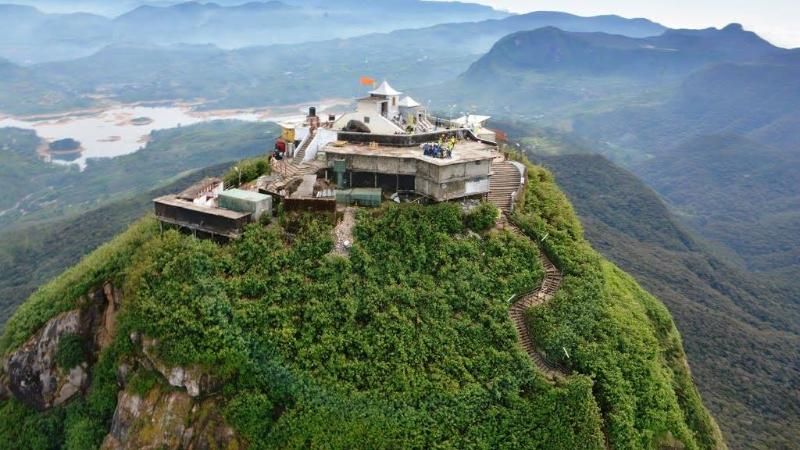
Sri Pada (Adam’s Peak) Sri Lanka: Climb Route, Season & Start Time

Priya Mehta
December 7, 2025
Complete guide to climbing Sri Pada (Adam's Peak) in Sri Lanka. Discover the sacred mountain revered by four religions, best climbing season, trail options, preparation tips, and the spectacular sunrise experience.
Introduction: The Sacred Mountain of Sri Lanka
Rising majestically to 2,243 meters (7,359 feet) above sea level, Sri Pada, also known as Adam's Peak, stands as Sri Lanka's most sacred mountain. This iconic peak has been a pilgrimage destination for over 1,000 years, drawing devotees from four major religions – Buddhism, Hinduism, Christianity, and Islam. What makes this mountain truly extraordinary is the sacred footprint found at its summit, believed by different faiths to belong to Buddha, Shiva, Adam, or St. Thomas. The mountain is locally called Samanala Kanda, meaning "Butterfly Mountain," due to the countless butterflies that flock here during the pilgrimage season. The trek to Sri Pada is not just a physical journey but a spiritual experience that combines breathtaking natural beauty with profound religious significance. The famous sunrise phenomenon, where the mountain casts a perfect triangular shadow on the clouds below, creates a mystical atmosphere that has to be witnessed to be truly appreciated. Whether you're a spiritual seeker, a trekking enthusiast, or simply a traveler looking for one of Sri Lanka's most extraordinary experiences, climbing Sri Pada offers an unforgettable adventure that tests both body and soul while rewarding you with some of the most spectacular views in South Asia.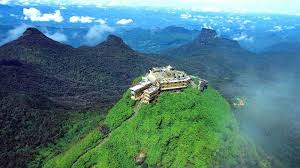
Religious Significance: Where Four Faiths Meet
What makes Sri Pada truly unique in the world is its universal reverence across four major religions, each interpreting the sacred footprint at the summit in their own way. This remarkable convergence of faiths has made the mountain a powerful symbol of religious harmony in Sri Lanka for centuries. For Buddhists: The footprint belongs to the Buddha himself, left during his third visit to Sri Lanka. They believe the Buddha stepped here on his way to paradise, and the mountain holds special significance in Theravada Buddhism. The peak is closely associated with Saman, a Buddhist deity who is believed to protect the mountain and its pilgrims. For Hindus: The sacred mark is believed to be the footprint of Lord Shiva, one of the principal deities of Hinduism. Hindu pilgrims climb the mountain as an act of devotion, and the peak is mentioned in ancient Hindu texts and scriptures. For Christians and Muslims: The footprint is associated with Adam, the first man according to Abrahamic faiths. Tradition holds that when Adam was expelled from the Garden of Eden, he stood here in penance for a thousand years. Christians sometimes refer to it as St. Thomas's footprint, believing the apostle brought Christianity to Sri Lanka. This beautiful tapestry of beliefs means you'll see pilgrims of all faiths climbing together, sharing tea and encouragement along the way. The mountain has been recognized by UNESCO as an important site of intangible cultural heritage, celebrating the peaceful coexistence of different religious traditions. For those interested in exploring more sacred sites, Buddhist temples in Sri Lanka offer fascinating insights into the island's spiritual heritage.Best Time to Climb: Planning Your Pilgrimage
Choosing the right time to climb Sri Pada is crucial for a safe and enjoyable experience. The pilgrimage season runs from December to May, with January to April being the peak months when weather conditions are most favorable. Pilgrimage Season (December - May): This is the recommended period for climbing. The weather is relatively dry, and the trail is well-maintained with all facilities operational. During these months, the path is illuminated with lights, making night climbs possible and safe. January and February are particularly popular, with clear skies offering the best sunrise views. The temperatures at the summit can be quite cold, ranging from 5-10°C, so warm clothing is essential. Peak Season (January - April): These months see the highest number of pilgrims, especially on weekends and full moon days (Poya days). The atmosphere is electric with hundreds of climbers, but trails can be crowded. If you prefer a quieter experience, plan your climb on weekdays or during the shoulder months of December or May. Off-Season (June - November): The southwest monsoon brings heavy rain to this region, making the trails extremely slippery and dangerous. Most facilities close, and climbing is strongly discouraged due to safety risks. The mountain is often shrouded in mist, and the famous sunrise view is rarely visible. Ideal Climbing Time: Most pilgrims begin their climb between 2:00 AM and 3:00 AM to reach the summit by sunrise (around 6:15 AM). This timing allows you to witness the magical moment when the sun appears over the horizon and the mountain casts its spectacular shadow on the clouds below. The full moon period is considered especially auspicious, so expect larger crowds and a more festive atmosphere during these times. If you're planning to explore more of Sri Lanka's natural wonders, the waterfalls in Sri Lanka are particularly stunning during the pilgrimage season when the countryside is lush and green.Trail Options: Choosing Your Route
There are two main routes to climb Sri Pada, each offering a different experience. The choice depends on your fitness level, time constraints, and what kind of experience you're seeking.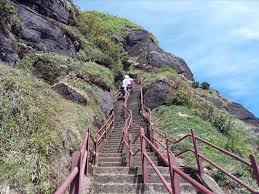 The Hatton Route (Most Popular):
This is the preferred route for most pilgrims and offers the best facilities and manageable difficulty level. The trail starts from Dalhousie (also called Nallathanniya), a small town that serves as the base camp.
- Distance: 5 kilometers one way
- Duration: 3-5 hours to climb up, 2-3 hours to descend
- Steps: Approximately 5,200 well-maintained stone steps
- Difficulty Level: Moderate
- Starting Point: Dalhousie (2-hour drive from Hatton town)
- Facilities: Numerous tea shops, rest areas, and first aid posts along the way
- Best For: First-time climbers, families, and most pilgrims
The Hatton route is well-lit during the pilgrimage season, making it safe for night climbing. The trail passes through beautiful cloud forests, and you'll find tea shops every 30-45 minutes where you can rest, warm up with tea, and purchase snacks. The path is generally wide and well-maintained, though it can get crowded during peak season.
The Ratnapura Route (Challenging):
This longer and less-traveled route appeals to experienced trekkers seeking a more adventurous climb with fewer crowds.
- Distance: 8 kilometers one way
- Duration: 5-7 hours to climb up, 3-4 hours to descend
- Difficulty Level: Challenging
- Starting Point: Palabaddala (near Ratnapura town)
- Facilities: Fewer tea shops and rest stops
- Scenery: More diverse landscapes including tea plantations and dense jungle
- Best For: Experienced trekkers seeking solitude and adventure
The Ratnapura route is more scenic but significantly harder. You'll pass through tea estates, rubber plantations, and thick jungle before beginning the steep ascent. The trail is less developed and receives fewer pilgrims, making it ideal if you prefer a quieter experience. However, facilities are limited, so you need to carry more water and supplies.
The Hatton Route (Most Popular):
This is the preferred route for most pilgrims and offers the best facilities and manageable difficulty level. The trail starts from Dalhousie (also called Nallathanniya), a small town that serves as the base camp.
- Distance: 5 kilometers one way
- Duration: 3-5 hours to climb up, 2-3 hours to descend
- Steps: Approximately 5,200 well-maintained stone steps
- Difficulty Level: Moderate
- Starting Point: Dalhousie (2-hour drive from Hatton town)
- Facilities: Numerous tea shops, rest areas, and first aid posts along the way
- Best For: First-time climbers, families, and most pilgrims
The Hatton route is well-lit during the pilgrimage season, making it safe for night climbing. The trail passes through beautiful cloud forests, and you'll find tea shops every 30-45 minutes where you can rest, warm up with tea, and purchase snacks. The path is generally wide and well-maintained, though it can get crowded during peak season.
The Ratnapura Route (Challenging):
This longer and less-traveled route appeals to experienced trekkers seeking a more adventurous climb with fewer crowds.
- Distance: 8 kilometers one way
- Duration: 5-7 hours to climb up, 3-4 hours to descend
- Difficulty Level: Challenging
- Starting Point: Palabaddala (near Ratnapura town)
- Facilities: Fewer tea shops and rest stops
- Scenery: More diverse landscapes including tea plantations and dense jungle
- Best For: Experienced trekkers seeking solitude and adventure
The Ratnapura route is more scenic but significantly harder. You'll pass through tea estates, rubber plantations, and thick jungle before beginning the steep ascent. The trail is less developed and receives fewer pilgrims, making it ideal if you prefer a quieter experience. However, facilities are limited, so you need to carry more water and supplies.
Preparing for the Climb: Essential Tips
Proper preparation is key to enjoying your Sri Pada experience. While the climb is achievable for most reasonably fit people, it does require some planning and the right gear. Physical Preparation: The climb involves ascending over 5,000 steps, which can be challenging if you're not prepared. In the weeks leading up to your climb, practice walking up and down stairs or hills to build leg strength and endurance. Cardio exercises like walking, jogging, or cycling will help improve your stamina. If you have any medical conditions, especially heart or respiratory issues, consult your doctor before attempting the climb. Clothing and Footwear: Wear comfortable, lightweight clothing that you can layer. The base of the mountain can be warm and humid, but temperatures drop significantly as you ascend. Carry a warm jacket or fleece for the summit, where temperatures can fall to 5°C with wind chill making it feel even colder. Footwear is crucial – wear comfortable shoes with excellent grip. The stone steps can be slippery, especially in the early morning dew or after rain. Avoid sandals or shoes with smooth soles. Many experienced climbers recommend hiking boots or well-worn sports shoes with good tread. Some pilgrims choose to climb barefoot as an act of devotion, but this is challenging and not recommended for first-time climbers. Essential Items to Carry: - Water: 1-2 liters (you can refill at tea shops along the way) - Snacks: Energy bars, chocolate, nuts, or fruit to maintain energy levels - Light: Flashlight or headlamp for night climbing (though the path is lit, personal light is helpful) - Rain Gear: Lightweight rain jacket or poncho, especially during shoulder months - First Aid: Basic first aid kit with band-aids, antiseptic, and pain relievers - Power Bank: To keep your phone charged for photos - Cash: Small denominations for tea, snacks, and temple offerings What to Avoid: - Heavy backpacks – travel light and carry only essentials - Alcohol or non-vegetarian food (not allowed on the sacred mountain) - Expensive jewelry or valuables - Cotton clothes that stay wet when you sweat Medical Considerations: If you're sensitive to altitude, be aware that the 2,243-meter elevation might cause mild altitude sickness. Take regular breaks, stay hydrated, and descend if you experience severe symptoms. Pregnant women, elderly travelers, and those with serious medical conditions should consult a doctor before attempting the climb.The Climb Experience: A Spiritual Journey
The actual climb to Sri Pada is an experience that combines physical challenge with spiritual reward, creating memories that last a lifetime. Starting Your Climb: Most pilgrims begin their journey between 2:00 AM and 3:00 AM from Dalhousie. The atmosphere at the base is electric, with groups gathering, flashlights bobbing in the darkness, and the sound of chanting and prayers filling the air. There's a palpable sense of anticipation and community as strangers become fellow pilgrims united by a common goal. The first section of the climb is relatively gentle as you ascend through tea plantations and small settlements. The stone steps begin in earnest after about 30 minutes, and this is where the real challenge begins. The trail is well-lit during pilgrimage season, with strings of bulbs illuminating the path like a staircase to heaven. Middle Section: As you climb higher, the vegetation changes to cloud forest, with trees draped in moss and the air becoming cooler and fresher. This section typically takes 2-3 hours and is the most demanding part of the climb. The steps seem endless, and just when you think you've reached the top, another flight appears around the corner. Tea shops appear every 30-45 minutes, offering welcome rest stops. Here you can warm up with sweet tea, buy snacks, or simply catch your breath. These little shacks, often run by local families, become social hubs where pilgrims from all over the world share stories and encouragement. The phrase "let's go together" ("samanga yamu" in Sinhala) is commonly heard as stronger climbers help those struggling with the ascent. The physical challenge is real – your legs will burn, your breath will come hard, and you might question why you chose to do this. But there's something about the shared struggle, the rhythmic sound of footsteps, and the knowledge that generations have climbed this same path that keeps you moving forward. The Final Stretch: The last section, known as the "Mahagiridamba" or Great Rock, is the steepest and most challenging part. Here, the steps are carved directly into the rock face, and in some places, there are iron rails to hold onto. This section tests your resolve, but the knowledge that the summit is close provides a second wind. As you near the top, the air grows colder and the crowds thicker. You can hear bells ringing from the temple above, and the first light of dawn begins to paint the sky. Pushing through this final section requires determination, but the sight of the temple at the summit gives you the energy to complete the journey.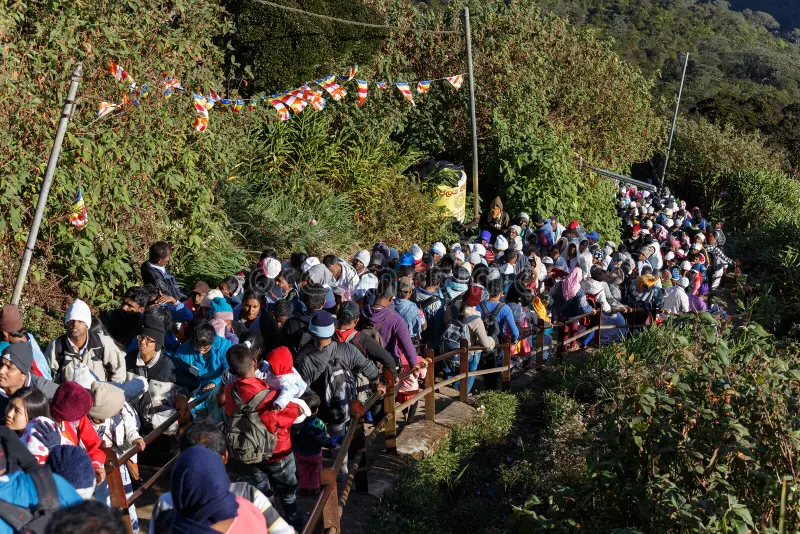
Sunrise at the Summit: A Magical Experience
Reaching the summit of Sri Pada just before dawn is one of the most magical experiences you can have in Sri Lanka. The atmosphere at the top is absolutely electric, with hundreds of pilgrims gathered in anticipation, wrapped in shawls and blankets against the cold mountain air. The Sunrise Phenomenon: As the first light of dawn breaks around 6:15 AM, the eastern sky begins to glow with shades of orange, pink, and gold. But the real showstopper is what happens on the western side – Sri Pada casts a perfect triangular shadow on the cloud layer below, creating one of nature's most spectacular optical illusions. This shadow pyramid is visible for about 30 minutes after sunrise and is considered a blessing by those who witness it. The 360-degree panoramic view from the summit is breathtaking on clear days. You can see the hill country of Sri Lanka stretching out in all directions, with tea plantations, forests, and distant peaks creating a patchwork of green below. If you're lucky, you might even spot the distant ocean on both sides of the island. Atmosphere and Emotions: The mood at the summit is euphoric. Pilgrims who strangers just hours ago now greet each other like old friends, sharing in the accomplishment of completing the climb. There's clapping, cheering, and in many cases, tears of joy and relief. The sense of achievement is overwhelming – you've climbed over 5,000 steps through the night to reach this sacred spot. Devotees rush to the temple to ring the bell – once for each time they've made the pilgrimage. Some have climbed dozens of times, and their enthusiastic ringing tells the story of their devotion. Others stand in silent prayer, offering thanks for the journey and the blessings they've received. Photography Tips: The sunrise offers incredible photo opportunities, but remember that this is primarily a spiritual experience. Be respectful when taking photos – don't block others' views or interrupt prayers. The temperature is freezing (5-10°C with significant wind chill), so keep your camera close to your body to preserve battery life. The best photos often capture both the natural spectacle and the human emotions – the joy on faces, the hands raised in prayer, the silhouette of the temple against the dawn sky. Duration at the Summit: Most pilgrims spend 1-2 hours at the top, soaking in the views, visiting the temple, and waiting for the full light of day. As the sun rises higher and the crowds begin to disperse, there's a peaceful period when you can find quiet corners to simply sit and contemplate the incredible journey you've just completed.The Temple and Sacred Footprint
At the summit of Sri Pada stands a small but sacred temple that houses the famous footprint – the reason millions have made this pilgrimage over the centuries. The Temple Structure: The temple is a simple, modest structure befitting the sacred site it protects. The main shrine room houses the sacred footprint, which is actually a rock formation that bears a resemblance to a large footprint. The footprint is covered and not directly visible – you'll see a large stone slab that protects it. The temple is maintained by Buddhist monks, but it welcomes pilgrims of all faiths. Visiting the Shrine: Before entering the temple, you must remove your shoes – a practice common in sacred spaces across Sri Lanka. The temple floor can be extremely cold in the early morning, so wear thick socks or be prepared for cold feet! Inside, the atmosphere is reverent and peaceful, contrasting with the festive mood outside. Pilgrims make offerings of flowers, incense, and oil lamps. Buddhist pilgrims often hang colorful prayer flags that flutter in the mountain wind. Devotees of all faiths can be seen praying here, each in their own tradition but united in their respect for this sacred space. Religious Practices: Buddhist pilgrims typically offer flowers and pour water on the sacred footprint while chanting verses. Hindu devotees might break coconuts and offer fruits. Christian and Muslim pilgrims often offer prayers and touch the sacred stone with reverence. The beauty of Sri Pada is that all these traditions coexist peacefully, with each faith respecting the others' practices. The Bell Ringing Tradition: One of the most distinctive sounds at the summit is the ringing of the temple bell. According to tradition, each pilgrim should ring the bell once for every time they've climbed Sri Pada. Listen carefully, and you'll hear some bells rung enthusiastically dozens of times – these are the devoted pilgrims who have made the journey many times. First-time climbers ring once, marking the beginning of what may become a lifelong practice. Views from the Temple: The temple area offers the best views from the summit. To the north, you can see the hill country's rolling peaks. On exceptionally clear days, some claim to see all the way to Colombo or the east coast. The temple courtyard is also where you'll find the marker showing the exact elevation (2,243 meters) and directional signs pointing to important landmarks visible from the peak. For those interested in exploring more of Sri Lanka's religious heritage, the Temple of the Sacred Tooth Relic in Kandy is another essential pilgrimage site that showcases the island's Buddhist traditions.Accommodation and Practical Information
Planning your stay around the Sri Pada climb requires some practical considerations to ensure a comfortable and safe experience. Where to Stay: Dalhousie (Nallathanniya): This is the most convenient base for the Hatton route, offering basic guesthouses and homestays right at the trailhead. Staying here allows you to start your climb easily at 2-3 AM. Options range from very basic rooms with shared facilities to slightly more comfortable guesthouses. Prices typically range from LKR 2,000-5,000 per night. During peak season (especially full moon days), advance booking is essential. Hatton Town: About 2 hours from Dalhousie, Hatton offers more accommodation options including mid-range hotels and heritage bungalows. Some climbers choose to stay here and arrange early morning transportation to Dalhousie (though this means waking up even earlier!). Hatton has better restaurants and facilities than Dalhousie. Nuwara Eliya: About 3 hours away, this hill country town offers the most comfortable accommodation options, including colonial-era hotels and modern resorts. It's a good choice if you want to combine the Sri Pada climb with a visit to Nuwara Eliya's attractions, including tea plantations and waterfalls. However, the very early start (midnight or 1 AM) for the climb can be challenging. Ratnapura: If you're taking the Ratnapura route, this gem-mining town offers accommodation options and the chance to explore Sri Lanka's gem industry. The route is less developed, so facilities are more basic. Tea Shops Along the Trail: One of the unique aspects of climbing Sri Pada is the network of small tea shops that operate along the trail during pilgrimage season. These basic shacks offer: - Hot tea (plain, milk, or ginger) - Instant noodles and soup - Bottled water and soft drinks - Snacks like biscuits, chocolates, and boiled sweets - Basic first aid supplies Some tea shops also offer simple accommodation for pilgrims who want to rest overnight, though facilities are extremely basic. Don't expect luxury – but the warmth of the tea and the hospitality of the shopkeepers more than make up for it. Booking Tips: - Book accommodation well in advance during peak season (January-April) - Full moon days (Poya days) are extremely busy – book months ahead - Weekdays are less crowded than weekends - Confirm if meals are included or if you need to bring your own - Ask about early morning tea/coffee – you'll need it before starting your climb! Other Facilities: Dalhousie has basic shops where you can buy water, snacks, and simple supplies. There are a few small restaurants serving local food. ATMs are available in Hatton and Nuwara Eliya but not in Dalhousie, so carry enough cash. Medical facilities are basic – for serious conditions, you'd need to travel to Hatton or Nuwara Eliya.Practical Tips for a Successful Climb
Drawing from the experiences of countless pilgrims who have climbed Sri Pada before you, here are invaluable tips to make your climb safer and more enjoyable. Before the Climb: - Rest Well: Get a good night's sleep or at least rest before starting your climb. Don't plan a long day of travel immediately before the climb. - Eat Light: Have a light meal before starting – not too heavy, as climbing on a full stomach is uncomfortable. Carry energy-rich snacks. - Hydrate: Start drinking water well before your climb to ensure you're well-hydrated. - Check Weather: Ask locals about weather conditions. If it's been raining heavily, consider postponing – slippery trails are dangerous. - Inform Someone: Let your hotel or family know your plans and expected return time. During the Climb: - Pace Yourself: There's no rush – go slow and steady. Taking regular short breaks is better than pushing until you're exhausted. - Breathe Rhythmically: Develop a steady breathing rhythm and match your steps to it. This helps manage the physical exertion. - Use Your Arms: Don't just rely on your legs. Use your arms to help pull yourself up, especially on steep sections. - Stay Hydrated: Drink small amounts frequently rather than large amounts occasionally. Dehydration is a real risk at altitude. - Watch Your Step: The steps can be uneven and slippery. Pay attention to where you're placing your feet, especially when overtaking others. - Respect Others: Be patient with slower climbers and help those struggling. The shared experience creates a beautiful sense of community. At the Summit: - Stay Warm: Put on your jacket as soon as you reach the top. The wind chill can be intense. - Respect Customs: Dress modestly, remove shoes before entering the temple, and maintain silence during prayers. - Ring the Bell: Don't forget to ring the bell once for each visit (just once for first-timers!). - Protect Electronics: Keep your phone and camera warm to preserve battery life. Keep them close to your body. - Be Patient: The temple can get crowded. Wait your turn respectfully. During Descent: - Take Your Time: Going down is actually harder on your knees than going up. Don't rush – steady and safe is better than fast and risky. - Use Side Rails: On steep sections, use the handrails to control your descent. - Rest Your Knees: Take breaks to give your knees a rest. The descent typically takes 2-3 hours. - Stay on the Path: Don't take shortcuts – they're often dangerous and damage the fragile ecosystem. Environmental and Cultural Respect: - Don't Litter: Carry all your trash back down. The mountain is sacred – keep it clean. - Respect Wildlife: Don't disturb plants or animals. The cloud forest is fragile. - Dress Modestly: This is a religious site – avoid revealing clothing. - Photography Etiquette: Don't take photos during prayer times or if worshippers object. Always ask before taking close-up photos of people. - Support Locals: Buy tea and snacks from the small vendors along the trail – this supports local communities. Safety Considerations: - Emergency Contacts: Save your hotel's number and local emergency numbers. - Travel in Groups: Solo climbing is possible, but going with others is safer, especially for night climbs. - Know Your Limits: There's no shame in turning back if you're struggling. The mountain will be there another time. - Weather Awareness: If weather deteriorates during your climb, consider descending. The summit view isn't worth risking your safety. After the Climb: - Rest Your Legs: Your legs will be sore for a day or two. Take it easy and consider a gentle massage. - Stay Hydrated: Continue drinking plenty of water. - Reflect: Take time to reflect on your achievement – you've joined millions of pilgrims who have made this sacred journey over more than a thousand years.Location
Frequently Asked Questions
Q1.When is the best time to climb Sri Pada?
Q2.How long does it take to climb Adam's Peak?
Q3.How difficult is the Sri Pada climb?
Q4.What can you see at the summit of Sri Pada?
Q5.Is Sri Pada climb worth it?
Q6.What time does sunrise happen at Adam's Peak?
Q7.How to reach Sri Pada from Colombo?
Q8.Are there facilities on the Sri Pada trail?
Recommended For You
Unawatuna Beach Sri Lanka: Stay Zones, Nightlife & Beach Activities
Unawatuna Beach Sri Lanka travel guide with best time to visit, how to reach from Colombo, top things to do, nightlife, hotels, food, and travel tips.
Galle Dutch Fort Sri Lanka: History, Walking Route & Nearby Cafes
Explore Galle Dutch Fort Sri Lanka: UNESCO heritage status, history, things to do, best time to visit, how to reach, shopping, food, stays, timings, and entry fee info.
Sigiriya Rock Fortress Sri Lanka: Tickets, Climb Timings & Travel Tips
Complete guide to Sigiriya Rock Fortress Sri Lanka. Details on tickets, timings, climbing tips, history, how to reach, and best time to visit this UNESCO World Heritage Site.
Never Miss an Adventure
Get the latest trekking guides, travel tips, and exclusive offers delivered straight to your inbox.
