
Ryoan-ji Temple Kyoto: Japan's Famous Zen Rock Garden

Rohit Verma
February 20, 2026
Explore Ryoan-ji Temple Kyoto, home to Japan's famous Zen rock garden. Discover history, meaning, meditation & visiting guide.
Introduction: The Enigma of Fifteen Rocks
Ryoan-ji Temple in Kyoto is home to Japan's most famous rock garden, an enigmatic masterpiece of Zen Buddhist design that has fascinated visitors, scholars, and artists for over five centuries. This simple yet profoundly moving garden, consisting of carefully arranged rocks in a bed of raked white gravel, represents the pinnacle of Japanese aesthetic principles and Zen philosophy. What makes Ryoan-ji's rock garden truly extraordinary is that it manages to be simultaneously minimalist and rich in meaning, simple in form but infinitely deep in interpretation, creating a space where silence speaks louder than words and emptiness feels more full than presence. For those interested in exploring more Japanese temples, Kiyomizu-dera Temple and Senso-ji Temple in Tokyo are also worth visiting.
For visitors to Kyoto, Ryoan-ji Temple is more than just another temple visit - it's a meditation experience, a philosophical inquiry, and an encounter with one of the world's most celebrated examples of spiritual art. Whether you're a seasoned practitioner of Zen meditation, an admirer of Japanese aesthetics, or simply a traveler seeking a moment of profound peace, sitting before Ryoan-ji's rock garden offers an experience that can be transformative in its quiet simplicity.
About Ryoan-ji Temple
Ryoan-ji Temple, formally known as Ryoan-ji Gionsho Zen Temple, belongs to the Rinzai school of Japanese Zen Buddhism and is designated as a Historic Site and Special Place of Scenic Beauty.
History and Origins
The temple's origins date to the Heian Period (794-1185), when it was an aristocrat's villa. In 1450, Hosokawa Katsumoto, a powerful military lord, converted the villa into a Zen temple. However, the rock garden's exact origins remain shrouded in mystery - no record exists of who designed it or precisely when it was created, adding to its enigmatic allure.
The temple has suffered fires throughout history and was rebuilt multiple times, but the rock garden has remained essentially unchanged, suggesting its design achieved a state of perfection that required no alteration. This consistency over centuries speaks to the timeless quality of the garden's design and the depth of its philosophical and aesthetic achievement.
Architecture and Layout
The temple complex includes several buildings besides the famous rock garden:
- Hondo (Main Hall): The main temple hall, housing important Buddhist statues and serving as the center of religious ceremonies.
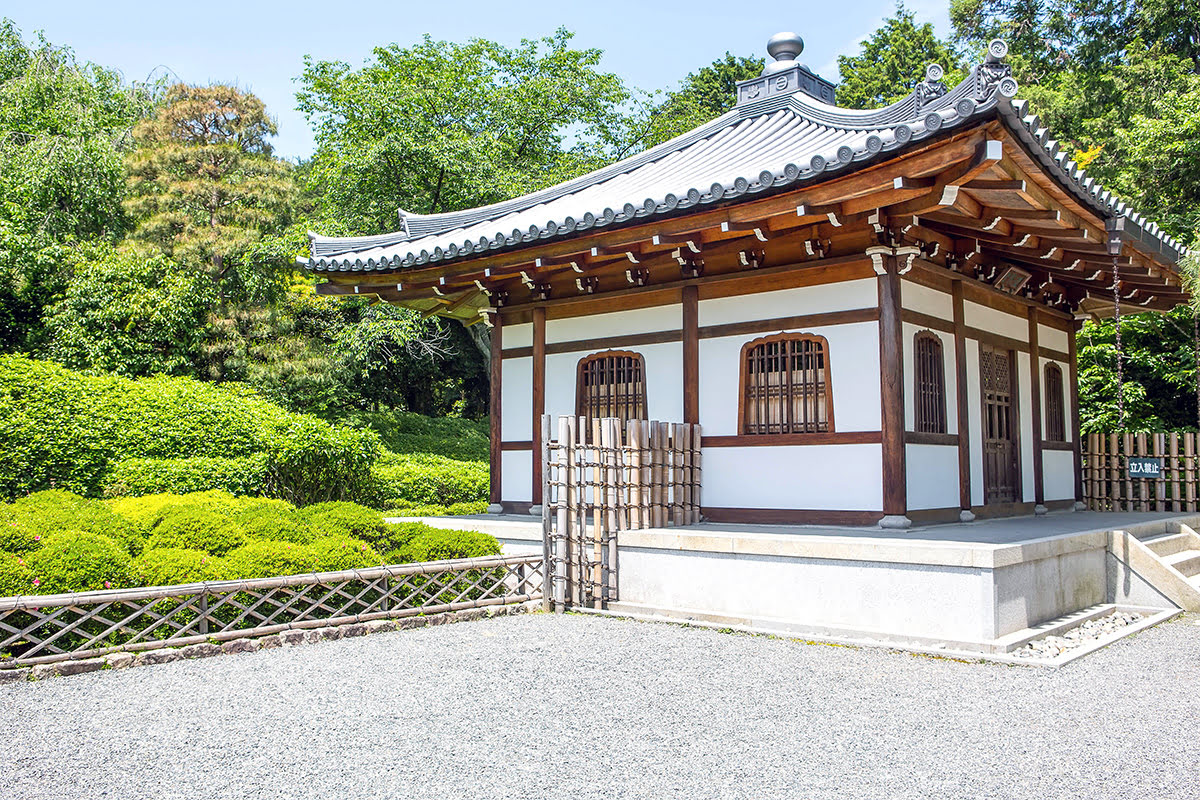
- Kyoyochi Pond: A beautiful pond created by the temple's original aristocratic owner, surrounded by weeping cherry trees and creating a serene water garden space.
- Tsukubai: A stone water basin with a famous inscription "Learn contentment" - a teaching in itself.
- Temple Grounds: Moss-covered pathways, traditional buildings, and beautifully maintained gardens.
Significance in Zen Buddhism
Ryoan-ji embodies key Zen Buddhist principles:
- Zazen (Seated Meditation): The rock garden is designed as an ideal setting for meditation practice.
- Mu (Emptiness/Nothingness): The garden expresses the concept of Mu - that true nature is emptiness of fixed forms.
- Impermanence: Raked gravel, which must be maintained and redone, represents the constant change and impermanence of all things.
- Simplicity: The minimalist design reflects Zen's emphasis on stripping away the superfluous to reveal essential truth.
The Famous Rock Garden
The rock garden (karesansui - dry landscape garden) is the temple's crown jewel and one of Japan's most iconic images.
Design and Layout
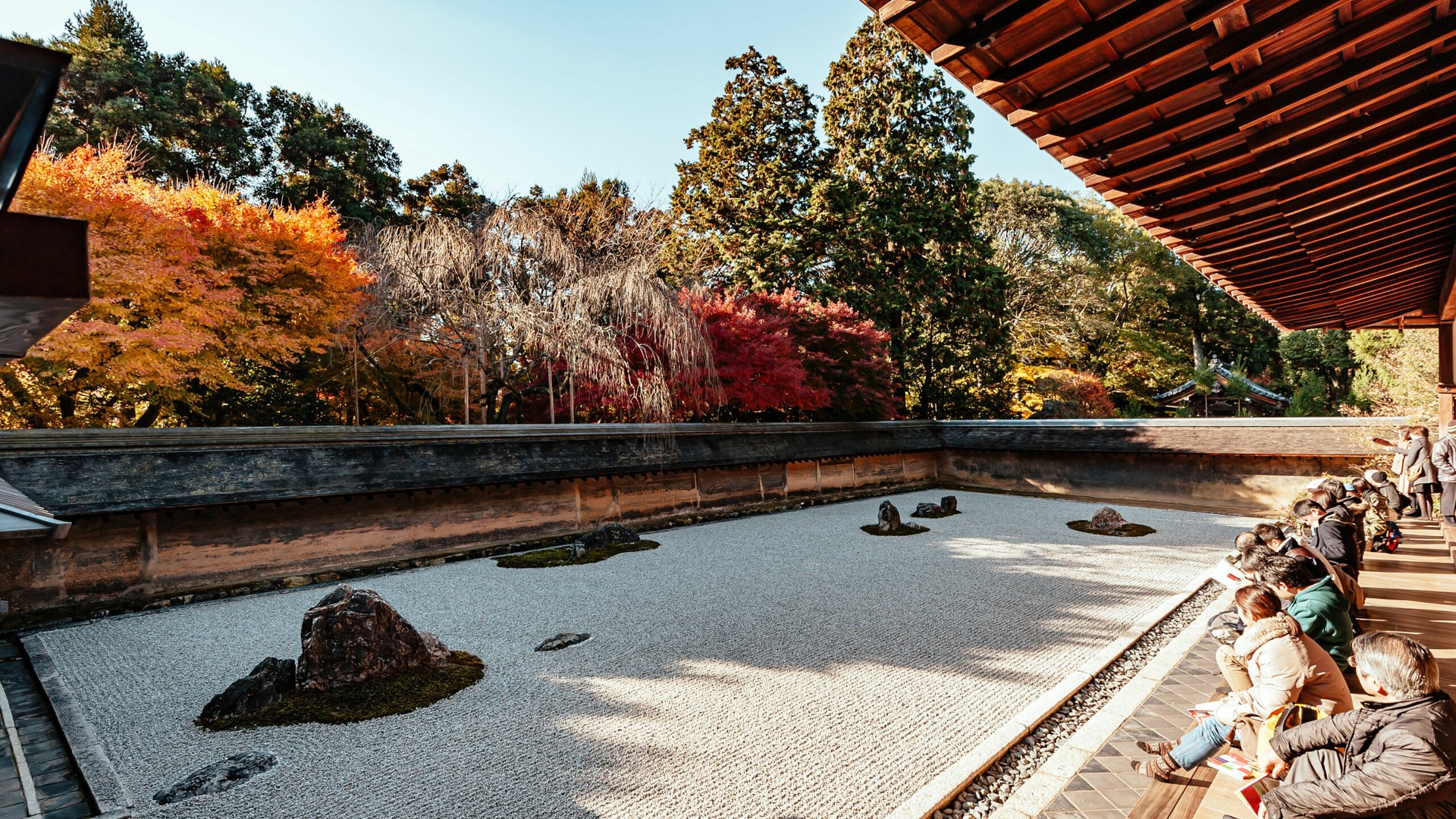
The garden is rectangular, measuring approximately 25 meters by 10 meters, containing:
- Fifteen Rocks: Arranged in five groups of two, three, five, two, and three rocks.
- White Gravel: Carefully raked white gravel surrounding and separating the rock groups.
- Moss: Patches of moss growing around the bases of the rocks.
- Moss-Covered Walls: The garden is surrounded by walls stained with oil that creates varying patterns.
The garden contains no trees, flowers, or flowing water - only rocks and gravel. This intentional simplicity directs attention to the relationships between the rocks and the space around them.
The Famous Riddle
Ryoan-ji's rock garden presents a famous riddle: from any viewing point on the temple's veranda, you can only see fourteen of the fifteen rocks. The fifteenth rock is always hidden behind another rock, no matter where you sit. This design is widely interpreted as:
- Spiritual Incompleteness: Only through enlightenment can one see all fifteen rocks - ordinary vision is always incomplete.
- Human Limitation: We can never fully grasp absolute truth - something always remains beyond our perception.
- Need for Humility: Reminding us of our limitations and the need for spiritual seeking.
- Personal Journey: Each person might need to find their own viewing position to see all fifteen rocks metaphorically.
Symbolism and Interpretations
The rock garden invites endless interpretations:
- Tigers and Cubs: Some see the rock groups as tigers and their cubs swimming across water (the raked gravel).
- Mountains: Others see the groups as mountain peaks rising from mist or clouds (the gravel).
- Islands: The rocks can be seen as islands in an endless sea.
- Kanji Characters: Some suggest the arrangement resembles Chinese characters for "heart" or "virtue".
- Abstract Forms: Others see no representational meaning, only pure abstract beauty.
The beauty of the garden is that no single interpretation is "correct" - each viewer finds their own meaning, and part of the experience is contemplating what the garden means to you.
Visiting Ryoan-ji Temple
Opening Hours
- March-November: 8:00 AM - 5:00 PM
- December-February: 8:30 AM - 4:30 PM
- Last Entry: 20-30 minutes before closing time
Note: Opening hours may vary slightly by season and for special events. Check current hours before visiting.
Admission Fees
- Garden and Temple: 600 yen (approximately $4 USD)
- Additional: Some buildings may have separate small fees, but the main admission covers the temple grounds and rock garden.
Best Time to Visit
Morning (8-10 AM):
- Quiet: Fewest crowds, most peaceful atmosphere.
- Light: Soft morning light creates beautiful ambiance.
- Meditation: Best time for personal meditation.
Evening (before closing):
- Atmosphere: Quiet, contemplative atmosphere as day ends.
- Golden Hour: Beautiful light in late afternoon.
Seasons:
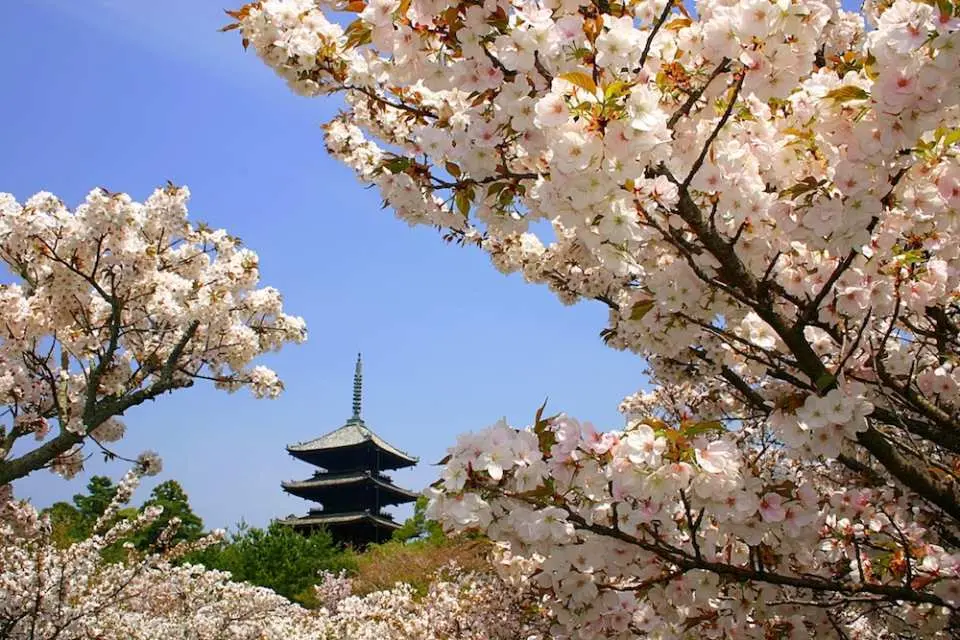
- Spring: Cherry blossoms (late March-early April) add beauty to temple grounds (though not in the rock garden itself).
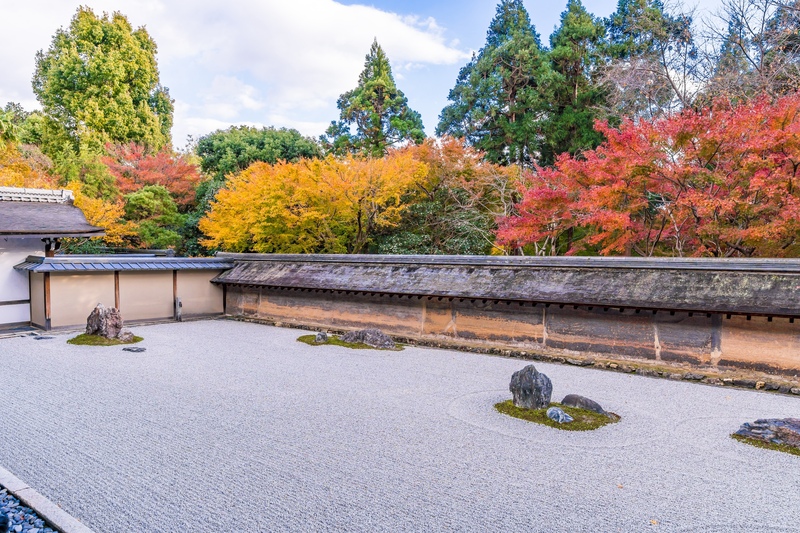
- Autumn: Fall colors create beautiful backdrop.
- Winter: Snow on temple grounds creates serene, stark beauty.
- Rain: Rainy days add atmospheric quality to the garden.
How to Reach
From Kyoto Station:
- Method: Take JR Sagano Line to Enmachi Station (15 minutes), transfer to Randen Arashiyama Line to Ryoan-ji Station (5 minutes), walk to temple (3-5 minutes).
- Alternative: Take City Bus (number 205 or 59) to Ryoan-ji stop (approximately 40 minutes due to traffic).
From Arashiyama:
- Method: Ryoan-ji is approximately 2 km from Arashiyama's famous bamboo grove - a pleasant walk or short bus ride.
Etiquette for Visiting
- Silence: Maintain silence or very quiet conversation. The rock garden is a place for contemplation.
- Stay on Veranda: Visitors should remain on the viewing veranda - do not enter the garden.
- Respect: Be respectful of others' meditation - avoid disturbing those sitting quietly.
- Photography: Photography is allowed and encouraged, but be respectful with flash and avoid blocking others' views.
- Dress Modestly: As with any temple, dress modestly and respectfully.
Meditating at Ryoan-ji
Many visitors find sitting before the rock garden to be a powerful meditation experience.
Tips for Meditation
- Find a Good Position: Try different spots on the veranda to find where you feel comfortable and have a good view.
- Relax Your Gaze: Don't focus on one rock - let your gaze soften and encompass the entire garden.
- Notice Thoughts: Observe your thoughts as they arise without judgment, then return attention to the garden.
- Experience Emptiness: Try to experience the space between rocks as much as the rocks themselves.
- Allow Time: Don't rush. Give yourself time to settle into the experience.
What You Might Experience
- Calm: A deep sense of calm and peace can arise.
- Clarity: Mental clarity and fresh perspective may emerge.
- Connection: Sense of connection with generations of meditators who sat before this garden.
- Questions: The garden may raise questions about meaning, perception, and existence.
- Stillness: Experience of stillness and presence that transcends ordinary awareness.
Nearby Attractions
Ryoan-ji is in the northwestern Arashiyama area of Kyoto, with several nearby attractions:
Arashiyama Bamboo Grove
Kyoto's famous bamboo forest:
- Experience: Walking through towering bamboo creates otherworldly atmosphere.
- Distance: Approximately 2 km from Ryoan-ji (30-40 minute walk or short bus ride).
- Best Time: Early morning for fewest crowds and most atmospheric light.
Tenryu-ji Temple
Famous temple with beautiful garden:
- Stroll Garden: One of Kyoto's most beautiful stroll gardens with carp pond.
- Autumn Colors: Spectacular fall foliage draws crowds in November.
- Distance: Near Arashiyama Bamboo Grove.
Kinkaku-ji (Golden Pavilion)
Kyoto's iconic Golden Pavilion:
- Famous: One of Japan's most photographed buildings.
- Distance: Approximately 3-4 km from Ryoan-ji.
- Route: Accessible by bus or a pleasant walk through residential Kyoto.
Other Temples
Ninna-ji, Hirano Shrine, and other temples are in the area, creating a temple-hopping route.
Practical Information
Facilities
- Restrooms: Available on temple grounds.
- Gift Shop: Small shop selling temple-related items and souvenirs.
- No Food: No restaurants or cafes on-site.
- Wheelchair Access: Some access but may be limited due to traditional architecture.
Tips for Your Visit
- Allow Time: Plan to spend at least 30-60 minutes, longer if meditating.
- Combine with Arashiyama: Combine Ryoan-ji with Arashiyama Bamboo Grove for a half-day experience.
- Visit Early or Late: Avoid midday crowds if possible for a more peaceful experience.
- Dress Appropriately: Wear comfortable shoes (you'll be on tatami mats on the veranda) and modest clothing.
- Turn Off Phone: Minimize phone use to fully experience the temple's peaceful atmosphere.
Philosophical Significance
Ryoan-ji's rock garden embodies profound philosophical principles:
Wabi-Sabi
The Japanese aesthetic of wabi-sabi - finding beauty in imperfection, impermanence, and incompleteness - is powerfully expressed in the rock garden. The weathered rocks, the imperfect walls with their oil stains, the gravel that must be constantly maintained and can never be perfectly still - all express the beauty of things that change and decay.
Ma (Negative Space)
The concept of ma - the importance of empty space - is central to the garden's design. The empty space between rocks is as important as the rocks themselves. This teaches that meaning arises from relationships, from what is absent as much as what is present, from emptiness as much as form.
Zen Teachings
The garden embodies Zen teachings without words:
- Non-attachment: Don't grasp at fixed meanings or interpretations.
- Direct Experience: Experience the garden directly rather than analyzing it intellectually.
- Present Moment: The garden exists only in the eternal present - raked gravel showing patterns that change.
- Unity: All elements - rocks, gravel, moss, walls, viewer - are one in the moment.
Conclusion: Where Silence Speaks
Ryoan-ji Temple's rock garden is a masterpiece not because of what it contains but because of what it invites - contemplation, stillness, and the possibility of experiencing something beyond ordinary consciousness. In a world filled with noise, complexity, and constant stimulation, the garden's radical simplicity offers a profound antidote, a space where silence speaks and emptiness becomes full. For travelers exploring Asia's spiritual sites, consider also visiting Temple of Literature in Vietnam or temples in Bhutan to experience different Buddhist traditions.
What makes this 500-year-old garden so extraordinary is that it continues to speak to each new generation of visitors who sit before it. The questions it raises about perception, meaning, and existence are as relevant today as when the garden was created. The experience of sitting in its presence - of being simultaneously drawn into contemplation and released from the need for answers - is one of the most powerful encounters with spiritual art and temple architecture anywhere in the world.
Whether you approach Ryoan-ji as a student of Zen Buddhism, as an admirer of Japanese aesthetics, or simply as a traveler seeking peace, the rock garden offers something essential: a reminder that meaning doesn't require complexity, that beauty can emerge from simplicity, and that some of life's most profound experiences occur in silence. Sit, be present, and let the garden speak in the language of stillness that has echoed across five centuries.
Location
Frequently Asked Questions
Q1.What is Ryoan-ji Temple famous for?
Q2.What are the opening hours of Ryoan-ji Temple?
Q3.How much is admission to Ryoan-ji Temple?
Q4.How do I reach Ryoan-ji Temple from Kyoto Station?
Q5.What is the meaning of the fifteen rocks at Ryoan-ji?
Q6.What is the best time to visit Ryoan-ji Temple?
Q7.Can I meditate at Ryoan-ji Temple?
Q8.What etiquette should I follow when visiting Ryoan-ji Temple?
Recommended For You
Sigiriya Rock Fortress Sri Lanka: Tickets, Climb Timings & Travel Tips
Complete guide to Sigiriya Rock Fortress Sri Lanka. Details on tickets, timings, climbing tips, history, how to reach, and best time to visit this UNESCO World Heritage Site.

Siddhivinayak Temple Mumbai: Darshan Timings, VIP Entry & Nearby Access
Complete guide to Siddhivinayak Temple Mumbai including darshan timings, aarti schedule, online booking, VIP pass, offerings, history, and how to reach.
Temple of the Sacred Tooth Relic Kandy: Timings, Dress Code & Entry
Visit Sri Dalada Maligawa, Kandy's sacred temple housing Buddha's tooth. Discover timings, dress code, rituals, history & travel tips.
Never Miss an Adventure
Get the latest trekking guides, travel tips, and exclusive offers delivered straight to your inbox.
