
Togetsukyo Bridge Kyoto: Best Views, Access and Tips

Ananya Sharma
February 20, 2026
Togetsukyo Bridge Kyoto guide with best viewing times, seasonal highlights, transport from Kyoto Station, and practical Arashiyama visit tips.
Introduction: Arashiyama's Most Recognizable Landmark
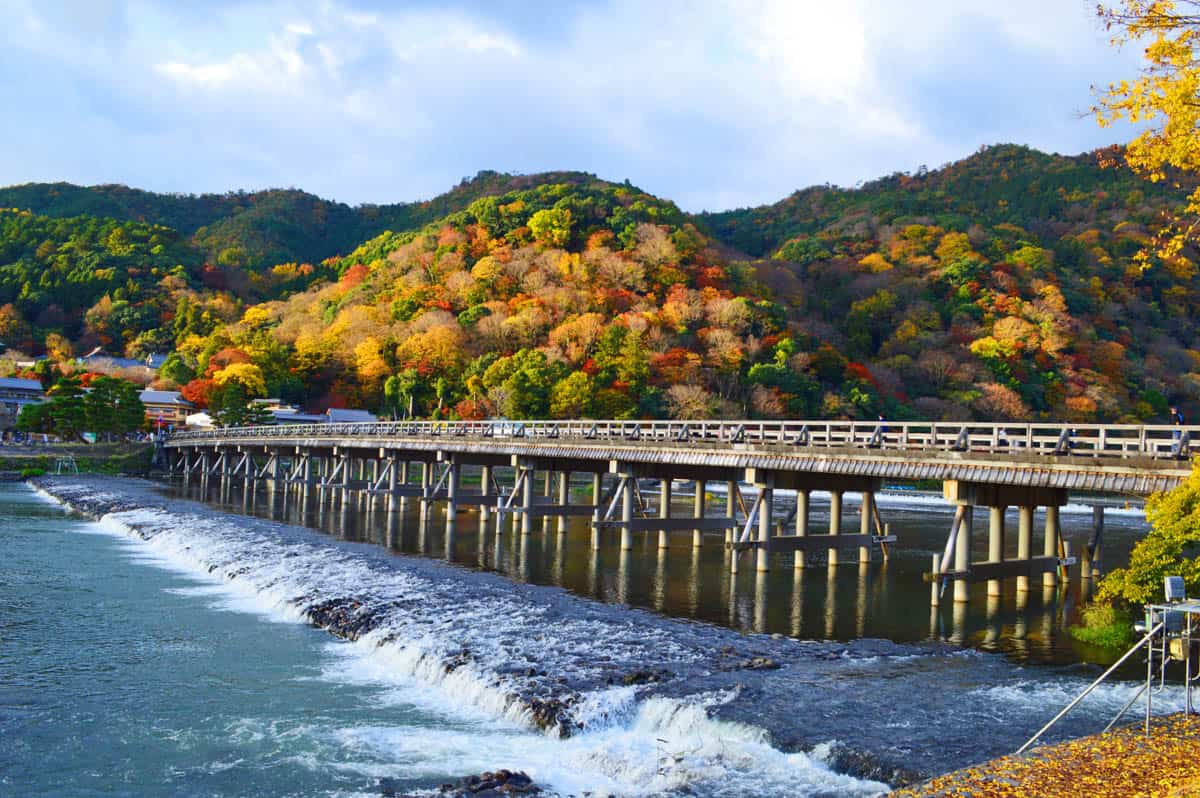
Togetsukyo Bridge in Kyoto is one of the most photographed spots in Arashiyama, and for good reason. The bridge frames the Katsura River with mountain backdrops that change dramatically through the seasons, from spring blossom tones to deep autumn reds and winter mist. For many visitors, it becomes the visual anchor of west Kyoto before they continue to bamboo grove walks, temples, and riverside cafés.
Although it is often treated as a quick photo stop, the area rewards slower pacing. Morning light, riverbank walks, and nearby attractions create a fuller experience than a rushed crossing. The bridge is also practical: free to access, easy to reach by train, and simple to combine with other Arashiyama highlights in one half-day or full-day route.
This guide covers history, best time windows, seasonal differences, how to reach from Kyoto Station, photography spots, and smart itinerary pairings. For deeper Kyoto planning, connect this stop with Katsura Imperial Villa, Nanzen-ji Temple, and Nishiki Market Kyoto.
About Togetsukyo Bridge
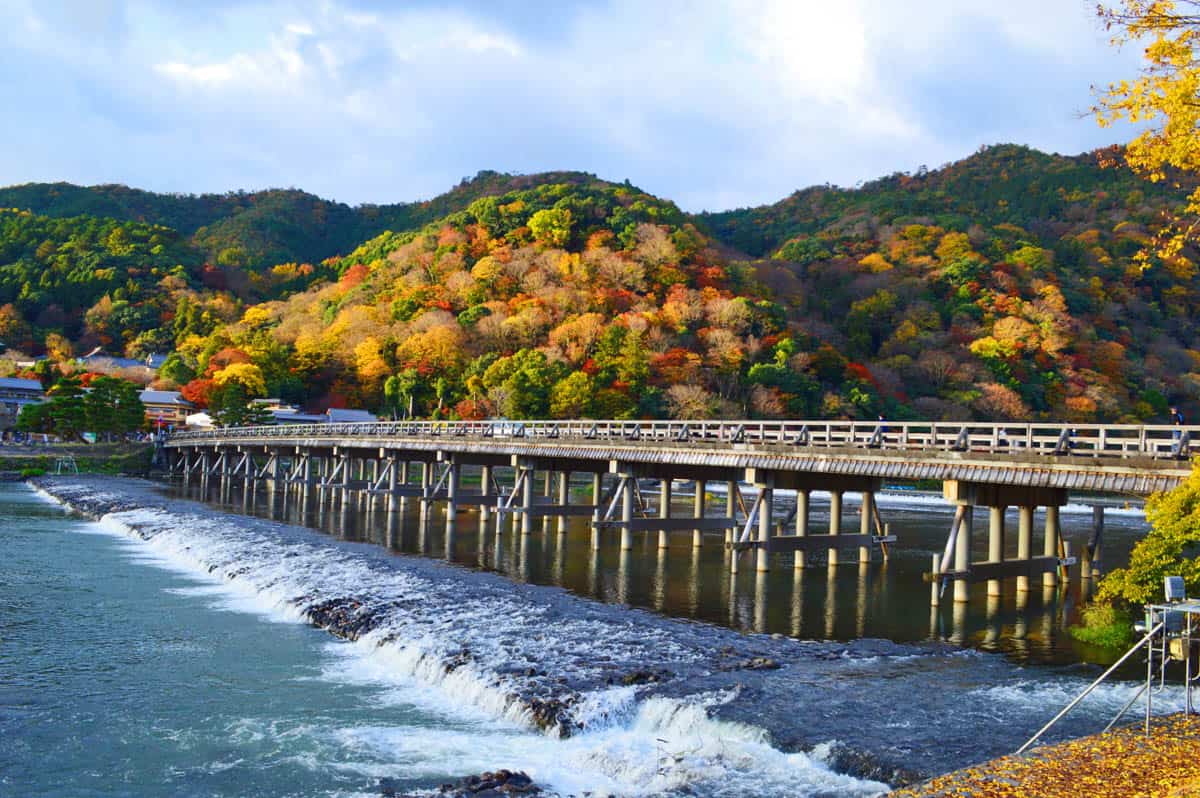
Togetsukyo translates roughly to Moon Crossing Bridge, a poetic name tied to historical appreciation of the landscape and night sky over the river. The bridge has long been associated with Arashiyama's identity and appears in countless seasonal travel references, postcards, and photography itineraries.
The current structure reflects modern reinforcement while preserving an aesthetic that blends with the surrounding natural and historical environment. Even for visitors not focused on architecture, the bridge's role as a visual connector between town, river, and mountain slopes is obvious from almost every angle nearby.
Why travelers prioritize it
- Free landmark: No entry ticket needed for bridge access.
- Seasonal range: Distinct atmosphere in spring, autumn, and winter.
- Easy logistics: Multiple transport options from central Kyoto.
- Cluster value: Near bamboo grove, temples, and river activities.
Best Time to Visit Togetsukyo Bridge
Timing affects both crowd level and visual quality. Early morning is usually best if you want quieter frames and smoother movement around nearby attractions. Late afternoon provides warm tones and strong mountain contrast, especially in clear weather.
- Best daily slot: Around sunrise to 8:30 AM for minimal crowd.
- Golden-hour slot: Late afternoon before sunset.
- Crowd-heavy period: Midday, weekends, and peak foliage windows.
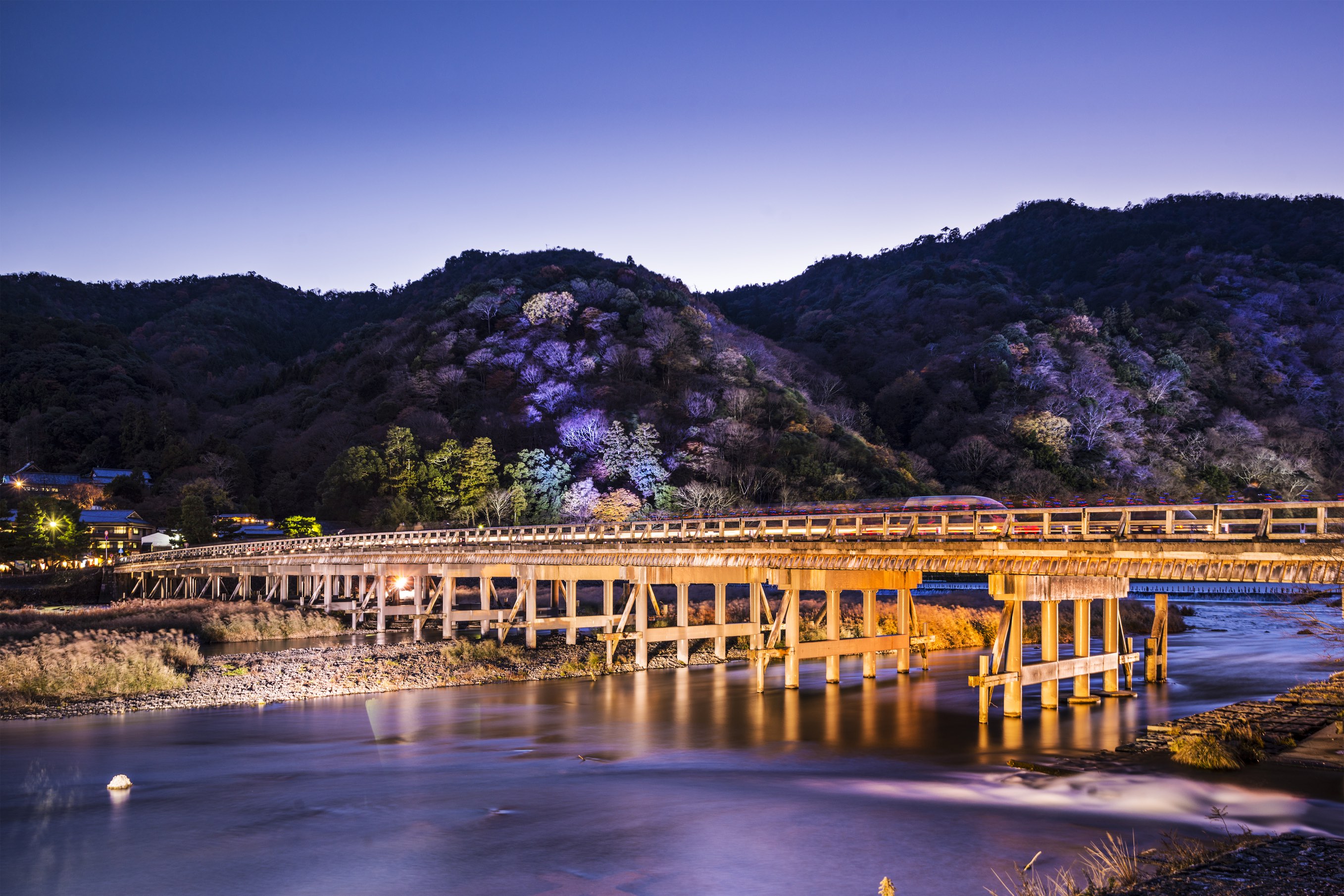
- Night visits: Calm atmosphere, but check illumination/event schedules.
If you are visiting during cherry blossom or autumn leaf peak, arriving early is essential. A difference of even one hour can significantly change crowd density on bridge walkways and riverbank photo points.
Seasonal Experience: Spring, Summer, Autumn, Winter
Spring (late March to early April window)
Spring attracts large numbers of visitors for blossoms near river and park zones. The bridge itself becomes a strong foreground line against pastel slopes and soft sky conditions. Expect crowds, but visual payoff is high.
Summer
Summer gives lush greenery and active riverside movement. Heat and humidity are higher, so morning sessions remain best for comfort and clearer photography.
Autumn (mid-November to early December peak)
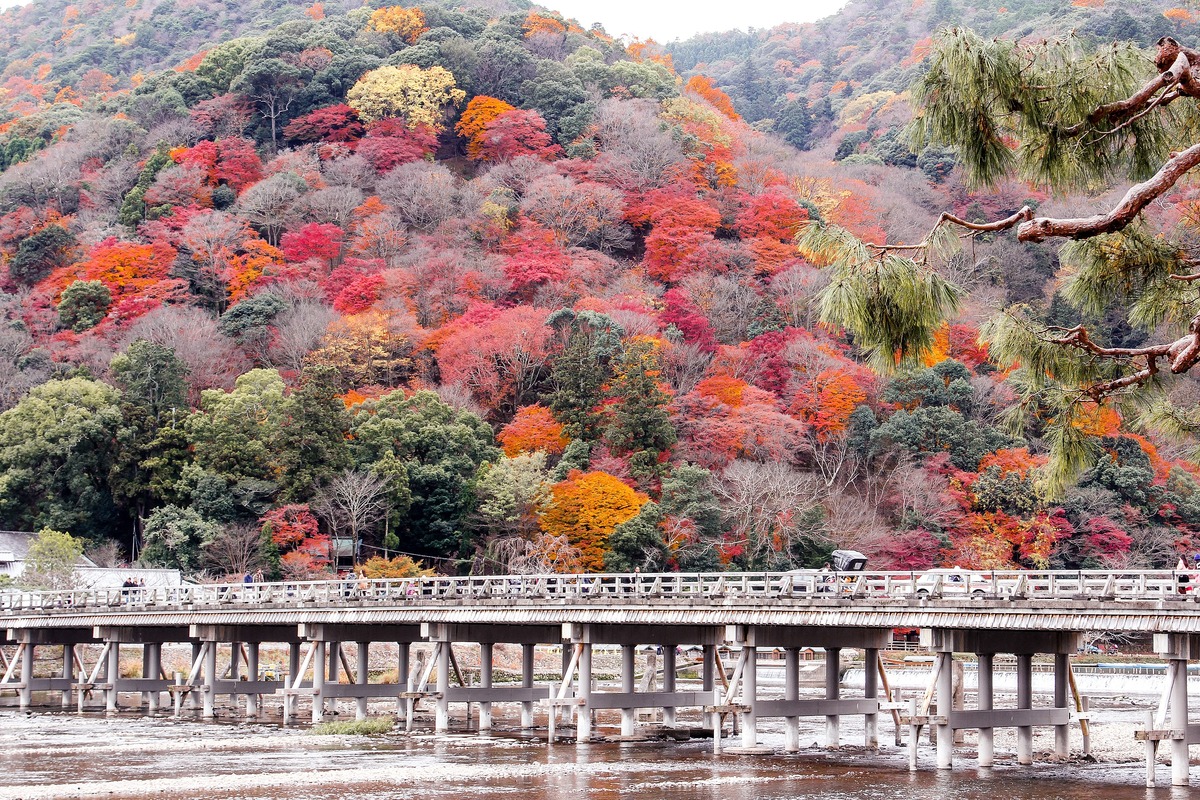
Autumn is often considered the most dramatic season here. Red and amber foliage on Arashiyama hills creates classic Kyoto compositions. This is also the busiest period, so preplanned timing matters.
Winter
Winter offers quieter walks and occasionally misty or lightly snowy framing. While less colorful, it can be the most peaceful season for contemplative visits and unhurried river views.
How to Reach from Kyoto Station
Arashiyama is well connected by train and bus, but train routes are generally more predictable for first-time visitors. Walking distances from stations are manageable and mostly straightforward with signage.
| Transport | Approx Time | Notes |
|---|---|---|
| JR route to Saga-Arashiyama | 15-20 minutes + walk | Simple for travelers near Kyoto Station |
| Hankyu route options | Varies + walk/transfer | Useful from other city zones |
| City bus | 30-50 minutes | Can slow during peak traffic |
| Taxi | 20-30 minutes | Convenient but costlier |
If you want to maximize your Arashiyama morning, take an early train and start at the bridge before major tour groups arrive. Then move to bamboo grove and temple zones in sequence.
Things to Do Around Togetsukyo Bridge
- Bridge crossing walk: Best first step for orientation and photos.
- Riverside stroll: Strong viewpoints from both banks.
- Boat viewing and seasonal activity: Visual interest on water depending on period.
- Bamboo and temple circuit: Extend toward Arashiyama highlights.
- Café pause: Good for mid-route break before next attraction.
The area can be covered quickly, but slower pacing improves experience quality. Consider spending 2-3 hours in this cluster if you enjoy photography and short cultural stops.
Photography Tips for Better Frames
Togetsukyo is easy to photograph but difficult to photograph uniquely because it is so popular. A few framing strategies help:
- Use riverbank angles instead of only center-bridge shots.
- Include mountain contour lines for seasonal context.
- Shoot early to avoid dense pedestrian clutter.
- Try wide-to-mid focal transitions for storytelling variety.
- In autumn, avoid overexposure on bright foliage highlights.
If you stay through late afternoon, you can capture day-to-evening transition tones on water and skyline. Keep tripod use mindful in crowded zones and never block walking flow.
Sample Half-Day Arashiyama Plan
| Time | Stop | Purpose |
|---|---|---|
| 7:00 AM | Togetsukyo Bridge | Low-crowd photos and calm river views |
| 8:00 AM | Riverside walk | Alternative framing and slow orientation |
| 9:00 AM | Bamboo/temple cluster | Core Arashiyama continuation |
| 11:00 AM | Café and transit out | Buffer before next Kyoto district |
Practical Tips
- Wear comfortable walking shoes with good grip.
- Carry water; summer humidity can be draining.
- Use weekday mornings for better crowd control.
- Keep weather flexibility for rain-sensitive photography.
- Respect residential and temple-adjacent quiet zones.
Arashiyama can feel crowded at peak times, but thoughtful timing turns the same space into a serene and highly memorable Kyoto experience.
Common Mistakes Visitors Make in Arashiyama
The biggest mistake is arriving late and expecting quiet frames at prime viewpoints. By late morning, bridge walkways and nearby lanes can become heavily congested, especially during blossom and autumn peaks. Another mistake is trying to cover too many Arashiyama points in one short slot. Crowds, café wait times, and walking flow can quickly break tight schedules.
Many visitors also photograph only from the center of the bridge and miss stronger riverbank compositions. A better method is to cross once, then take side-bank angles that include mountains, water texture, and bridge line in one frame. This creates more distinctive photos and reduces time spent in dense pedestrian traffic.
Weather Strategy and Backup Planning
Kyoto weather can shift quickly, and light rain does not always ruin the experience. In fact, overcast conditions often produce softer tones and fewer harsh highlights on foliage. Keep a compact rain layer and continue with riverside walking if conditions remain safe. If heavy rain sets in, pivot to nearby indoor options and return to the bridge when visibility improves.
For travelers with flexible itineraries, assign one backup morning to Arashiyama in case your first day becomes too crowded or weather-limited. This strategy is especially useful during short peak windows when photography goals are important.
Where to Pause, Eat and Reset Nearby
Arashiyama can be tiring if you move continuously through crowded areas. Plan one short pause after your bridge and riverside segment before continuing to other sites. Hydration and a short seated break improve route quality, especially for families and senior travelers. Small timing decisions like this often determine whether the area feels stressful or enjoyable.
Accessibility and Comfort Notes
Arashiyama routes around Togetsukyo are generally manageable for most travelers, but crowd density can affect movement speed. If you are traveling with elders, keep extra transition time between bridge and nearby attractions. Short seated breaks and gradual walking pace make a clear difference in comfort.
Families with strollers should prefer earlier hours when walkways are less congested. During peak foliage periods, route flexibility is essential; choose one or two high-priority stops and avoid overcommitting to long checklists.
Comfort-aware pacing ensures you enjoy the bridge and surrounding scenery without turning the visit into a rushed transit exercise.
One-Hour Express Plan
If your Kyoto schedule is tight, dedicate one focused hour to Togetsukyo Bridge: 20 minutes for crossing and orientation, 20 minutes for riverbank photos, and 20 minutes for short café reset before transit. Even this compact format gives a meaningful Arashiyama taste when timed early.
For best results, keep your route simple and avoid peak midday congestion.
If possible, revisit the bridge briefly in a second light window. Comparing morning and evening tones gives a richer visual and emotional sense of Arashiyama.
Another practical advantage of early arrival is cleaner access to nearby paths, which lets you complete river, bridge, and bamboo-area transitions before congestion builds. This improves not only photos but also overall walking comfort and schedule reliability for the rest of your Kyoto day.
Conclusion
Togetsukyo Bridge Kyoto is more than a photo landmark. It is a seasonal viewing platform, itinerary connector, and cultural gateway to Arashiyama's broader landscape. The visit is simple to execute, but best experienced with early timing, flexible pacing, and smart pairing with nearby sites.
If you prioritize morning access, riverbank framing, and cluster-based route planning, this iconic bridge becomes one of the most rewarding and efficient stops in your Kyoto itinerary.
Location
Frequently Asked Questions
Q1.Where is Togetsukyo Bridge located?
Q2.How do I reach Togetsukyo Bridge from Kyoto Station?
Q3.What is the best time to visit Togetsukyo Bridge?
Q4.Can you walk across Togetsukyo Bridge?
Q5.How long should I spend at Togetsukyo Bridge?
Q6.Is Togetsukyo Bridge good during cherry blossom and autumn season?
Q7.Is Togetsukyo Bridge illuminated at night?
Q8.What can I combine with Togetsukyo Bridge in one trip?
Recommended For You
New Year in Japan: Traditions, Temple Visits, Foods & Travel Tips
A practical guide to New Year in Japan covering hatsumode, osechi food, temple-bell traditions, best cities, and travel planning tips.
Kiyomizu-dera Kyoto: Timings, Entry Fee & Temple Highlights
Planning Kiyomizu-dera Temple Kyoto? Check opening hours, entry fee, history, Otowa waterfall highlights, access routes, and practical visitor tips.
Ryoan-ji Temple Kyoto: Japan's Famous Zen Rock Garden
Explore Ryoan-ji Temple Kyoto, home to Japan's famous Zen rock garden. Discover history, meaning, meditation & visiting guide.
Never Miss an Adventure
Get the latest trekking guides, travel tips, and exclusive offers delivered straight to your inbox.
