
Panch Kedar Yatra: Temple Sequence, Trek Difficulty & Best Season

Rohan Malhotra
February 20, 2026
Plan Panch Kedar Yatra with temple order, trek difficulty, route guidance, best season, and practical tips for Kedarnath, Tungnath, Rudranath, Madhyamaheshwar, and Kalpeshwar.
Introduction: The Spiritual Legend of Panch Kedar
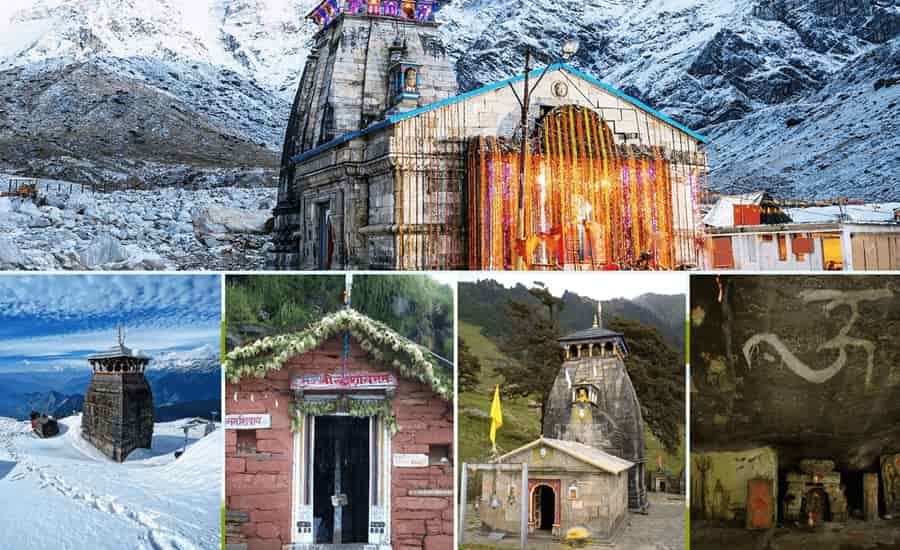
Panch Kedar refers to five sacred Shiva temples in Uttarakhand's Garhwal Himalayas: Kedarnath, Tungnath, Rudranath, Madhyamaheshwar, and Kalpeshwar. In the traditional legend linked to the Mahabharata, the Pandavas sought Lord Shiva for forgiveness after the Kurukshetra war. Shiva, avoiding them, appeared in the form of a bull and later manifested in parts across different Himalayan locations. These locations became the Panch Kedar temples and remain among the most meaningful pilgrimage-trek circuits in India.
Unlike a single-destination yatra, Panch Kedar is a sequence of road journeys and mountain walks through forests, meadows, river valleys, and high-altitude settlements. It blends devotion, endurance, and slow travel. This guide explains temple order, route structure, trek difficulty, seasonal planning, and practical logistics so you can build a realistic plan whether you are a pilgrim, a trekker, or both.
The Five Panch Kedar Temples
Each Panch Kedar shrine is associated with a symbolic form of Shiva and a distinct trekking profile.
| Temple | Approx Altitude | Common Base | Trek Character |
|---|---|---|---|
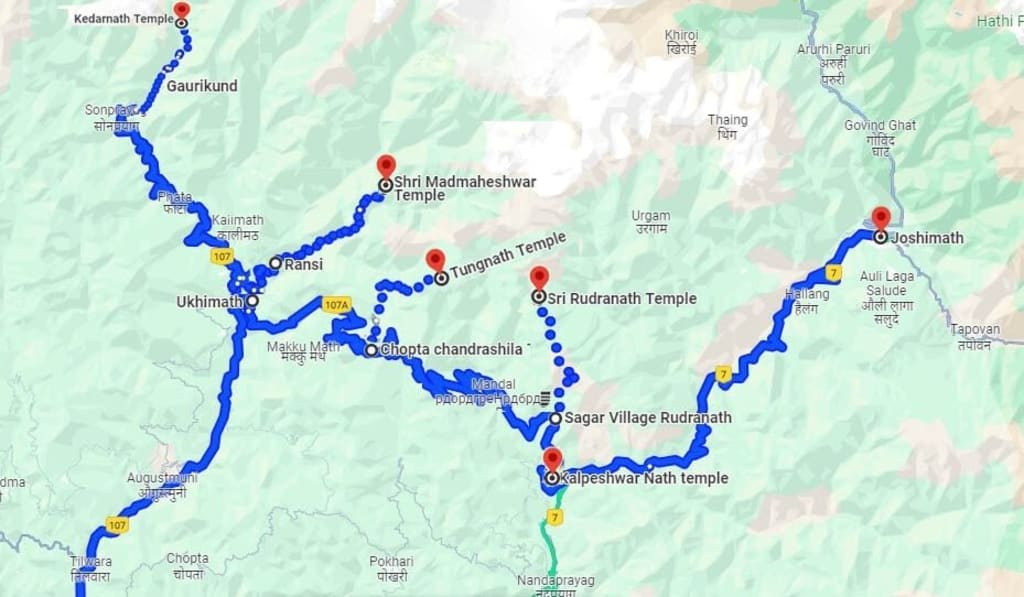
| Kedarnath | ~3,583 m | Gaurikund | Long, structured pilgrimage trek |
| Tungnath | ~3,680 m | Chopta | Short but steep ascent |
| Rudranath | ~3,500+ m | Sagar/Mandal side | Most demanding multi-stage approach |
| Madhyamaheshwar | ~3,200-3,500 m zone | Ransi | Moderate to challenging with long climb |
| Kalpeshwar | ~2,200 m | Urgam valley roadhead | Shortest and most accessible temple approach |
Kedarnath
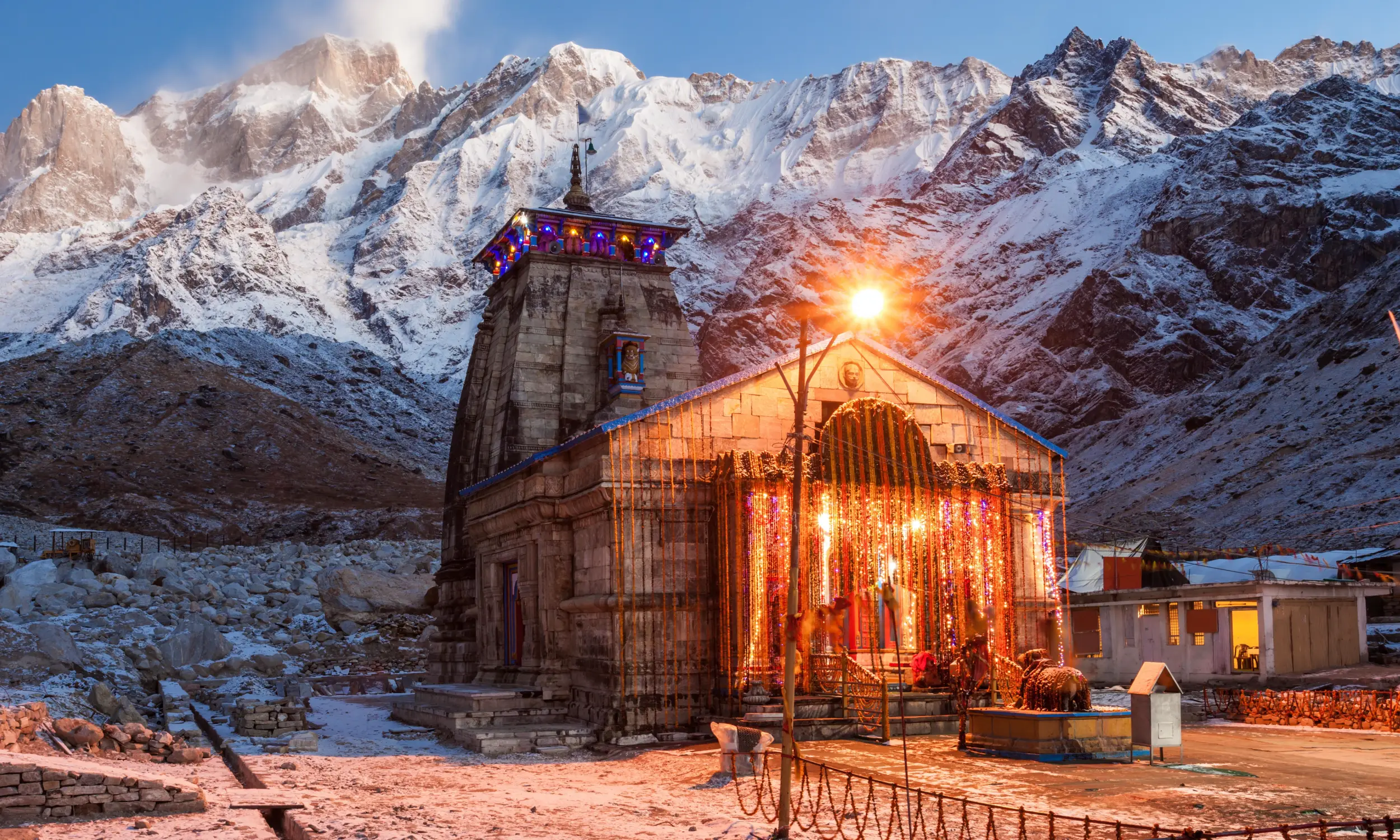
Kedarnath is the principal shrine of the Panch Kedar tradition and also one of the most important Shiva temples in India. Most travelers begin or center their yatra around this temple because of its spiritual weight and established pilgrimage infrastructure. For route-level details, use how to reach Kedarnath and history of Kedarnath Dham.
Tungnath
Tungnath is known as the highest Shiva temple and is reached via the Chopta trail. The path is shorter than other Panch Kedar treks but can feel steep, especially with altitude. Many pilgrims combine Tungnath with nearby ridge viewpoints and return the same day.
Rudranath
Rudranath is often considered the toughest Panch Kedar segment for first-time yatris. Approaches are longer and involve sustained trekking through meadows and highland terrain. This section demands better pacing and weather awareness than shorter routes.
Madhyamaheshwar
Madhyamaheshwar is typically approached from the Ransi side and requires sustained uphill effort. The route is known for scenic valley views but also for changing weather and variable trail comfort.
Kalpeshwar
Kalpeshwar is usually the most accessible of the five and can be integrated more easily into a broader Uttarakhand route. Many travelers place it later in sequence when fatigue is higher because the access is relatively easier.
Traditional Panch Kedar Yatra Route and Sequence
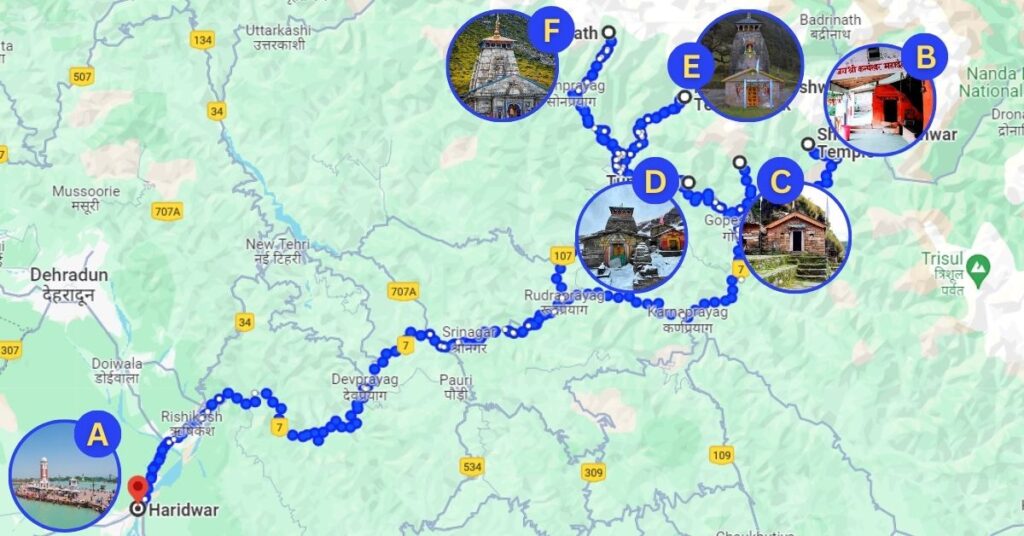
The commonly followed order in pilgrimage writing is: Kedarnath - Tungnath - Rudranath - Madhyamaheshwar - Kalpeshwar. Some trekkers adjust sequence by road logic, weather windows, or accommodation availability, but the above order remains the most cited devotional pattern.
A practical planning structure is to start from Rishikesh/Haridwar belt, use road transfer to relevant base villages, then complete each trek segment in phases. The total duration for full Panch Kedar can vary widely depending on fitness, weather holds, and whether you keep buffer/rest days. Many travelers take around 10 to 14 days for a comfortable pace.
| Yatra Phase | What To Expect | Planning Priority |
|---|---|---|
| Temple 1-2 | Initial adaptation to altitude and long road legs | Acclimatization and hydration |
| Temple 3-4 | Higher fatigue and tougher trail decisions | Pacing and weather planning |
| Temple 5 | Relatively lighter closure phase for most groups | Safe exit and return logistics |
Best Time for Panch Kedar Yatra
The most practical windows are pre-monsoon (roughly May-June) and post-monsoon (roughly September-October). These periods usually offer better trail conditions and clearer mountain visibility than high-rainfall weeks. Monsoon can bring landslides, trail damage, and transport unpredictability. Winter usually means heavy snow closure across most high shrines, with winter worship traditions shifting to lower-altitude seats for specific temples.
If your priority is safer trekking and fewer disruptions, avoid peak rain periods and keep at least one or two weather buffer days in your itinerary.
Trek Difficulty and Fitness Preparation
Panch Kedar is not a casual temple-hopping route. It is a combined pilgrimage and mountain-endurance circuit. Even when individual temple treks are moderate, the cumulative load from repeated climbs, descents, and road transfers can be exhausting.
Fitness Baseline
- 4-6 weeks of pre-yatra preparation is strongly recommended.
- Focus on stair climbing, long walks, and breathing control.
- Practice walking with a daypack and layered clothing.
- If you have cardiac, respiratory, or orthopedic concerns, seek medical clearance in advance.
Mental and Pacing Discipline
Most yatra failures happen due to speed, not lack of devotion. Walk slower than your ego allows, hydrate regularly, and avoid skipping recovery meals. A steady pilgrim usually completes more safely than a fast-start trekker who burns out by the third shrine.
How To Reach Each Panch Kedar Temple
Kedarnath
Road movement generally brings pilgrims to the Gaurikund side, followed by a long uphill trek. Managed services like pony/palki and helicopter options may be available seasonally, but availability depends on weather and operational permissions.
Tungnath
Tungnath is reached from Chopta via a short but steep mountain path. For linked planning, see places to visit in Chopta and things to do in Chopta.
Rudranath
Rudranath is typically approached from Sagar/Mandal side with longer trekking stretches. This segment needs early starts and careful weather tracking.
Madhyamaheshwar
A common base is Ransi, followed by sustained trekking through intermediate settlements and climbs. Keep enough daylight margin on ascent days.
Kalpeshwar
Kalpeshwar lies in the Urgam valley area and is usually the easiest Panch Kedar access segment, requiring comparatively lighter walking from the nearest roadhead.
Accommodation, Food, and On-Ground Facilities
Facilities vary by temple segment. You may find guesthouses, dharamshalas, seasonal lodges, and homestays in base or mid-route villages, but comfort levels are not uniform. During peak yatra windows, pre-booking is safer than walk-in planning.
- Prefer flexible booking where cancellation/reschedule is possible.
- Carry essential medicines even if basic medical help exists en route.
- Do not depend entirely on digital payments in remote sections.
- Pack dry snacks and hydration salts for long trek days.
For broader route context and adjacent pilgrimage planning, you can pair this guide with Char Dham Yatra and Rishikesh travel guide.
Registration and Risk Management
Before starting Panch Kedar, verify any active yatra registration rules, route advisories, and weather alerts from current local authorities. Mountain routes can change quickly after rain, and open-path assumptions from old blog posts can be misleading. Keep soft and hard copies of identity documents, emergency contacts, and booking details. If your group includes seniors, assign one person as logistics lead and one as health-monitoring lead so decisions are quick when conditions shift.
Avoid over-reliance on mobile connectivity. Network gaps are common in sections of the route, especially during weather disturbance. Set daily check-in windows with family, and predefine fallback plans if one segment gets blocked. If any member reports persistent breathlessness, dizziness, or unusual fatigue, pause and descend rather than forcing completion. In Panch Kedar, safe retreat is always better than risky continuation.
Panch Kedar Packing Checklist
| Category | Must Carry | Why It Matters |
|---|---|---|
| Clothing | Layered thermals, fleece, windproof jacket, rain shell | Rapid weather change at altitude |
| Footwear | Broken-in trekking shoes + backup socks | Prevents blisters and slip risk |
| Health | Personal meds, ORS, basic first-aid | Limited immediate pharmacy access |
| Documents | ID proof and required yatra registrations | Checkposts and temple-route compliance |
| Gear | Torch/headlamp, power bank, rain cover | Useful in early starts and outages |
Important Travel Tips for a Safer Yatra
- Start early each day to avoid late descents and weather shifts.
- Do not ignore altitude symptoms like headache, nausea, or unusual fatigue.
- Keep one reserve day in your itinerary for weather disruptions.
- Respect local temple customs and keep noise low near sanctum areas.
- Avoid plastic litter; this route passes fragile mountain ecosystems.
- If a local guide or authority advises delay, prioritize safety over schedule.
Suggested Itinerary Approach
If you are a first-time pilgrim-trekker, avoid attempting all five shrines in a compressed schedule. A practical model is to complete two major shrine segments, evaluate your stamina and weather, then continue the remaining circuit with one active recovery day in between. This greatly improves completion probability without compromising safety.
Experienced trekkers may shorten the schedule, but they still usually keep contingency for road blockades and rain-related delays. Panch Kedar rewards patience more than speed.
Final Take
Panch Kedar Yatra is one of the most meaningful Shiva pilgrimages in the Himalayas because it asks for both faith and effort. The route is not only about darshan at five temples; it is also about discipline, mountain respect, and inner steadiness.
Its deeper value appears when you move mindfully through each valley, accept weather-led delays, and treat every temple halt as part of the journey rather than a checklist stop. That mindset usually transforms a difficult trek into a lasting spiritual memory.
Plan with realistic timelines, prioritize weather-safe movement, and keep your trek load manageable. If you prepare well, Panch Kedar can become a once-in-a-lifetime blend of devotion and Himalayan trekking. For connected planning, continue with how to reach Kedarnath, history of Kedarnath Dham, and things to do in Uttarakhand.
Location
Frequently Asked Questions
Q1.What is Panch Kedar Yatra?
Q2.Which are the five Panch Kedar temples?
Q3.How many days are required for Panch Kedar Yatra?
Q4.What is the best order to visit Panch Kedar?
Q5.Which is the most difficult Panch Kedar trek?
Q6.Can beginners do Panch Kedar Yatra?
Q7.When is the best time for Panch Kedar Yatra?
Q8.Are Panch Kedar temples open in winter?
Recommended For You
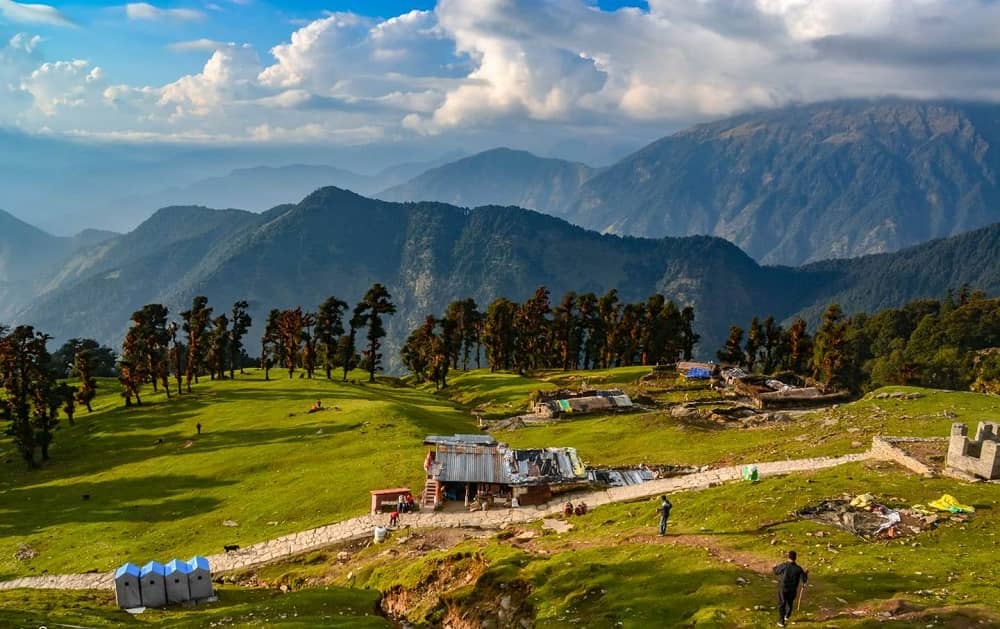
Things to Do in Chopta: Treks, Camps & Scenic Stops
Explore top things to do in Chopta including Tungnath trek, Chandrashila summit, camping, nature walks, winter planning, and practical itinerary tips.
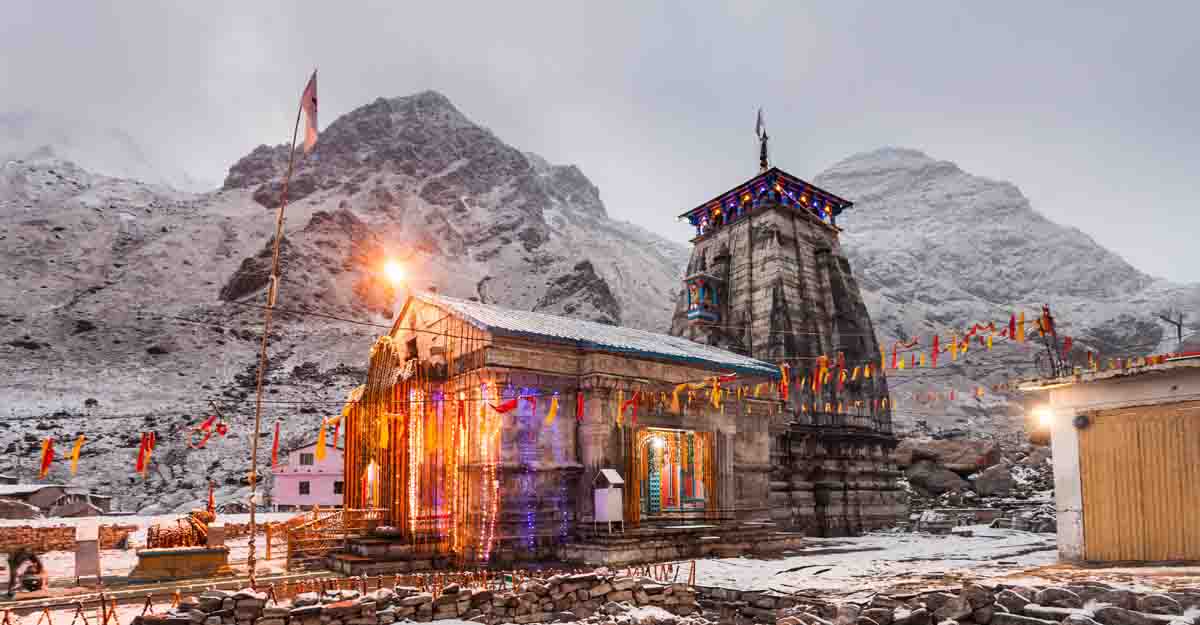
Char Dham Yatra Guide: Route, Itinerary, Season & Travel Tips
Plan Char Dham Yatra with practical route sequencing, day-wise templates, seasonal strategy, budget guidance, and safety-first pilgrimage preparation.
Things to Do in Uttarakhand: 30 Best Experiences & Attractions
Discover the 30 best things to do in Uttarakhand - from spiritual Char Dham pilgrimage and yoga in Rishikesh to adventure sports, wildlife safaris, and offbeat Himalayan villages. Complete guide with costs and tips.
Never Miss an Adventure
Get the latest trekking guides, travel tips, and exclusive offers delivered straight to your inbox.
